Multimodal AI first proved itself in a warehouse not at a product launch, but during an ordinary damage report. One night in the autumn of 2025, on the night shift at a third-party logistics warehouse in eastern China, an operator on the sort line spotted a crushed carton. He took a photo with his handheld terminal and said aloud: "Lane 3, outer carton crushed, glassware inside, possible leakage." Within seconds, the system combined the photo, the voice note, and the written order record, and returned a recommendation: isolate the carton, keep the photo as evidence, and have customer service contact the buyer first. Three tasks that used to live in three separate systems, stitched together by human effort, were handled by a single model.
The warehouse problem was never missing data. It was data that never lined up.
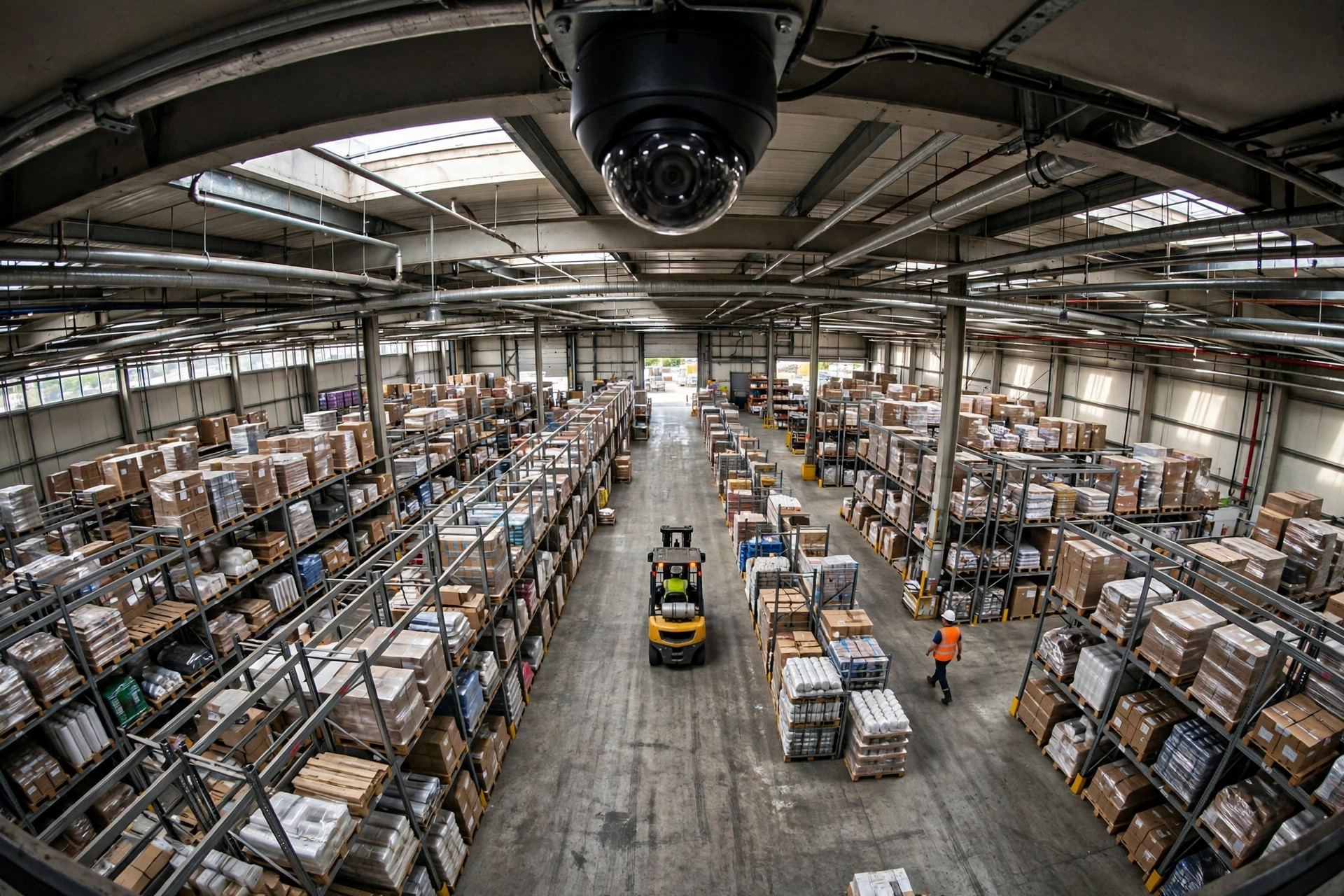
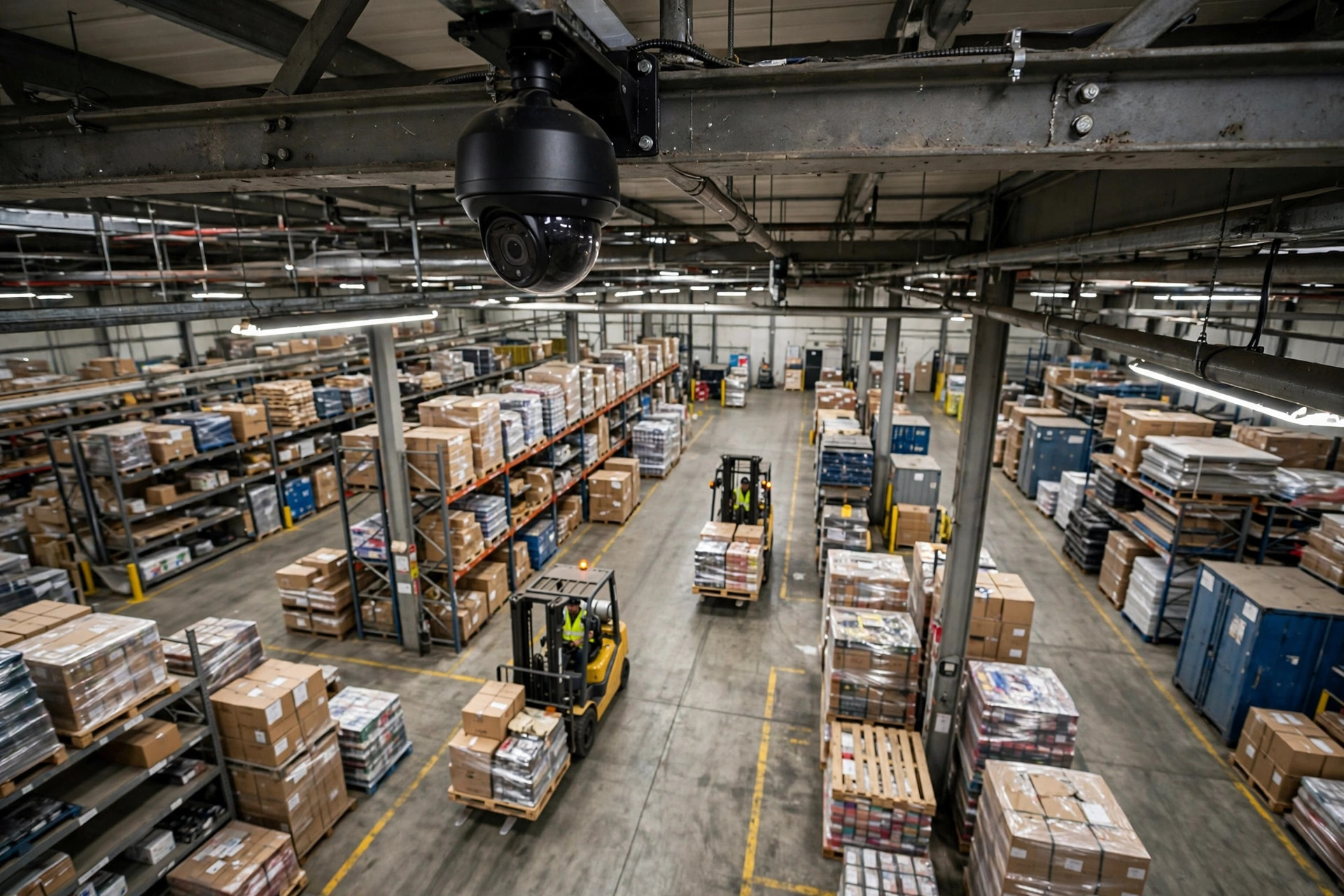
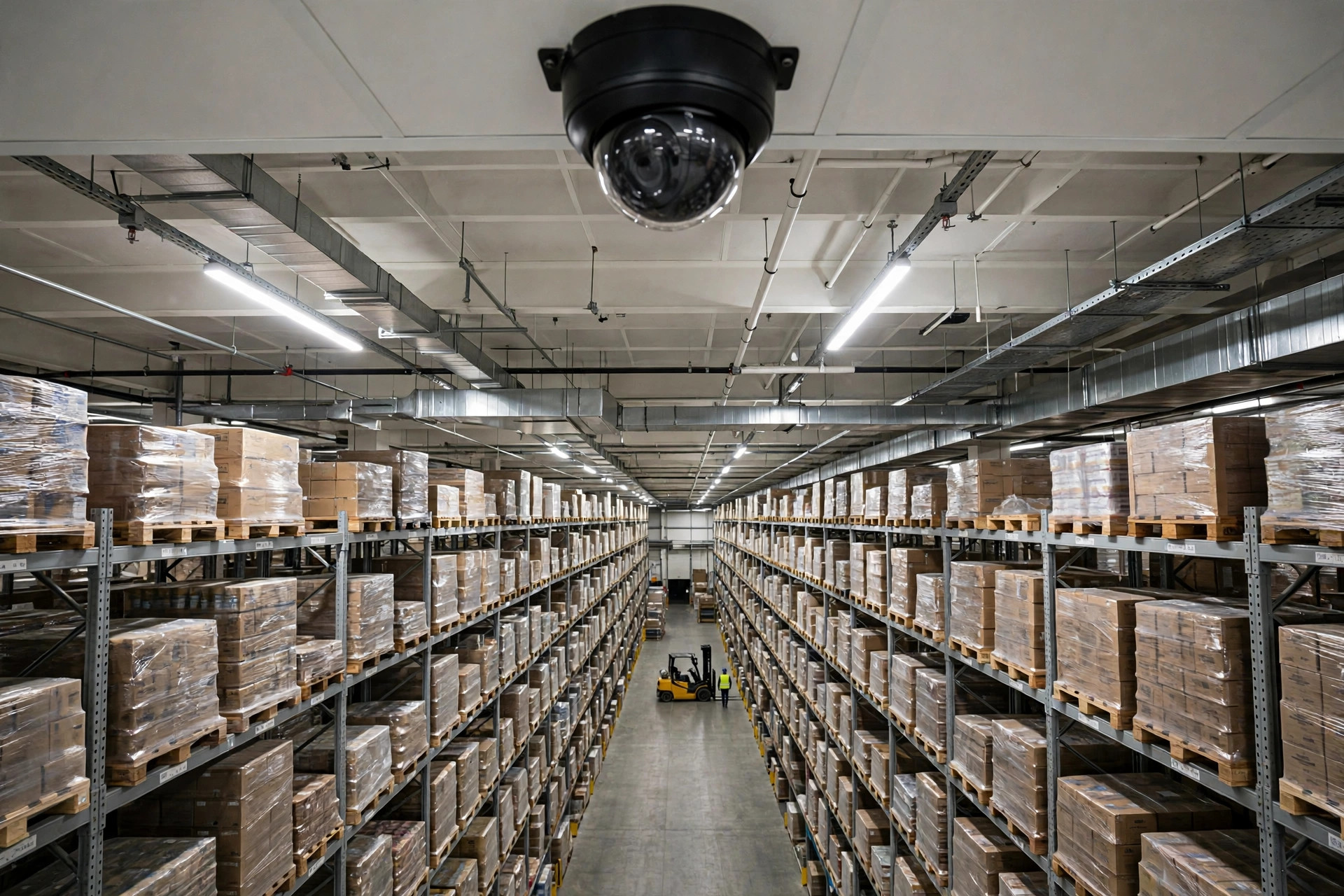
A mid-size warehouse generates no shortage of data: camera footage, handheld scan records, voice-picking audio, orders and inventory in the WMS, emails and work orders in text. The problem is that each stream tells its own story. A camera sees a fallen carton but does not know which order it belongs to. A voice system hears an operator report damage but cannot see what the damage looks like. The WMS knows an order is late but not where the delay occurred.
According to OpenAI's public announcement when it released GPT-4o in May 2024, the design goal of this class of model is to take text, image, and audio into one model, rather than running three separate models and stitching the results together. Transplanted into the warehouse, the point is not that the technology is more fashionable. It is that warehouse work is itself multi-channel: eyes watch, mouths speak, systems record. Drop any one channel, and the judgment goes wrong.
What multimodal AI actually fuses in a warehouse
The fusion happens on three levels. The first is alignment: one event leaves traces in several channels, and the model must first recognize that they belong to the same event. The damaged carton in the photo, the "Lane 3" in the voice note, and the location code in the order have to point to the same slot at the same moment.
The second level is complementarity: where one channel falls short, another fills in. A photo proves the extent of damage; voice adds context the photo cannot capture, such as "glassware inside"; text supplies order background that neither photo nor voice carries, such as whether this customer accepts replacements. Each channel's weakness is covered by the other two.
The third level is conflict resolution: when channels disagree, the model has to decide which to trust. In warehouse deployments, the real quality of such a system usually shows up at this third level, not the first.
Three multimodal AI scenarios already running in warehouses
The first is photo plus voice damage reporting. The operator photographs the problem on site and describes it aloud; the model combines photo and voice and returns a damage type, a severity rating, and a recommended action. The value is in merging "discovering an exception" and "recording an exception" into a single act.
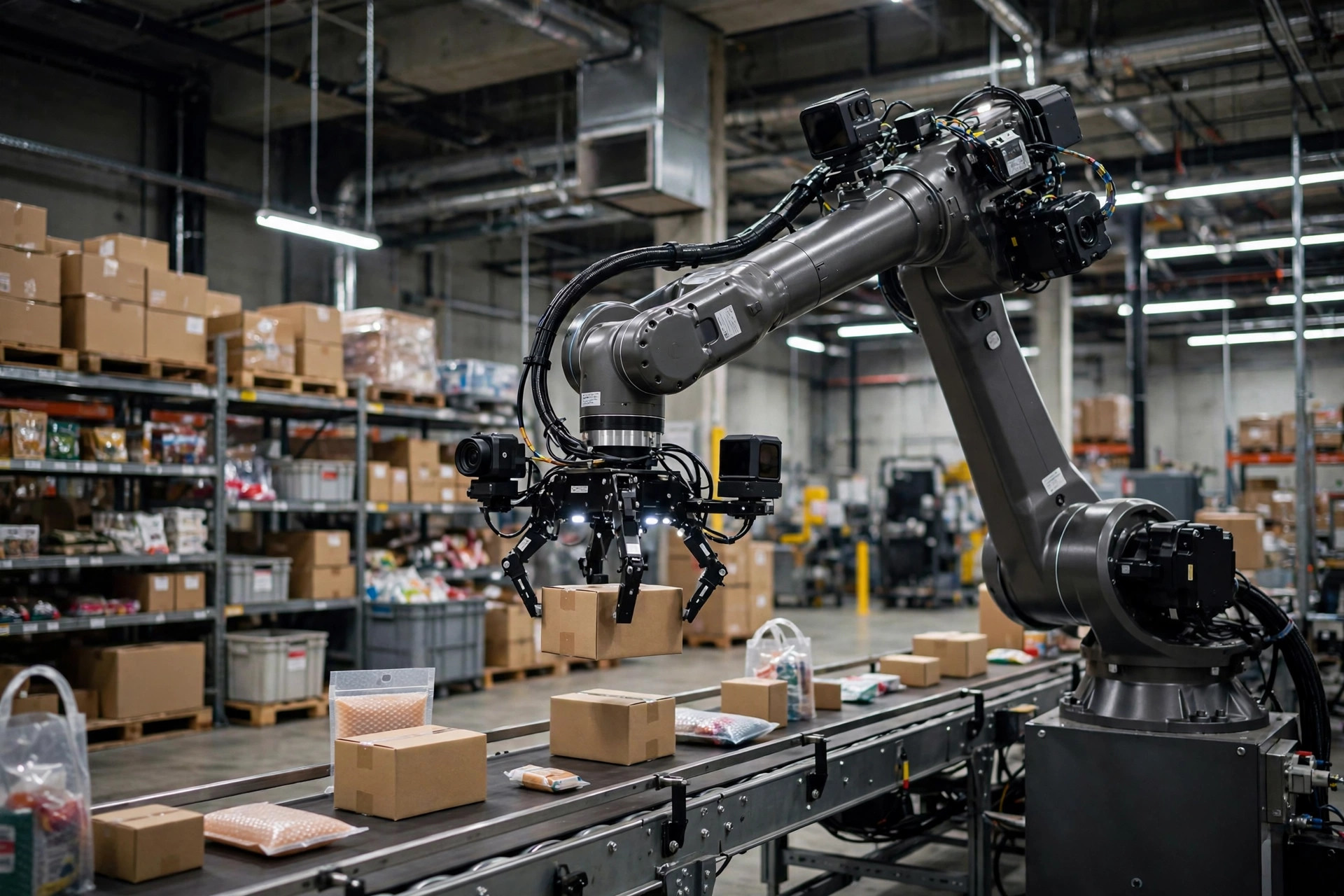
The second is visual verification against written instructions. A camera at the packing station photographs the parcel contents before sealing; the model checks them against the written order detail: quantities, SKUs, promotional items. An auto-parts warehouse piloting this kind of verification moved its checkers from watching every order on screen to handling only the orders the model flagged as suspicious. One caution is in order: in this scenario the model screens, it does not sign off. Final release authority stays with people.
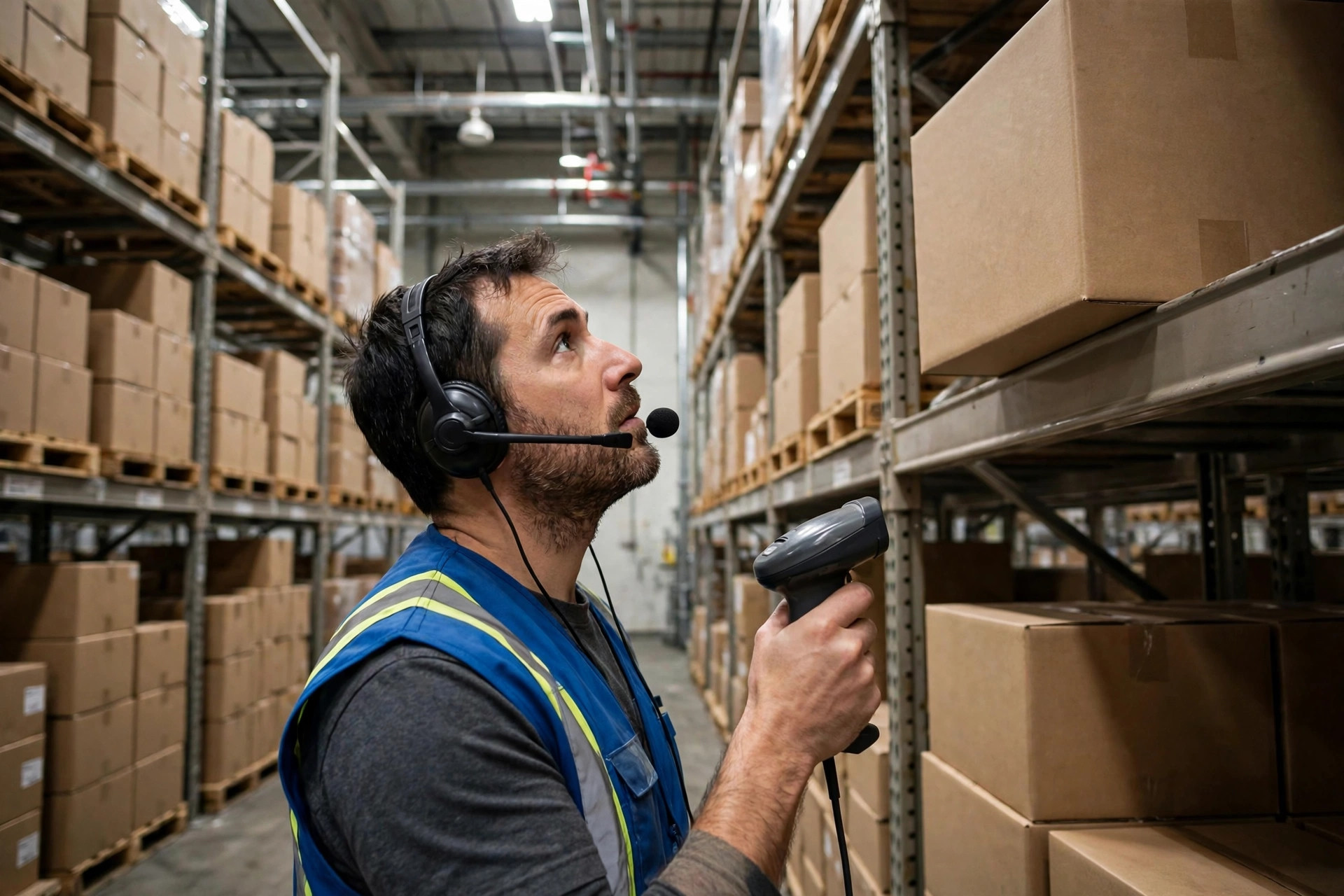
The third is voice cycle counting with image confirmation. The counter wears a headset and calls out quantities while a camera photographs the rack in the same moment; the model matches the spoken count against the visual state of the location and flags mismatches for immediate rechecking. This kind of counting pulls verification forward to the moment the number is spoken.
Single-modality vs. multimodal: a comparison
| Dimension | Single-modality system | Multimodal AI |
|---|---|---|
| Input | One signal only, e.g., image or voice | Image, voice, and text together |
| Basis for exception judgment | Single piece of evidence, prone to misjudgment | Cross-validated evidence from several channels |
| Context | Information within one channel only | Order, location, and history layered on top |
| Conflict handling | Cannot detect contradictions in other channels | Identifies and ranks conflicting evidence |
| Manual handoffs | Exceptions move between systems by hand | Recorded and notified on site in one step |
| Best fit | Fixed, repetitive, single-channel tasks | Exception and verification work that needs integrated judgment |
The table supports a basic judgment: this technology wins not by beating single-modality systems on any single metric, but by removing manual handoffs where integrated judgment is required.
Accuracy, false alarms, and latency: three hard constraints
Multimodal AI in the warehouse faces three hard constraints. If any one fails, the system stays a pilot.
The first is false alarms. If visual verification keeps flagging good parcels, checkers quickly stop trusting the system and start bulk-approving, and the system might as well not exist.
The second is latency. Voice counting needs feedback shortly after the operator calls out a number. If the answer arrives after the operator has moved to the next location, on-the-spot verification loses its point.
The third is compute cost. Its inference costs more than single-modality inference, especially with continuous video input. Compute belongs in any honest ROI calculation.
Why the bottleneck is not the model, but the warehouse
Here is a counterintuitive judgment: the main factor limiting this technology in warehouses is no longer model capability, but the warehouse's own data foundation.
Second is the density of camera and voice device deployment. Many warehouses mount cameras above the aisles, capturing a wide view rather than a close-up of each location.
A third constraint, easily overlooked, is privacy and compliance. Cameras plus voice capture mean employees' faces and voices are continuously recorded.
A trend judgment: where this technology scales first
Based on the current pace of deployment, my judgment is that multimodal AI in the warehouse will scale in three stages. The first is exception handling: damage, misloads, empty locations, steps with a clear triggering event, because the return is easiest to calculate. The second is verification: packing checks and loading checks, where the division of labor, model screens and humans sign off, is easiest to accept. The third is real-time understanding of the whole operation, and its timetable is the least certain.
One caveat: this judgment rests on a premise, that model vendors keep offering multimodal capability as a general-purpose service rather than an expensive custom project.
Multimodal AI changes not one step in the warehouse, but the way a warehouse understands its own operation. Camera, voice, and text enter a single framework of judgment for the first time. After understanding, whether decision authority goes to the model or stays with people is a question technology cannot answer. Each warehouse will have to answer it for itself.
By Dr. Chen, Supply Chain Researcher