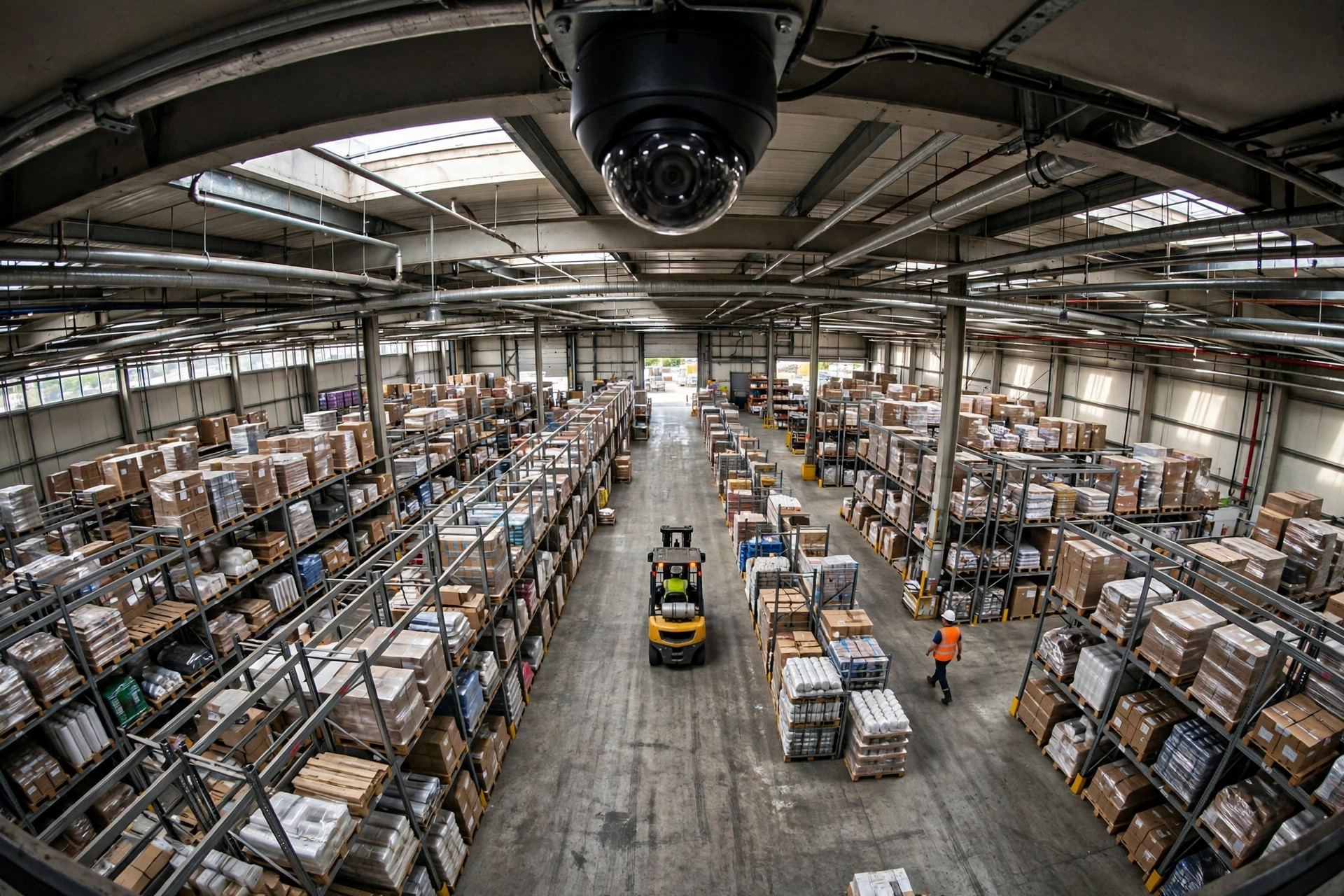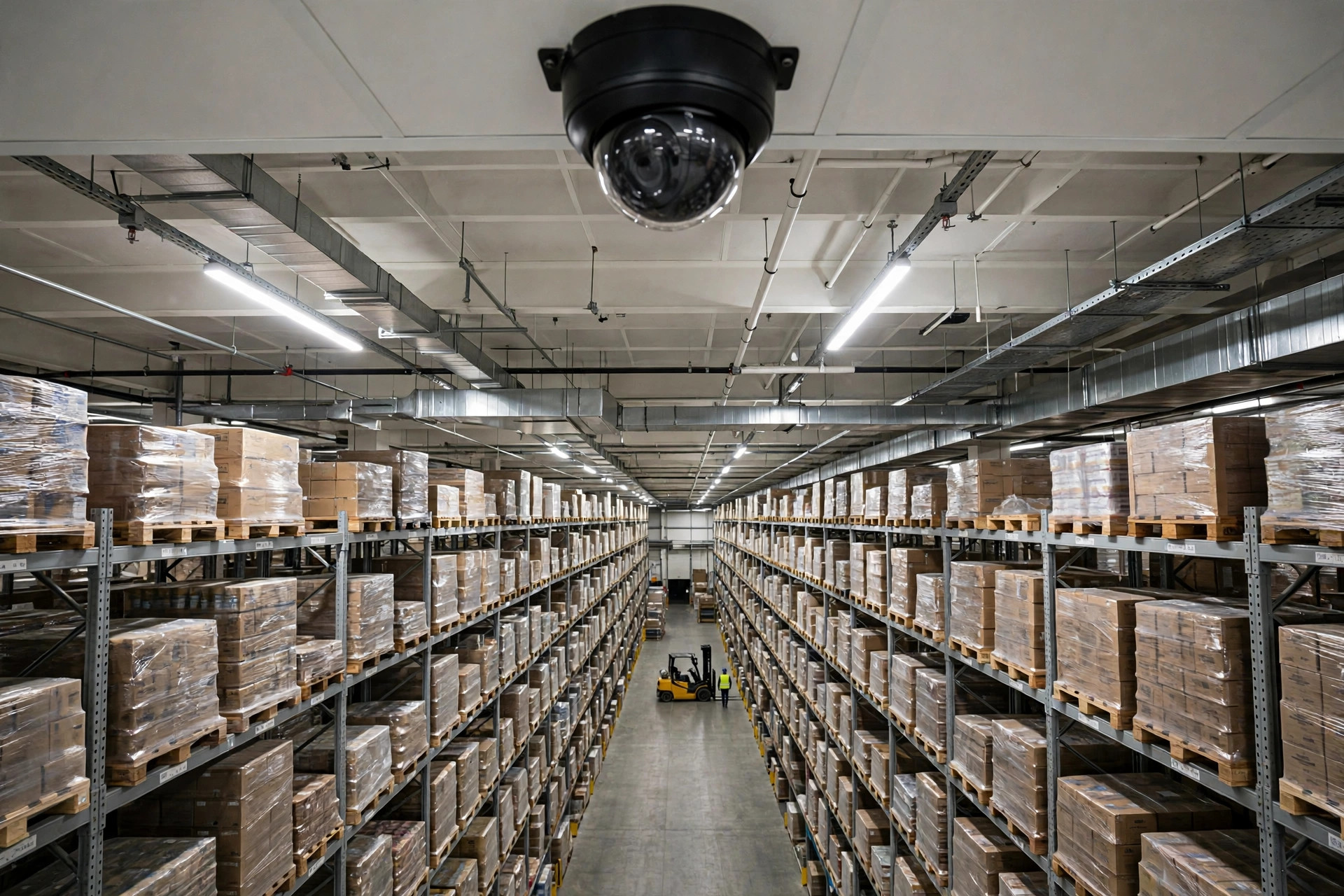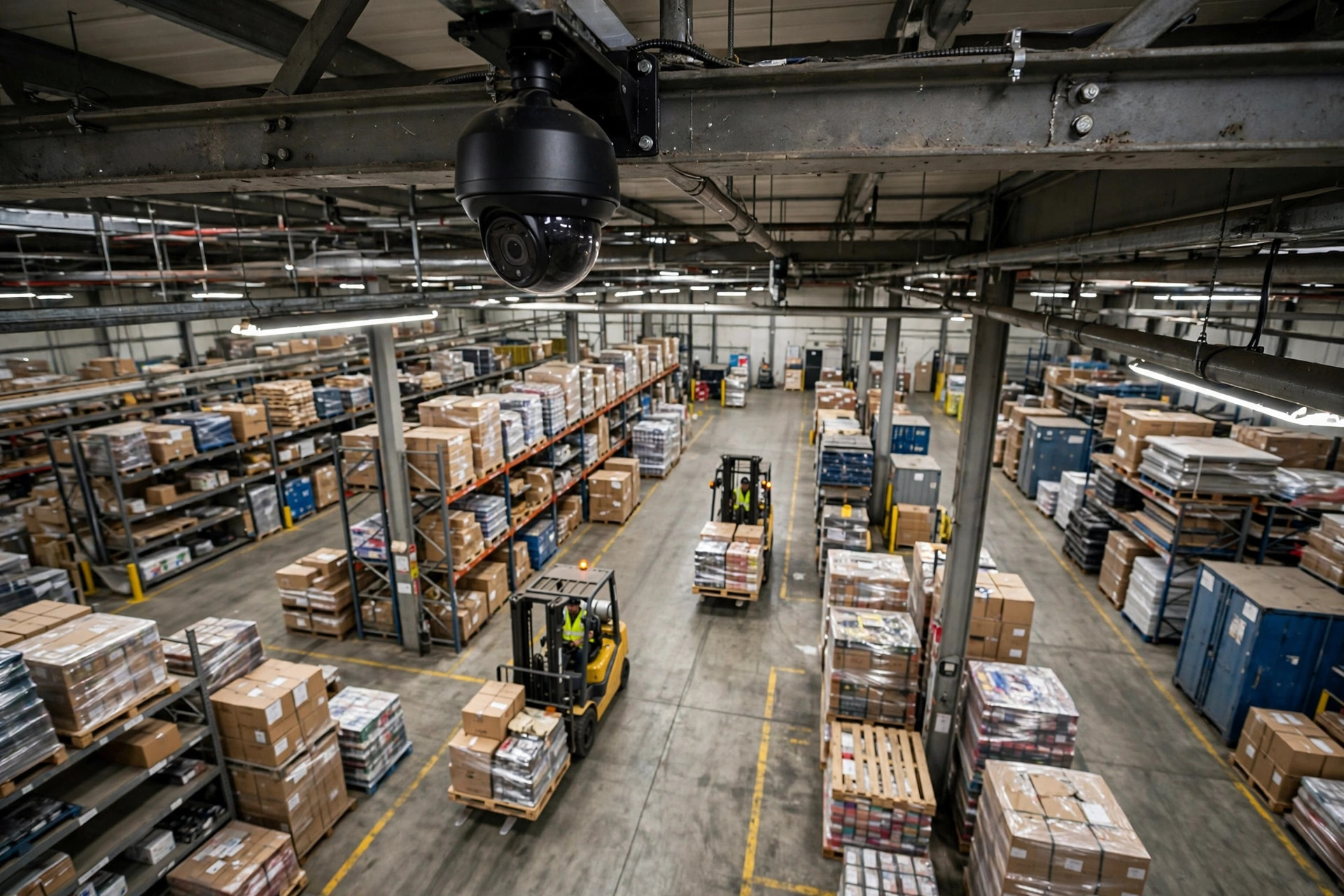
Over the past two years, a quiet change has unfolded above warehouse aisles: cameras that once only recorded footage are being connected to AI that understands what it sees — a speeding forklift gets flagged automatically, a pedestrian in a forklift zone triggers an instant alarm. This experiment in applying computer vision to warehouse safety is shifting safety management from after-the-fact investigation toward real-time intervention. But before debating effectiveness, it is worth calmly sizing the risk.
The data first: pedestrian-forklift contact dominates warehouse safety numbers
According to long-cited U.S. Occupational Safety and Health Administration (OSHA) figures, forklifts are involved in roughly 85 deaths and about 34,900 serious injuries each year in the United States. The structure matters more than the totals: OSHA attributes about 36 percent of fatal forklift accidents to incidents involving pedestrians, while a National Institute for Occupational Safety and Health (NIOSH) fatality analysis classifies roughly 20 percent of fatal victims as workers on foot struck by a forklift. The two sources count differently but converge on one conclusion — in the enclosed world of a warehouse, the deadliest risk is not the equipment itself but the mixing of people and machines.
A second number explains why the problem has resisted solution for so long: OSHA estimates that roughly 70 percent of forklift accidents could have been avoided with proper training and safety procedures. The gap between "could have been avoided" and "kept happening anyway" exposes the limit of traditional management — training answers whether people know the rules, not whether they follow them every single time.
Safety consultants describe the following pattern as depressingly typical. In the fall of 2023, at a roughly 270,000-square-foot food distribution center in the American Midwest, a night-shift picker cut across a main forklift artery to save time, just as a fully loaded forklift reversed at 7 to 8 miles per hour — above the facility's 5 mph internal limit. The driver's view was blocked by the load; the picker wore noise-canceling earbuds. Neither saw the other. The investigation listed three causes — speeding, a pedestrian in a vehicle lane, divided attention — but the detail that frustrated the safety manager was a fourth: those same three causes had appeared more than 40 times in the previous year's inspection records, each closed with a verbal reminder, none of them traceable.
The case compresses three blind spots of traditional safety management into one story: spot checks cannot substitute for full coverage — no safety officer stands at every intersection around the clock; after-the-fact review cannot substitute for intervention — footage assigns blame but stops nothing in progress; self-discipline cannot substitute for external awareness — the limit is posted on the wall, but nothing in the building knows how fast any truck is moving right now. Vision-based systems are, at their core, an attempt to close exactly these three gaps.
Three approaches side by side: patrols, onboard sensors, and vision AI
Today's warehouse safety technology falls roughly into three camps. Lined up in one table, the trade-offs become much clearer.
| Approach | Coverage | Real time? | False alarms / misses | Cost scale | Biggest weakness |
|---|---|---|---|---|---|
| Human patrols plus training | Sampling, person to person | Mostly after the fact | High miss rate — most happens unseen | Labor cost, scales linearly | No full coverage, no traceable record |
| Onboard sensors (speed alarms, proximity detection) | Follows the truck | Real time | Moderate false alarms, metal interference | A few thousand dollars per truck, one-time | Covers the truck, not the pedestrian; hard to retrofit old fleets |
| Computer vision (cameras plus behavior analysis) | Per location, around the clock | Real time, with automatic evidence capture | False alarms depend on tuning, high at first | Tens of thousands per location plus annual software fee | Lives or dies by on-site tuning; privacy and compliance boundaries |
A rough, explicitly hypothetical calculation based on publicly listed price ranges: for a regional distribution center of about 320,000 square feet running 40 forklifts, covering only the six busiest pedestrian-truck intersections takes roughly 12 to 18 camera positions. At 1,000 to 2,000 dollars per position for camera plus edge-compute box and 300 to 600 dollars per year for software, year one lands between 20,000 and 50,000 dollars, with 4,000 to 10,000 dollars annually after. Two full-time safety officers on three shifts cost a similar order of magnitude yearly but deliver only sampling; outfitting 40 trucks with speed alarms and proximity sensors is a one-time outlay in the tens of thousands, yet does nothing about the pedestrian side.
The math suggests computer vision is not cheap — its edge is not absolute cost but certainty of coverage per dollar: cameras take no breaks, and every violation is recorded. That certainty has a price, and the price is false alarms.
In early 2024, a third-party logistics provider running a 400,000-square-foot facility outside Dallas ran a deliberately restrained pilot: no full-site rollout, just vision AI at eight pedestrian-truck intersections, each with a light-and-sound alarm and automatic clip push to the safety manager's phone. For two weeks the system pushed over a hundred alerts a day, and the manager nearly switched it off — until review showed more than 70 percent were edge cases like "a pedestrian walking close to the yellow line." The vendor spent three weeks tuning against footage, tightening "intrusion" from "entered the frame" to "entered the vehicle lane and stayed longer than two seconds."
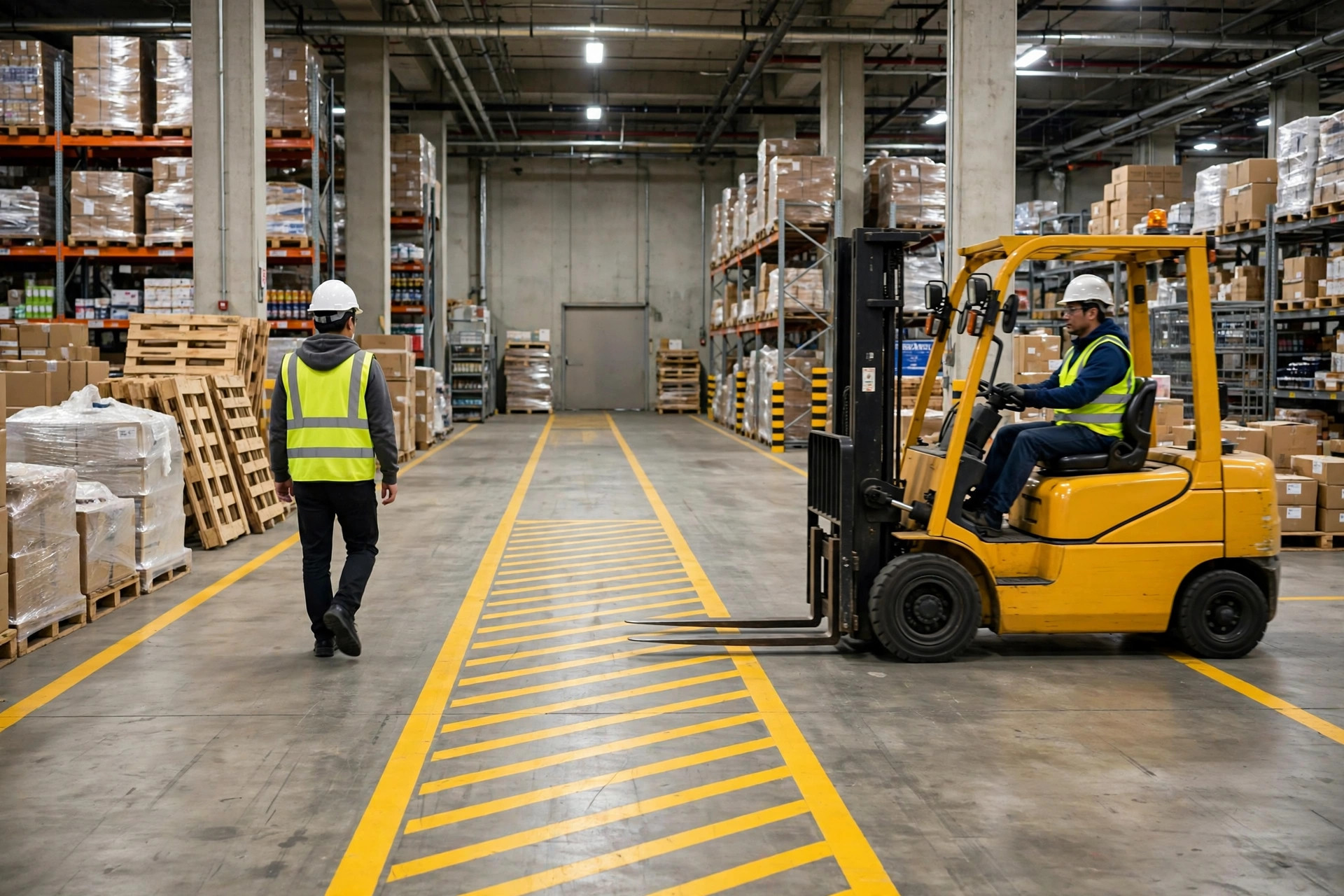
Three months later, valid alerts were down to single digits daily, and shortcut-taking had nearly vanished. The safety manager's summary is worth remembering: "We didn't buy snapshots. We bought the shared knowledge that someone is always watching."
The counterintuitive lesson: more cameras do not mean more safety
This is the most commonly misjudged point in deploying vision AI for warehouse safety. Intuition says more positions and fuller coverage equal better safety. What frontline feedback actually traces is a different curve — once alert volume exceeds human processing capacity, the system degrades quickly from safety tool to background noise.
The mechanism is straightforward: a poorly tuned system pushes hundreds of alerts a day; the tenth still gets opened, the fiftieth becomes "I'll check later," and after the hundredth, muting the phone is the rational choice. Behavioral science calls this alarm fatigue, documented in hospital ICUs and factory control rooms alike. Cameras solve not seeing; alarm fatigue creates seeing without reacting — arguably more dangerous, because it gives management the illusion of control.
A second counterintuitive judgment: the greatest value of vision AI may lie not in catching violations but in the deterrent effect of being seen. In the Dallas pilot, behavior changed before any punishment — once drivers and pedestrians knew the intersection had eyes, behavior corrected itself first. Judging such projects only by "violations caught" is the wrong accounting; the right metric is whether the violation baseline moved down systematically.
A third judgment hides in the timeline: why did vision AI reach warehouse safety only in the last two years, not five years ago? The public record traces roughly three phases — before 2020, object detection produced too many false alarms in messy warehouses, and systems could only assist after-the-fact review; 2021 to 2023, edge-compute boxes fell into an affordable range, making real-time analysis economically viable; after 2024, models with behavioral understanding spread, evolving systems from "there is a forklift and a person in the frame" to "this behavior is a violation." Each wave rode on the previous wave's cost decline — adopting now is essentially paying for five years of accumulated cost reduction, not for magic.
Looking two to three years out, the trend most likely runs two ways: from after-the-fact evidence toward advance warning — predicting trajectories so alarms fire seconds before paths converge; and from single-point detection toward site-wide orchestration, integrated with warehouse management data so high-risk intersections gain sensitivity during peaks. But three structural constraints set the ceiling: employee privacy and labor law — whether a camera captures "behavior" or "people" gets different answers in different jurisdictions; attribution of a missed detection — if the system misses a fatal intrusion, whether liability sits with the vendor, the integrator, or the warehouse has no standard answer today; and most fundamentally, vision AI cannot substitute for site-management basics — poor aisle design, overpacked schedules, and chronic understaffing will not vanish because a few more eyes were added.
So as AI begins watching the warehouse around the clock, what changes may not be the technology but the nature of the problem: managers could once say "I didn't see it" — now "having seen it" is the default. What follows is no longer a technology question but an organizational one: having seen, what price will the organization pay to change — chase every speeding event, or quietly loosen the alert threshold? No camera can answer that.
By Dr. Chen, Supply Chain Researcher