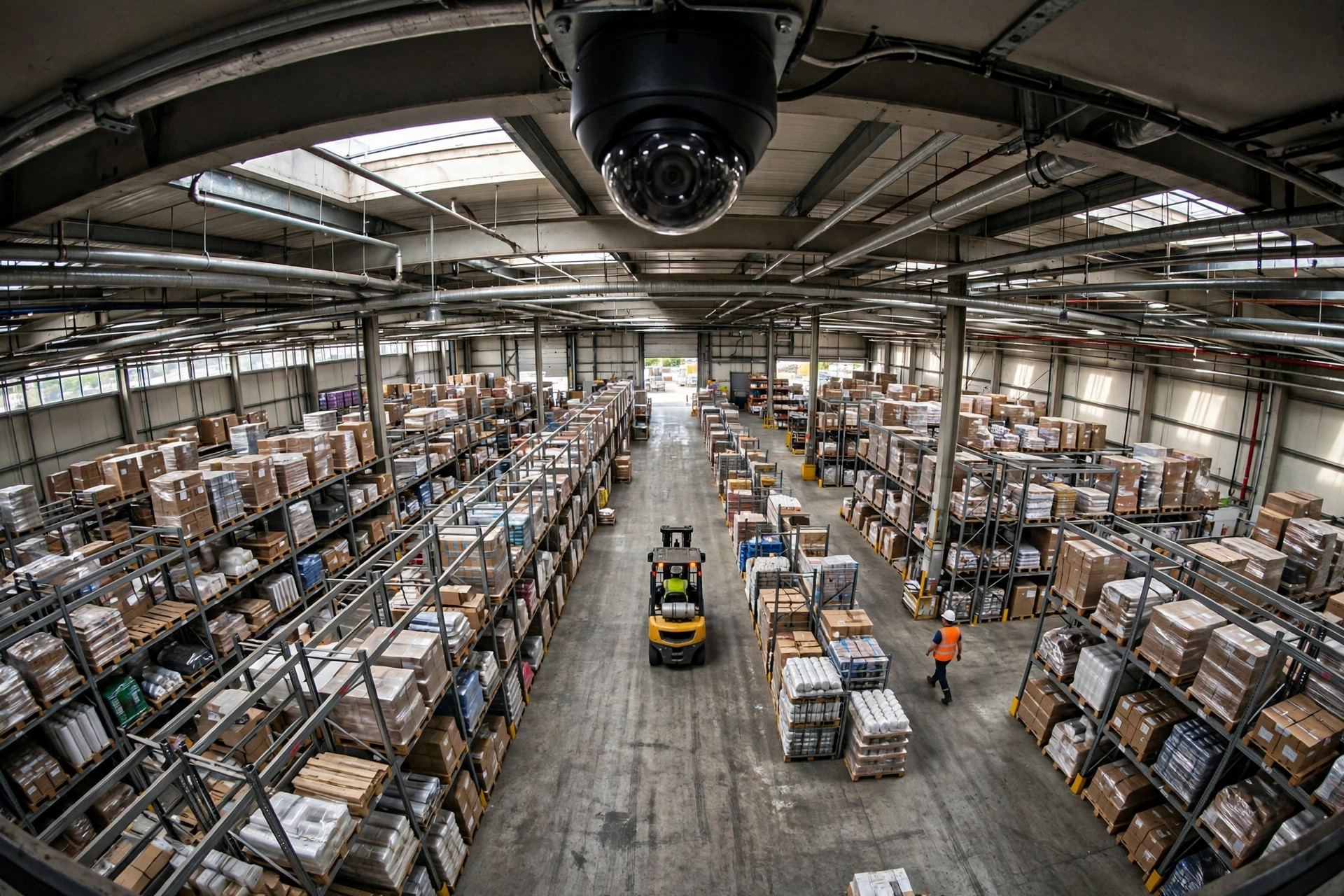
Inventory counting is still one of the most labor-intensive jobs in a warehouse. That statement can sound outdated, but anyone who has worked through a full count night knows why it still holds. RFID inventory counting warehouse has been discussed for years for exactly this reason. People want a way to count without one worker scanning, tallying, and reconciling item by item.
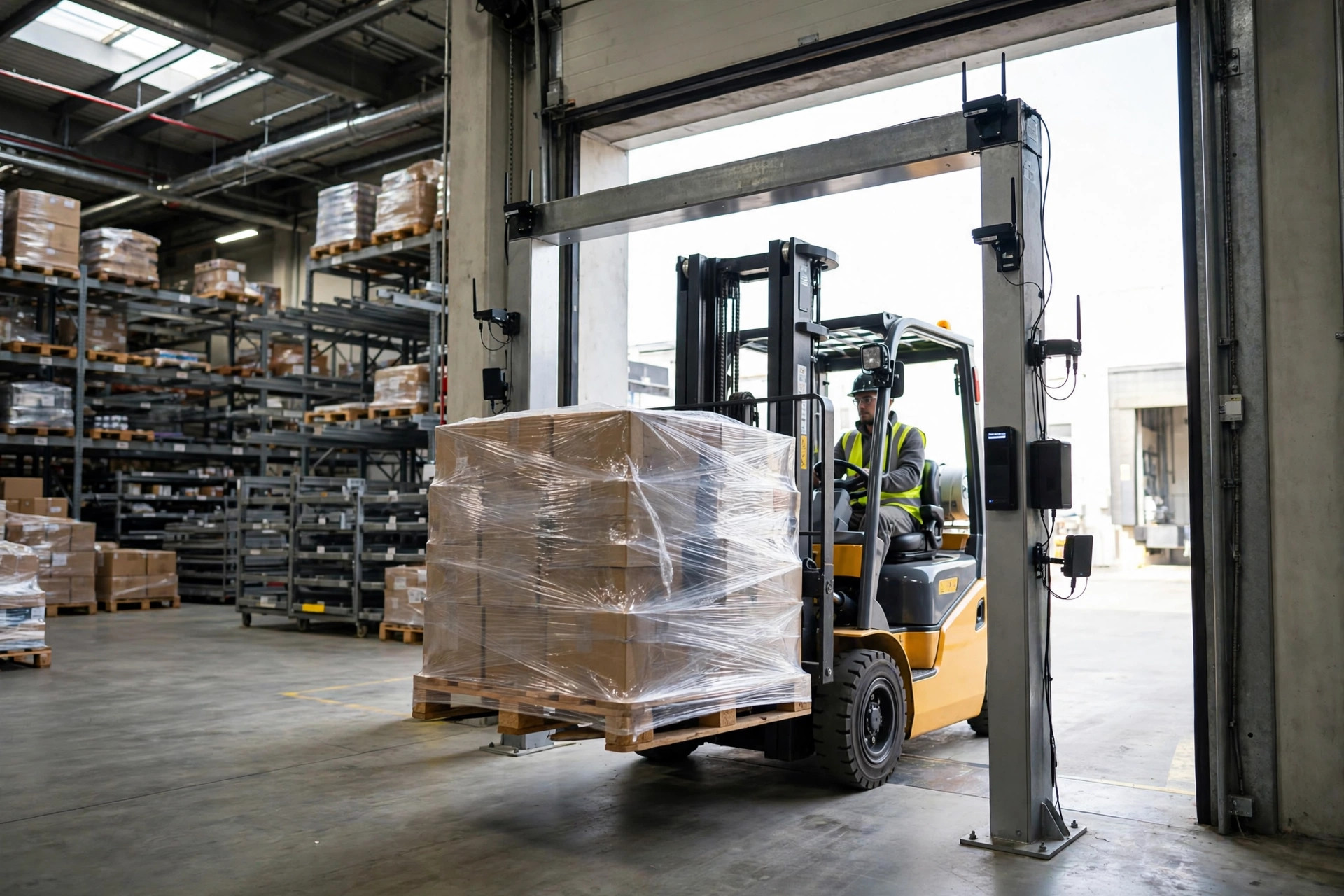
The principle behind RFID counting is not complicated. Goods or pallets carry RFID tags. A reader sends out a radio signal. Tags reply with their codes. The system reads a batch of tags at once, without contact and without line of sight. A full pallet passing through a reader gate can be read in seconds. Compared with barcodes, which must be aimed at and scanned one at a time, that bulk-reading difference is the core appeal of RFID counting.
According to the warehouses we have visited over the past few years, counting labor tends to concentrate in two stages. One is the physical count on the floor. The other is the reconciliation afterward. The physical count eats time. Reconciliation eats patience. RFID mainly compresses the first stage. If the tag data itself is messy, the second stage can actually grow. That detail is easy to miss in an early evaluation.
How Whole-Pallet Reads Work: RFID inventory counting warehouse and the Bulk-Reading Idea
To understand RFID counting, it helps to break the act of "reading" apart. Barcode counting is point-to-point. The operator must see the label, raise the scanner, and confirm each item. RFID counting is zone-to-zone. The reader covers an area, and every tag inside that area answers at once. A whole-pallet gate read turns that area into a doorway. As the pallet passes through, dozens of tags on it get read in one pass.
Three conditions have to hold for this to work. First, the tags have to be readable. Metal and liquid are the common sources of interference. Metal reflects the signal, liquid absorbs it, and both can make reads unstable. Second, tag placement has to be consistent. A tag on a metal surface behaves very differently from a tag on a cardboard carton. Third, reader placement has to be planned. A gate that is too narrow misses tags. Power set too high can pick up tags from the neighboring pallet.
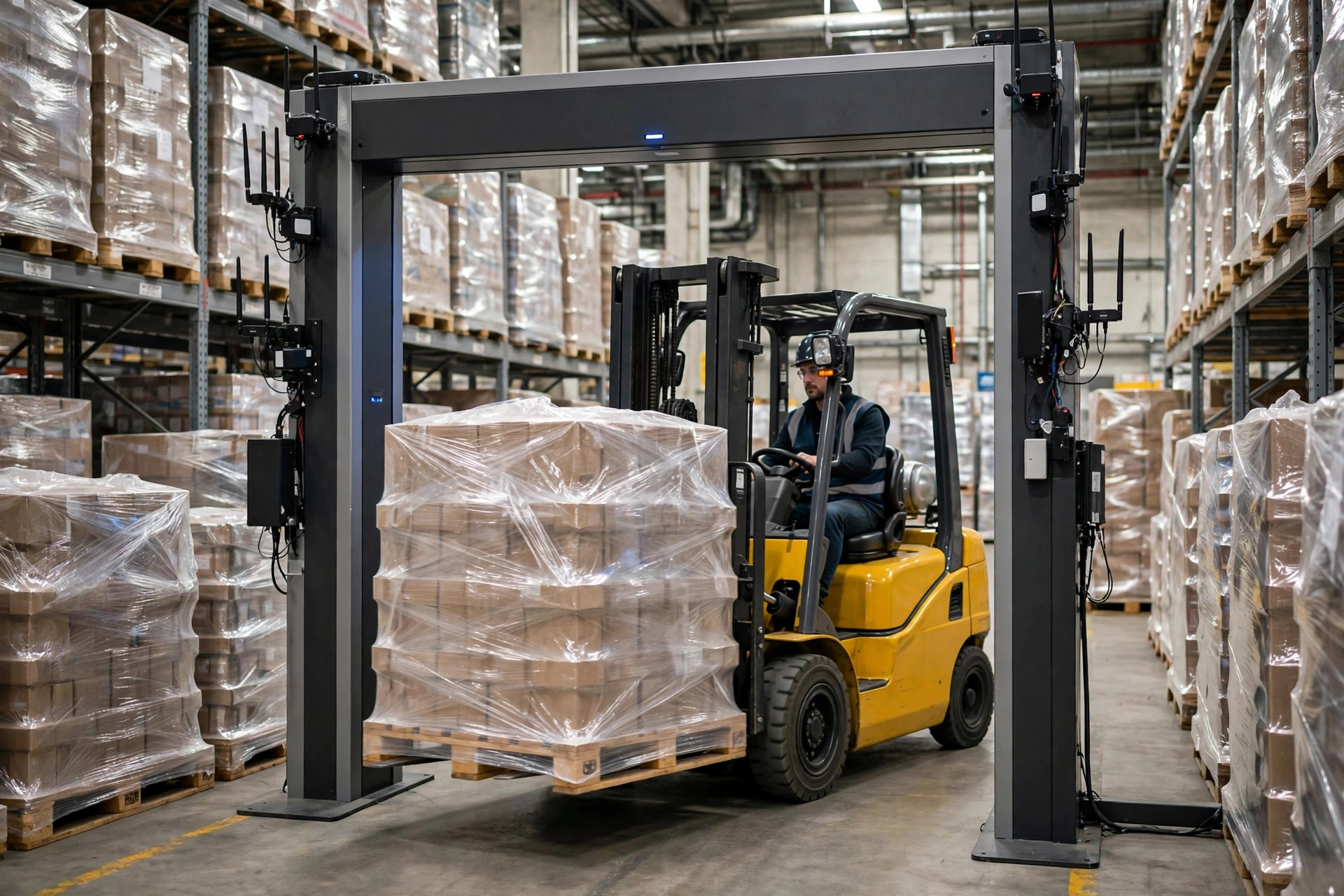
We saw a third-party logistics warehouse run into this during a pre-peak rollout. The team wanted to move from a monthly full count to a weekly cycle count. The first test round looked good. The second round did not. The same pallet returned different tag counts on two passes, and the system could not reconcile. The investigation found the problem was not the software. It was tag placement. Some tags sat on the side of the pallet. Some sat deep in gaps between cartons. Change the angle of the forklift through the gate, and the read changed with it. Once the team standardized placement and fixed the pass-through speed, reads stabilized.
Another case came from an auto parts warehouse. The assortment was broad, individual items carried real value, and counting errors were costly. Instead of covering the whole warehouse at once, the team picked two zones for a pilot and tagged only high-value parts. Barcodes stayed in use everywhere else. After six months, counting time in the pilot zones had dropped noticeably, and reconciliation differences were smaller. The manager put it plainly. RFID did not make counting disappear. It turned counting from an all-hands overtime job into a smaller job of review and exception handling.
RFID Versus Barcode Counting: RFID inventory counting warehouse Is Not a Simple Replacement
Putting RFID and barcode counting side by side can lead to a tidy conclusion that RFID wins on every line. That conclusion needs care. The two technologies work under different conditions and carry different cost structures. Comparing single metrics in isolation hides the real trade-off.
| Dimension | Barcode counting | RFID counting |
|---|---|---|
| How it reads | One at a time, needs line of sight | Bulk read, no line of sight needed |
| Counting speed | Depends on operator skill, slows as pallet contents grow | Whole-pallet gate read, short time per pallet |
| Labor | Heavy on-site counting labor | Less on-site labor, but tag management and review labor remain |
| What affects accuracy | Missed scans, double scans, damaged labels | Metal and liquid interference, tag placement, reader layout |
| Cost structure | Cheap labels, low equipment investment | Higher tag and reader investment, plus tagging labor and system integration |
| Where it fits | Few SKUs, low count frequency, tight budget | Many SKUs, high value, high count frequency |
The table shows where each technology actually wins. RFID wins on speed and bulk reading. It loses on cost and sensitivity to the physical environment. Barcodes win on cheapness, maturity, and tolerance for rough conditions. They lose on speed and dependence on manual work. For a warehouse that counts every week, the hours saved add up to real money. For a warehouse that counts once a quarter, the hours saved may not cover the tag and reader investment.
When RFID counting projects fail, the causes tend to fall into three groups. The first is the physical environment. Warehouses packed with metal racking or holding a high share of liquid goods will see repeated signal interference, and tuning power alone rarely fixes it. The second is tag management. Inconsistent placement, duplicate tag codes, damaged tags never replaced. Once the underlying data is dirty, a faster reader only delivers wrong data faster. The third is expectation management. Treating RFID as a device that is accurate the moment it is installed, while leaving old processes untouched, often ends with two sets of books that do not agree.
Which Warehouses Should Adopt It, and Which Should Wait
The judgment should start from the warehouse, not from the technology. Based on the pattern across the industry today, RFID counting is most likely to take hold first in three kinds of operations. High-value goods, where counting errors are expensive and the investment case is easy to build. Broad assortments in small lots, where scanning barcodes one by one is costly and bulk reading pays off clearly. High-frequency counting, such as weekly cycle counts or monthly full counts, where saved hours accumulate week after week.
Three other kinds of operations should be cautious. Low-value bulk goods, where the tag cost per unit is hard to justify. Warehouses dense with metal racking or holding a large share of liquid goods, where interference needs small-scale validation before any rollout. And operations with tight budgets and weak systems foundations. RFID has to connect to the inventory system. If the count data cannot flow into the books, the readers become decoration.
One trend worth noting is the shift from whole-warehouse rollout to zoned pilots. Start with one zone, one product family, or one class of high-value goods. Get tagging, reading, and reconciliation working in a closed loop. Then decide whether to expand. The pace is slower, but the cost of failure is smaller, and the warehouse team has time to adjust. The hard part of adopting a technology is rarely the technology alone. It is whether the team is willing to change a routine it already performs well.
Over a longer timeline, the spread of RFID counting may depend on two variables. One is whether tag and reader costs keep falling. The other is whether warehouses build the digital foundations to use the data. If the inventory records themselves are unreliable, a faster reader only moves unreliable data into the system faster. The goal of counting was never simply to read fast. It is to make the books match the floor. There is no shortcut to that goal.
So is a whole-pallet read in seconds worth it? The answer may not be a plain yes or no. It may be a conditional judgment. Value high enough, assortment broad enough, counting frequent enough, interference manageable. When those conditions line up, RFID deserves a serious evaluation. When two or more are missing, getting barcode counting solid and the books accurate may be the better move for now. The technology will keep advancing. The warehouse ledger, in the end, still has to be balanced one line at a time.
By Dr. Chen, Supply Chain Researcher