For any team taking an AGV into the North American market, AGV certification cost and timeline are usually the first questions asked, and also the easiest to ask badly. The question is really two questions: how long testing itself takes and what it costs, and how long fixing the design to pass testing takes and what that costs. The first question has ranges that can be quoted. The second is where budgets actually come apart.
The pattern: one certificate holding up an entire market-entry schedule
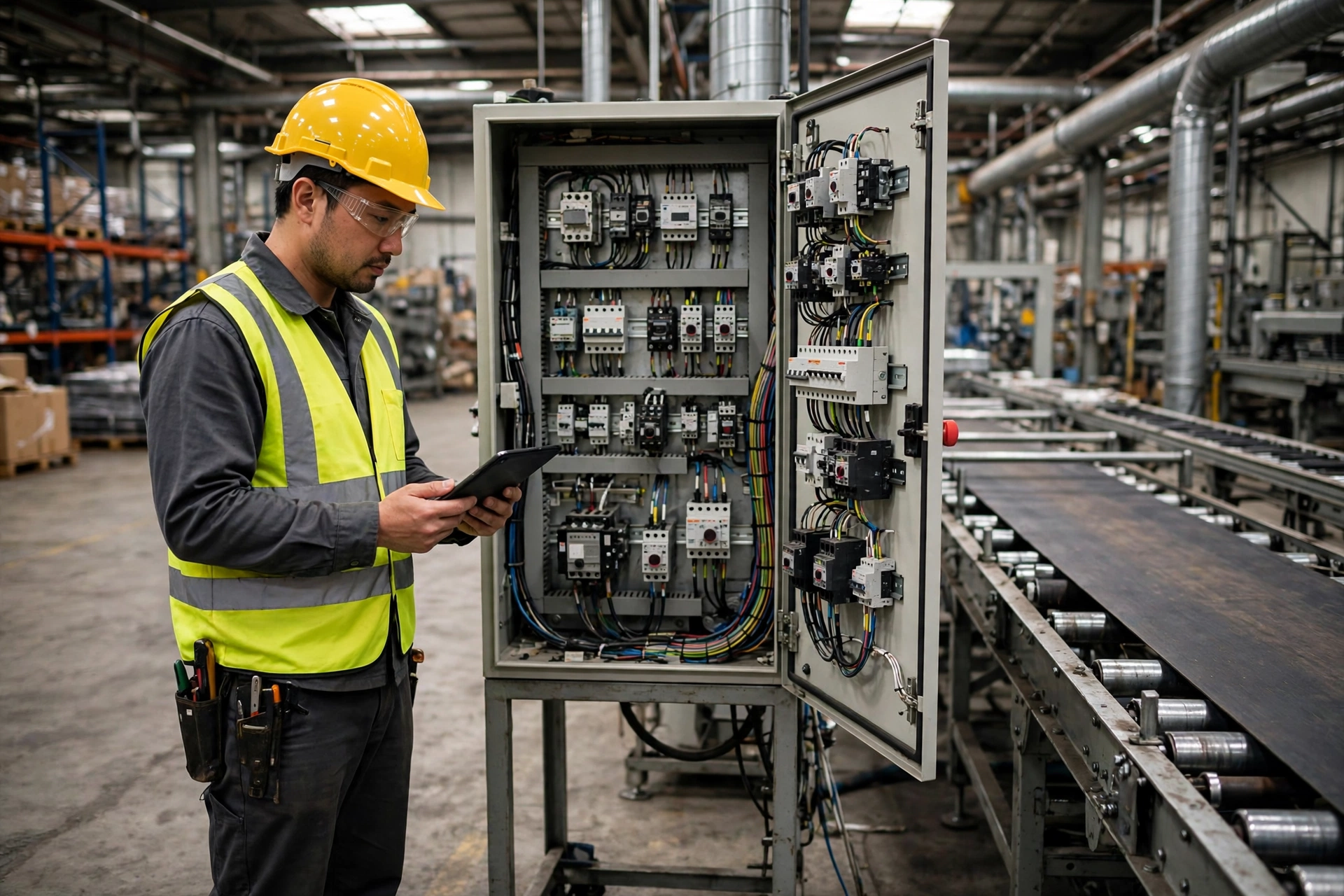
According to publicly available process descriptions from certification bodies, an AGV bound for the North American market typically passes through several gates: machinery safety, electromagnetic compatibility, and electrical safety, each tied to different standards and test items. Viewed in isolation, the testing phase is not frightening. What stretches the schedule is the loop of fixes and retesting that follows when problems are found: a failed item sends the machine back to the engineering team, the redesign has to be verified, and a new lab slot has to be booked.
I have heard two versions of this story from manufacturers. One East China AGV maker described a first submission that failed on items related to the emergency-stop circuit and safety protection. The team had to redesign part of the safety logic, and rebooking the lab after the fix added months to the schedule. Another warehouse robotics company took the opposite route, running a round of pre-testing before the formal submission, surfacing the obvious problems early, and passing the formal tests on the first attempt. The second company finished faster overall despite paying for an extra round of testing.
Both cases point to the same conclusion: the certification timeline is not the time spent waiting in a lab queue. It is the time spent calibrating a product against a standard, back and forth, until the two agree. Treat submission as an exam, and the result depends mostly on how well the revision was done beforehand.
The numbers: AGV certification cost and timeline ranges
Based on public industry material and certification bodies' process descriptions, full-machine certification for the North American market is normally measured in months, with a common range of four months to a year, and complex machines or projects with multiple rounds of fixes can run longer. On cost, the testing and certification stages themselves typically fall in a range from tens of thousands to hundreds of thousands of US dollars, depending on machine complexity, the number of test items, and how many standards apply. These are order-of-magnitude ranges only. Quotes differ sharply between labs and machine types, so any team should obtain a written quote for its own model before budgeting, and treat the latest quote from the body as authoritative.
| Stage | Time range | Cost magnitude | Notes | | Documentation and sample delivery | Weeks | Relatively low | Incomplete technical files delay everything downstream | | Laboratory testing | Weeks to months | Tens to hundreds of thousands of dollars | Charged per test item; more items mean higher cost | | Fixes and retesting | Weeks to months | Depends on the scale of redesign | Often the least predictable part of the total timeline | | Certificate issuance and listing | Weeks | Usually included in the overall quote | Confirm against the body's latest process |
One caution applies to every figure in that table. Treating a number overheard from another manufacturer as your own budget is a common and expensive planning error. Different machines and different test scopes can produce quotes several times apart. Ranges are useful for orientation; only a model-specific written quote is useful for a budget.
Why the AGV certification testing fee is not the biggest cost
Here is the counterintuitive judgment at the heart of this topic: many teams negotiate hard over the testing quote while ignoring where certification really costs money. The testing fee is printed on paper. The cost of redesign is not, and the cost of time is even less visible.
When a prototype fails a safety item in the lab, the fix can ripple through control software, wiring layout, and even mechanical structure, and each change then requires re-verification of related items. The quieter cost sits on the market side: a certificate that arrives one quarter late can mean a customer's tender window has already closed, or that delivery slots for the peak warehousing season have already been taken by a competitor. None of that appears on any certification quote, yet it routinely exceeds the testing fee by an order of magnitude.
Seen this way, the value of pre-testing becomes clear. It is essentially a smaller, controllable payment made to buy out a later, uncontrollable cycle of fixes. Pay a little early to find problems, or pay much more later to rework them: the choice depends on how early a company is willing to confront the standard.
What pre-testing actually buys you
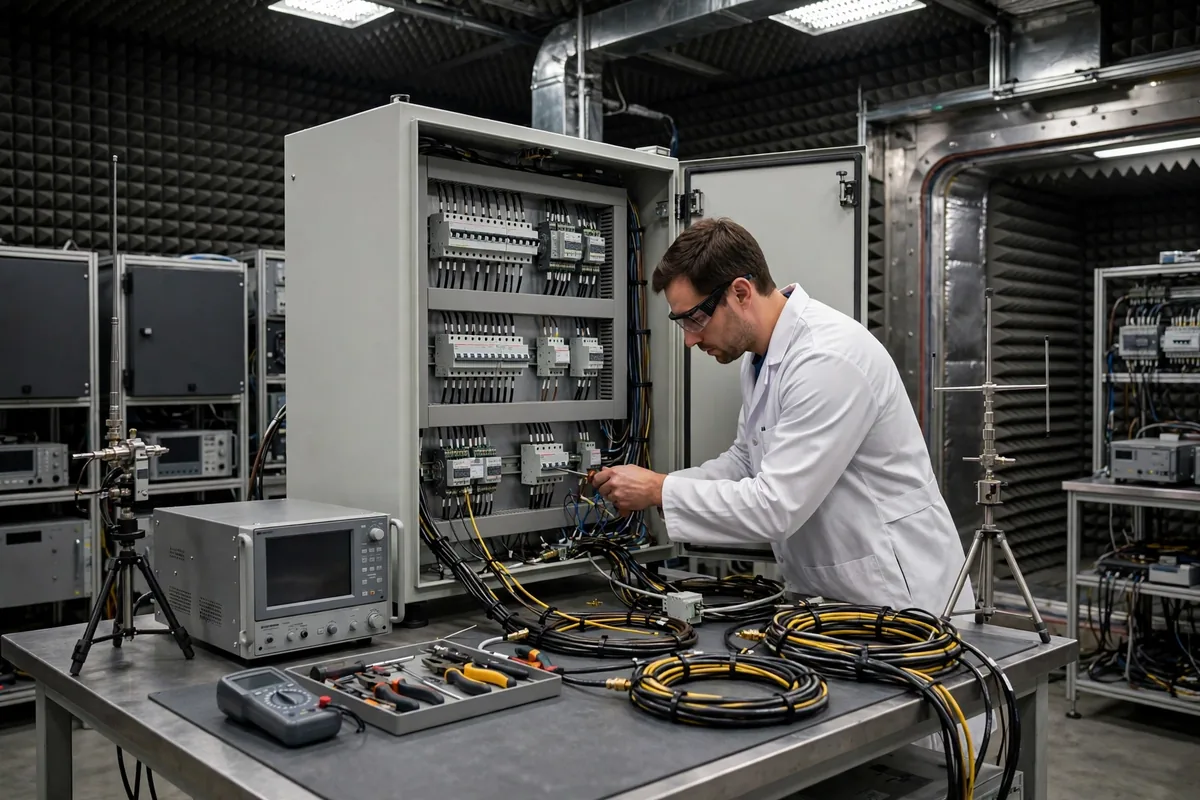
Pre-testing is an often underestimated stage of AGV certification. It is not the formal test, and it earns no certificate. Its only job is to expose the gap between a design and the standard before the formal submission, so the team can close that gap on its own schedule. The usual approach is to work through the formal test item list one by one, verify each safety function, and ask the lab for a gap analysis highlighting which items carry the highest risk.
The company mentioned earlier found its emergency-stop response issue at exactly this stage. The fix touched software parameters and wiring, not mechanical structure, so both cost and time stayed manageable. Had the same problem surfaced only during formal testing, the redesign, the retest fee, and the wait for a new lab slot would have stacked up together, and the bill would have looked entirely different.
Budget-wise, pre-testing typically costs far less than formal testing, but what it buys is not a certificate. It buys certainty: a realistic picture of what problems the formal submission will surface and how much rework they will take. That certainty matters for production planning and for customer commitments. When you promise a delivery date to an overseas customer, being able to certify on time matters far more than any number on the testing quote.
The longer trend: certification is becoming a competitive variable
Over a longer timeline, the tightening of safety requirements for mobile robots in North America looks like a structural trend rather than a one-off policy swing. As AGVs move into more warehouses where people and machines share the floor, safety-related test items will only get more detailed, not less. That shifts what certification means commercially: it is ceasing to be a mere compliance hurdle and becoming a variable that separates suppliers. Companies that can certify quickly get onto customer shortlists faster. Companies that need repeated attempts fall systematically half a beat behind on delivery rhythm.
So the question worth sitting with may not be what one AGV's certification costs, but where certification sits inside a company's product development process. If it only appears as a final gate before mass production, every standards update becomes a fire drill. If it exists as an input condition from the design stage onward, certification stops being an extra burden and becomes part of the product itself. That placement decision, more than any single testing quote, is what will set the pace of a company's overseas expansion. By Dr. Chen, Supply Chain Researcher