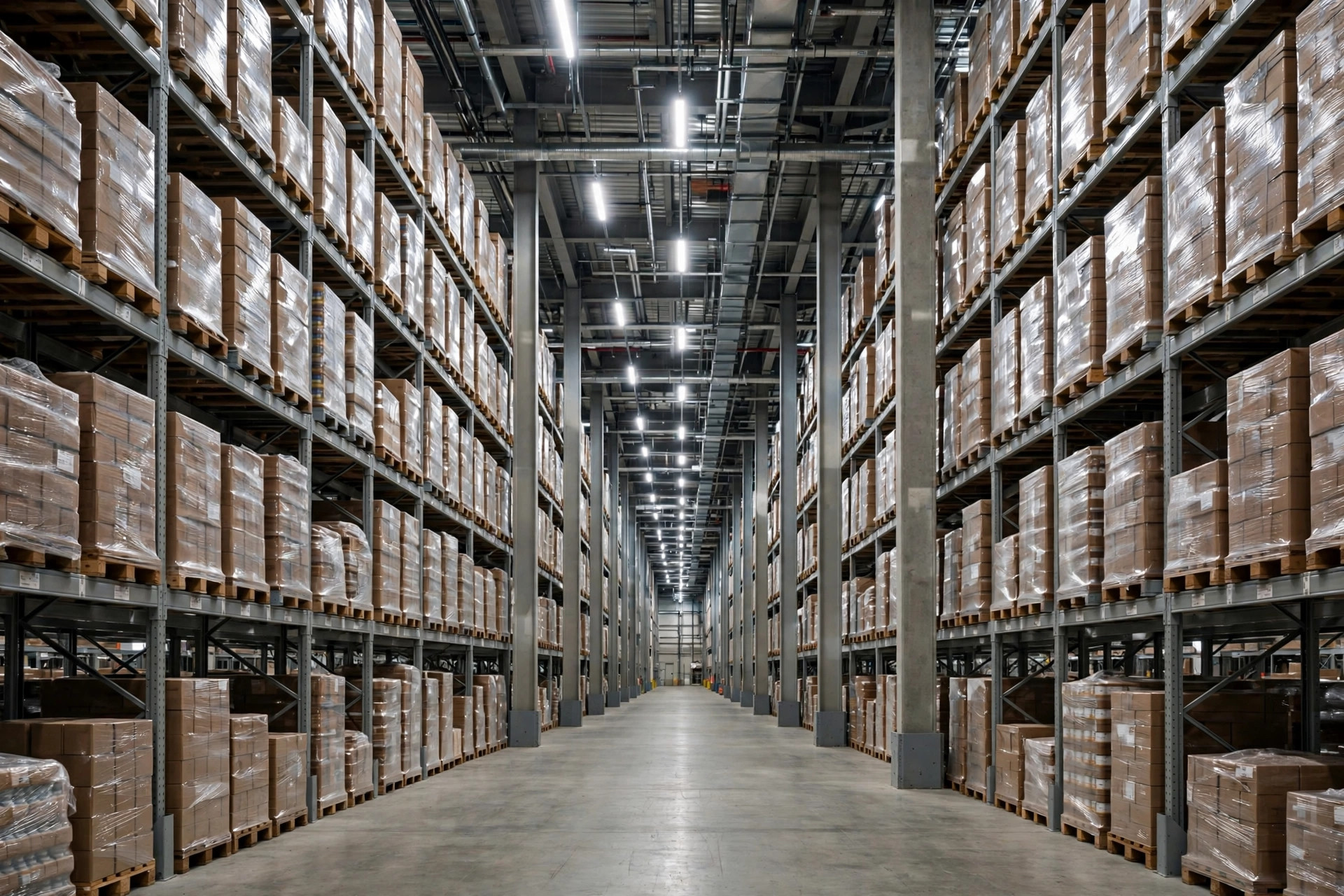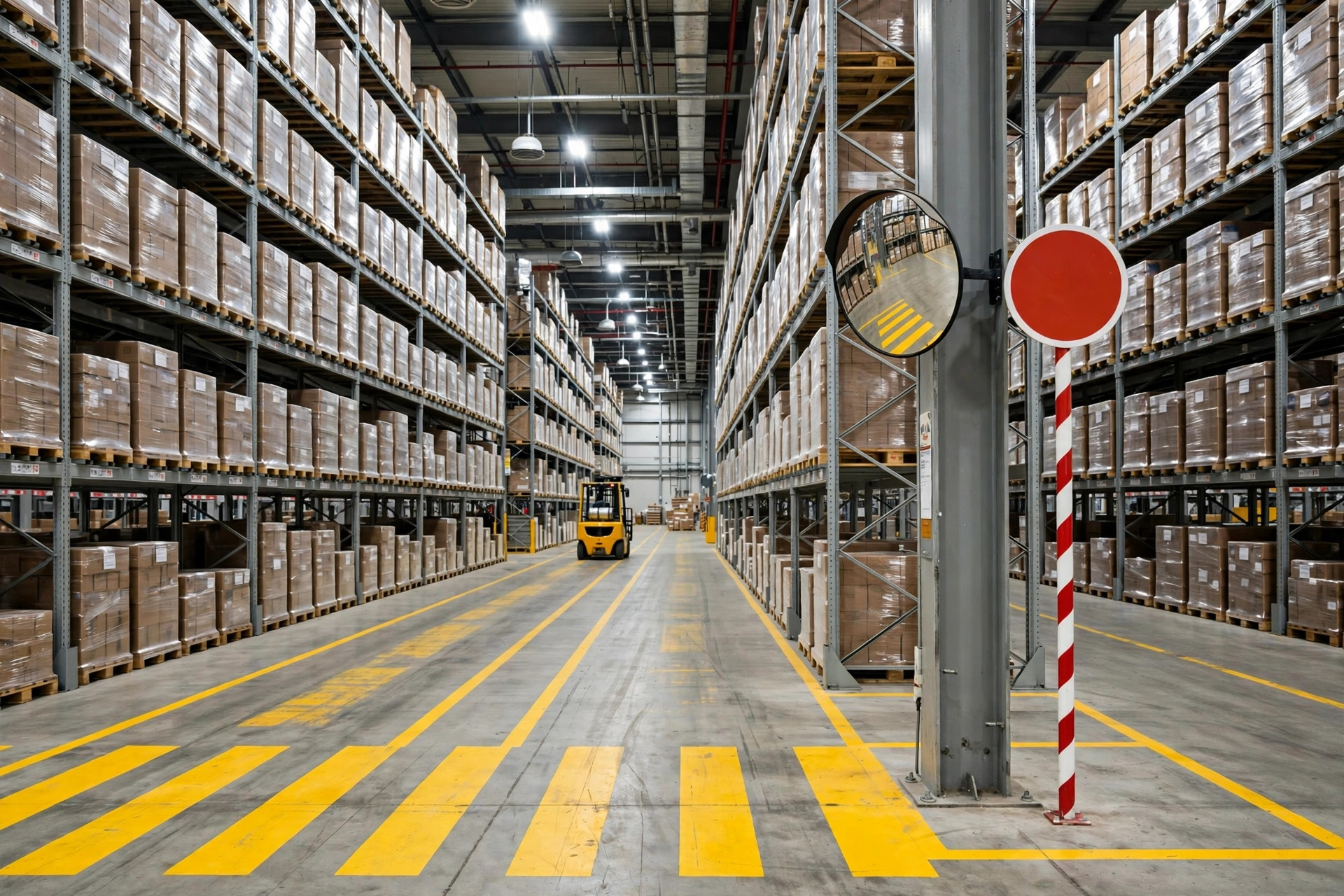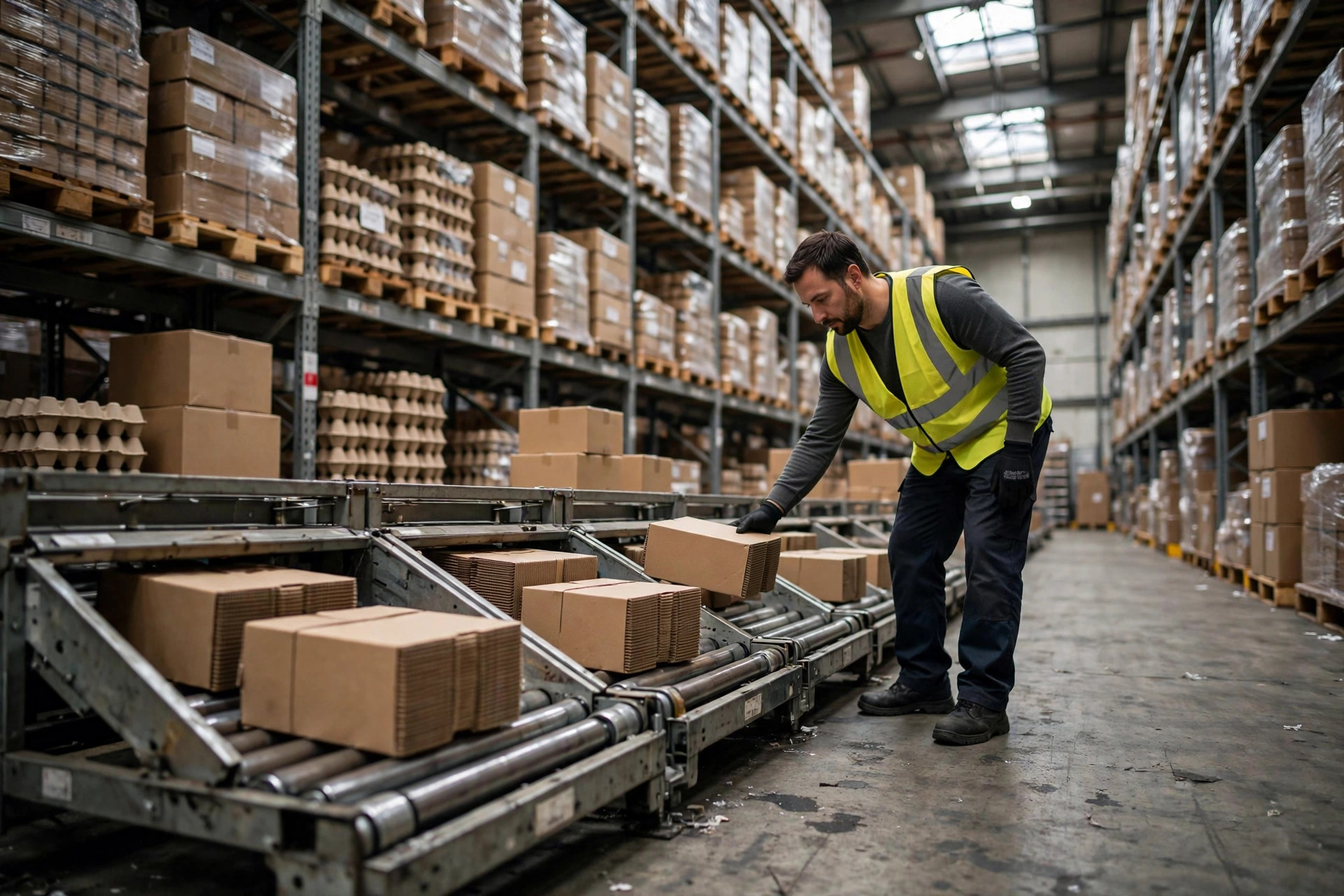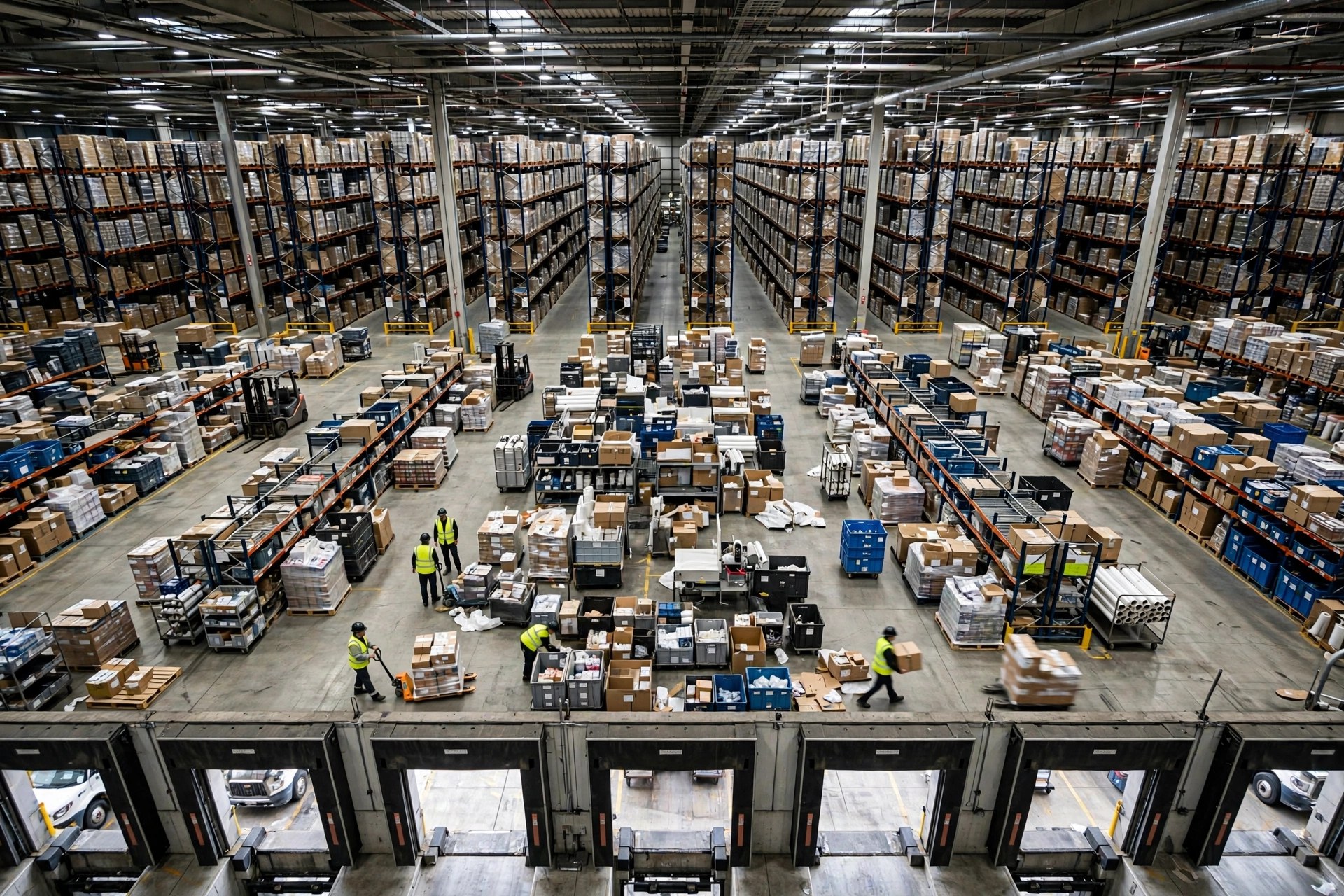
6:40 AM. Last Monday before peak season, and our ABC zoning was failing in real time. I'm standing by the dock door watching Xiao Wang push his pick cart back from the deepest aisle — third trip this morning.
"Boss, 12 lines on this order. Took me almost 20 minutes."
I glance at his pick list: shampoo, paper towels, laundry detergent. All of them move hundreds of lines a day. And where do they live? Zone G — the farthest corner from the dock. Real talk: that's not a people problem. That's a zoning problem.
ABC Zoning Sorts by Touches, Not by Price
Here's where most warehouses get ABC analysis wrong on step one: they sort by sales value. Expensive stuff becomes A, cheap stuff becomes C.
Not in our building. We pull three months of outbound data and look at exactly one metric — pick lines per SKU. The SKUs with the most lines are A. Even if the bottle sells for two bucks. Paper towels, shampoo, bottled water — the "cheap stuff" is the real A-class. That $300 coffee machine that ships three units a month? That's C. It can live in the back.
The rule I drill into every new hire: ABC sorts movement, not money. What moves most, lives closest.
Three Moves That Fixed Our ABC Zoning
Move one, we went by gut. Shoved the "looks popular" SKUs toward the dock. The two aisles by the dock turned into rush hour — forklifts and pick carts fighting for the same lane. Throughput went down, not up.
Move two, we got smart. IT exported three months of pick-line data. Turns out 180 SKUs drove 65% of all pick lines — that's our A-class. We re-slotted by that list: all A-class into two aisles within 30 meters of the dock, ground level and waist level, the golden zone you can reach without stretching or bending. B in the middle. C in the back and up high.
Move three, we fixed something we'd missed: heavy goods. Brake pads, motor oil — 20-plus kilos a case. By "C goes deep" logic they'd been living in the far corner. Our forklift driver had words: "80 extra meters per trip, 40 trips a day — you paying for the diesel?" New rule: heavy A-class SKUs skip the rack entirely. They live on floor pallet positions right by the dock, full-pallet in and out. Only light A-class smalls go to waist-level pick faces.

After the third move we measured it: a mixed 12-line order went from about 380 steps of walking to about 260. That's our building's number — don't copy it blindly — but the direction is universal. Shorter walk, faster order.
What We Run Now: One Zoning Logic Table
Every new SKU gets run through this table before it gets a home:
| Zone | Profile | Location | Rack Level | Pick Method |
|---|---|---|---|---|
| A fast-mover | Top 15% of SKUs by monthly pick lines, light smalls | Within 30 m of dock | Ground + waist level | Case/each picking, frequent replenishment |
| A heavy | Heavy/bulky items within A-class | Floor pallet spots nearest the dock | Floor only | Full pallet/case, direct forklift access |
| B standard | Medium movers | Middle aisles | All levels | Standard picking |
| C deep storage | Slow, long tail | Back of building + upper levels | Upper levels | Case picking, replenish forward to B |
| C special | High value / regulated | Secured cage area | As needed | Dedicated picker |
A trainee asked me once: how is this different from location coding? I told him: location codes are street addresses — once they're in the WMS, you don't touch them. Zoning is school-district policy. The policy can change, and it should.
Zoning and Location Coding Are Two Different Things
This is where a lot of operations get tangled. The location code (A-01-03 and friends) is an address system baked into the WMS — change it and you're doing a full-wall inventory. ABC zoning is a management policy: which category lives in which part of the building. This quarter's answer doesn't have to match next quarter's.
Our deal: the coding system stays rock solid. The zoning policy gets reviewed every quarter. IT re-runs the numbers, and we only move the SKUs that got promoted or demoted. Four small moves a year beats one giant move every three years — and the crew doesn't complain.
Peak Season Changes Your ABCs, So the Zones Must Move Too
Last October, space heaters were solid C-class, living in the back. Then temperatures dropped in November and overnight they became A-class, and pickers were running marathons for them. Lesson learned. Now we do "pre-promotion" every September and March: seasonal SKUs get staged. Heaters move to Zone B in September as a staging play; once November data confirms it, straight into A.
Works in reverse too. Christmas gift-box SKUs get evicted from Zone A in January, no exceptions. Every day they squat on the best real estate in the building, they're stealing efficiency from the true A-class. Zone A is the most expensive land you own. One wrong tenant is pure waste.
The Counterintuitive Part
Here's the one that surprises people: the A zone shouldn't be as close to the dock as physically possible.
On our second move, we crammed all 180 A-class SKUs into the two dock-adjacent aisles. Morning shift turned into gridlock. So we split A into two waves — one by the dock, one in the second row of aisles — with a 4-meter main travel lane between them as a buffer. A few extra steps of walking. Zero congestion since.
Zoning solves average distance. Travel-lane design solves peak congestion. If you only optimize the average and ignore the peak, the prettiest zoning plan in the world still blows up in November.
So here's my homework for you: pull your last three months of pick-line data. Find your top 15% of SKUs. Now go look at where they actually live. If half of them are in the back, your efficiency gains for this quarter are sitting right there in that table.
By Chen Feng, Warehouse Operations Manager