Last November, I sat at the dock of a small-appliance warehouse in Fontana for 100 minutes doing nothing — all because their hot-SKU slotting was a mess, with one pick slot choked by the replenishment forklift.
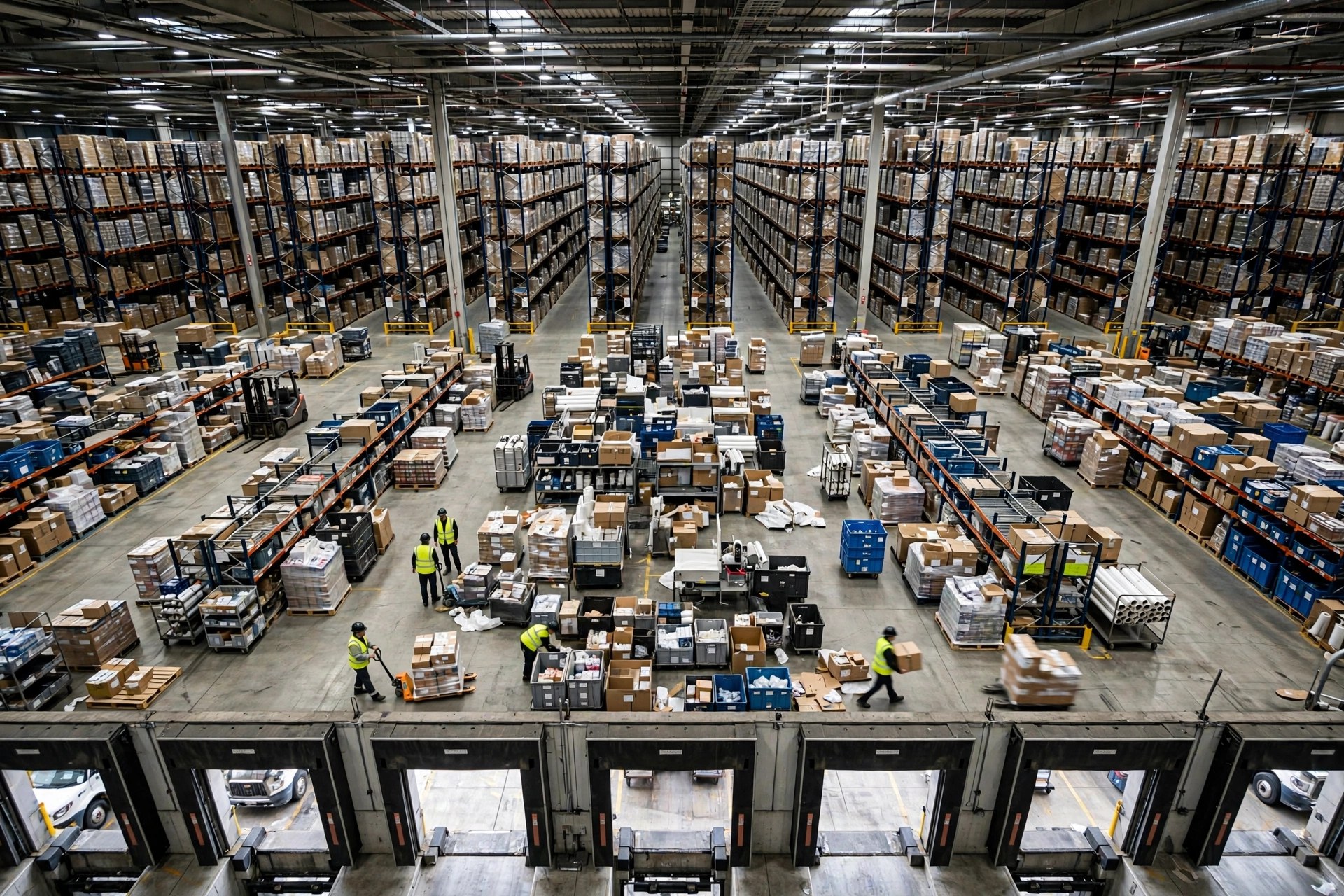
My appointment was 10 a.m. loading; I got there at 9:30. By 10:30 nothing had moved, and all the warehouse would say was "picking isn't done." With nothing better to do, I wandered over to the pick area. Quite a sight: a replenishment forklift parked sideways in the middle of a pick aisle, two pickers standing around with their carts, nobody moving. Their hot item was a desktop humidifier — over two thousand units a day the week before Thanksgiving — and its pick slot was exactly one pallet position. That morning the pickers had run it dry three times, and each time the forklift had to drag a full pallet in from the back. The aisle was narrow to begin with; the moment the forklift rolled in, the whole aisle locked up and every order behind it stalled.
After all these years on the road, let me tell you: most of the time wasted at the dock isn't drivers dragging their feet — it's the warehouse choking on itself. One SKU in one pick slot works fine when volume trickles. But when a hot SKU spikes, that single slot becomes the narrowest gate in the building. Pickers wait on replenishment, the forklift blocks the pick aisle, the blocked aisle backs up every wave behind it, and drivers sit at the dock watching their appointment windows burn. That day there were two trucks ahead of me, and all three of us were cursing.
Here's what that tells you. A hot SKU isn't scary because it sells a lot — it's scary because its slotting wasn't planned out. A SKU's inventory needs to live in two places: up front, "enough for today," and in the back, "full pallets on standby." The industry calls it forward pick plus bulk reserve. Let me put it in plain words.
How Many Slots Does One SKU Need: The Multi-Slot Setup for Hot SKUs
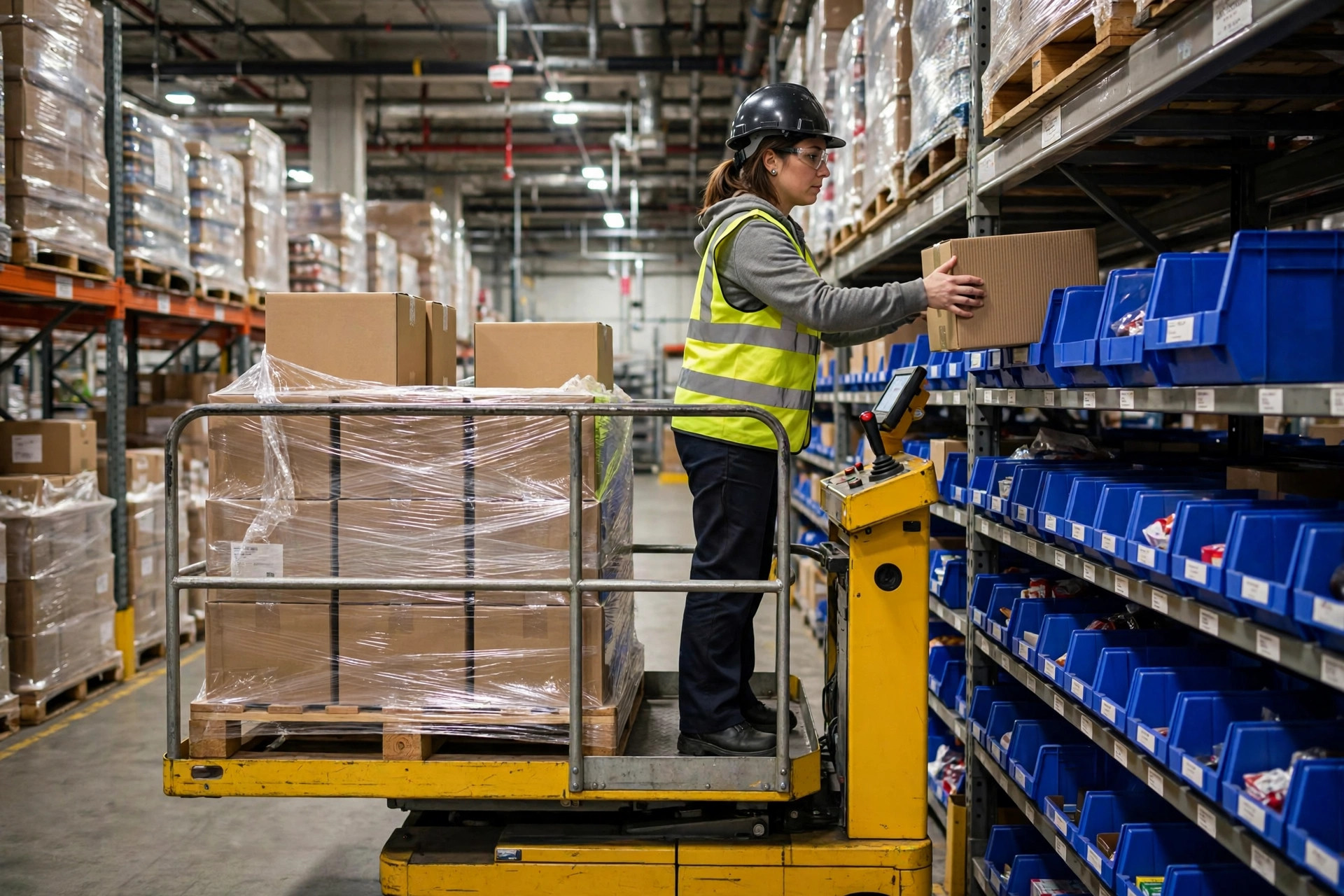
The forward pick slot sits in the handiest spot in the pick zone and holds half a day to a day of stock. Think of it this way: on a long haul, you keep two bottles of water and a snack in the cab — enough for today. Nobody stuffs a whole case of water into the cab. The smaller and handier the forward slot, the less the picker walks and reaches, even picking it hundreds of times a day.
The bulk reserve slot is full pallets stacked on high racks in the back. Being far from the pick zone doesn't matter — only the forklift goes there, a few trips a day, out of everyone's way.
How do you size the split? One rule of thumb: the forward slot's size isn't about how much space you have — it's about how many times a day you plan to replenish.
Forward slot capacity = daily pick volume ÷ replenishments per day, plus 20% buffer.
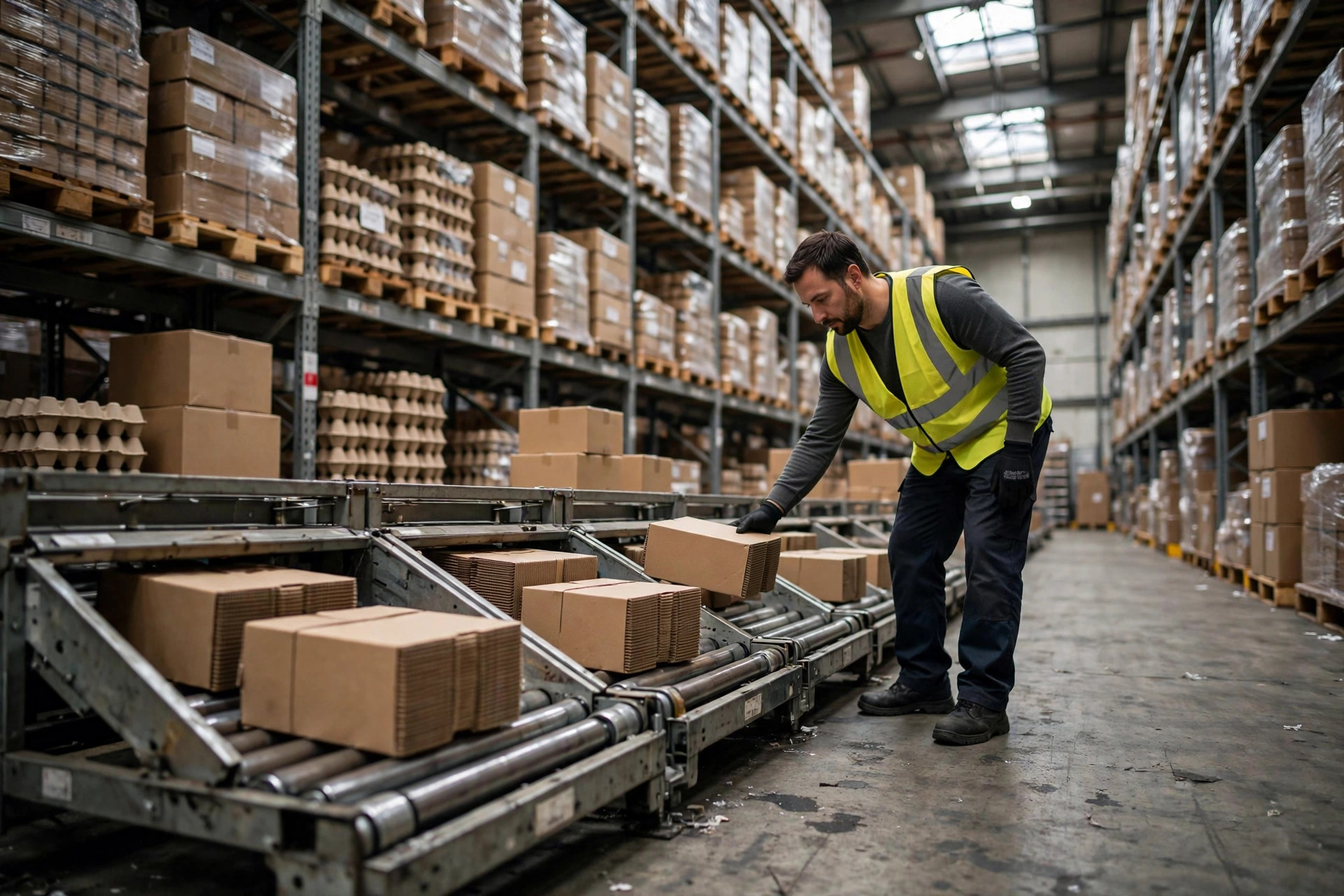
A concrete example: a hot SKU moves 2,000 cases a day. The forward slot is flow rack, 50 cases per lane. You plan 4 replenishments a day, so each one must drop 500 cases — the forward slot needs to hold 500 plus buffer. Twelve lanes, 600 cases of capacity, done. The forklift carries two pallets per trip, 100 cases per pallet, so one replenishment is 3 trips. That's the whole math.
Timing Replenishment for Hot SKUs: The Part That Actually Matters
Space alone won't save you. Replenishment has to land outside peak picking hours — that's the sentence that matters most.
Do the math with me: a forklift pulling one pallet from the back to the forward slot takes 3 minutes to grab it, 2 minutes to drive, 3 minutes to drop it — 8 minutes a trip. Three trips per replenishment, 25 minutes, done. Those 25 minutes must land in the gaps — lunch break, shift change — topping up the slot while nobody's looking. Never replenish during the picking rush. Replenishing at rush hour is using your own forklift to blockade your own pick aisle. That's exactly how the Fontana warehouse died.
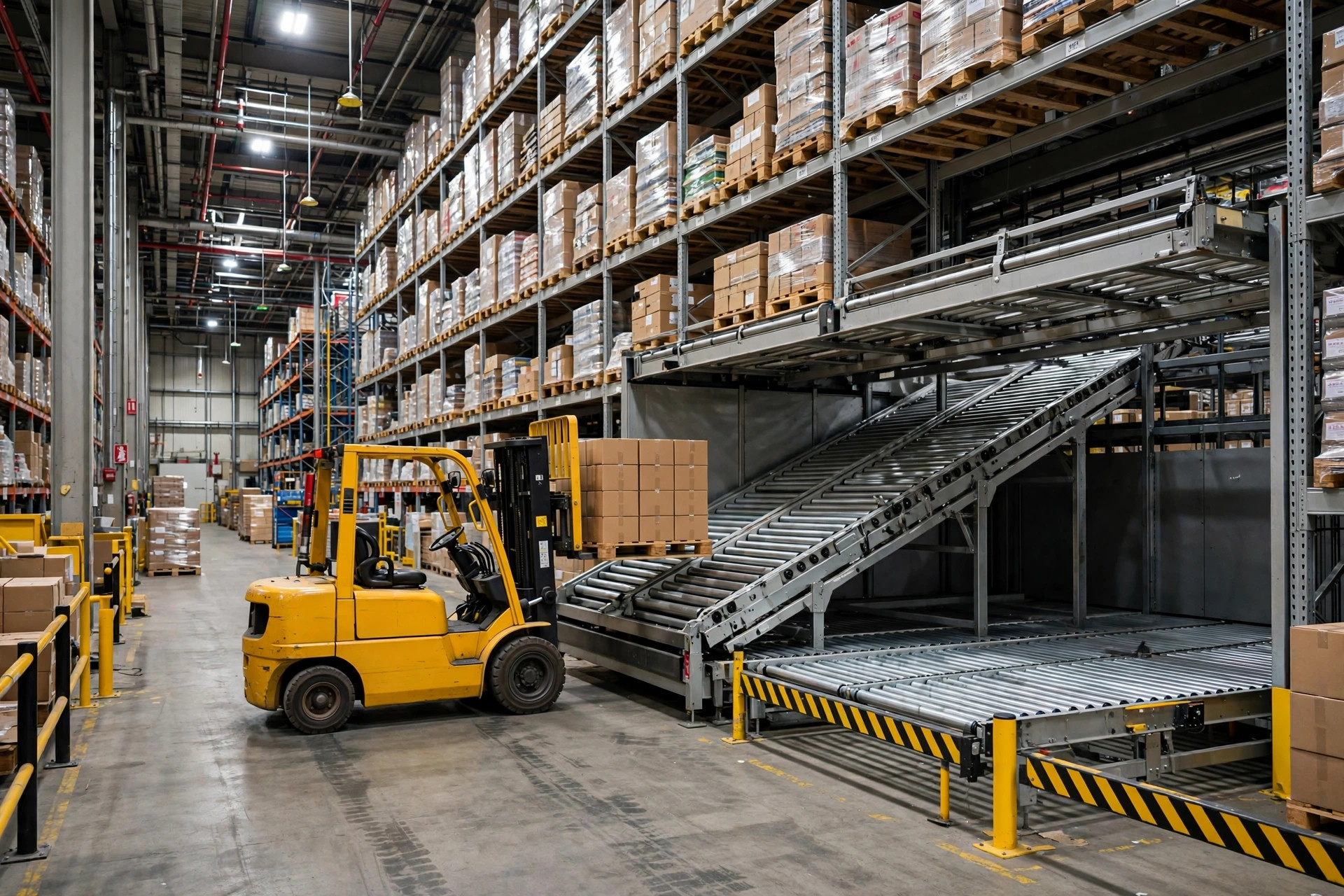
This March I saw the good version in Riverside. Same kind of hot SKU: 6 flow-rack lanes up front holding about half a day's worth, 10 full pallets on high racks in the back, replenishment locked in at noon and 4 p.m. I arrived at 2 p.m. and was loaded and gone in half an hour. The warehouse manager told me that since they set it up this way, picking has never starved for stock, the forklift no longer weaves through the pick aisles, and dock appointment on-time rates jumped. Every minute a driver saves was earned by the warehouse itself.
The Counterintuitive Part: More Slots Can Slow a Hot SKU Down
One last thing that surprises people: more slots isn't always better — especially for hot SKUs.
I've seen warehouses split a hot SKU across four scattered little pick slots, thinking "more is merrier." What actually happens? Pickers can't remember which slot has stock. The system points to slot A, slot A is empty, the real stock is in slot C — two extra trips hunting for it, and the pick path is a mess. Four small slots combined don't beat one properly sized forward slot. A hot SKU wants one big-enough forward slot, not several small ones. Scatter the slots and the time wasted hunting dwarfs whatever replenishment time you saved. Pure self-sabotage.
There's an old saying: before the troops move, the grain and fodder go first. For a hot SKU, slotting is the grain and fodder — get the forward and reserve split right and the replenishment rhythm down before peak season, not after the forklift has blocked the aisle and the trucks have blocked the dock.
By Shifu Zhao, Trucking Veteran (15 yrs)