Should you integrate your YMS with your TMS? Here's my verdict up front: yes — but only if you're prepared to pay three prices. Money. Time. And rewriting your appointment rules from scratch. Skip any one of the three, and the project will most likely die on the vine.
Two sides to every integration story. The upside is obvious: the system knows where every truck is, late arrivals get rebooked automatically, and the gate guard stops living on the phone. The cost side? Your vendor's sales rep won't volunteer that part. I will.
The Real Price of YMS–TMS Integration
I've seen too many owners treat integration like buying a cable — plug two systems together and done. The interface is the cheapest part. The real costs come in three flavors.
First, master data alignment. Your TMS says "ABC Logistics"; the gate log says "ABC trucking." License plates with dashes in one system, without in the other. Door 12 versus "door-12." Feed misaligned data into an integration and you get garbage at machine speed. Cleaning that up at a mid-size facility takes three to four weeks, easy.
Second, rewriting the appointment rules. This is the big one, and the most underestimated. Everything your gate crew does on instinct — waving in the driver they know, prioritizing the hot load — has to become explicit, written rules: how late is "late"? Can an early truck jump the line? Where does a bumped appointment go? If you can't write the rules down, the system has nothing to execute.
Third, the people. Your gate guards and dispatchers have run on judgment for a decade. An auto-scheduling system feels like a threat to their jobs. Ignore that, and week one of go-live will produce a creative inventory of "system doesn't work" complaints. The fix isn't a memo — it's involving them in writing the rules. People don't sabotage rules they helped write.
Costs covered. Now the payoff — because I'm not just here to rain on parades.
The Same Disease at Every Gate
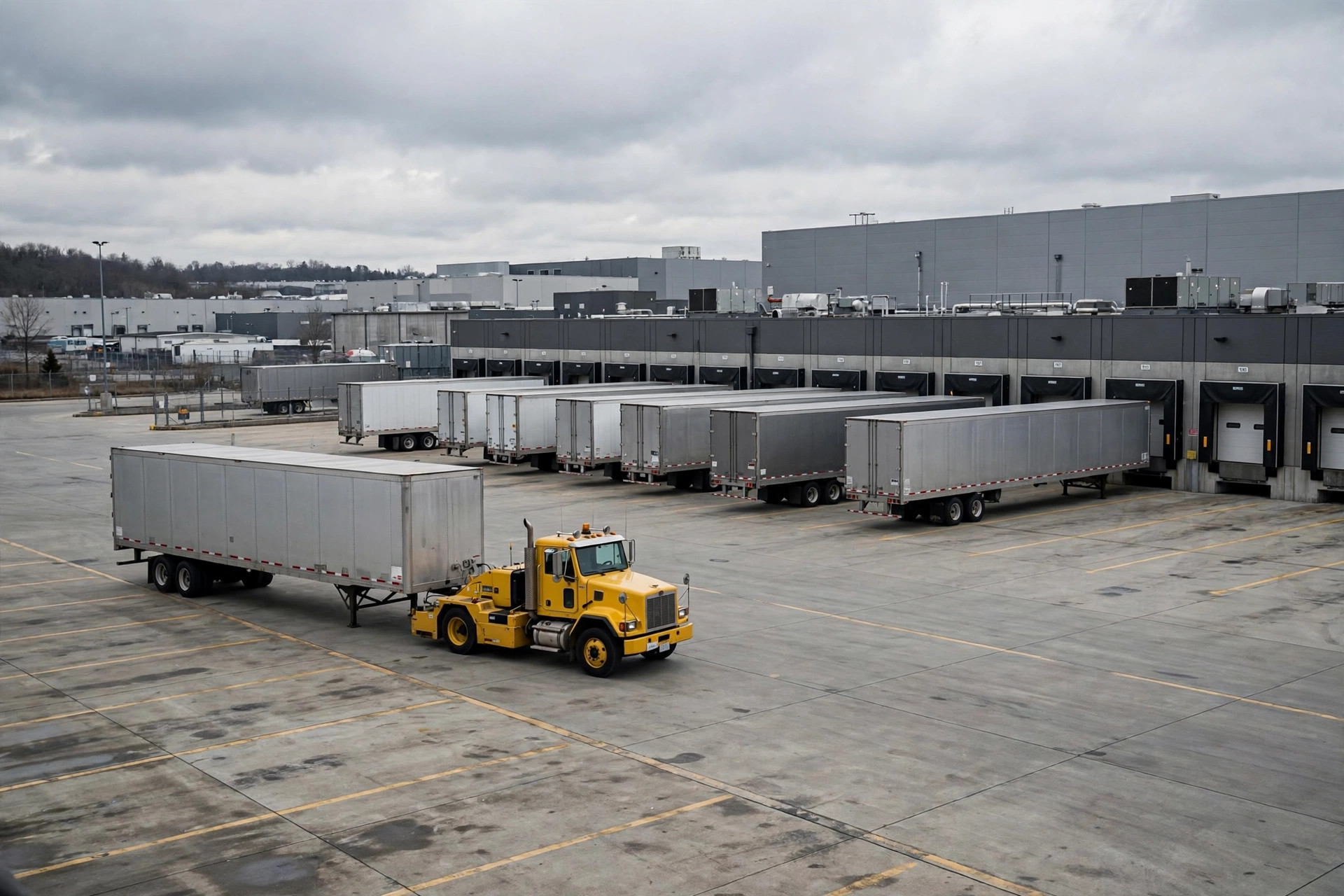
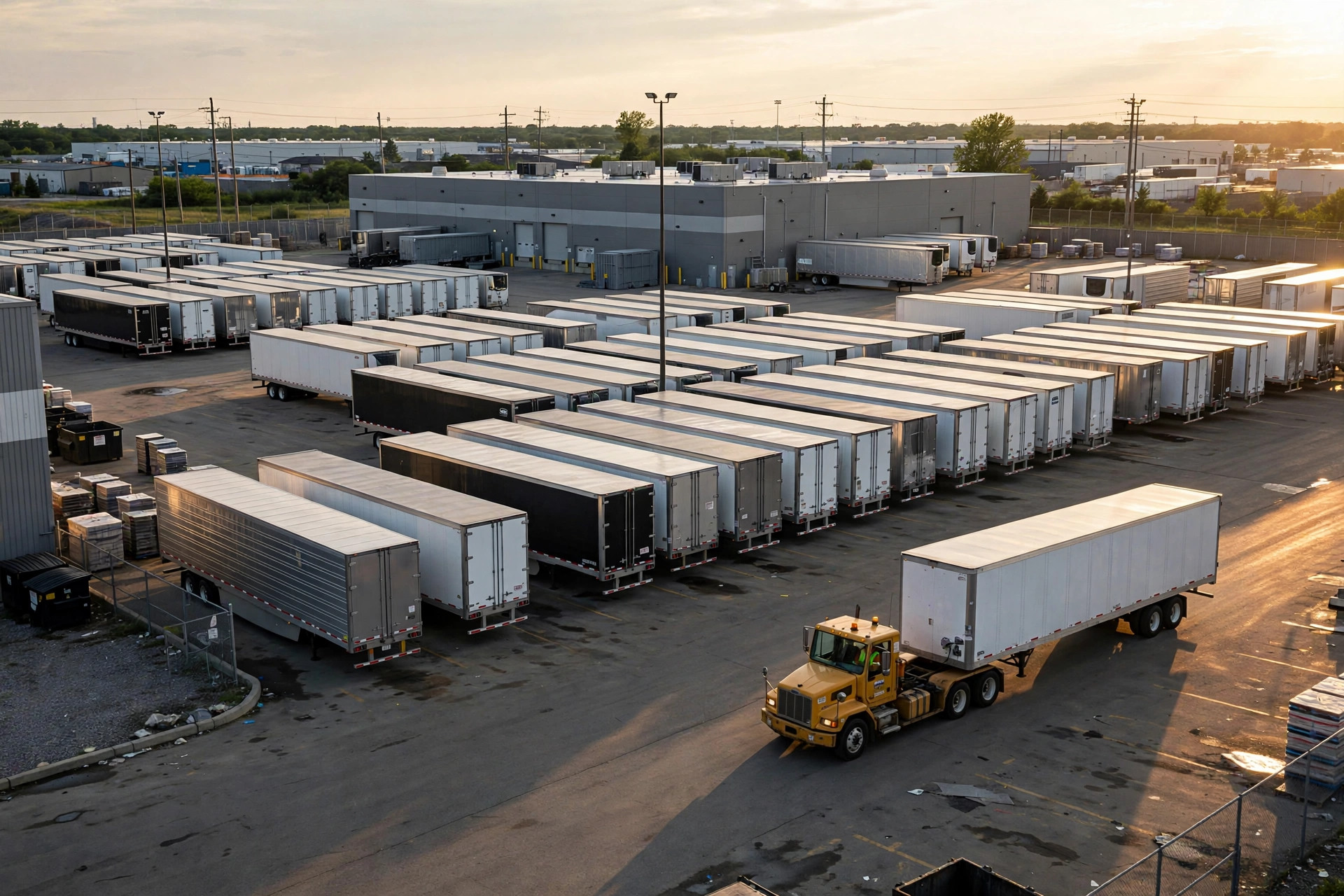
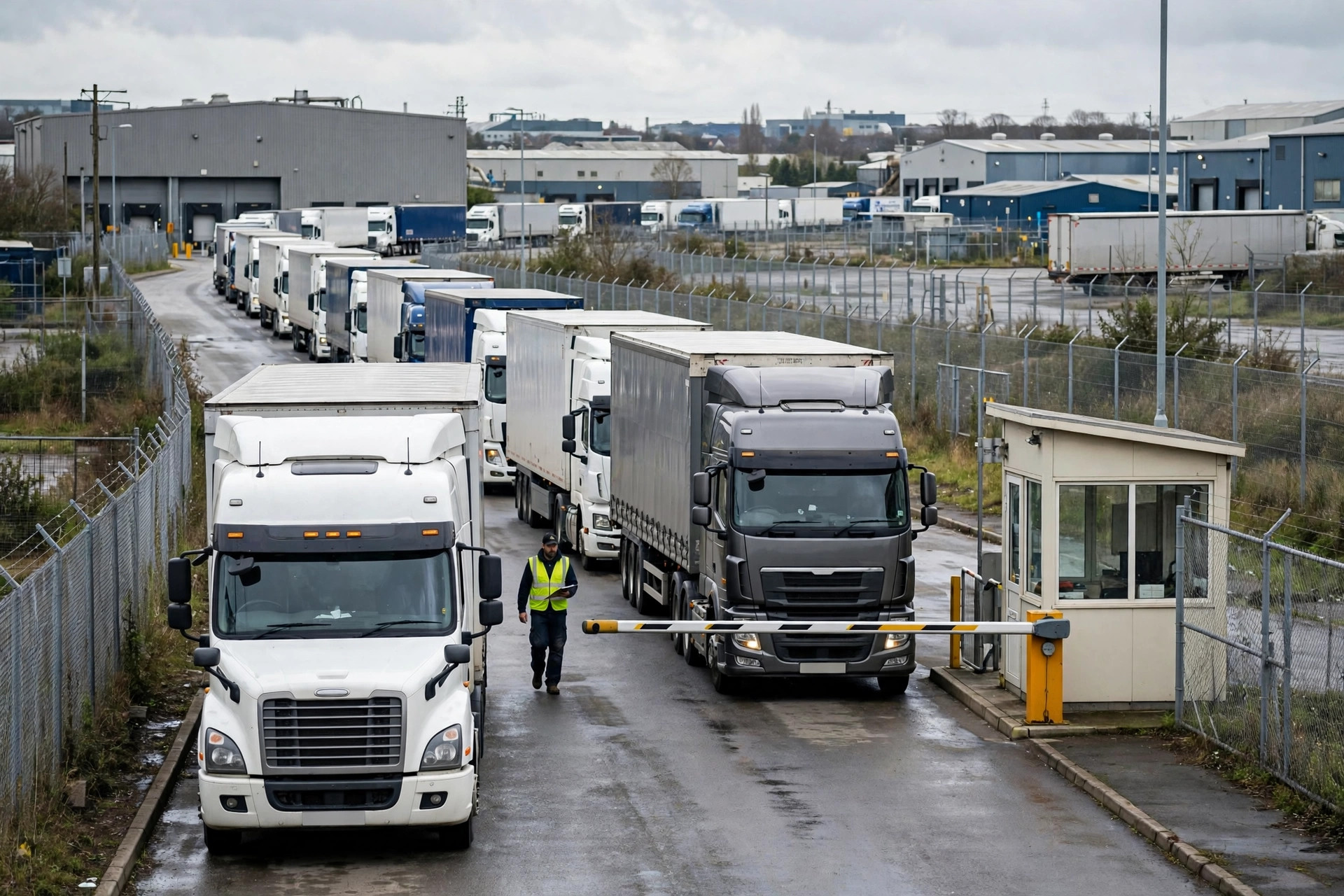
- A 300,000-square-foot distribution center near Ontario, California. I arrived at 3 p.m. and counted twelve trucks lined up on the access road outside the gate. The worst day I witnessed: seventeen, stretching half a mile down the road. Appointments lived in the guard's Excel spreadsheet. The ETAs in the TMS lived in a different universe.
Drivers arrived and waited — two to three hours was routine. The impatient ones turned around and left; the no-show rate hovered around twenty percent. The dispatcher made 200-plus calls a day, and every call was some version of "where's the truck" or "is a door free." The facility manager told me he lost several days a month to driver complaints and detention-fee disputes.
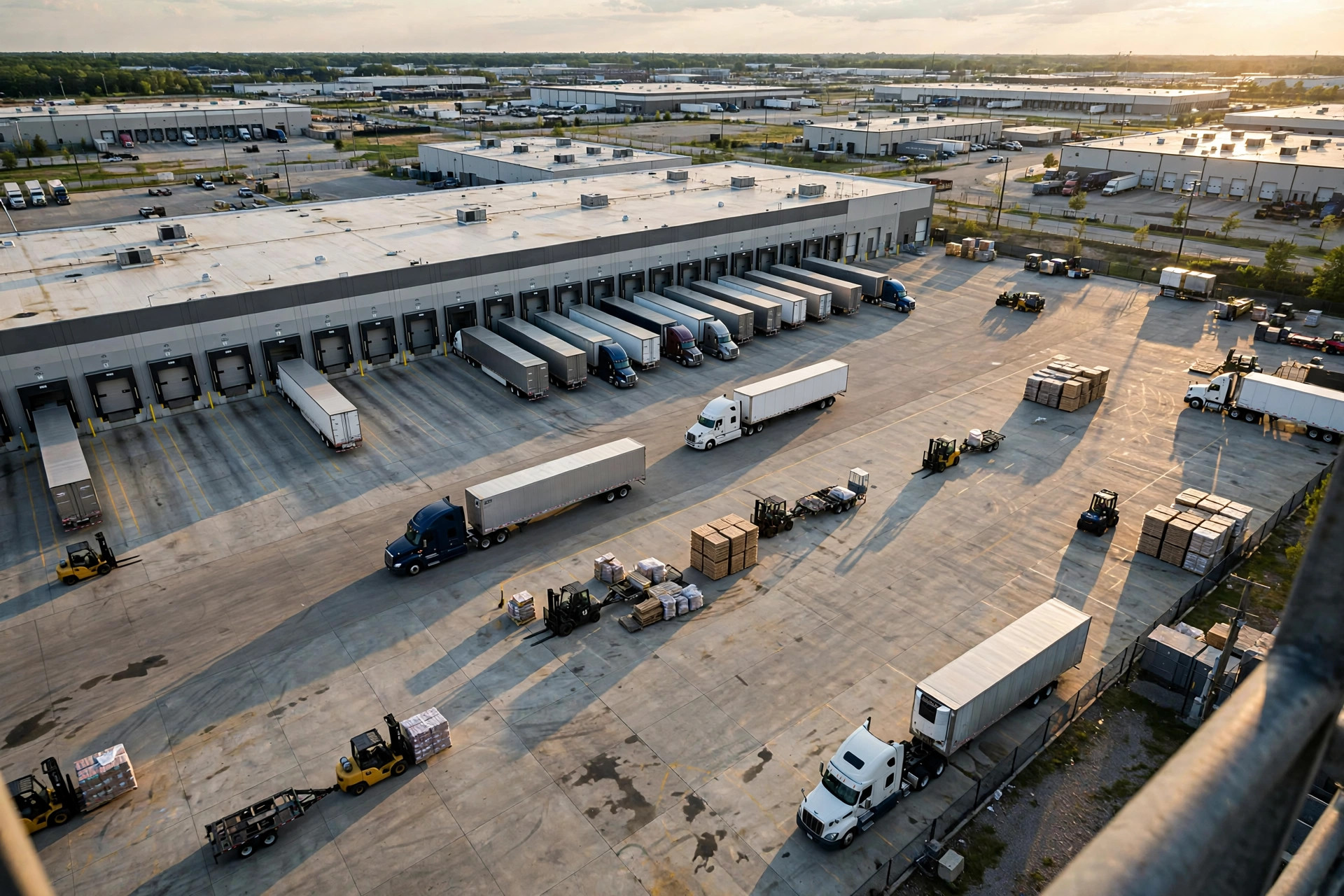
- A facility in New Jersey, same industry. YMS connected to TMS. Real-time location data flowed in, and the system knew a full hour ahead that a truck would miss its window — it slid that appointment back one slot and backfilled the freed window with a truck that had arrived early. Late and early arrivals stopped being phone calls. The system just handled it. Three months in, the gate line was essentially gone, and the dispatcher's call volume had dropped by roughly eighty percent. Carrier on-time performance became measurable per carrier for the first time, which gave procurement real leverage in rate negotiations.
Same disease, two treatments. The difference wasn't the price of the software. It was whether the data flowed and the rules were written.
I use this comparison in every talk I give. Someone always asks: does a small facility even need this? Bluntly — the smaller the yard, the less it can afford a gate line. A 40-door facility with five trucks backed up still has 35 doors turning. An 8-door yard with three trucks stuck is paralyzed. Small size isn't a reason to skip it; it's a reason to need it more.
Integrated Systems, Unchanged Rules: Zero Gain
Here's the counterintuitive part, and I know some people won't like hearing it: getting YMS and TMS technically integrated is only half the job. The other half is the appointment rules. If the rules don't make it into the system, the integration is decoration.
Real example. A facility spent serious money wiring the two systems together. ETAs streamed into the YMS beautifully. But the appointment rules never changed: the guard still waved through whoever looked urgent, overriding the system's schedule with a hand gesture. So the system auto-rescheduled all day, and the guard manually overrode all day. Three months later everyone reached an unspoken agreement — the system does its thing, and the real work still runs on shouting. The integration money might as well have been set on fire.
Bluntly: software executes rules; it doesn't invent them. If you can't translate tribal knowledge into machine-readable language — "30 minutes late means auto-bump, early arrivals wait in the holding lane, three no-shows in a month drops your priority" — then auto-rescheduling is just auto-chaos.
My advice: before you buy anything, write the appointment rules down. Print them. Tape them to the wall. Let everyone argue until there's consensus, then put that into the system. Skip this step and every step after it is a trap.
Do the Math, Then Land It in Three Steps
This table is built from the facilities I've seen — order-of-magnitude numbers, not a census, but the magnitudes are honest:
| Metric | Siloed (before) | YMS+TMS integrated (after) |
|---|---|---|
| Avg driver wait | 2–3 hours | Under 30 minutes |
| Dock utilization | ~60% | 80%+ |
| No-show rate | ~20% | Single digits |
| Rescheduling | Phone calls, one by one | Automatic |
| Dispatcher call volume | 100+ calls/day | Near zero |
Read it carefully. Integration doesn't save you "efficiency" — it saves hours of waiting, real dock capacity, real headcount. One extra turn per door per day adds up to serious money over a year. Do your own math.
Someone always asks me how to calculate the ROI. Here's a rough cut: one door turning two extra trucks a day is 60 extra moves a month; drivers waiting two fewer hours means detention disputes and complaint-handling time visibly shrink within a quarter. I can't give you exact figures — every facility's rates differ — but the direction is never wrong: what you save is real money, not slide-deck efficiency.
But remember the precondition: the rules have to live in the system. Without that, you get none of the right-hand column.
The landing comes in three steps, in this order:
Step one: master data first. Carriers, plates, door numbers, appointment windows — unified names, unified formats — before any integration work begins. Dirty data in, faster mistakes out.
Step two: rules on the wall. Late thresholds, early-arrival handling, no-show penalties — written down, signed off by everyone. The louder the argument now, the smoother the go-live.
Step three: the auto-reschedule logic. Real-time ETA from the TMS triggers re-slotting in the YMS: appointments honored first, first-come-first-served within slack, late trucks bumped, early trucks backfilled. Once that runs, the guard stops being a dispatcher and becomes an exception handler — dealing with the five percent the system can't.
Steps one and two involve zero code. They decide whether step three is a weapon or wallpaper.
So stop asking "how hard is the integration." Ask yourself this instead: are your appointment rules good enough to write into software? If the answer is no, the integration will just be an expensive ornament.
By Lao Mi, Supply Chain Veteran (20 yrs)