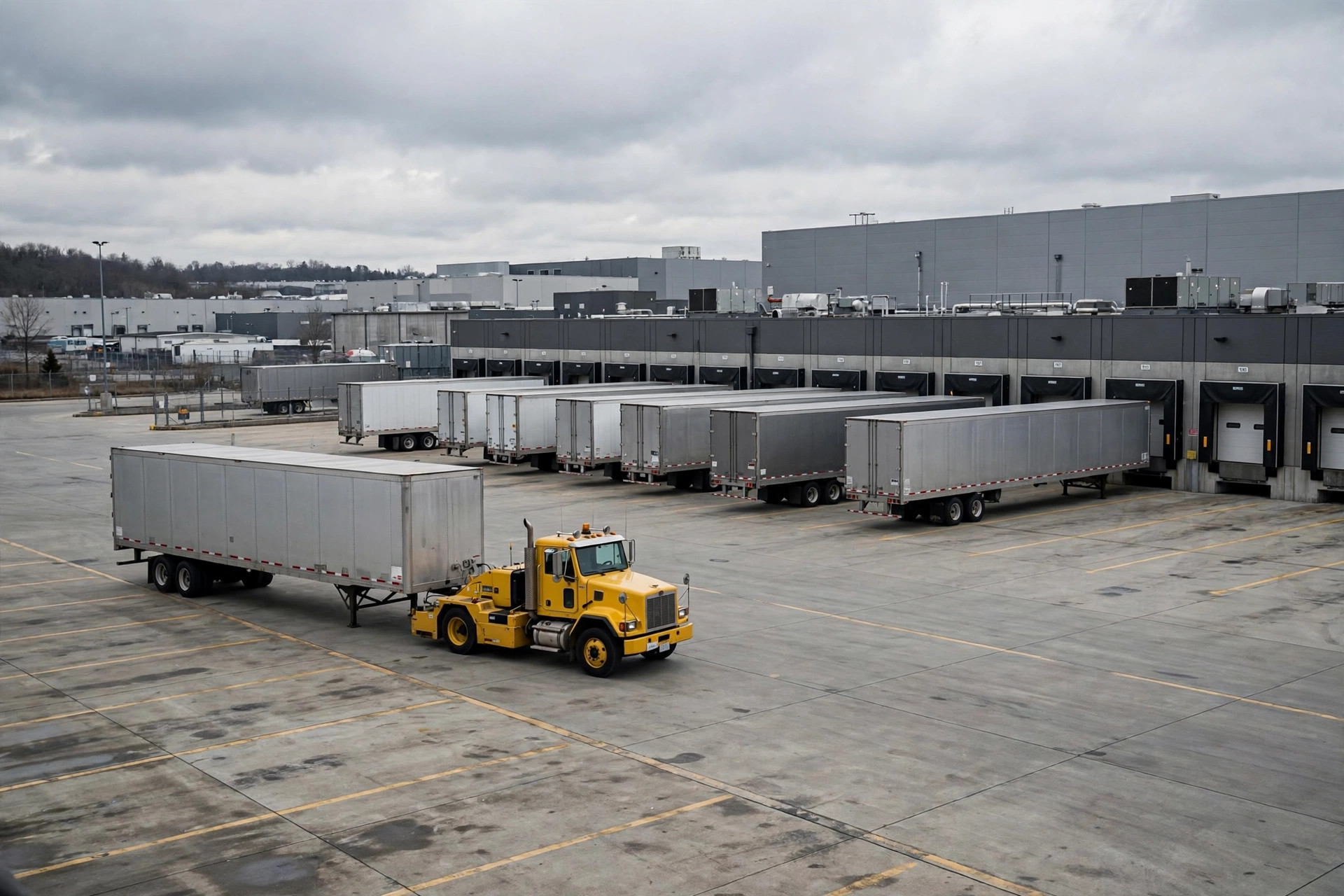
Here's my verdict up front: the standalone YMS vs WMS yard module debate has no universal answer, but it does have a dividing line. I've led 30+ WMS implementations, and nearly every yard-module disaster I've walked into was a client standing on the wrong side of that line.
My rule: score four numbers — dock count, trailer fleet size, whether you have your own yard drivers, and daily gate moves. If three out of four cross the thresholds below, a standalone YMS is worth it. Otherwise, the yard module inside your WMS, plus a tight gate process, is enough — and you'll save a six-figure annual bill.
What the two options actually are (and aren't)
Most selection debates go wrong at step one because people compare feature lists instead of capability boundaries. The yard module bundled into a WMS is warehouse operations extended a few feet outward: it knows a truck has an appointment, which door it's at, and whether loading is done. It's designed around doors and appointments.
A standalone YMS is built on different logic: it's designed around yard resources — trailers, spotter trucks, drivers, parking spots. Its core capability is scheduling, not recording.
| Capability | WMS yard module | Standalone YMS |
|---|---|---|
| Appointments and gate management | Yes, adequate | Yes |
| Real-time trailer location in the yard | Basically no — manual updates | Yes, GPS/gate integration |
| Automatic yard driver task dispatch | No — radio/WhatsApp shout-outs | Yes, priority-based scheduling |
| Trailer dwell time analytics | Basic reports | Multi-dimensional, auto-alerts |
| Empty/loaded parking spot management | Manual | System-assigned and optimized |
| TMS/carrier collaboration | Weak | Strong — carrier portal, self check-in |
See the difference? The WMS module answers "where's the truck, is it here, is it loaded?" A standalone YMS answers "what should this trailer do now, who moves it, and where to?"
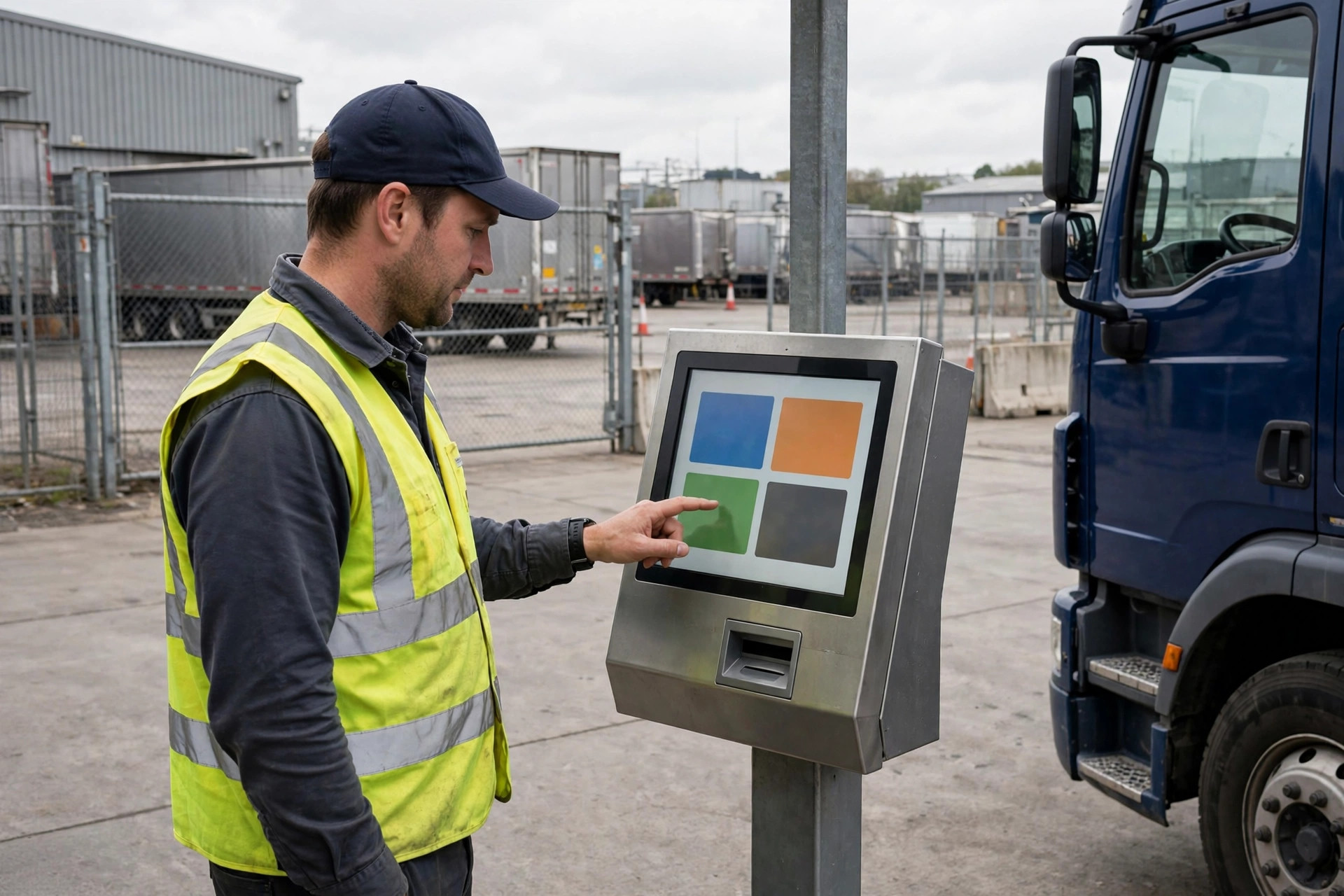
So here's the counterintuitive take: a standalone YMS doesn't sell visibility — it sells dispatch automation. If you're buying one just to see trucks on a screen, half that money is wasted. A WMS module plus a dashboard does that.
The four-number scoring rule for standalone YMS vs WMS yard module
On my go-live-night checklist, there's one page that settles this. Four metrics, each with a threshold:
1. Dock count ≥ 30
Docks are the #1 source of yard complexity. Under 20 doors, one gate guard with a radio can manage. Past 30, door assignment, conflicts, and wait queues become a combinatorial problem no human can schedule well.
2. Trailer fleet ≥ 50 (including drop trailers)
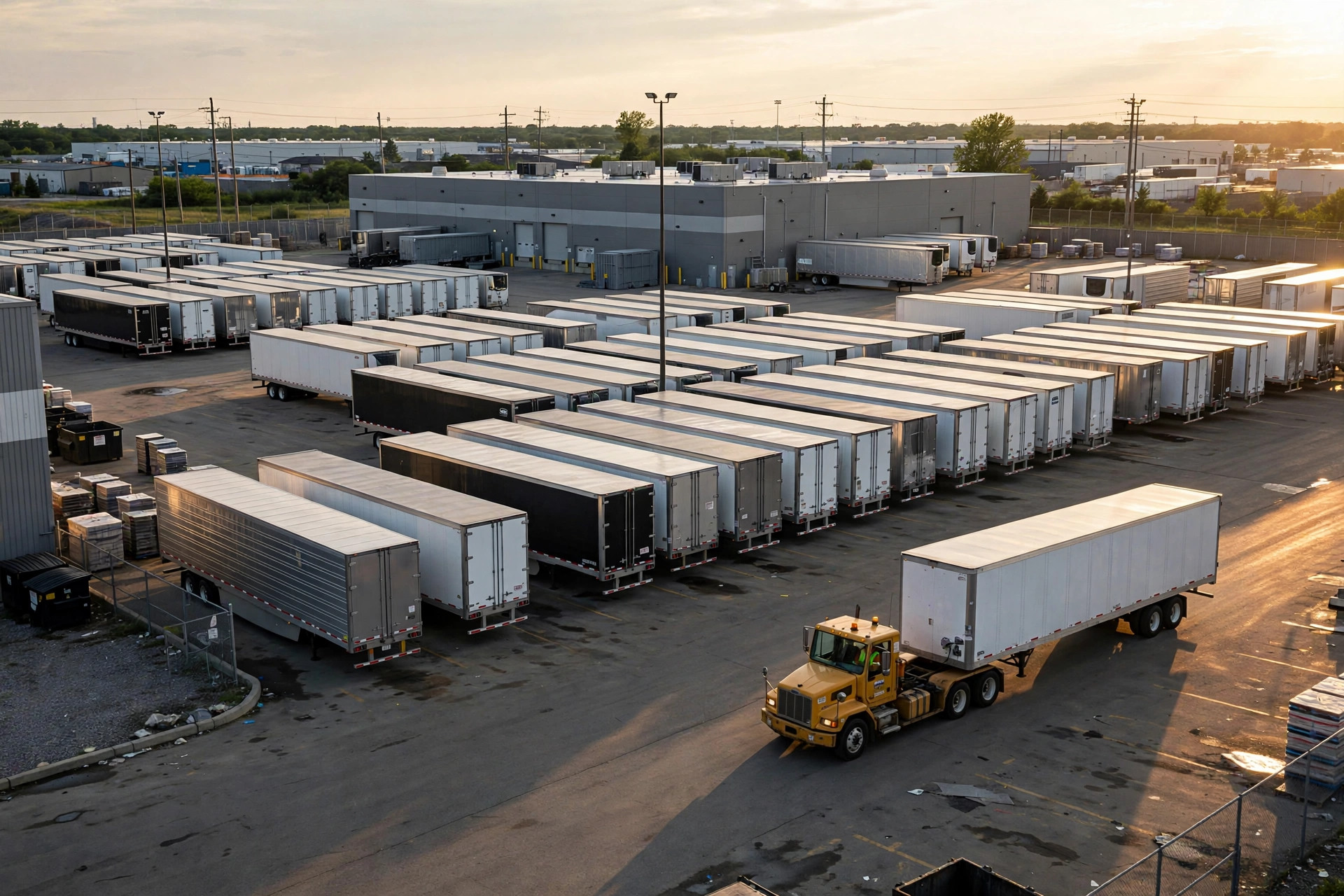
With a small fleet, you can eyeball where everything is. Past 50 trailers, finding them, moving them, and balancing empties becomes a daily burden. Drop trailers are the killer — a driver drops the trailer and leaves, it sits for days, and without a system, lost trailers and duplicate moves are routine.
3. In-house yard drivers, ≥ 3
This is the one that matters most. Yard drivers are the YMS's actuators: the system generates move tasks, and someone has to execute them. If you have no in-house yard team and every move depends on carrier drivers, half the YMS's scheduling power is useless — you can't dispatch someone else's drivers.
4. Daily gate moves ≥ 80
Volume. Under 80 moves a day, that's one truck every ten minutes or so, and the gate rhythm keeps up. Past 80, appointment conflicts, early/late arrivals, and line-jumpers never stop, and manual scheduling breaks down.
Scoring: three or four over threshold → standalone YMS. Two or fewer → WMS yard module.
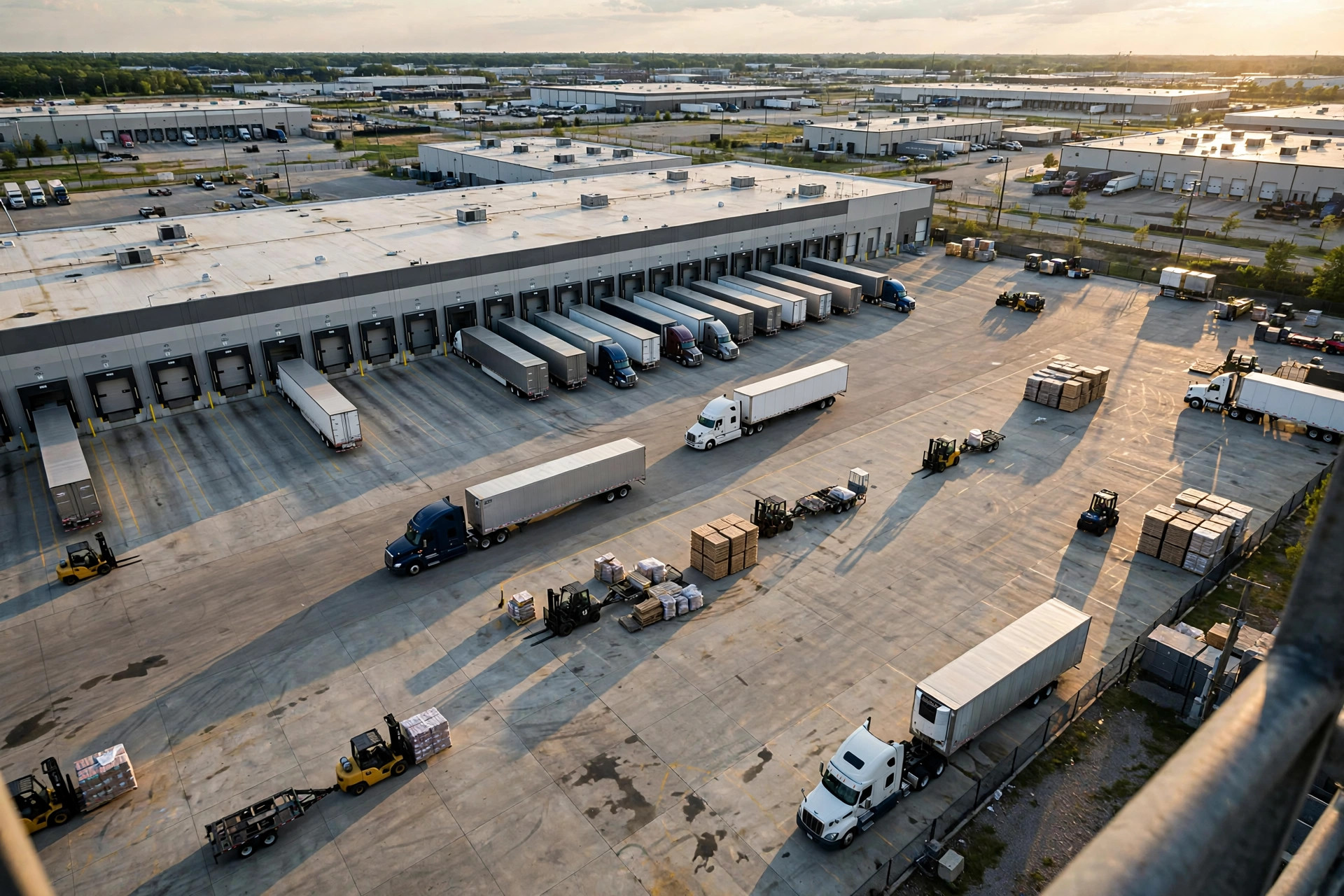
Why am I confident in this line? Because I've seen both failures. In 2023 I worked with a California 3PL: 42 docks, 70+ trailers, 130 daily moves — all four over the line — but they'd decided "our WMS has a yard module, let's just use that." Peak season hit, yard drivers were shouting over radios, average trailer dwell hit 9 hours, and carriers complained daily about detention. After they moved to a standalone YMS — auto-dispatched moves, real-time trailer positions — dwell dropped under 4 hours. A year of detention fees and wasted labor would have paid for three YMS licenses.
The flip side: a 2024 Nevada warehouse with 12 docks and 30 daily moves, zero of my four thresholds crossed, got talked into a standalone YMS anyway — over $200K in subscriptions and implementation. Two years later, 70% of the features had never been opened. They canceled and went back to the WMS module. That mistake came straight from skipping the math.
Three ways I've seen this go wrong
Failure #1: buying a standalone YMS as a "visibility dashboard."
In 2022, a client crossed all four thresholds — they genuinely needed a YMS. But their buying reason was "the boss wants to see the yard on a screen." After go-live, yard drivers kept using radios, and the system only recorded outcomes after the fact. The dispatch engine sat idle — scheduling-system money spent on an electronic whiteboard. Repeat after me: the value is dispatch automation, not visualization.
Failure #2: no in-house yard drivers, standalone YMS anyway.
One client crossed on docks and volume, but the yard was 100% carrier drivers — no in-house yard team. The YMS generated move tasks… for whom? Carrier drivers don't take orders from your system. It degraded into an expensive appointment spreadsheet. I'll say it again: no actuators, no scheduling system. Settle the yard-driver question first, then talk software.
Failure #3: stretching the WMS module across a big yard.
The most common one. The WMS vendor's rep says "we have yard functionality," the client hears "free," and signs. Then the yard gets complex — no trailer tracking, no auto-dispatch — and the gate team compensates with Excel and radios. The data in the system and the reality in the yard diverge completely: the system says the trailer is at door A, it's actually in the far corner of the lot. That systematic distortion is worse than no system, because management's reports are all wrong.
If the WMS module wins, do these four things
Scored two or fewer? Congratulations — you just saved real money. But don't think the cheap option runs itself. The WMS yard module only works if the process holds up:
- One appointment list. The gate has a sheet, the warehouse has a sheet, and the drivers' group chat has a third — this is the root of all yard chaos. Turn on the WMS appointment function and make the gate recognize only the system list.
- Physicalize trailer IDs and lot zones. Big painted numbers on trailer rears, zone signs in the lot: A for empties, B for loaded, C for inspection. The WMS module has no GPS — every position update is typed by a human, and humans type garbage without clear numbering.
- Walk dwell time daily. Even with simple reports, someone must review daily: which trailers sat over 6 hours, flagged red, root cause chased. Skip this and the module is furniture.
- A daily move list, even for outsourced drivers. No auto-dispatch? Dispatch manually: every morning the gate issues a move sheet — who moves which trailer, from where to where, sign off on completion. Low-tech, works.
And before either option, three steps in this order: (1) measure the four numbers in the yard for three days — don't trust reports, reported trailer counts never match reality; (2) map "a day in the life of a truck" from gate to departure, noting who does what and where information is recorded; (3) run the total math — a standalone YMS costs more than the subscription (implementation, integrations, kiosks, process change), and the "free" WMS module costs gate labor, detention fees, and trailer-hunting hours. For a 40-dock yard, I've estimated the hidden cost of stretching the WMS module at $150K–$250K a year — that's the right number to compare against a YMS subscription.
Print the four numbers, score them, and let the math decide. In selection, a clear calculation beats an expensive guess.
By Lin Xiao, WMS Implementation Consultant