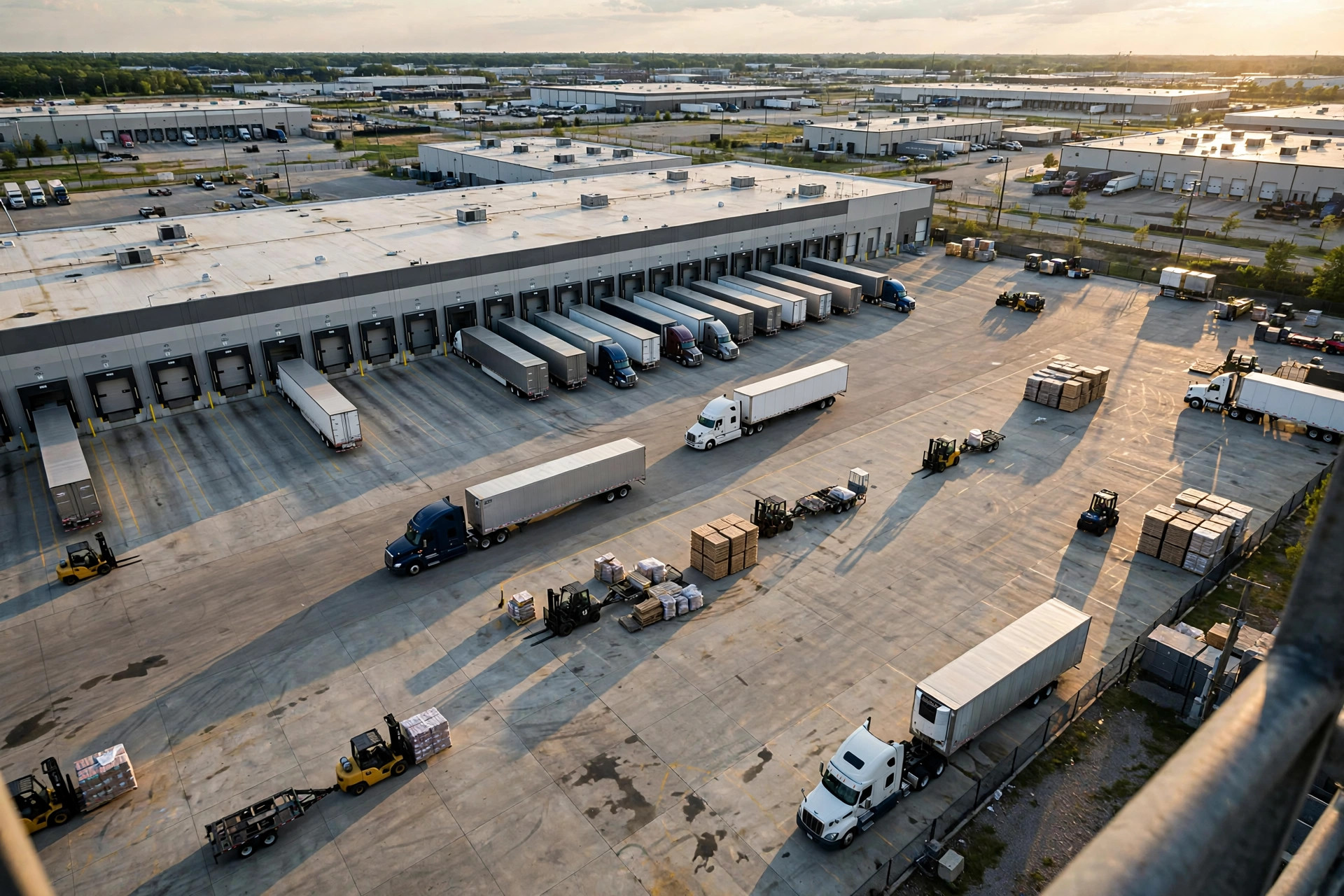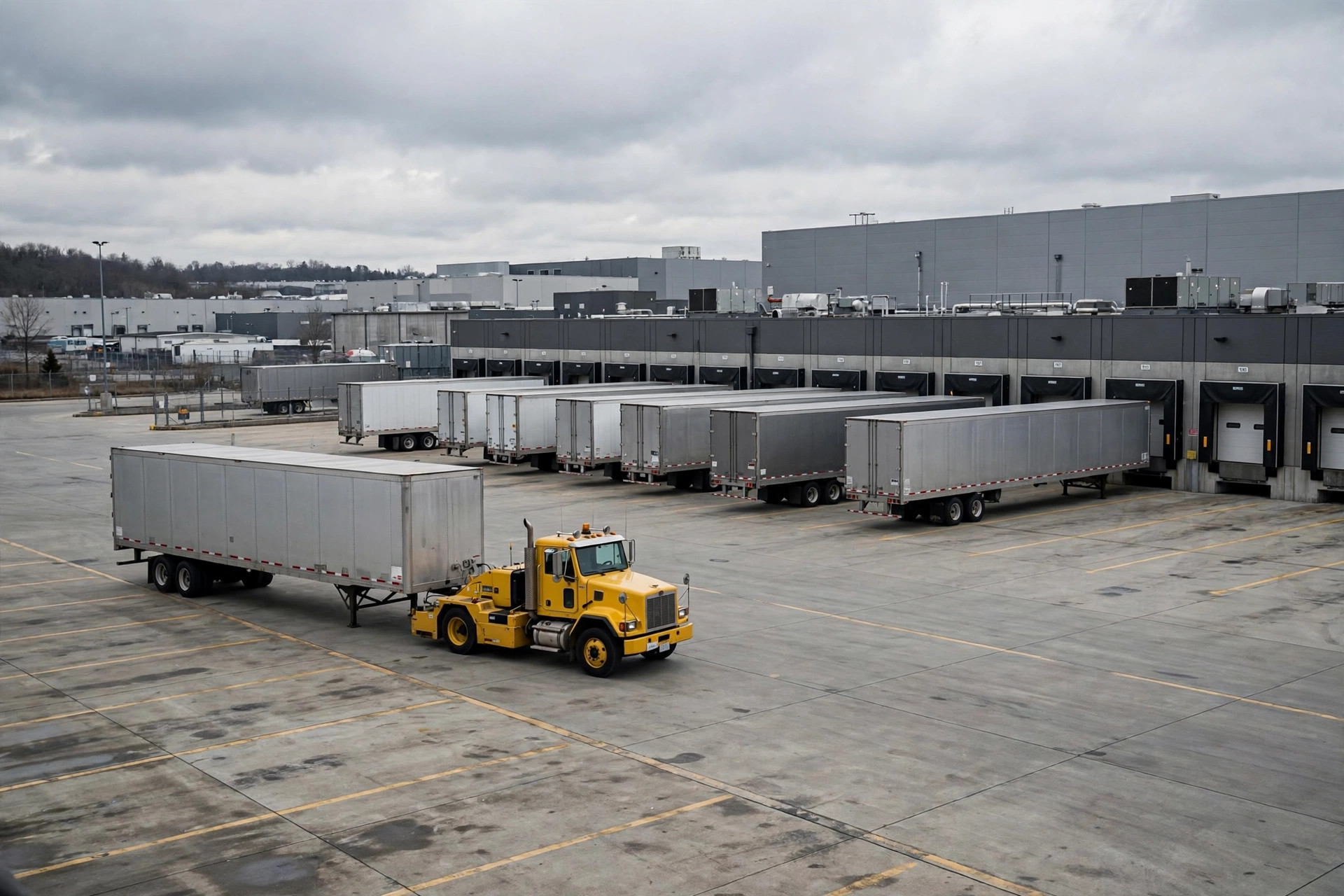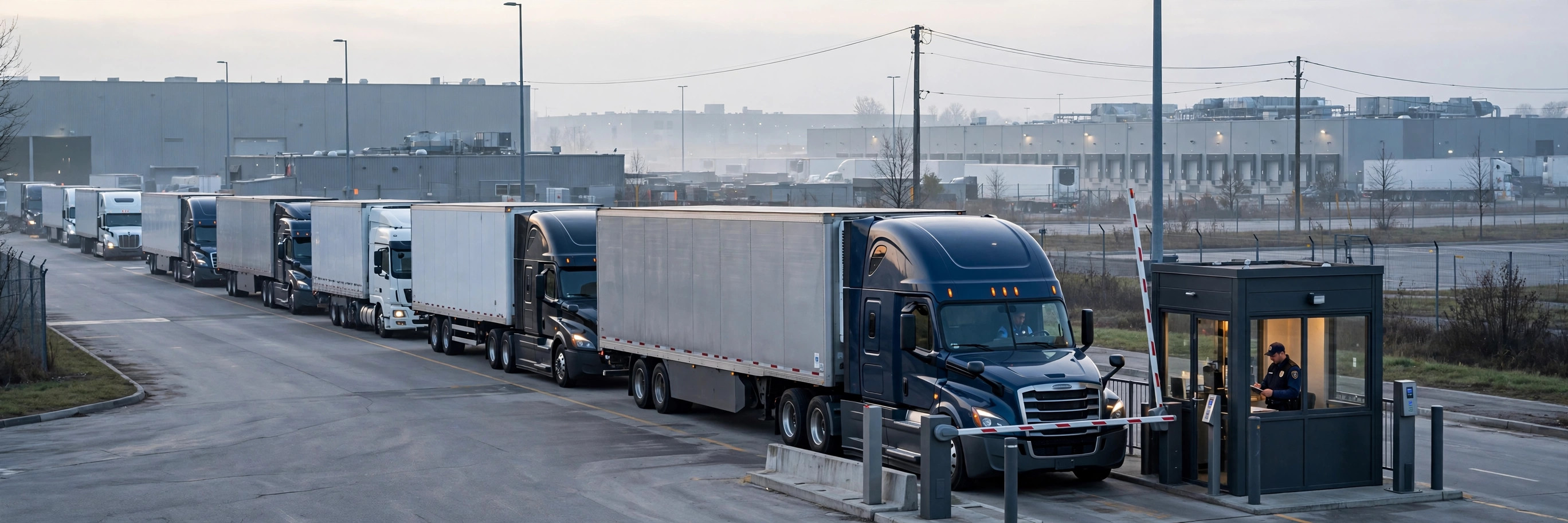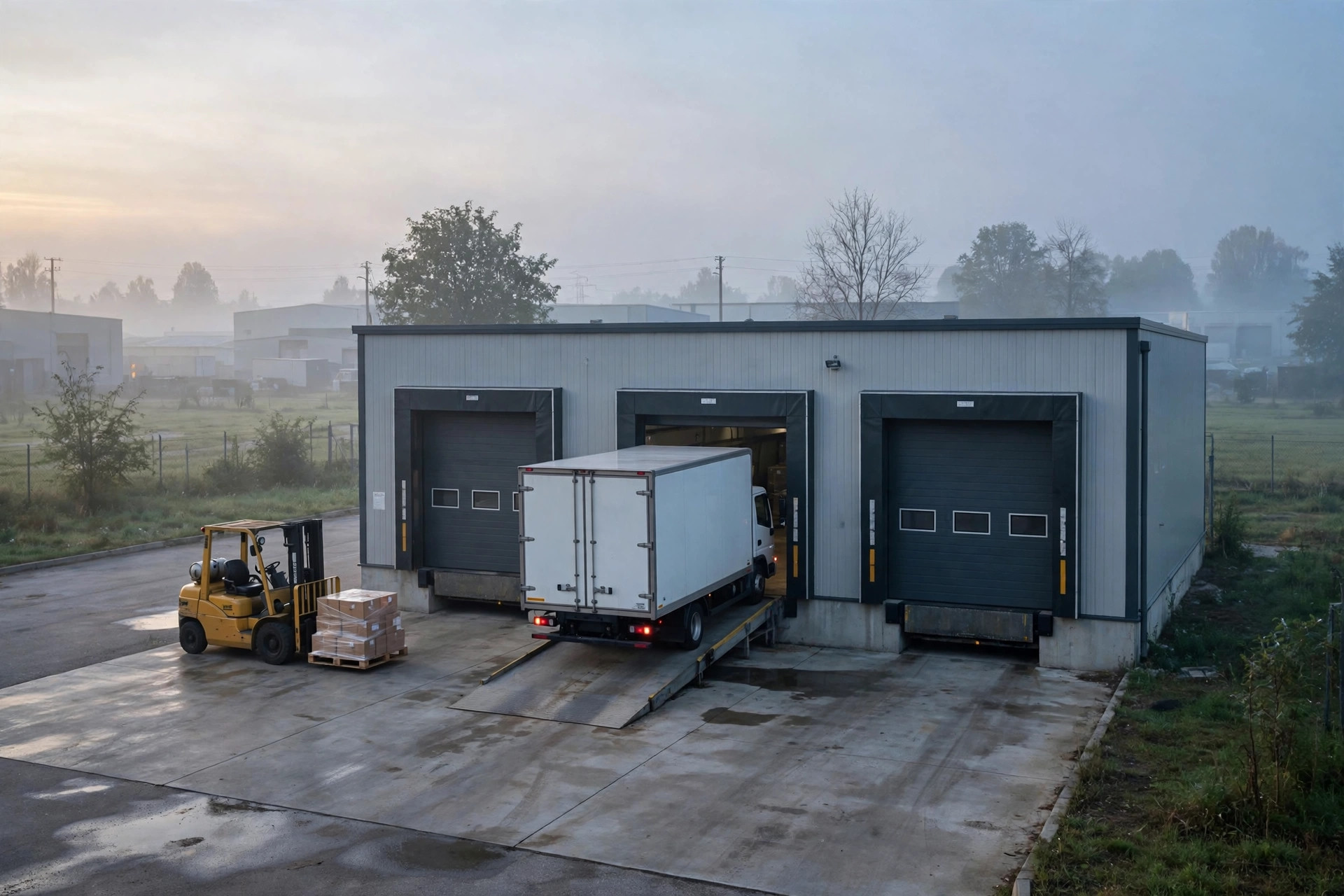
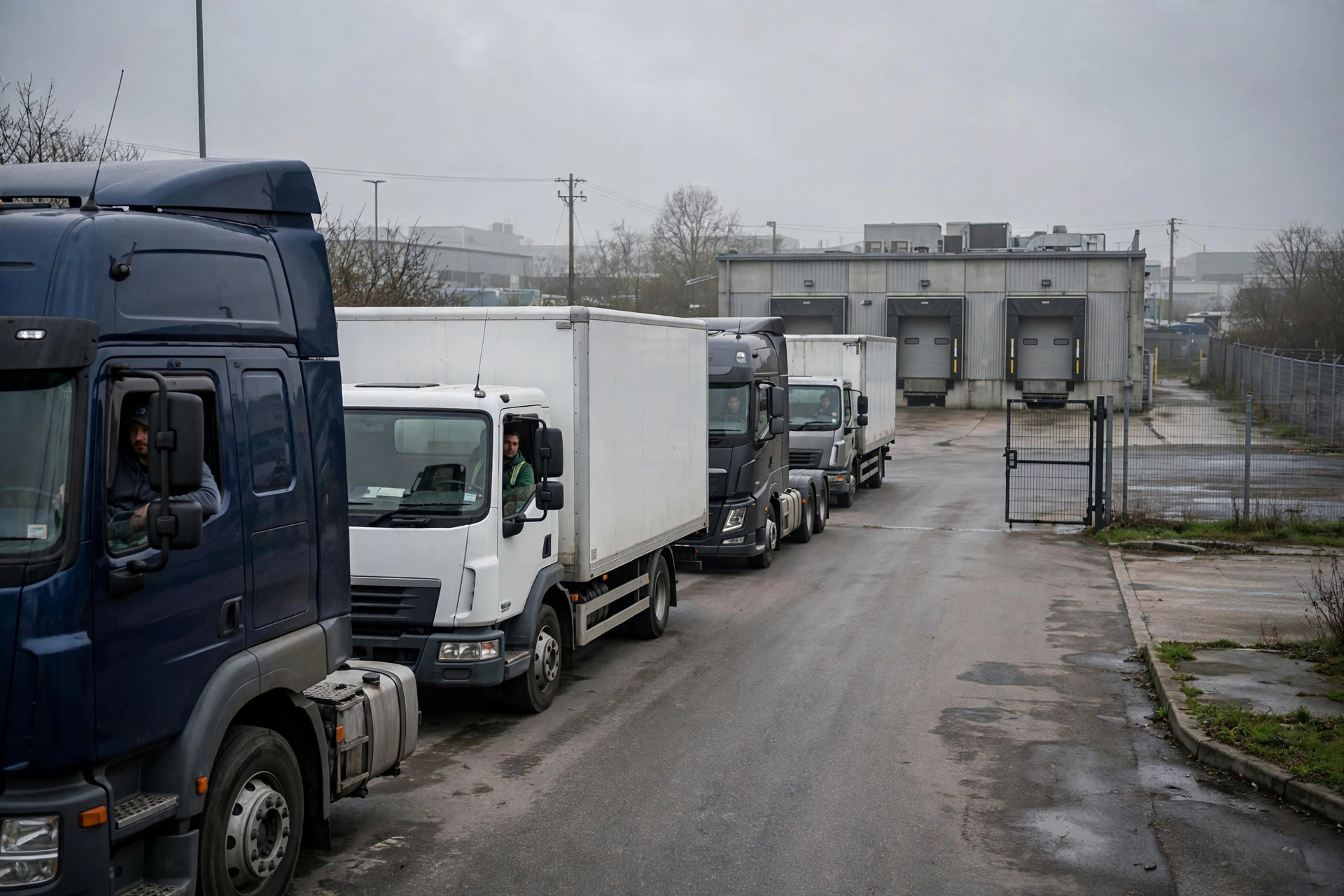
Last November, on a Tuesday morning at 7:50, I pulled into our yard and found four trucks already stacked up at the gate. We have three dock doors. One was still unloading yesterday's leftover freight, one was waiting on a forklift, and one sat empty — because none of the drivers at the gate knew which door was theirs. I got out to wave them through, and one driver rolled down his window and yelled: "You guys don't even do dock appointment scheduling — how are we supposed to know when to show up?"
Let me be straight with you: that stung. I'd always figured dock appointment scheduling was a big-warehouse game. Three doors, maybe twenty trucks a day — why bother booking slots? Then I sat down and ran the numbers. After that, I went out and bought a whiteboard.
The problem wasn't too many trucks — they all showed up at once
Nearly every truck wanted the 8-to-11 a.m. window. Why? Drivers want to get unloaded early and roll to the next job. Three doors, five or six trucks piling in at once — queues for unloading, queues for paperwork, queues for the forklift. Come afternoon, the doors sat empty while the forklift crew swept the floor.
The worst week was mid-November, during the pre-peak-season inbound surge. One Friday afternoon, an out-of-state truck waited at our gate for over three hours. The driver called the shipper to complain; the shipper called my boss. My boss called me in and asked exactly one question: "How much money does that line of trucks burn every day?"
So I did the math. It's simple — plug in your own numbers:
What gate waiting costs (our warehouse's real numbers)
| Item | Our number |
|---|---|
| Trucks per day | ~22 |
| Trucks in the morning rush (8–11 a.m.) | ~14 |
| Dock doors | 3 |
| Extra wait per truck, no scheduling | ~35 min |
| Total extra waiting in the rush window | 14 × 35 min ≈ 8 hours |
| Driver detention rate | Check your own invoices — every carrier bills differently |
Call it $60 an hour as a working assumption — swap in your own detention rate. That's 8 × $60 = $480 a day, just from the morning rush. Over 22 working days, that's north of $10,000 a month. And that doesn't count the forklift crew playing traffic cop at the gate, the overtime, or the hidden cost of drivers who get fed up and stop taking our loads.
That math sobered me up fast. A three-door warehouse burning five figures a month on "no schedule." If I didn't fix that, I wasn't doing my job.
Here's the counterintuitive part: fewer doors means you need scheduling more
Plenty of people think like I used to: scheduling systems are for the 20-door giants; a three-door shop can just shout across the yard.
Wrong. Honestly, it's the opposite.
A big warehouse has slack — if one door jams, nineteen others absorb the mess. With three doors, one jammed door paralyzes the whole operation. For a small warehouse, dock appointment scheduling isn't a luxury. It's a lifeline.
Second counterintuitive point: the biggest winner from dock appointment scheduling isn't the warehouse — it's the driver. What do drivers hate most? Showing up and sitting. Sitting means no miles, no money. Once we had slots running, drivers arrived on time and left on time, detention dropped, and they actually started preferring our warehouse. A few regulars roll in now like they own the place.
The trade-off, to be fair: a schedule that's too rigid turns brittle. An urgent load shows up, there's no open slot, and the sales rep is begging favors. So we keep one flex slot open every day, reserved for urgent and late trucks. More on that below.
Step one: a spreadsheet and text messages — dock appointment scheduling for $0
Don't buy software on day one. Our first step cost exactly $0: a shared spreadsheet and a phone.
Here's the setup:
- One spreadsheet. Google Sheets, dead simple columns — date, time slot, plate number, driver phone, commodity, expected dwell time, assigned door. By 4 p.m. daily, sales or customer service enters tomorrow's trucks. After the cutoff, I do the slotting.
- 45-minute slots. We timed it with a stopwatch: one full truck — gate in, check-in, unload, paperwork signed — averages 40 to 50 minutes. So each appointment slot is 45 minutes. Three doors across the morning wave gives 12 slots, which covers us.
- Text confirmation. Before clocking out, I text every driver tomorrow's slot — screenshot of the sheet or individual texts. The driver replies "OK." No reply by morning — I call.
- The late rule. Under 15 minutes late: roll in, no penalty. Over 15 minutes: you drop to the next open slot. No cutting the line. I announced this to every driver and every sales rep on day one and pinned it in the group chat.
Two months on the spreadsheet, and gate congestion dropped by roughly 70%. Note: dropped, not disappeared. Spreadsheets are filled in by humans — sales forgets to enter trucks when it's busy, drivers change phone numbers without telling anyone. That's when step two earns its keep.
The fixed routine: our dock schedule today
Once the spreadsheet habit stuck, we locked in a daily rhythm. This is exactly how our warehouse runs it now:
- 8:00–11:30, morning wave: inbound only, all three doors open. Full truckloads get priority; long-haul and short-haul mix.
- 11:30–1:00, midday buffer: no appointments. Clear the morning's leftovers, charge the forklifts, crew eats. That buffer was bought with pain — we used to pack the schedule tight, one truck ran 20 minutes late, and everything behind it collapsed.
- 1:00–3:30, afternoon wave: outbound only. What came in during the morning ships out in the afternoon.
- One flex slot every day: the last slot of the morning wave stays unassigned — for urgent loads, late trucks, add-ons. An empty slot costs nothing; chaos costs everything.
- 8:00 a.m., ten-minute huddle: me and the forklift lead walk the day's appointment sheet — who's on which door, which truck might run late, who gets the flex slot. Ten minutes. Not eleven.
On lightweight tools: there are dock scheduling tools with free tiers that are plenty for a small warehouse (check the vendor's site for current plans and pricing). Our lesson: get the spreadsheet-and-texting process working first, then let software automate the manual parts. Automating a broken process just gives you automated chaos.
One last word for fellow small-warehouse folks: don't tell yourself "we're too small for this stuff." With three doors, one truck sitting an hour means two more trucks stacking up behind it. Dock appointment scheduling matters more the smaller you are — and the sooner you start, the more you save. You can build the spreadsheet tonight and use it tomorrow morning.
By Chen Feng, Warehouse Operations Manager