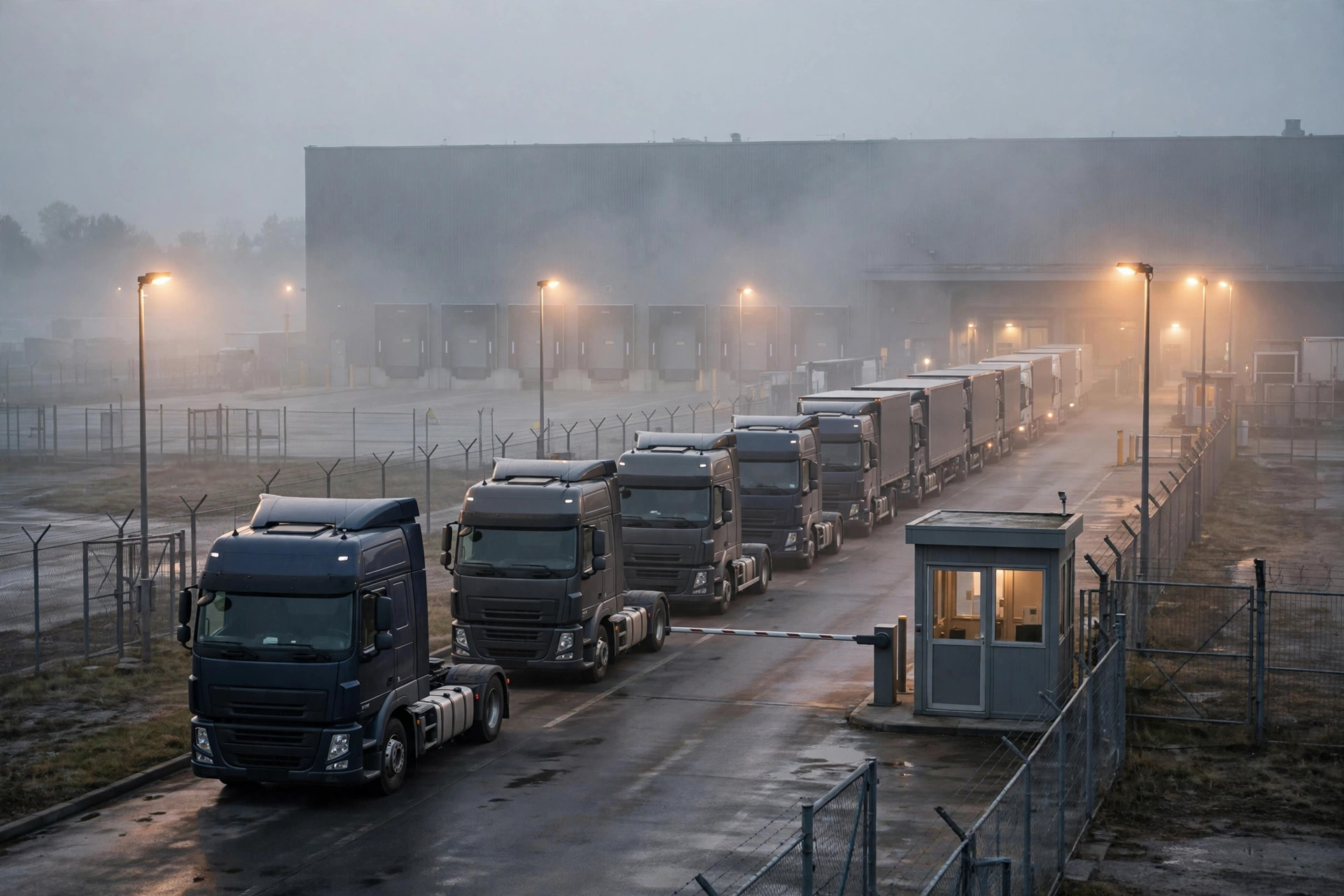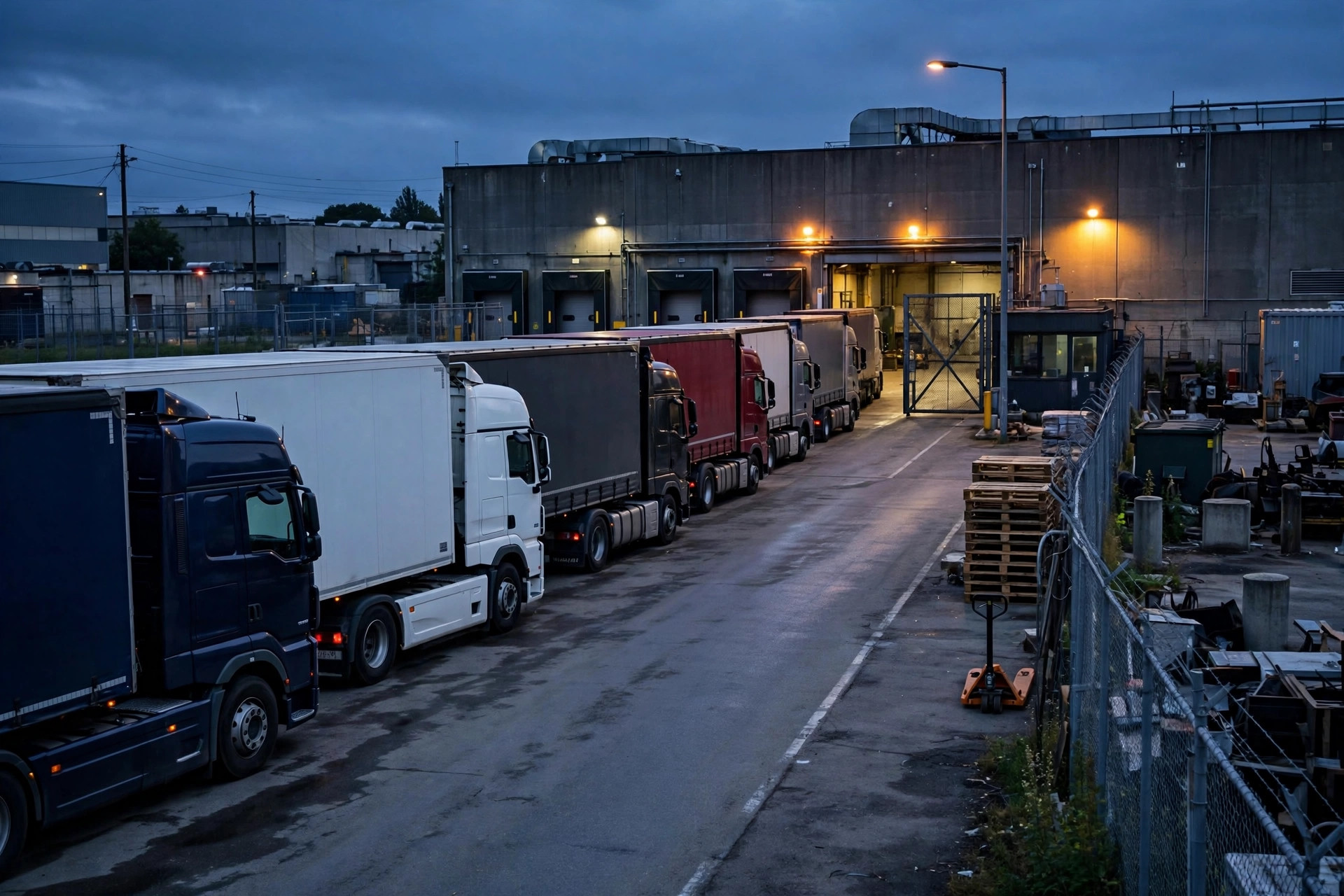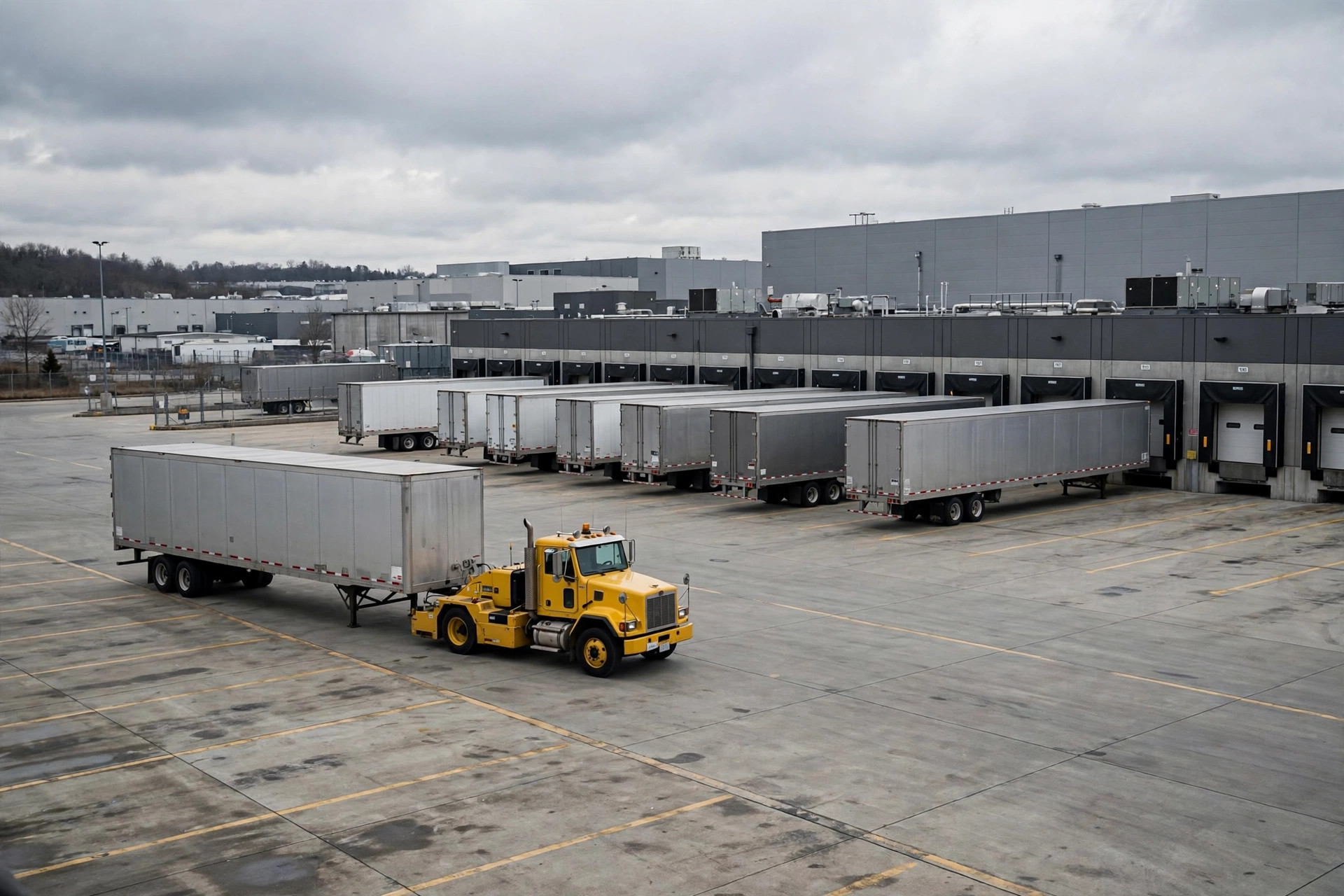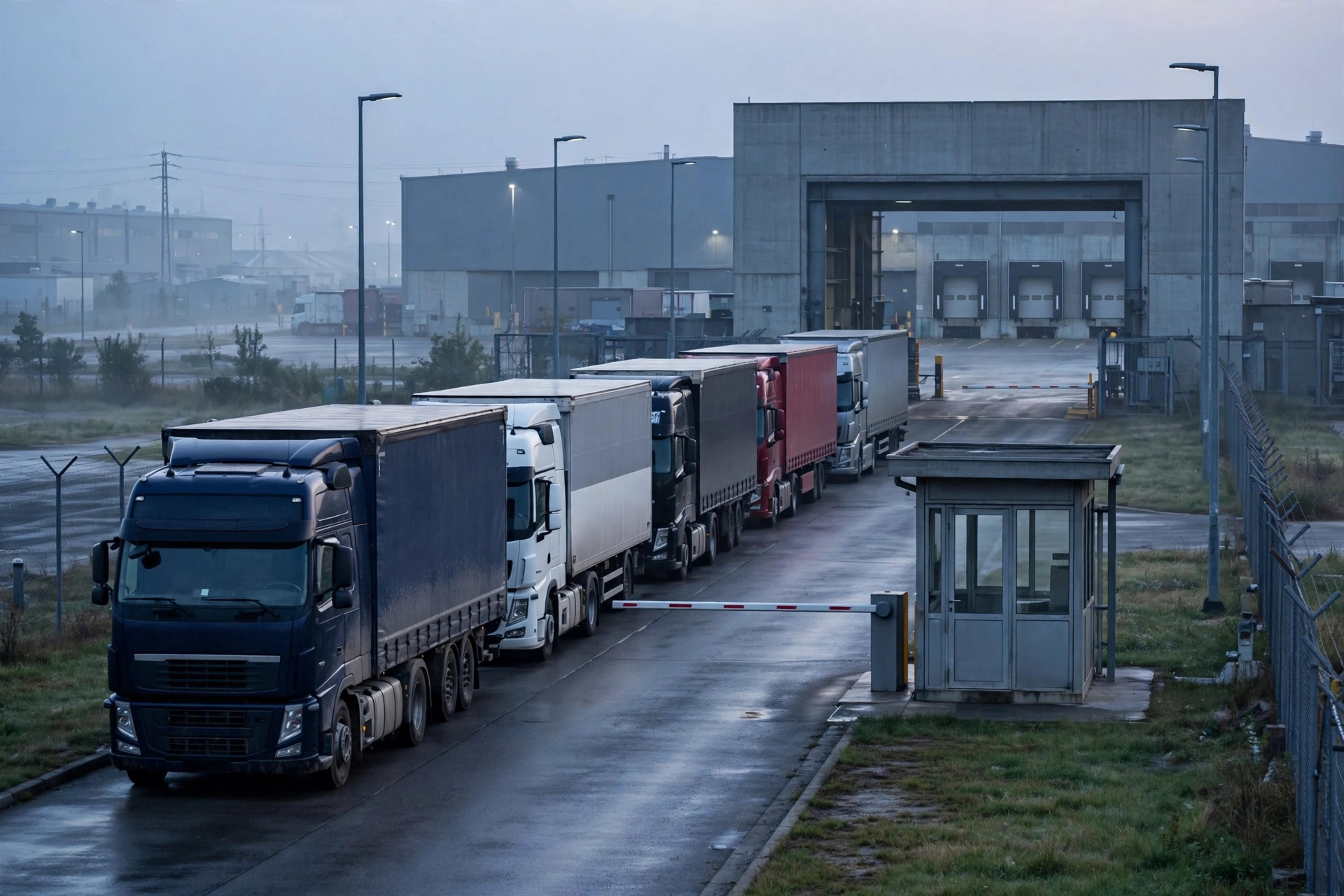
Last month I visited a distribution warehouse in the Inland Empire. At 8 a.m., eleven trailers were lined up outside the gate — the first one had arrived at 4:30. The guard told me, "This is a slow day. In peak season the line reaches the street." I asked the warehouse manager one question: have you ever calculated what each hour of driver waiting costs you? He just stared at me. Fifteen years in the business, never ran the number.
Here is my verdict up front: a driver sitting at your gate for four hours is not normal. It is a management problem. A yard management system does three unglamorous things — appointment scheduling, faster gate check-in, and rules-based dock assignment — and it can cut average dwell time from 3.5 hours to under 45 minutes. For a site handling 30 trailers a day, that is hundreds of thousands of dollars a year, in real money.
Where the money actually goes
Most people only see the tip of the iceberg.
The most visible cost is detention. Two hours of free time is a common industry practice, and anything beyond that is billed by the hour — check your actual carrier contracts for the rate, but it typically lands in the tens of dollars per hour and climbs in peak season. A trailer waiting four hours racks up two billable hours. Multiply that by 30 trailers a day and the monthly invoice will make your eyes water.
Then there is driver time and morale. Your own fleet drivers get paid whether they are rolling or idling. Contract carriers are worse: keep a driver waiting long enough and he will refuse your loads next time. When capacity is tight, carriers cherry-pick freight — a warehouse with a bad reputation at the gate pays higher rates. That cost never shows up on a report, but every operator knows it.
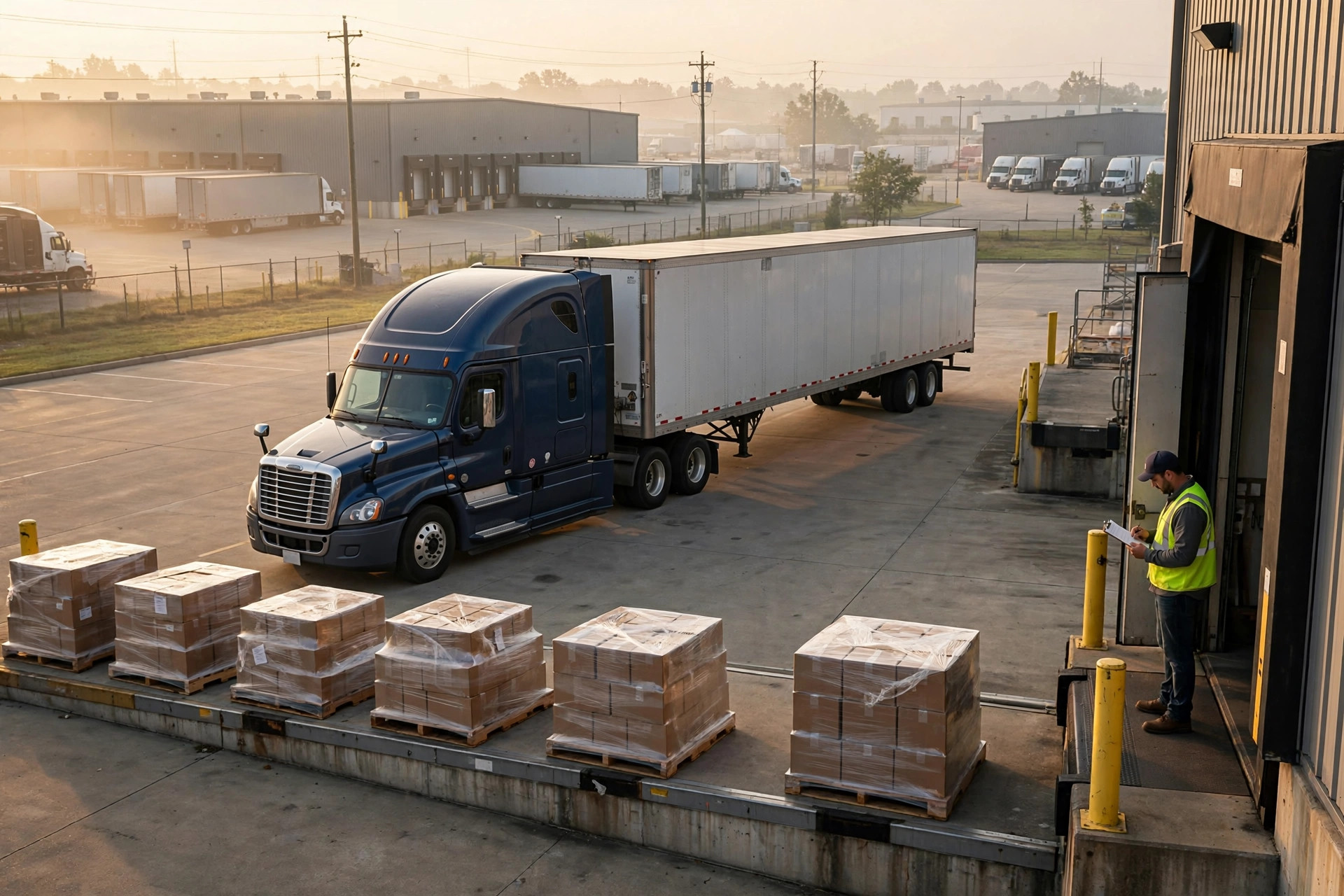
Third, wasted dock capacity. One door blocked by a trailer that "isn't ready yet" means three more trailers cannot get in, the receiving wave falls apart, and your people inside are standing around. Chaos at the gate cascades into the building.
Fourth, safety and compliance. Trailers spilling onto public roads invite city fines, neighbor complaints, and awkward questions from your insurer. In many U.S. cities the municipal penalties for trucks staging on public streets are no joke.
What a YMS actually does
Do not let the word "system" intimidate you. The whole logic of a YMS fits in one sentence: every truck knows when to arrive, where to park, and when to leave. Here is how it gets built, step by step.
Start by taking your temperature. For two weeks, log every trailer's gate arrival, dock start, and departure time. A notebook at the guard shack works fine. Compute your average dwell time, split between normal days and peak. Without this baseline, everything else is guesswork.
Move to appointments. Work backward from your dock count and receiving labor to decide how many trailers each time slot can handle, then hand those slots to carriers. You do not need software at first — a shared spreadsheet plus text confirmation will do. The rule that matters: miss your slot by more than 30 minutes and you roll to the next open window. First come does not mean first served; the appointment does.
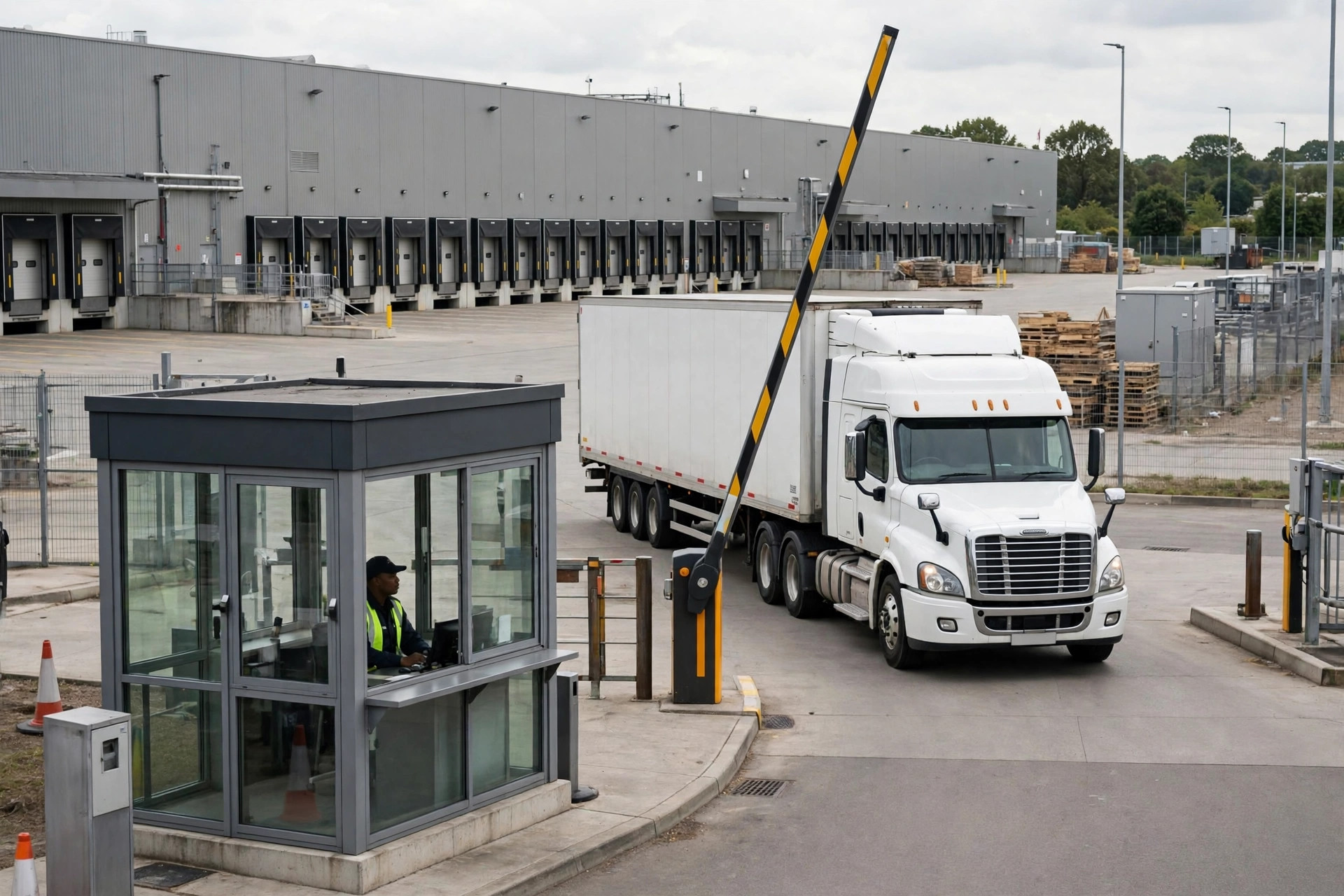
Speed up the gate with advance notice. Know before the day starts how many trucks are coming, what they carry, and which door they need. License-plate recognition or a QR code check-in both work. The goal is to turn the guard from "digging through paperwork and calling the office" into "glance and wave through." When gate processing drops from five minutes to thirty seconds per truck, the queue melts.
Assign docks by logic, not gut feel. Fast-turn freight goes to the doors nearest staging. Heavy loads go to the doors near the scale. Trailers with paperwork problems go to a hold area, not a working dock. Write the rules down, post them at the gate shack, and apply them the same way every time.
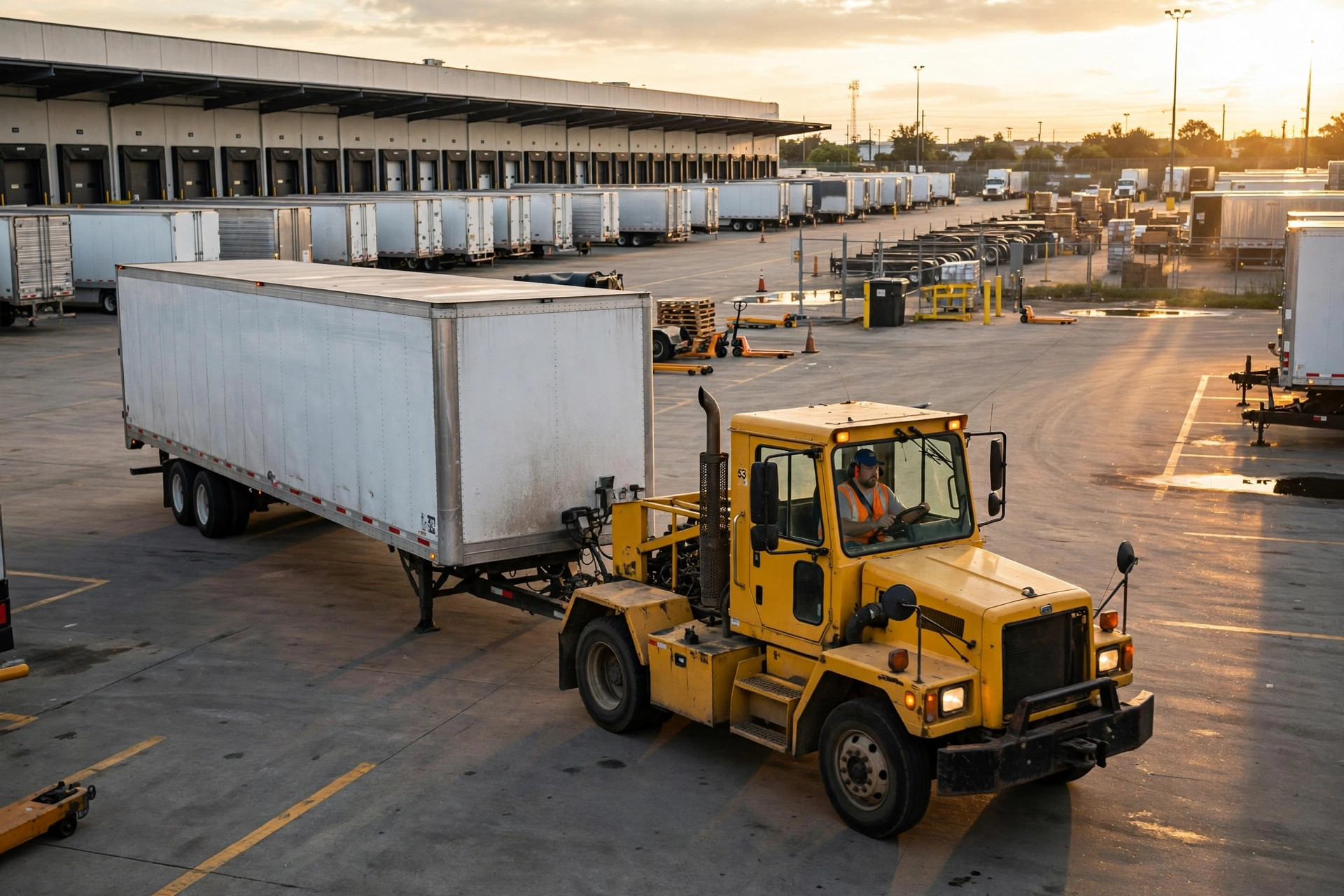
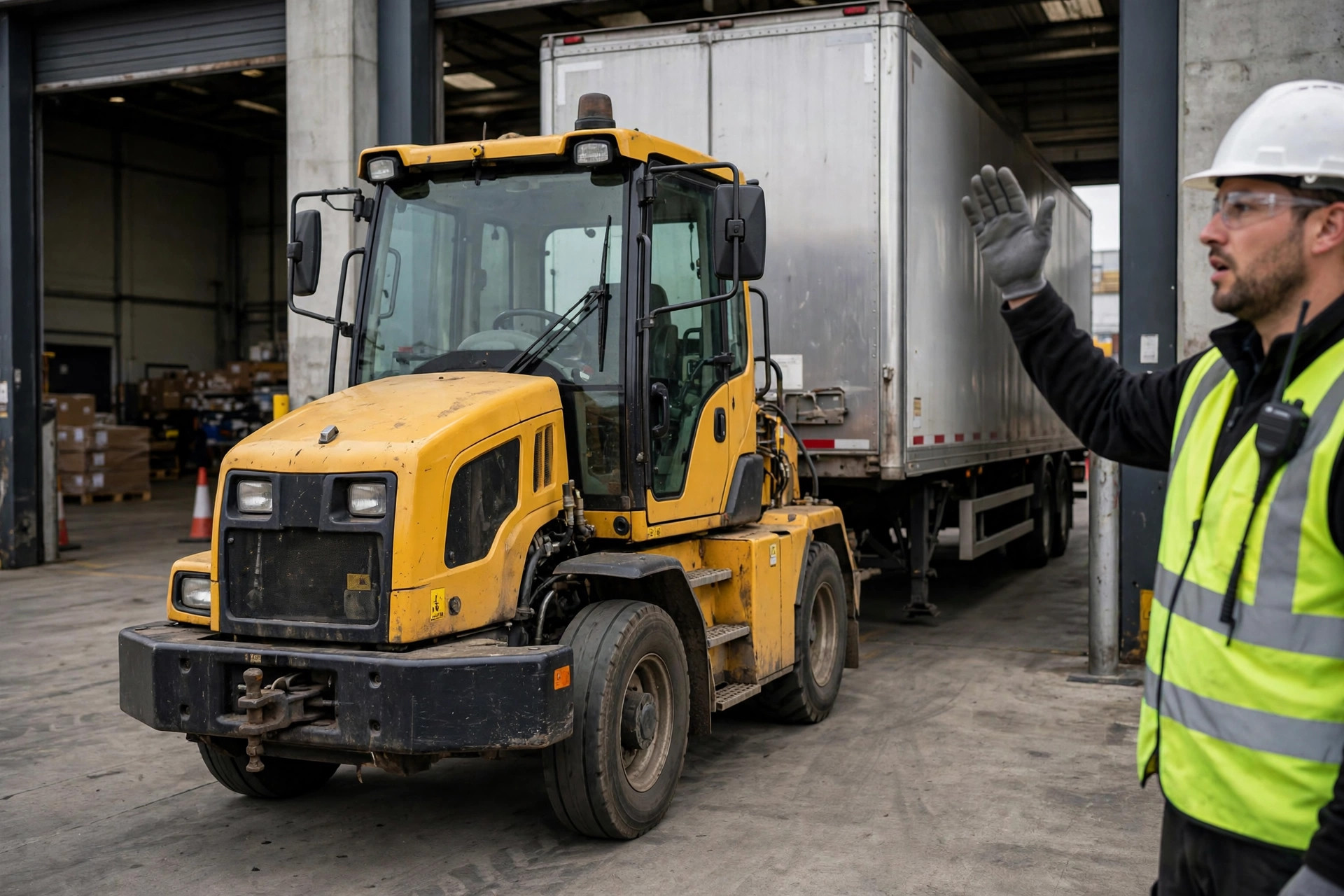
Run your own yard moves. Drop the trailer, send the driver on his way, and reposition with your own yard truck — drop and hook. This single move can zero out driver waiting time, and it is usually the fastest win in the whole project.
Finally, keep a weekly KPI board: average dwell time, on-time appointment rate, dock utilization, detention incidents. Two bad weeks in a row means you adjust the slots — do not wait for the quarterly review. One more thing most people miss: break the waiting data down by carrier. The two carriers that are always late or no-show become your leverage at renewal time; the reliable ones get priority slots in peak season. Six months of data changes the whole negotiation dynamic.
The math
Take a site with 30 trailers a day. Assume two hours of free time and $65 per hour beyond that — check your own contracts; this is just to show the method.
At 3.5 hours of average dwell, each trailer bills 1.5 hours, or $97.50. Thirty trailers a day is $2,925 a day. After a YMS brings dwell under 45 minutes, detention drops to zero. Over 250 working days a year, that is more than $730,000 saved.
And that is before the hidden wins: the guard stops arguing with drivers, doubled dock throughput is effectively free capacity, and carriers actually want your freight in peak season — which gives you room to negotiate rates down. A YMS subscription costs a fraction of that number; check actual vendor quotes, but the ROI math is not close. Still, small sites should not rush to buy — read on.
The low-tech playbook for small yards
If you handle fewer than 15 trailers a day, my honest take is: do not buy a system yet. Get the basics right with elbow grease, and you will capture most of the benefit.
Give every carrier a fixed arrival window. Miss it by 30 minutes and you roll to the next opening — set the rule before you enforce it. Hang a whiteboard in the guard shack showing the dock board: which door, what freight, what time it clears. Align receiving waves with appointments: if the WMS receiving shift starts at 7, book arrivals for 7, not 6. Set up a driver notification group chat — the moment a dock opens, the guard pings the group and the next truck rolls in instead of idling at the gate.
The principle is one line: appointments before software. Run the manual version for two weeks, collect the data, and only shop for software if the numbers still do not move. Most small warehouses do not have a software problem. They have a discipline problem.
One thing you can do tomorrow morning: have the guard start logging "gate arrival" and "dock start" for every trailer. In two weeks you will have your first dwell-time report — and only with that report in hand will you know what that line of trucks outside your gate really costs you every year.