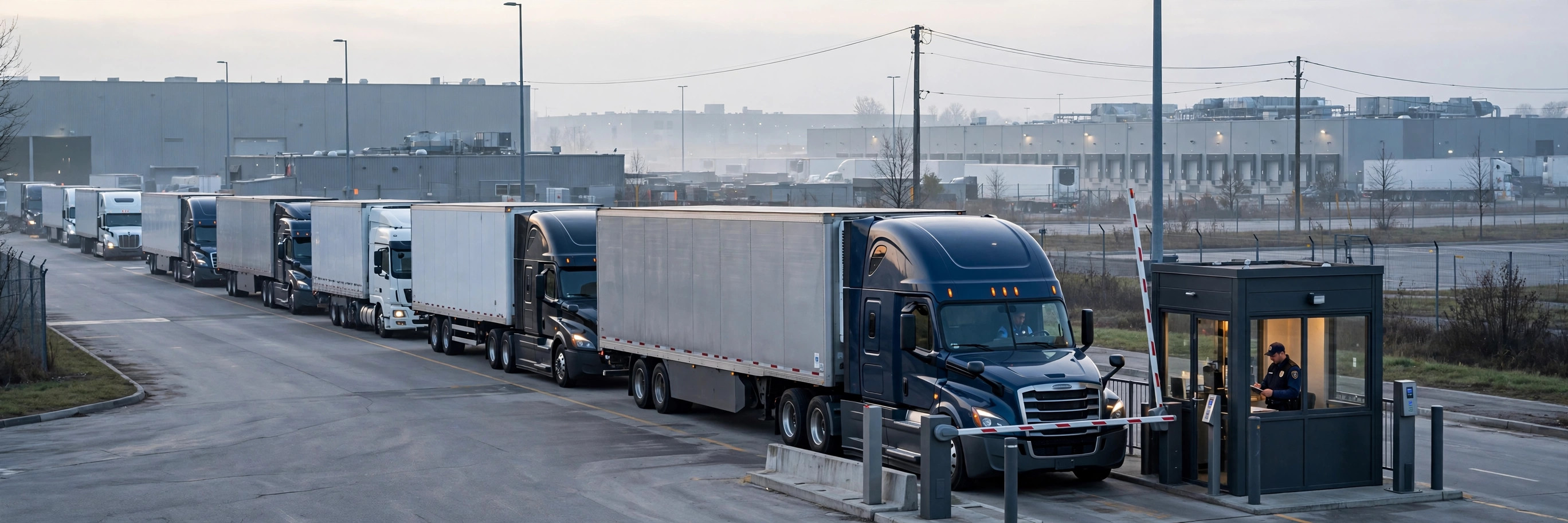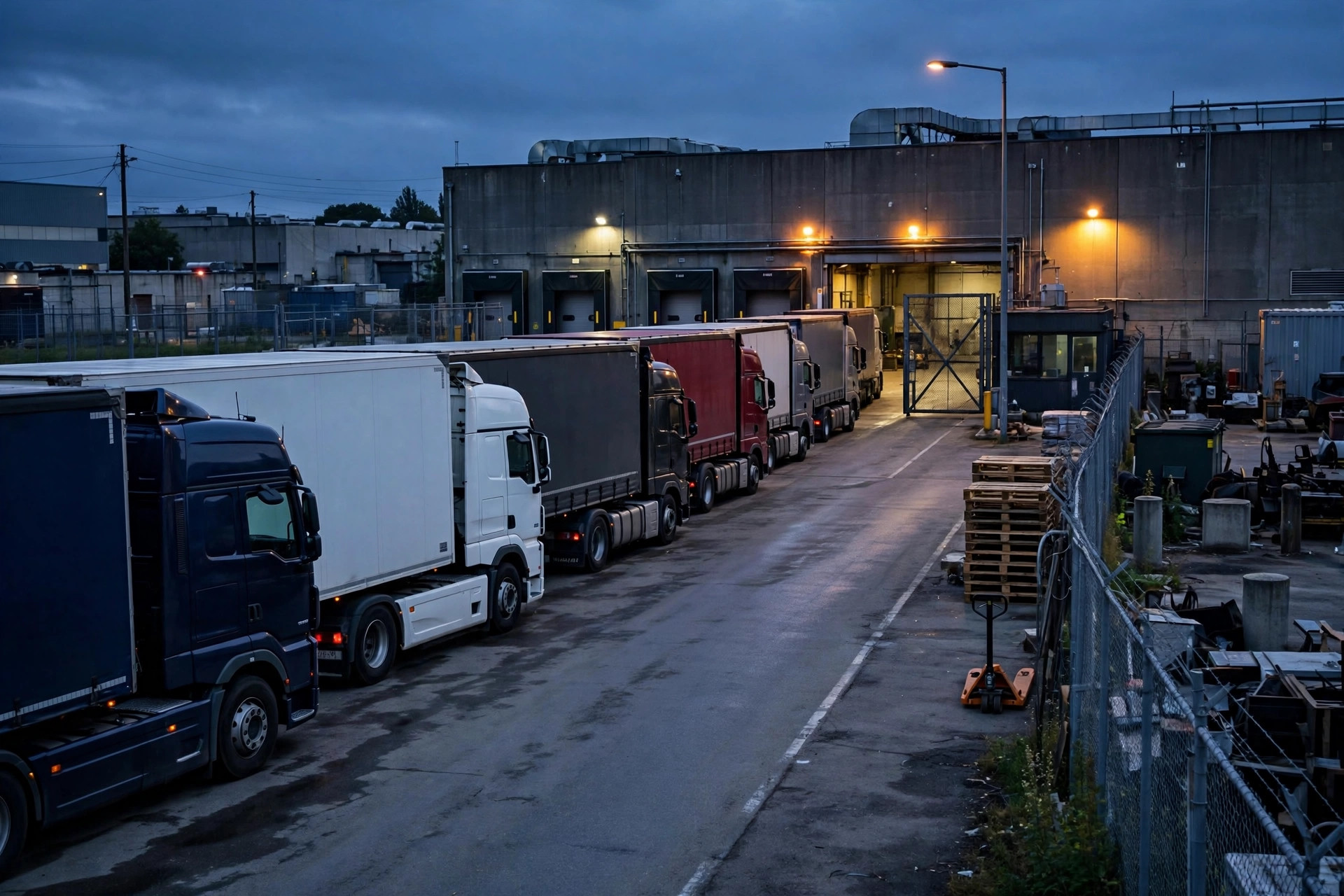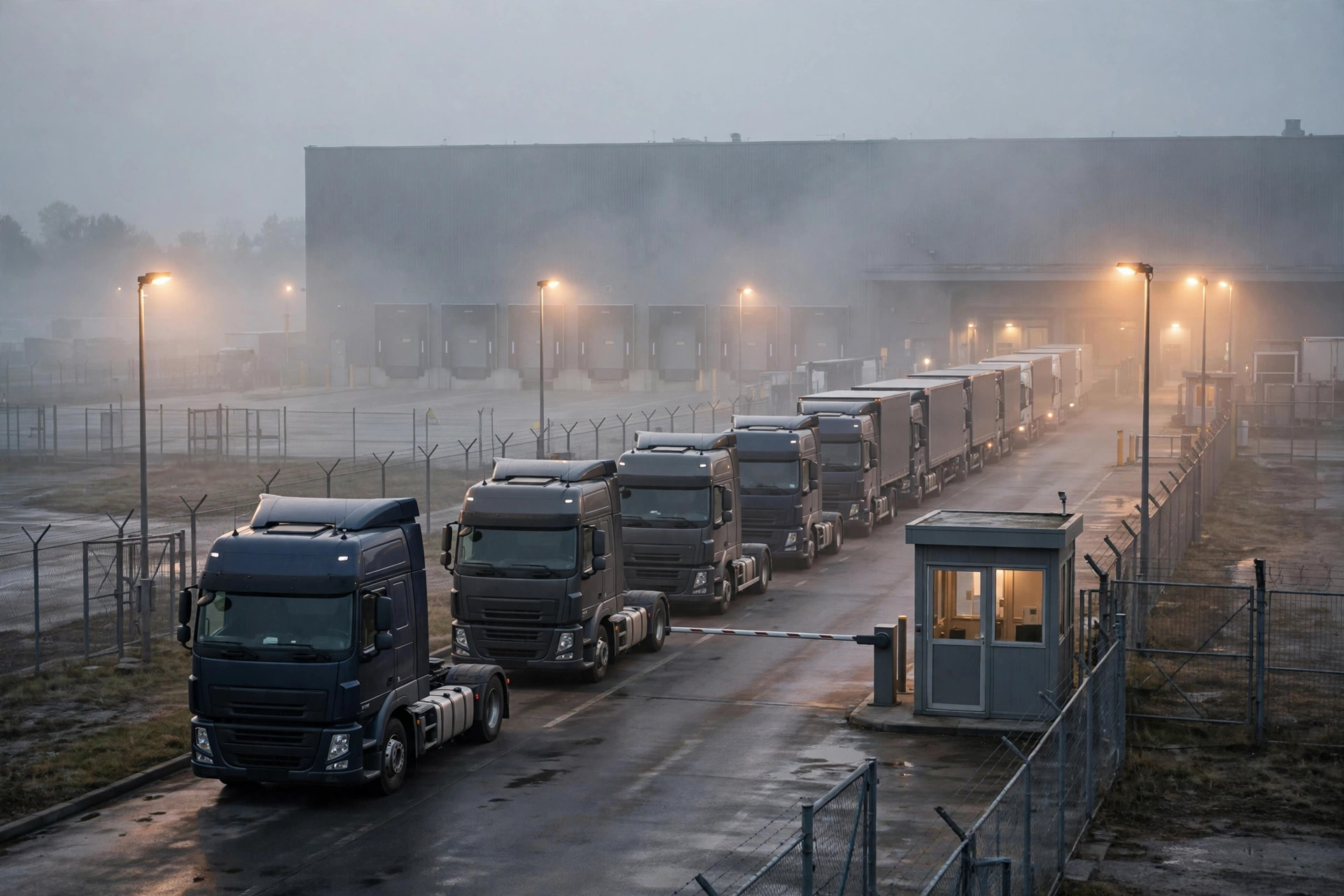
Let me tell you something. After all these years on the road, the thing I dread most isn't highway traffic. It's the line at the yard gate.
Two winters ago, 4 a.m., I rolled up to a big distribution campus with a full load. A dozen trucks were already ahead of me. The guard said my appointment wasn't in the system and told me to wait until morning shift to sort it out. I sat there over two hours, engine idling, fuel burning by the minute, fighting to stay awake. Turns out my appointment never synced from the YMS to the gate — in the system I was "scheduled," in reality I didn't exist.
That's when it hit me: a driver knows in the first minute whether a yard is well run. And if management wants to know too, they can't rely on polished reports — they need the numbers on the YMS dashboard. Problem is, those dashboards are full of flashy metrics. After 15 years, I've boiled it down to five yard KPIs that actually matter.
Number one: how long trucks wait at the gate
What the driver sees: you arrive, you can't get in, you sit in line. Some yards clear you in 20 minutes. Some take two hours as a matter of routine.
What the number means: average dwell time is the yard's thermometer. When it creeps up, something is clogged — the gate, the appointment system, or the docks. A common industry target sits somewhere around the half-hour to one-hour mark, though every operation sets its own standard. What matters is your trend: three straight weeks climbing is a warning light.
What to do when it's over: first split the data — are scheduled trucks waiting, or unscheduled ones? If scheduled trucks wait, your dock scheduling is broken. If it's the walk-ins, your gate rules are. A decent YMS shows both separately, and the split tells you exactly where to look.
Number two: how many appointments actually run on time
What the driver sees: my slot is 10 a.m., I show up at 9:30, and the gate says no dock is free — come back at 2. Next time I learn my lesson: booked for 10, I'll roll in after lunch. Why bother being early? Pretty soon nobody trusts the appointment system at all.
What the number means: low appointment punctuality kills the credibility of the whole scheduling system. Once drivers stop believing in slots, they bunch up, show up early, show up whenever — and the yard gets harder to manage every month. It's where the vicious cycle starts.
What to do when it's over: don't blame the drivers first. Check the YMS for "arrived on time but worked late" — if the driver was punctual and we weren't ready, the driver takes the heat but the disease is ours. Line up dock readiness and labor schedules with the appointment book, and punctuality comes back on its own.

Number three: are the docks really busy
What the driver sees: I wait two hours at the gate, finally get in, and half the docks are sitting empty. That'll raise your blood pressure.
What the number means: look at effective utilization, not "looks busy." Some yards run 90%+ dock utilization year-round and management brags about it — let me tell you, that's a danger sign. A dock with no slack has no shock absorber: one late truck or one equipment failure and the whole yard cascades into gridlock. Healthy utilization keeps 15–20% headroom; standards vary, but "maxed out every day" is never good news.
What to do when it's over: chronically high means add dock capacity or stretch the working window; chronically low (say, under half) means consolidate work zones or repurpose idle doors. Read the YMS number by time band — 70% daily average can hide 95% in the morning and 40% in the afternoon, which is a staffing problem, not a dock problem.
Number four: how fast dropped trailers turn around
What the driver sees: drop-and-hook is where you feel a yard's discipline. You drop the trailer, the tractor goes off to other work, and days later you come back — if the yard buried your trailer in a corner or stacked freight against it, half your day evaporates.
What the number means: drop-trailer turnaround measures the yard's internal logistics. Every day a trailer sits idle is an asset asleep. Longer turnarounds mean messier yard moves — lost trailers, hunted trailers, shuffled trailers.
What to do when it's over: give every dropped trailer a planned departure time in the YMS and flag overdues automatically. Plenty of yards buy a YMS and never switch this on — like buying a smartphone and using it as a watch.
Number five: the monthly detention bill
What the driver sees: drivers don't pay detention directly, but we all keep score — word travels fast about which yards burn your clock, and dispatchers start routing around them.
What the number means: the monthly detention total is the combined verdict of the other four metrics. It's the yard's real bill, and it doesn't lie, because it's actual money.
What to do when it's over: split detention by cause — how much from slow gates, how much from unready docks, how much from late drivers. A good YMS breaks it down to that level, and once it's split, accountability is obvious: fix the process or have the conversation.
Don't be fooled by the prettiest number
On many YMS dashboards, the biggest number on the home screen is "Trucks in/out today: 200." Management feels good looking at it — let me tell you, it's the most useless number on the board.
Volume isn't velocity. Two hundred trucks that each waited two hours at the gate are worse than 120 that flowed through clean. The first burns driver fuel, shipper service levels, and the yard's reputation; the second is the real achievement. The five numbers worth enlarging on the dashboard are the ones above:
| Metrics that work | Vanity metrics |
|---|---|
| Avg. dwell time (downward trend = good) | Trucks in/out today (more isn't faster) |
| Appointment punctuality (the lifeblood of trust) | Registered drivers (registered but absent = nothing) |
| Effective dock utilization (headroom = health) | Total dock count (unused doors = zero) |
| Drop-trailer turnaround (days assets sleep) | Vehicles on site (a big number may mean a jam) |
| Monthly detention total (the bill that never lies) | System logins (opened doesn't mean understood) |
The old saying: smooth gate, smooth yard
Fifteen years on the road taught me this: the gate is the mirror of yard management. The YMS can cost a fortune and the dashboard can look beautiful, but if management stares at "200 trucks today" and feels proud, the drivers in that queue aren't playing along.
Pin these five yard KPIs where they can't be missed, review the trends weekly, and split the causes when one goes red. In three months the line at the gate will tell you the answer — as the old saying goes, a long road tests the horse, and the gate tests the management.
By Shifu Zhao, Trucking Veteran (15 yrs)