How much does a yard spotter truck cost? The honest answer is a price band, not a number: $25,000–$55,000 for a used diesel, $95,000–$150,000 for a new diesel, and $250,000–$350,000 if you go electric. Those bands come from dealer listings and manufacturer pricing that you can verify with one round of quotes.
But anyone who stops at the sticker price will get the math wrong. On a spotter truck, the purchase price is the smallest line on the bill. Driver, maintenance, insurance, and depreciation together run about two-thirds of total cost. This article works through all three options — buy outright, lease, or outsource to a yard management company — and draws the line on when owning your own truck actually pays.
First, the physics: a spotter truck is a different animal from a highway tractor
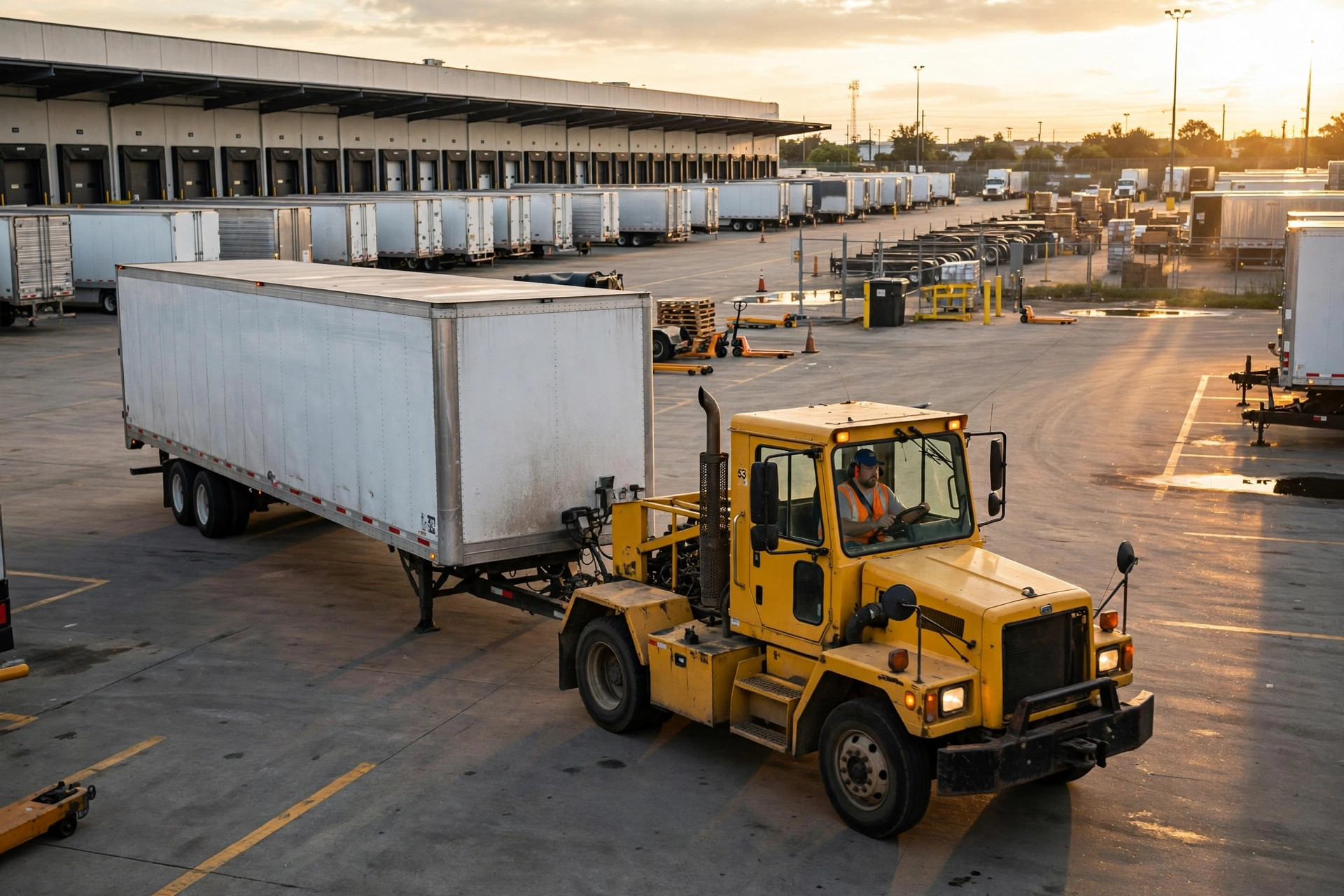
Think of it this way: a highway tractor is a marathon runner, optimized for steady cruising fuel economy. A spotter truck — also called a yard jockey or terminal tractor — is a boxer, built for close-quarters fighting. Every spec on it serves one job: coupling and uncoupling trailers 50 to 100 times a day.
The fifth wheel rides on a hydraulic lift, so the driver never climbs down to crank landing gear. The cab is short with a huge rear window, because the driver spends the day looking backward. The wheelbase is stubby with a tight turning radius for threading between dock doors and parked trailers.
That duty cycle flips the cost structure upside down. A spotter might log a tenth of a highway tractor's annual miles but dozens of times the coupling cycles. Clutch, fifth wheel, and tire wear follow completely different rules. Apply highway-truck maintenance logic here and you will get burned.
Yard spotter truck cost: three price tiers
Used diesel: $25,000–$55,000. Typical dealer asking range for units 8–15 years old. Cheap to buy, expensive to own: at that age the DPF and EGR systems are entering their "a few thousand dollars per repair" phase. One question before you buy: when was the DPF last serviced? No answer, walk away.
New diesel: $95,000–$150,000. Mainstream brands in this class land here. A financing company published a useful anchor: a $125,000 new unit on a 60-month term runs about $1,150 a month. A well-maintained diesel spotter lasts 10–15 years, so depreciation works out to barely $10,000 a year. The truck itself is genuinely cheap.
Electric: $250,000–$350,000. That's the 2026 industry-media range for electric terminal tractors, before chargers and electrical upgrades. The sticker shock is real.
The three-way math: buy vs. lease vs. outsource
Here's the table that matters. Scenario: a mid-size distribution center, 40 dock doors, about 60 trailer moves a day, two shifts. Cost per truck, per month:
| Cost item | Buy (new diesel) | Full-service lease | Outsource to yard company |
|---|---|---|---|
| Truck: payment/rent | ~$1,150 (financing basis) | $2,500–$4,500 (quote range, maintenance included) | $0 (they bring the truck) |
| Driver labor | ~$4,800 ($28/hr × 173 hrs, one shift) | ~$4,800 | $0 (they bring the driver) |
| Maintenance | ~$800–$1,200 | $0 (included) | $0 |
| Insurance | ~$300–$500 | ~$300–$500 | $0 |
| Monthly total, one shift | ~$7,000–$7,700 | ~$7,600–$9,800 | ~$9,300 |
| Monthly total, two shifts | ~$12,000–$13,000 | ~$12,600–$15,000 | ~$18,600 |
Sources, so you know I'm not making these up: $28/hr is the going rate in 2026 US job postings for yard spotter drivers. The $9,300 outsourcing figure comes from a published financing case — a three-truck, fully staffed yard service contract at $28,000 a month. Straight rental of one spotter (no driver) has been quoted publicly at $4,800 a month. Full-service lease quotes vary by dealer, so treat $2,500–$4,500 as a planning band and get your own numbers.
See the pattern? The truck is about 15% of the bill; labor is sixty-plus percent. Debating a $125,000 truck versus a $95,000 one is arguing over the garnish. The real decision variables are whether you need a full-time driver on payroll and whether your move volume can keep a truck busy.
The selection boundaries: what scale justifies owning
I draw selection lines, not vibes. Three numbers decide it:
Boundary one: daily moves. Under 30 moves a day, a spotter spends half its life sunbathing — outsource. A yard service company runs one truck across several clients' yards and spreads the cost; owning it yourself is waste. At 30–60 moves a day, lease one unit with full maintenance included and let the lessor carry the repair risk. Above 60 moves a day with two shifts, buy a new diesel outright and push utilization past 80% for the lowest cost per move.
Boundary two: shifts. Think twice about buying on a single shift. A spotter is an asset you buy to keep turning — eight hours a day doesn't spread the depreciation. Two or three shifts is where ownership math works. Single shift plus low volume means outsource; single shift plus high volume means lease. That's the rule.
Boundary three: your growth curve. Opening a new building or adding doors in the next 18 months? Lease terms run 24–72 months; a purchase is a 10-plus-year asset. Buying today and discovering next year you need a second truck sinks capital into iron. When growth is uncertain, lease and let fleet size follow the business.
In short: if your moves can't feed a truck, don't buy one. If they can but you run one shift, lease. Buy outright only with two shifts, high volume, and certain growth.
Three fake needs, called out
An equipment article that doesn't shoot down some sacred cows isn't doing its job.
Fake need one: "electric saves money because maintenance is half." The data is real — industry reporting shows 50–75% lower maintenance per operating hour on electrics, and one fleet saves roughly $10,000 a year per unit on fuel alone. But the price gap starts at $150,000. At $15,000 a year in combined savings, payback takes a decade — and no electric spotter has yet run a full depreciation cycle, which is why 52% of fleet operators admit it's too early to call the business case. The savings are real; so is the price. Unless carbon compliance pressure (think California yards) forces your hand, don't buy electric on the "saves money" story in 2026.
Fake need two: "grab the cheapest used truck to get by." A $25,000 used spotter looks like a steal until it becomes a subscription to the repair shop. One DPF job, one hydraulic fifth-wheel rebuild, one transmission repair — three visits and you've paid for half a new truck. Used only makes sense with full maintenance records in hand and your own shop to back it up. Missing either, lease.
Fake need three: "we'll have a warehouse guy drive it part-time." The most expensive fake need of all. Spotter drivers are skilled labor at $28 an hour; pulling a picker off the floor to jockey trailers means two jobs done badly plus a safety exposure. Remember the table: labor is two-thirds of total cost. You're not buying a truck — you're staffing a driver and building a maintenance operation. The truck is just the ticket in.
The maintenance traps to check before you buy
The wear logic differs from highway trucks, so the traps cluster in three places:
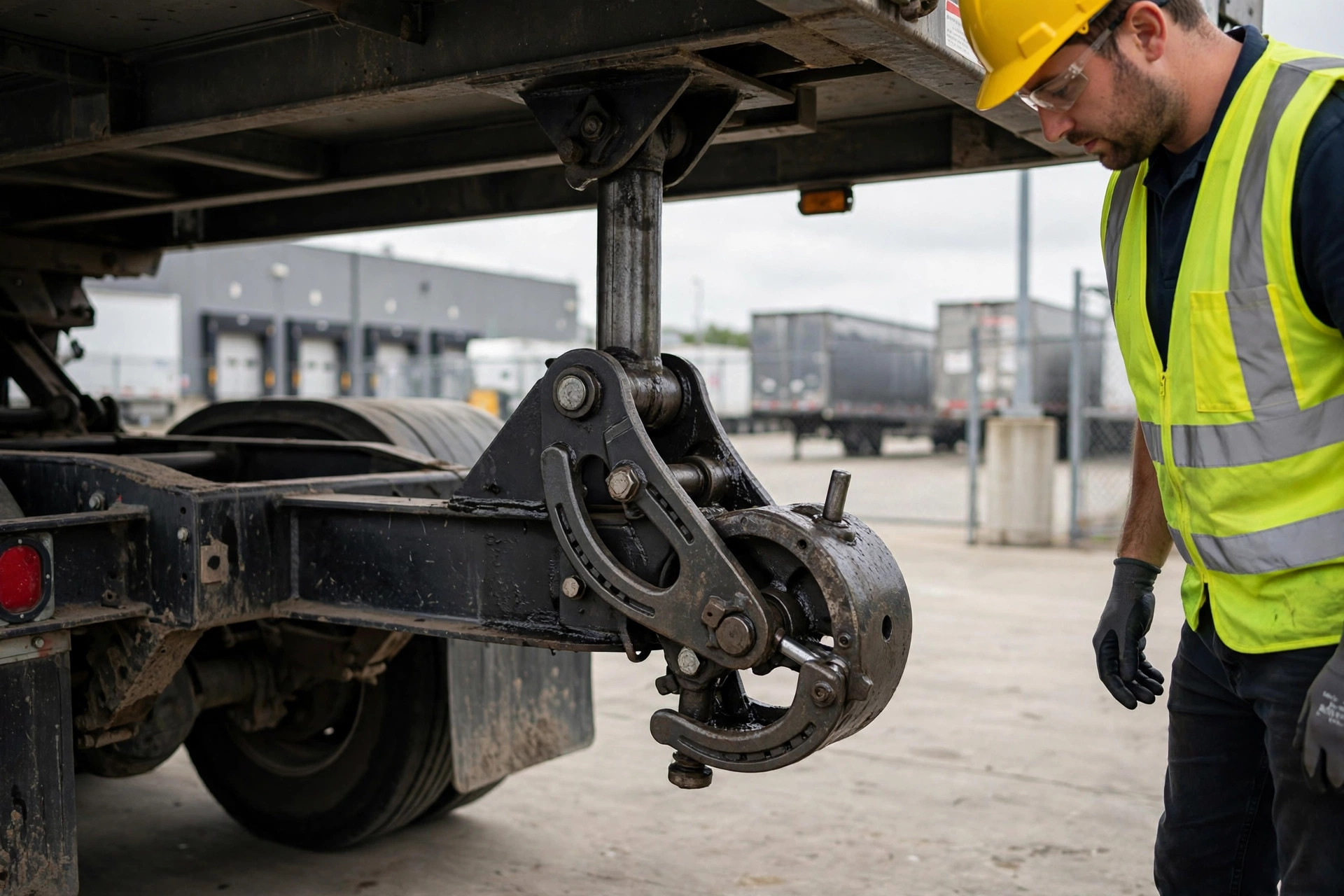
First, the hydraulic fifth wheel — the most expensive wear item and the biggest difference from a road tractor. Aging lift-cylinder seals leak; ignore the leak and the locking mechanism wears, and a replacement assembly runs into the thousands. When inspecting a used unit, cycle the fifth wheel ten times and watch for sluggish motion or seepage.
Second, tires. Constant tight turns under load chew through tires far faster than highway duty. Fleets that budget tires like a road tractor routinely blow the budget by 30%.
Third, driver training. Spotters share the yard all day with pedestrians, forklifts, and backing highway drivers — incident rates are not low. OSHA has clear requirements for powered industrial truck operation in yards, and training isn't optional. One collision, and the insurance increase will fund a year of regret.
Worth it or not? Watch this one number
After all that arithmetic, it converges on a single metric: cost per move.
Monthly total cost divided by monthly moves. Take the mid-size DC above: buying on two shifts costs about $12,500 a month; at 60 moves a day over 22 working days that's roughly 1,300 moves, or about $9.60 per move. Outsourcing at $18,600 works out to about $14.30 per move. That $4.70 gap is what you earn for staffing the driver and running the maintenance operation yourself.
So the decision is three steps: count your daily moves, check your shifts, then compare your cost per move against the yard company's quote. If their quote beats your number, outsource. If it's meaningfully higher, own it. Once that number is on the table, the buy-versus-lease-versus-outsource debate settles itself.
By Da Liu, Automation Engineer