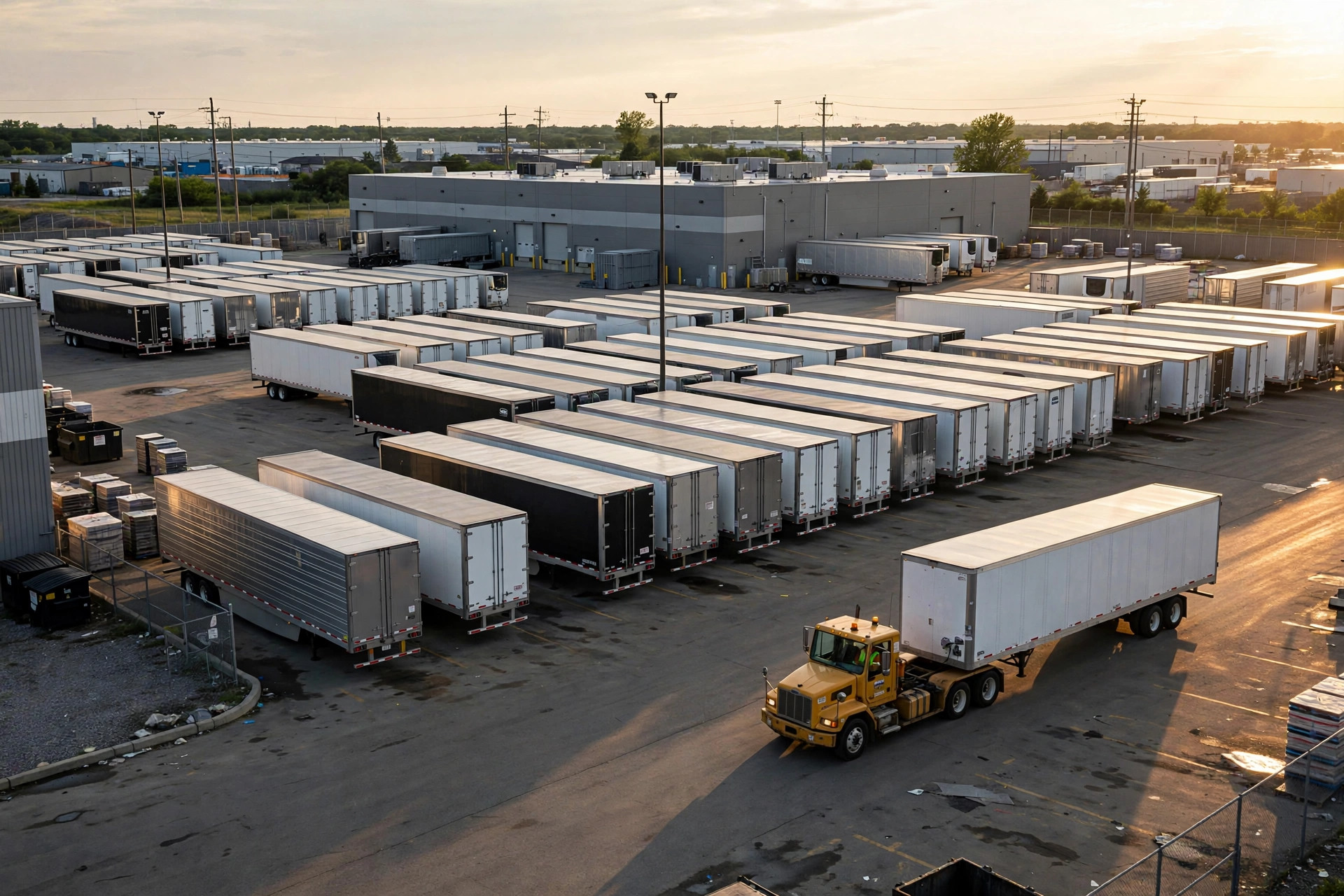
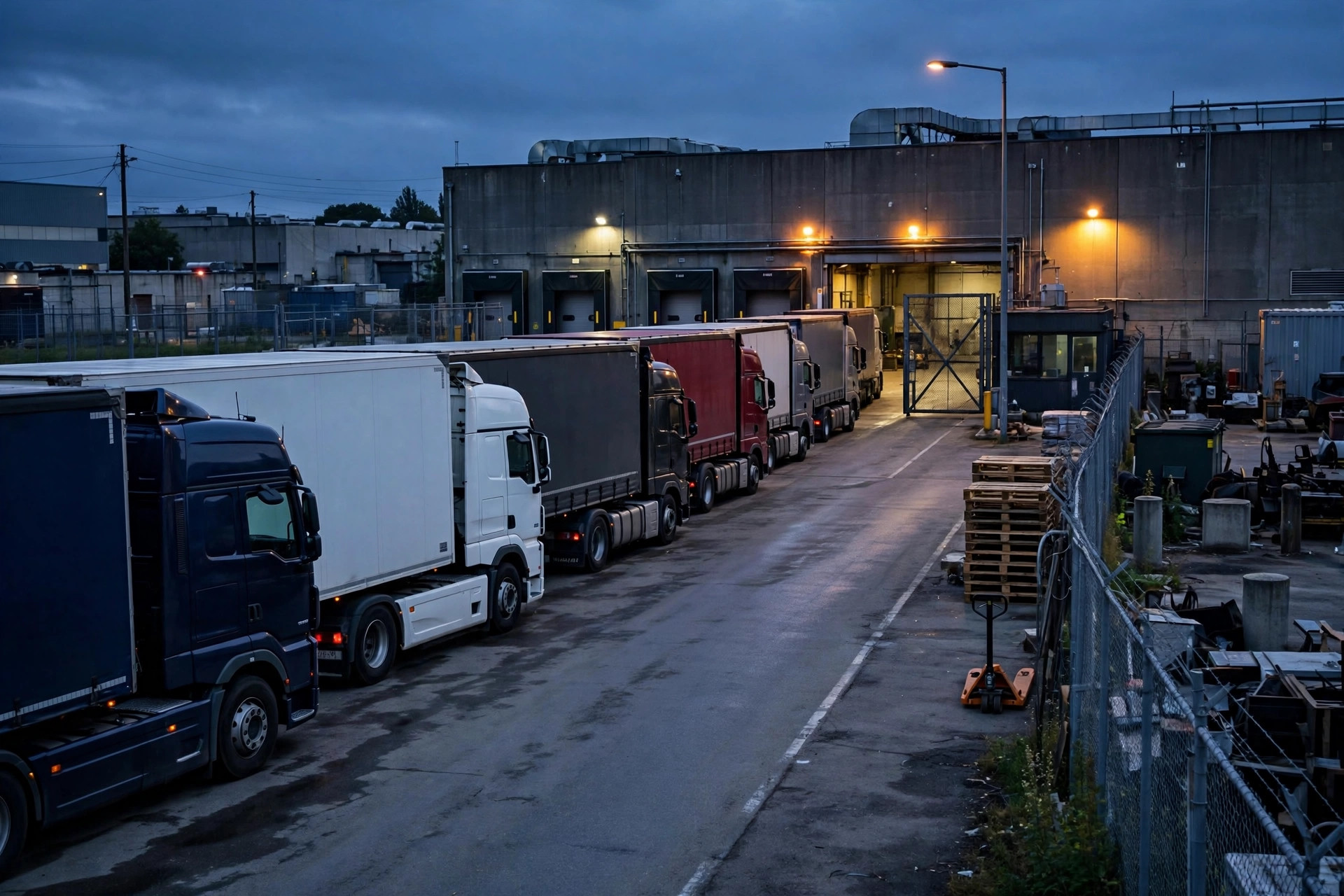
We had a client who lost a deal in the most unfair way you can imagine — and the post-mortem pointed straight at a blind spot in YMS yard management.
Last fall, a large e-commerce shipper — moving several million units a year — sent a five-person team to tour the distribution campus for their annual vendor audit. Veteran 3PL folks know these audits are theater — walk the warehouse, glance at the systems, nod. The real decision, renew or walk, gets made on gut feeling: does this place feel safe?
The team arrived at 10 a.m. They spent twenty-plus minutes at the gate hand-filling visitor forms — "purpose of visit" included — before being waved through. Inside, it got better: half a loading lane was blocked by a roofing crew, welding sparks flying, while a reversing forklift startled a visitor walking past. Nobody got hurt — but the client's face said everything.
The next day, the email landed: "We have concerns about on-site management and need to reassess the partnership." It took three months to save the account — at a discount.
They didn't lose points on management — they lost points on feeling. And where did that feeling die? In the blind spot YMS can't see: the trucks were managed, the people were not.
Insider truth from the sales side: a client touring your campus isn't auditing the warehouse — they're measuring a "trust index." Every audit visit is a sales call.
YMS Knows Where Every Truck Is. It Has No Idea Where People Are.
We pitch YMS to clients daily: every truck's arrival, its door, dwell time, departure — total yard visibility. Clients nod. Sounds great. But zoom out: the trucks are covered. What about the people who climb out of them?
Any given day, a campus sees a small army of humans: drivers, client auditors, the forklift technician, the roofing crew, inspectors, cleaners, temp workers. Does YMS know where any of them are? No. YMS tracks trucks, not people — that's a design decision, not a bug. Its world is license plates and parking spots, not badges and hard hats.
And that creates a massive blind spot, because people — not trucks — are the most dangerous variable in the yard. Forklifts mixing with pedestrians, contractors working at height, drivers smoking near the dock, visitors wandering the warehouse floor. YMS sees none of it.
Here's the part that stings: after an incident, investigators go straight for the people records. The guard's sign-in sheet. The contractor's safety-training log. The visitor escort record. Either those papers don't exist, or they're a mess. Insider confession: the question that keeps 3PL operators up at night isn't about the audit — it's the follow-up, "Do you have contractor safety-training records?" — with no good answer.
The Counterintuitive Truth: Half the Liability Lives on the Guard's Sign-In Sheet
Most people think campus management is about equipment and systems. After a decade and a half in sales and more than a hundred warehouse contracts signed, here's my counterintuitive take: when something goes wrong in the yard, half the liability traces back to the sign-in sheet at the guard booth.
Why? Because that sheet is the only evidence that "people" were managed at all. When OSHA shows up, when the insurer assigns blame, when the client demands answers — the first thing they pull is the record: who was this person, when did they enter, who authorized it, did anyone brief them on safety? Clean records turn an incident into "an isolated case." No records turn it into "a management failure."
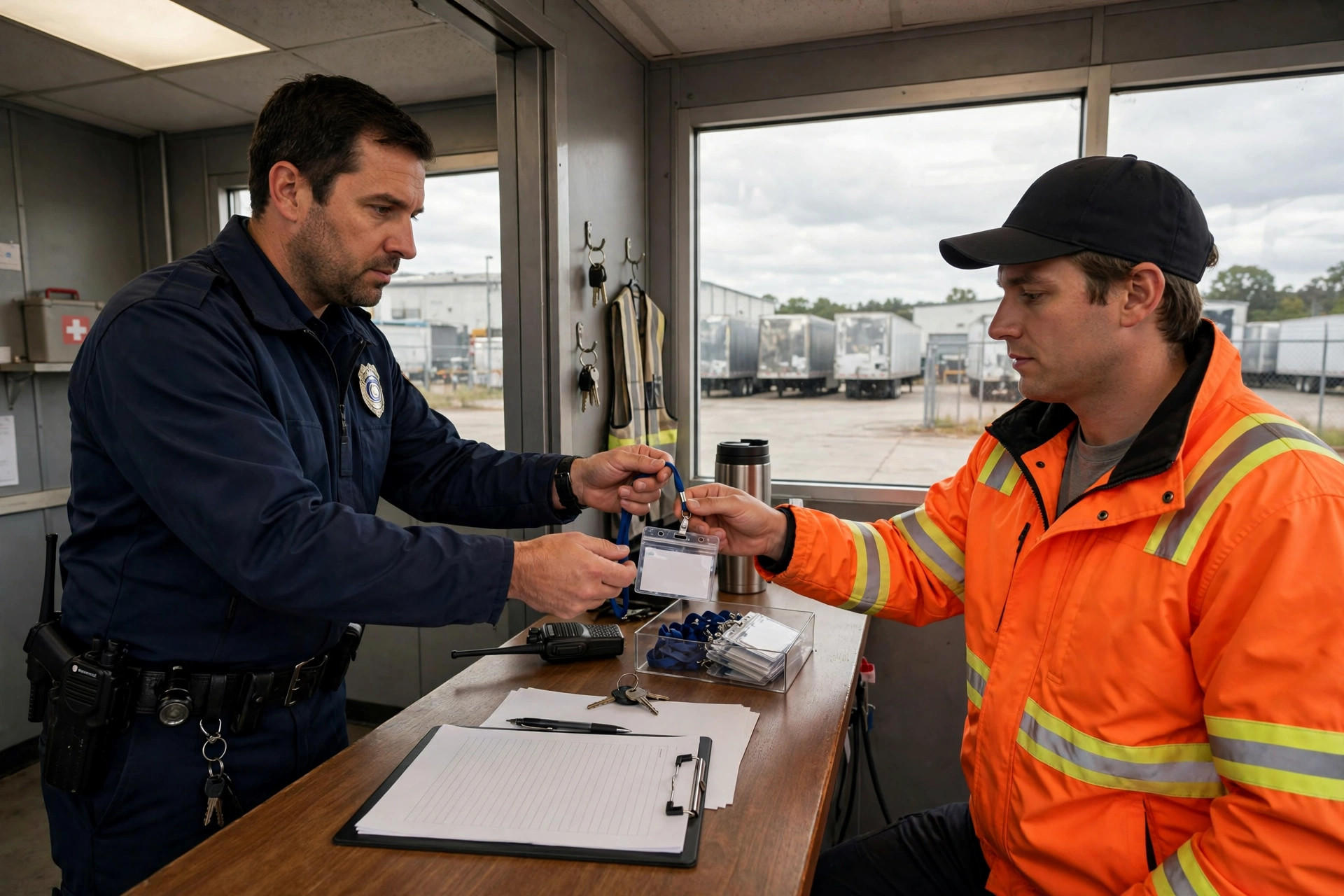
Let me put a number on it. For 2025, OSHA's maximum penalty for a serious violation is $16,550 per violation; for willful or repeated violations it's $165,514 per violation (per the U.S. Department of Labor's January 2025 inflation adjustment — check the latest official schedule to be sure). And that's just the fine, before downtime, lawsuits, and lost business. What does a sign-in sheet cost? Paper and a pen.
Another client of ours had a contractor reinforcing racking. A worker fell from about 10 feet up without a harness and broke his leg. OSHA arrived with three questions: Who hired the contractor? Was there safety training before entry? Who supervised the work on site? The client fumbled all three — the contractor came via the property manager, the "training" was verbal, and supervision was "everybody keeping an eye out." Fines plus remediation dragged on for the better part of a year. Insider reality check: this is routine — contractor shows up, guard waves them in, training assumed, supervision is vibes.
Insider View: One Matrix That Shows Who Owns "People" in the Yard
The biggest trap in visitor and contractor management is unclear ownership. The client thinks it's the 3PL's job. The 3PL thinks it's the property manager's. The property manager thinks "I just watch the gate." The contractor thinks "I'm just here to work." Before an incident, everyone assumes it's handled. After one, everyone points fingers.
Here's a responsibility matrix. Bring it to your next negotiation — with the client or the property manager — and walk through it cell by cell:
| Step | Visitors / Auditors | Truck Drivers | Contractor Crews | Temp Workers |
|---|---|---|---|---|
| Pre-entry booking | 3PL reception | YMS appointment | Property / 3PL approval | 3PL HR |
| Gate check-in | Sign in + visitor badge | Sign in + plate linked | Sign in + insurance verified | Sign in + ID verified |
| Safety briefing | In-person walkthrough by host | Handout at the gate | Job-specific training before entry | Pre-shift training |
| On-site escort | Escorted at all times | Restricted to dock area | Supervised by 3PL / property staff | Led by shift lead |
| Check-out | Badge returned | YMS departure logged | Work accepted, site cleared | Attendance confirmed |
See the pattern? Every row and every column needs a named owner. Any cell without an owner is where your next incident is hiding. And the real value of this matrix isn't operational — it's commercial. Put it on the table during contract talks, point at a cell, and ask "who owns this?" It beats a hundred slides about "we take safety seriously."
One special note on the contractor column: collect and verify insurance certificates, safety training records, and special-operation licenses (welding, working at height) before they set foot on site. Too many campuses run "work first, paperwork later" — and when something happens, the paperwork still isn't there. That's operating naked.
One more piece of insider intel: our large-client proposals now include a page on visitor and contractor management — this matrix included. Everyone else pitches square footage; we pitch how we manage people.
Next Time You Negotiate a Contract, Ask These Three Questions
At the end of the day, I'm in the business of selling warehousing, so this has to land on the contract. Visitor and contractor management appears in roughly zero percent of contracts — or gets one throwaway line like "Party B shall be responsible for campus safety." That clause is worth exactly nothing. Whether you're the client or the 3PL, ask these three questions next time:
One: Whose contract actually owns visitor and contractor management? Line up the 3PL agreement, the property management agreement, and the client's safety and environmental requirements side by side. Make sure there's no no-man's-land. A campus with fuzzy ownership isn't worth signing no matter how cheap the rate — cheap storage gets expensive on the day something goes wrong.
Two: Who collects and verifies contractor insurance, training records, and licenses — and where are they stored? Get specific: which system, retained for how long. Verbal promises don't count; ink does. One of our clients skipped this question and discovered — after an incident — that the contractor's insurance had lapsed three months earlier. They paid the settlement out of pocket.
Three: Are client audit and visit reception standards written into the service agreement? The "feeling points" lost during audits come down to one thing: no reception standard. How many minutes at the gate, who hosts, which route, which stops — put it in the agreement, and every client visit runs like clockwork. This one's a sales-side trick: writing reception standards into the contract converts "feeling points" into "contract points." Much harder to lose.
The honest bottom line: YMS can track trucks down to the minute, but the real uncertainty in any yard will always be people. Get the people part right, and your campus reads as "well managed" in the client's eyes. Trucks are assets; people are risk. The same systems thinking that manages trucks — booking, check-in, briefing, escort, check-out — works for people too. Five steps. Skip none of them.
By Susan, 3PL Sales Director