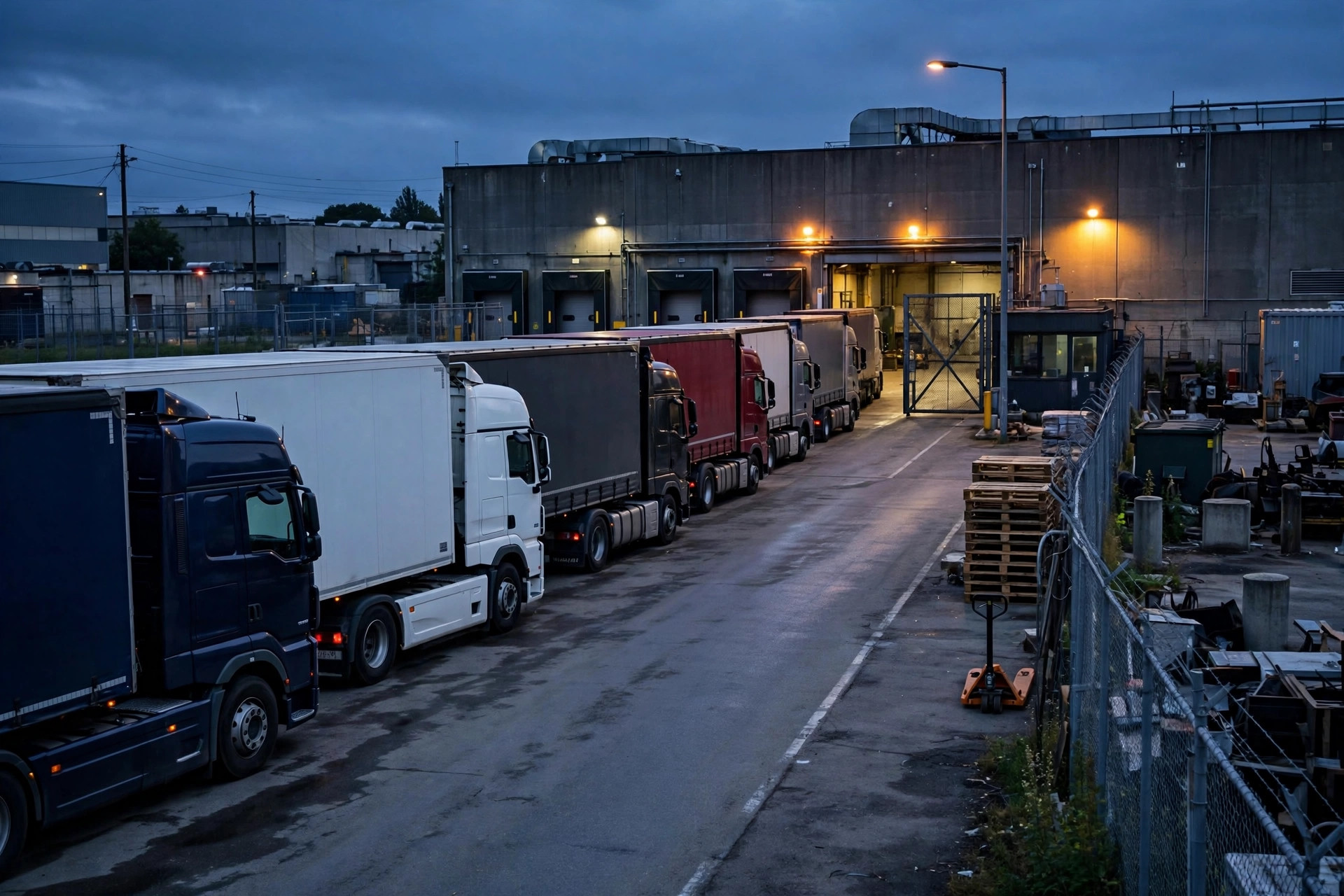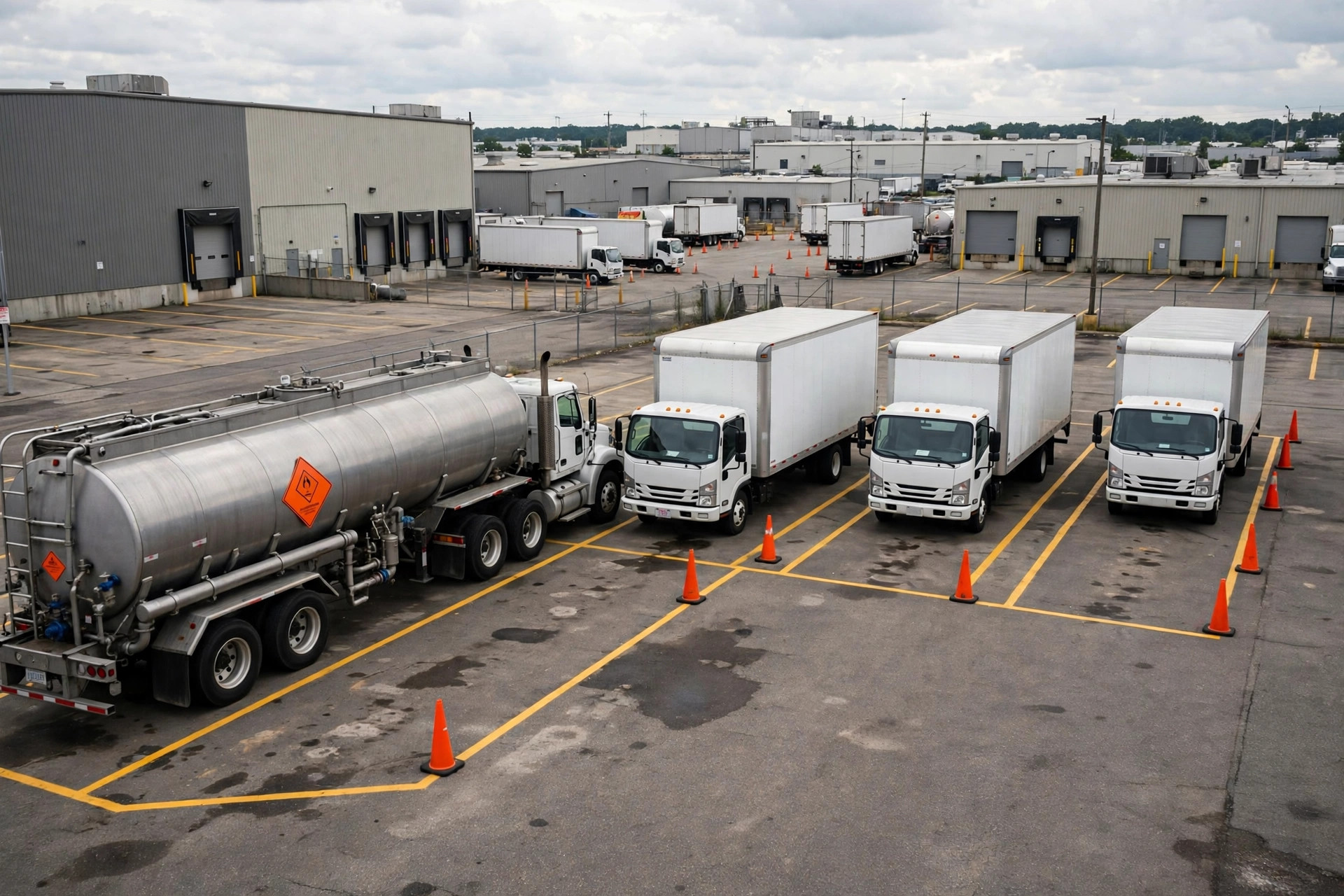
I'll tell you something. These days, at some warehouses, a driver never has to climb out of the cab — two taps on a phone and you're checked in and in the queue. That's what a driver app does. But a couple of years back, at a distribution warehouse outside Ontario, California, it was a whole different scene. I got there at seven in the morning and there were already seven or eight rigs lined up at the gate. The guard shack routine: climb down, register with the paperwork, walk out with a handwritten number on a paper slip. Then sit in the cab waiting for your number over the radio. Miss it? Back of the line. That day the fellow ahead of me dozed off, missed his number, and they crossed him right off the list. He was pounding his steering wheel. I told him, brother, that's just how it is here.
Fifteen years on the road, and I've seen that scene more times than I can count. That same morning I watched the truck ahead of me lose his paper slip — ten minutes of arguing with the guard, "I was number five," "you're not in my book," and off to the back of the line he went. His parting line cracked me up: "The long haul doesn't scare me. What scares me is getting there and nobody recognizing my claim."
What drivers fear most isn't the distance. It's getting to the gate and not getting in. On the road, the truck burns diesel. At the gate, it burns money — your schedule, your next load, all of it.
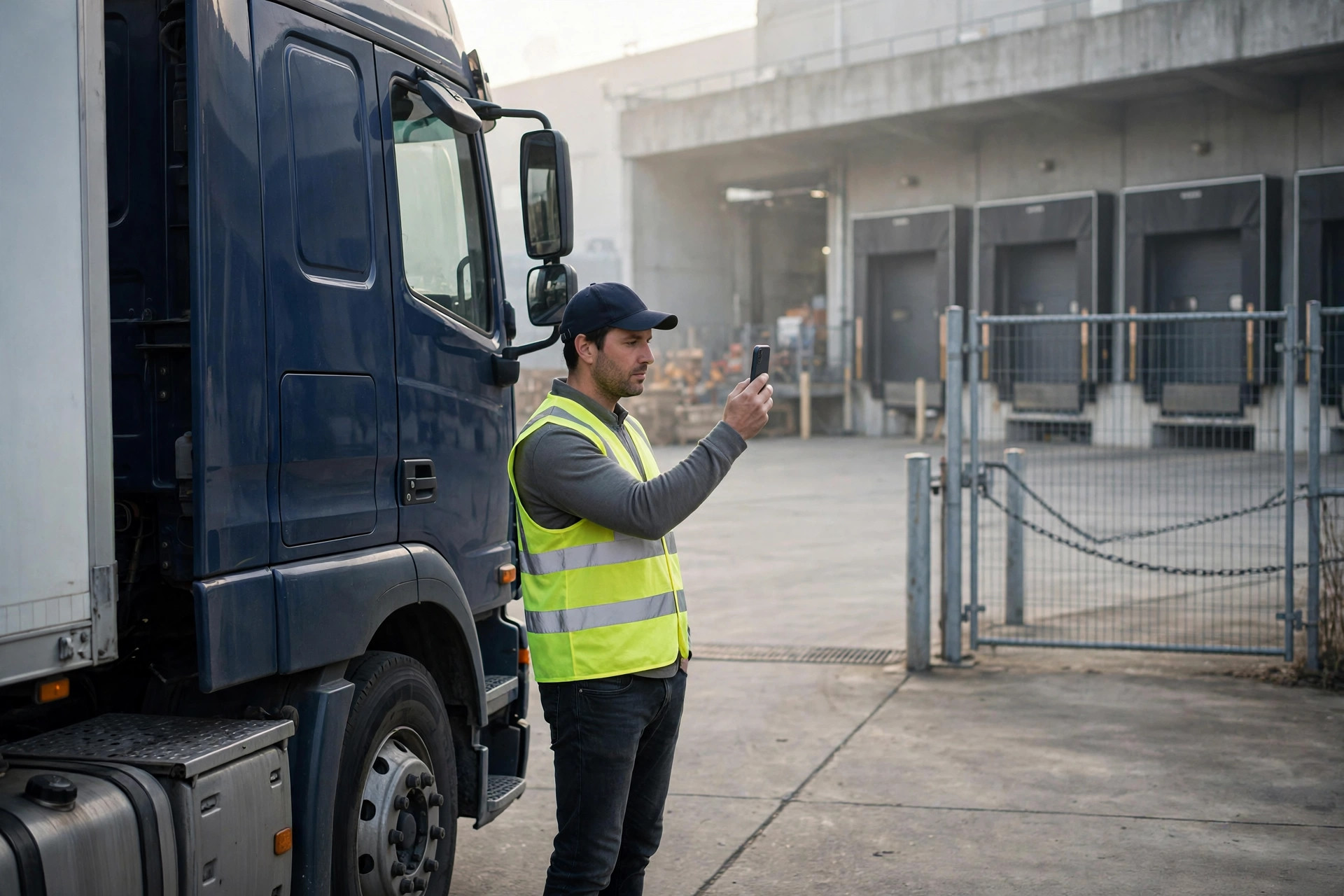
Last year I went to another warehouse, also in California, about the same size. Rolled up to the gate and nobody asked me to get out. The guard just waved: "Checked in on the app?" I blinked. He said, punch your load number into their driver app, it takes a number for you automatically, and your phone buzzes when it's your turn. I fumbled with it for two minutes. Sure enough — four trucks ahead of me, about forty minutes. I parked in the staging area, locked up, and went and got a sandwich. Then the buzz: "Please proceed to Dock 7." Drove over, backed in, got loaded. When it was done I didn't have to hike to the office — tapped confirm on the phone, electronic signature, and rolled out. I got out of my cab maybe three times the whole visit. Their dispatcher told me the gate barely backs up anymore — trucks used to spill onto the main road at peak hours and the cops would come shoo them away. Now drivers time their arrival and the docks turn faster.
What the Driver App Actually Changes
Here's what that tells me. It used to be that dealing with a warehouse ran on legs, lungs, and luck. Now it runs on a phone. That little app is really the yard management system stretched all the way into the driver's hand. The warehouse watches the big screen and dispatches; the driver watches the phone and queues. Both sides are looking at the same numbers. Information used to sit in the warehouse's pocket while the driver sat blind. Now the progress is right there on the phone, and nobody has to beg anybody for answers.
Just look at it — same job, getting into a warehouse, but with and without this thing it's two different days:
| Without a driver app | With a driver app | |
|---|---|---|
| Check-in | Climb down, register at the shack on paper | Check in from the road, number assigned automatically |
| Queuing | Numbers called over the radio — miss it and you're skipped | Live queue on the phone, push alert when it's your turn |
| Dock assignment | Shouting, running around, who you know | System assigns the dock, phone tells you directly |
| Disputes | Phone tag, everybody's story is different | Every check-in and move logged, the record settles it |
| Gatehouse work | Registering drivers one by one, keeping order | Mostly handles exceptions, quiet on a normal day |
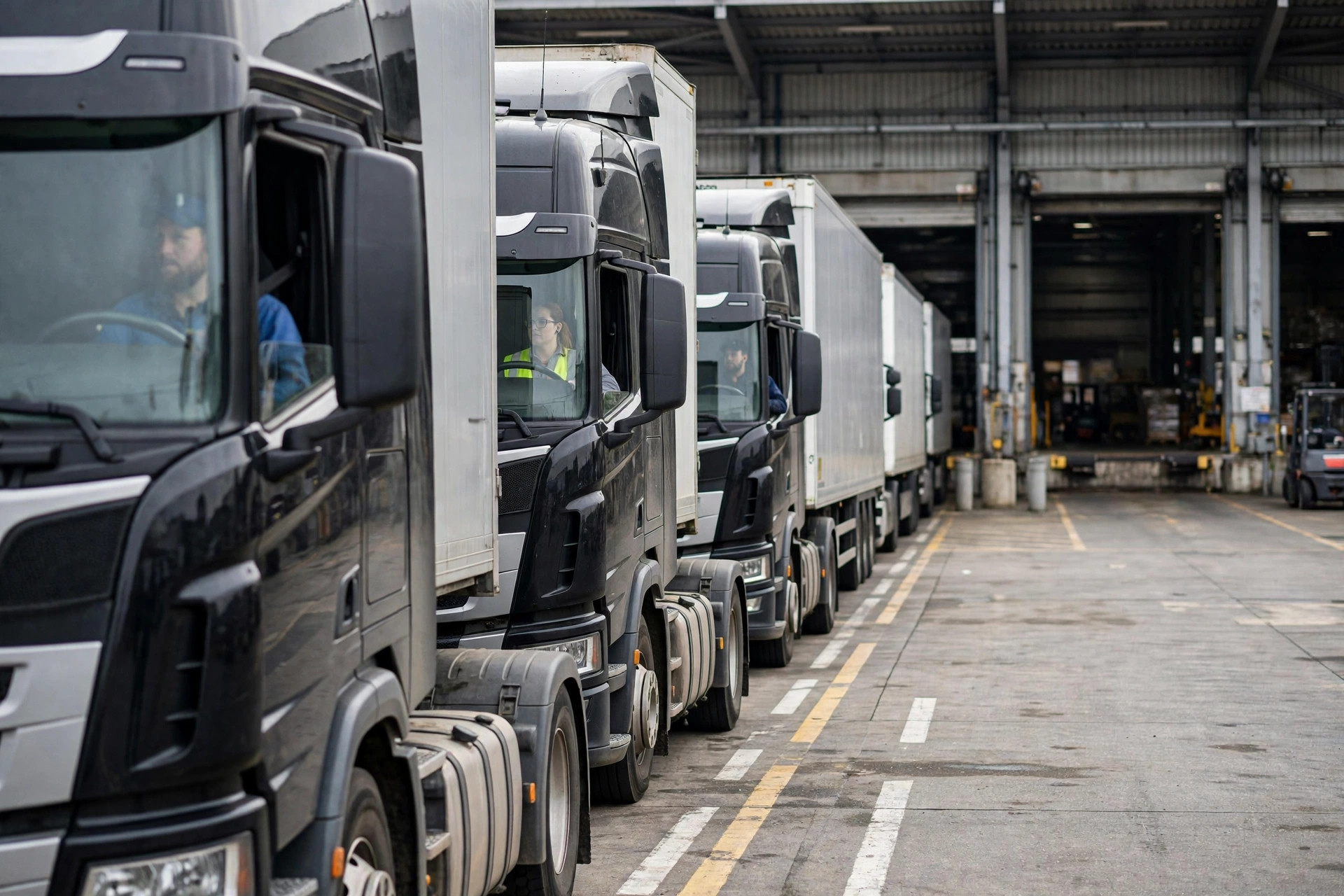
The "dock coordination" part deserves its own mention. Loading used to go like this: back into the dock, then wait — when it finishes is anybody's guess. You'd climb down every so often and ask, "How's my load coming?" and nobody has time to answer. At some warehouses now the phone shows loading progress and pings you when it's done — you walk over, lock the doors, grab the paperwork. Dock turns are won in those few minutes. A YMS manages four things: trucks, people, freight, and time. The driver app just extends that into the cab.
Do Drivers Actually Want the YMS in Their Pocket?
Now, I'll tell you — the thing works great, but don't assume every driver loves it. An old buddy of mine, twenty-plus years behind the wheel, told me: "Used to be, waiting in line, I could catch some sleep and nobody bothered me. Now everything's on the phone — what time I got here, how long I've been waiting, the warehouse sees it all." See, the problem isn't the technology. It's trust. Drivers worry about being watched, about burning phone data, about not figuring the thing out. The first hurdle in rolling this out isn't buying the system. It's getting drivers willing to pull out their phones.
There's another layer most people miss: this turns queuing from physical work into information work. It used to be about fast legs and knowing the guard. Now it's about who checked in first. The honest driver comes out ahead, and line-cutters are out of luck.
And here's the part that surprises people: the smoother the system runs, the more idle the gatehouse gets — and the happier the warehouse manager is. Why? It used to be shouting matches at the gate. Driver says "I've been waiting three hours," warehouse says "you just got here an hour ago," and nobody can prove a thing. Now the phone keeps the record: checked in at this time, docked at that time, left at that time. All those fights over detention and waiting fees? Most of them just evaporate. Data looks cold until you're in an argument — then there's nothing better.
Let me walk you through the math — not to the penny, just the rough shape of it. Without this: driver arrives, climbs down, registers, queues by radio call, a dock sits empty and nobody knows, a driver sleeps through his number and goes to the back of the line. Half the morning gone, nothing moved. With it: the driver checks in while still on the road, rolls into the staging area, watches the queue on the phone, gets called the minute a dock opens, taps confirm when done, and leaves. One side has people waiting on information. The other side has information waiting on people. The whole gap comes down to one word: waiting. And waiting costs money.
Real math from my own logbook: last year I burned three-plus hours at one gate, rolled out, and missed the pickup window for my next load — dispatch gave it to somebody else. A two-three-hundred-mile run, revenue gone. Every hour saved at the gate is an hour earning on the road. Drivers know that math by heart.
Three Honest Suggestions for Shippers and Warehouses
First, when you roll this out, don't just think about your own convenience. The driver has to get something out of it too. Transparent queue so he can eat and rest easy. Electronic sign-off so he doesn't have to hike to the office. A real waiting record so detention pay is easy to settle. Give and take — that's what gets people on board. If all you think about is controlling drivers, drivers will think about gaming you right back.
Second, the old hands who can't figure it out? Don't laugh at them. Tape a big poster at the gate with a three-step picture guide, or have the guard spend one minute showing them. It's not hard. What's hard is nobody teaching. My old buddy — the guard showed him for two minutes, and now he teaches the new guys.
Third, keeping records is a good thing, but don't use it to squeeze drivers. If a man waited two hours, pay the detention you owe and don't pretend you didn't see it. In this business, fairness is everything. Treat a driver fair and he'll happily come back to your gate. Play games, and the good drivers route around you — the ones left are the ones with no choice.
Old saying to close: sharpening the axe doesn't delay the woodcutting. That half hour, that hour at the gate — looks like nothing. Add up a year of burned diesel, blown schedules, and ruined tempers, and it's not a small number. Tapping "check in" on a phone? That's no trouble at all.
By Shifu Zhao, Trucking Veteran (15 yrs)