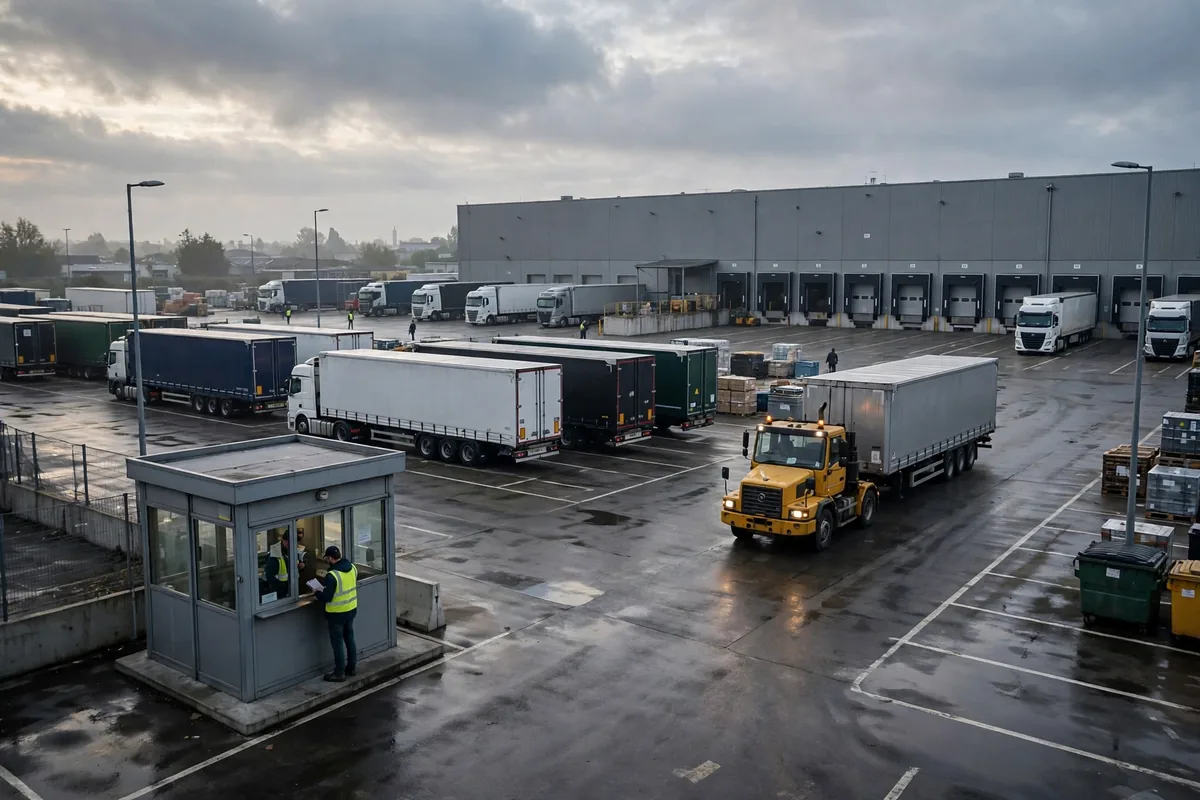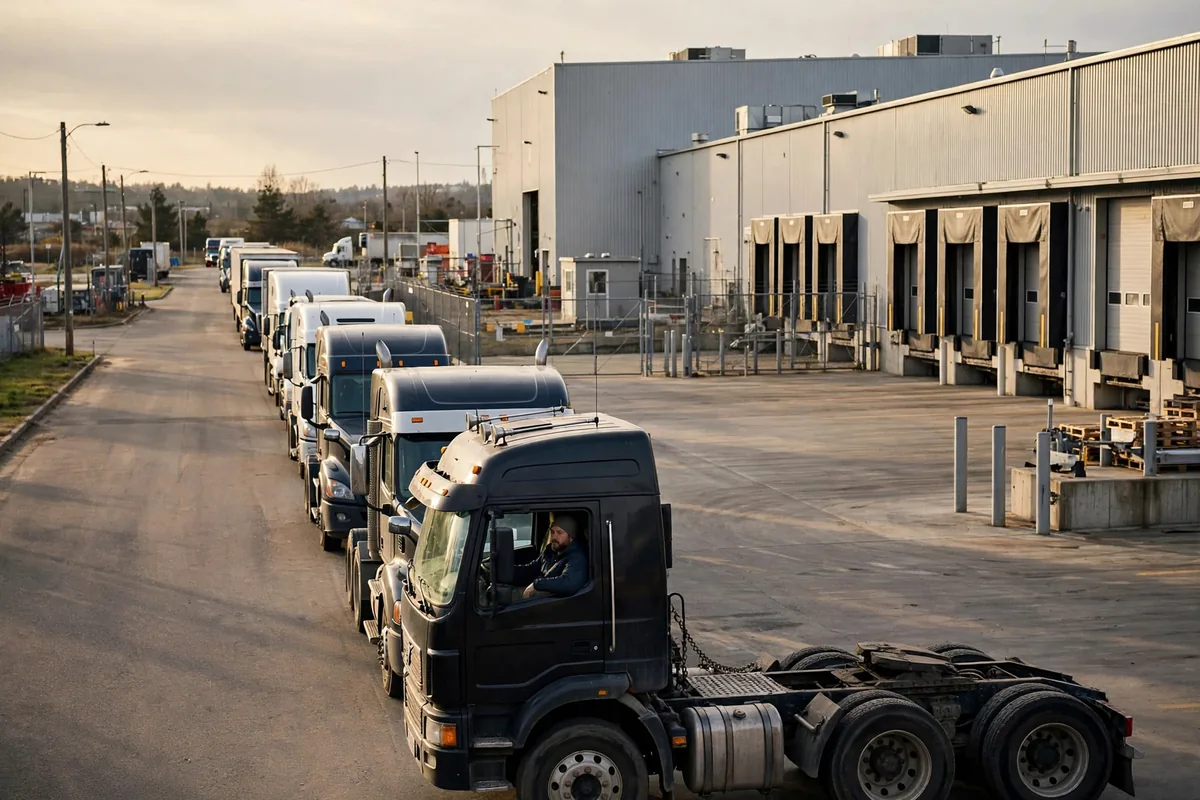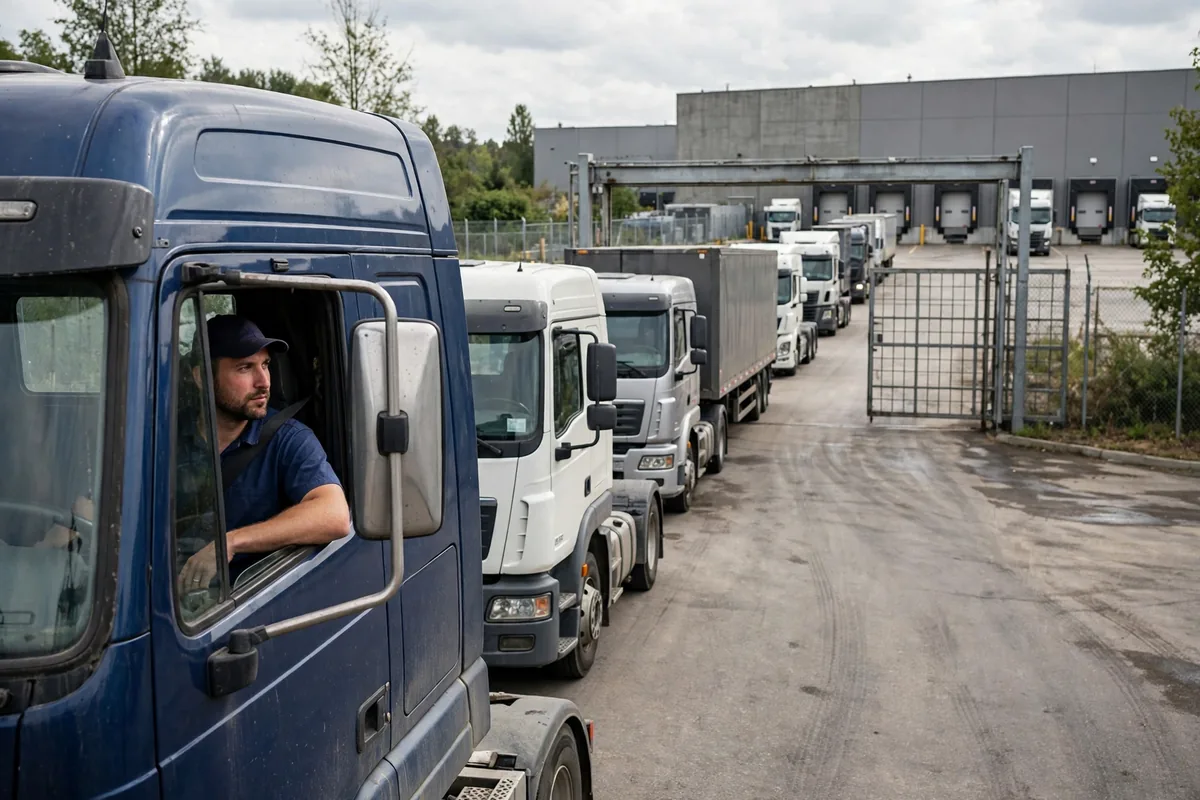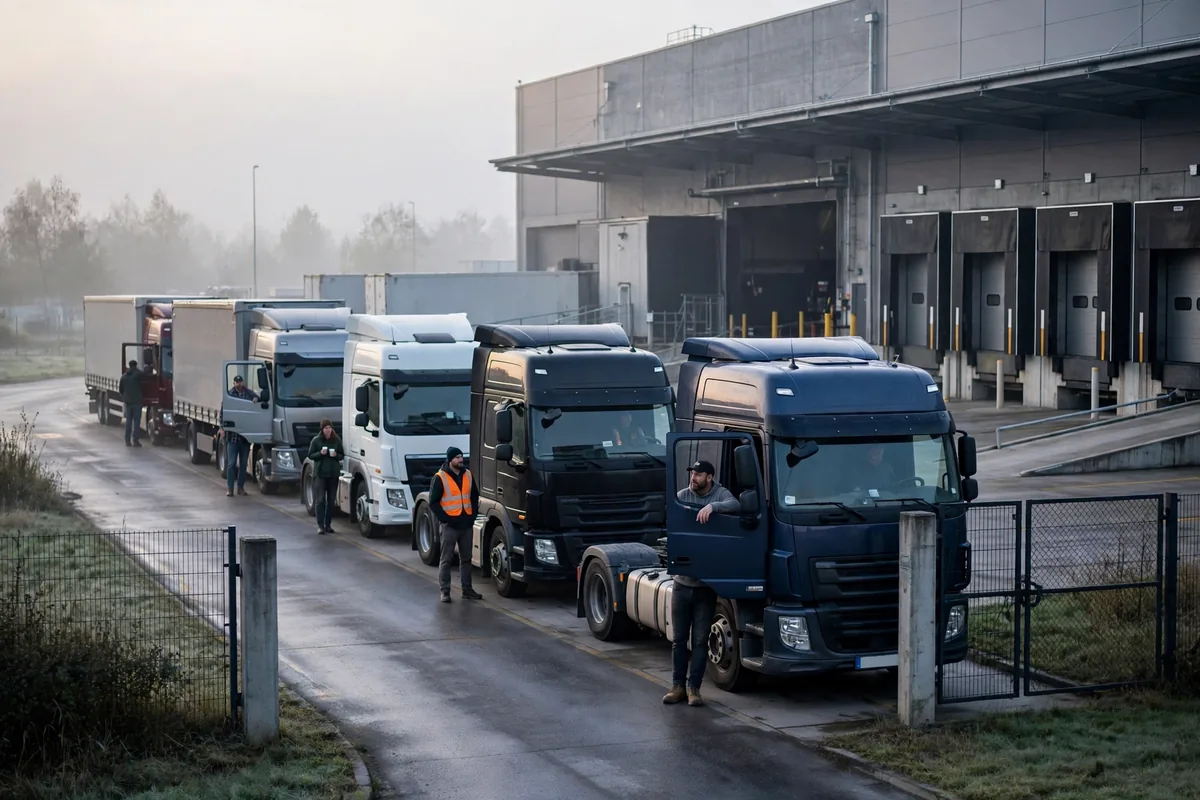
It was 6:10 in the morning, still half dark, and my phone was ringing. Zhang at the gate said seven trucks were lined up outside, and the first had rolled in a little after two. The driver lowered his window and did not shout. That worried me more. He should have been unloaded and gone by four, he said, and he had not even seen a dock door yet. In peak season, the side with trucks has the power. Make drivers wait often enough, and they stop coming. When people talk about yard management system driver wait time, they jump straight to software. Out on the floor, that is not where the story starts.
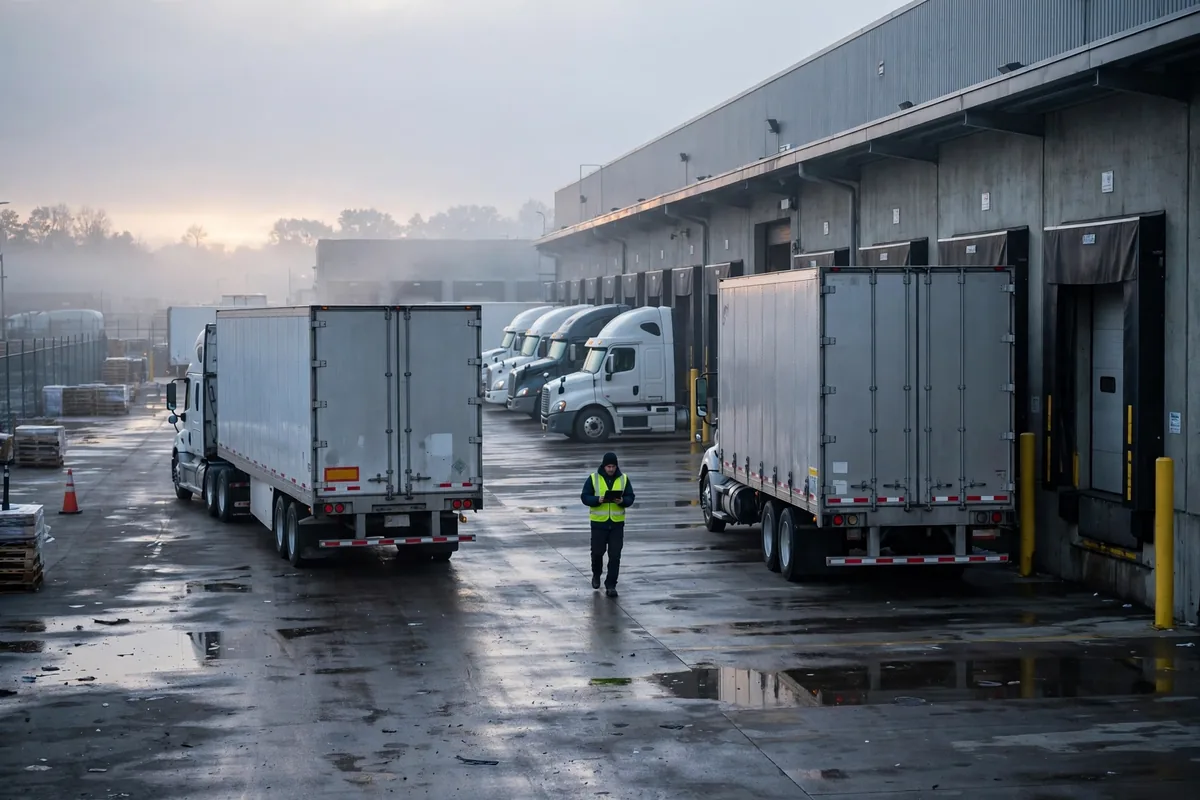
Why did that truck sit for four hours? I pulled the morning apart later. The driver was not late. The paperwork failed first: the piece count on his bill did not match our system, so receiving would not touch the load. The dock failed second. Two doors were blocked by trailers the night shift had not pulled, and the day-shift forklift drivers had not clocked in yet. Zhang failed third, and it was not his fault. He knew a truck had arrived; he did not know which door it belonged in, and he was not going to guess. Three crews, all busy, and the truck never moved. Most waiting does not happen at the gate. It happens inside the building.
yard management starts with the clock: where driver wait time piles up
We stopped treating wait time as one number. Now we stamp four moments: gate check-in, door assignment, unload start, and gate exit. Check-in was fast. The long sits were waiting for a door and waiting for someone to clear the paperwork.
One driver sticks in my mind. He had run our lane for three years, steady, never any trouble. One peak morning he arrived at nine and still had not started unloading at one. He did not yell. He sat in his cab eating instant noodles, then told me, half joking, that next time this load would cost extra — he could not burn half a day here. A driver plans his day in trips; burn half a day here and the next trip is gone. Dispatchers keep score. Warehouses that unload clean get trucks first.
Then there is detention. The usual setup is simple: the carrier contract allows a set amount of free waiting time, and time beyond that gets billed. How much free time, and what the charge looks like after it, changes from contract to contract. I will not quote a number here, because any number would mislead you. Read your own carrier agreement. A peak month of them, truck after truck, adds up. And the invoice is not the worst part. The hidden bill is drivers who avoid your site, rush fees for a replacement truck, and a receiving delay that squeezes the whole day.
Here is the rough sheet on our office wall. Not fancy. It works.
| Where it stalls | How you spot it | Fix first | Cost if you don't |
|---|---|---|---|
| Waiting for a door | Trucks in yard, no door free | Pull finished trailers, clear door status each shift | Trucks stack up |
| Waiting on paperwork | Truck here, crew won't start | Pre-check documents a day ahead | Driver sits, crew takes blame |
| Waiting on labor | Door free, nobody to unload | Tie roster to appointments | Booking becomes pointless |
| Waiting on a decision | Counts mismatch, nobody signs | Name one person for exceptions | One truck blocks the rest |
What we tried first: yard management without buying anything
We did not start with a system. We ran three cheap tools for two months. A shared appointment sheet, filled a day ahead: who is coming, when, with what freight. A whiteboard at the gate showing the day's door plan, so Zhang could call doors without phoning the office. And a paperwork pre-check: the office reviewed the next day's documents and called about mismatches before trucks rolled. Those moves brought the average wait down noticeably. If your yard is small, they may carry you a long time. Do not spend before you have squeezed them dry.
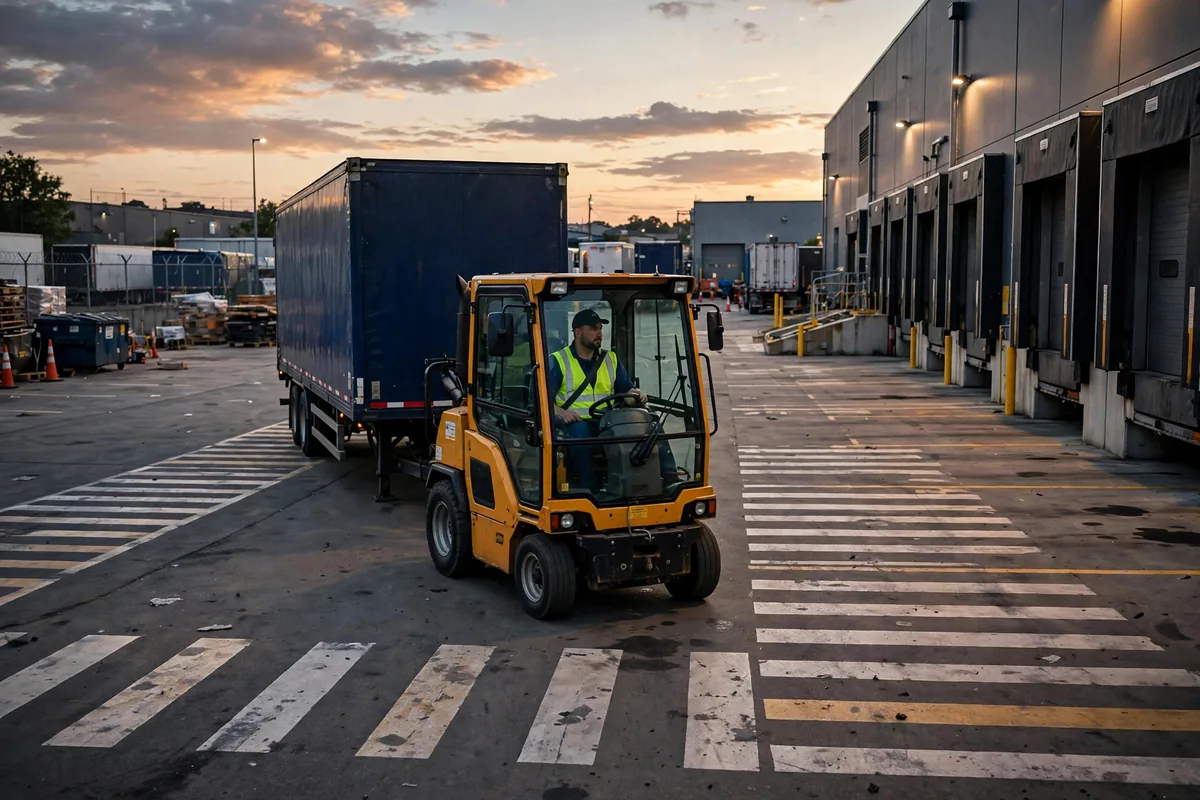
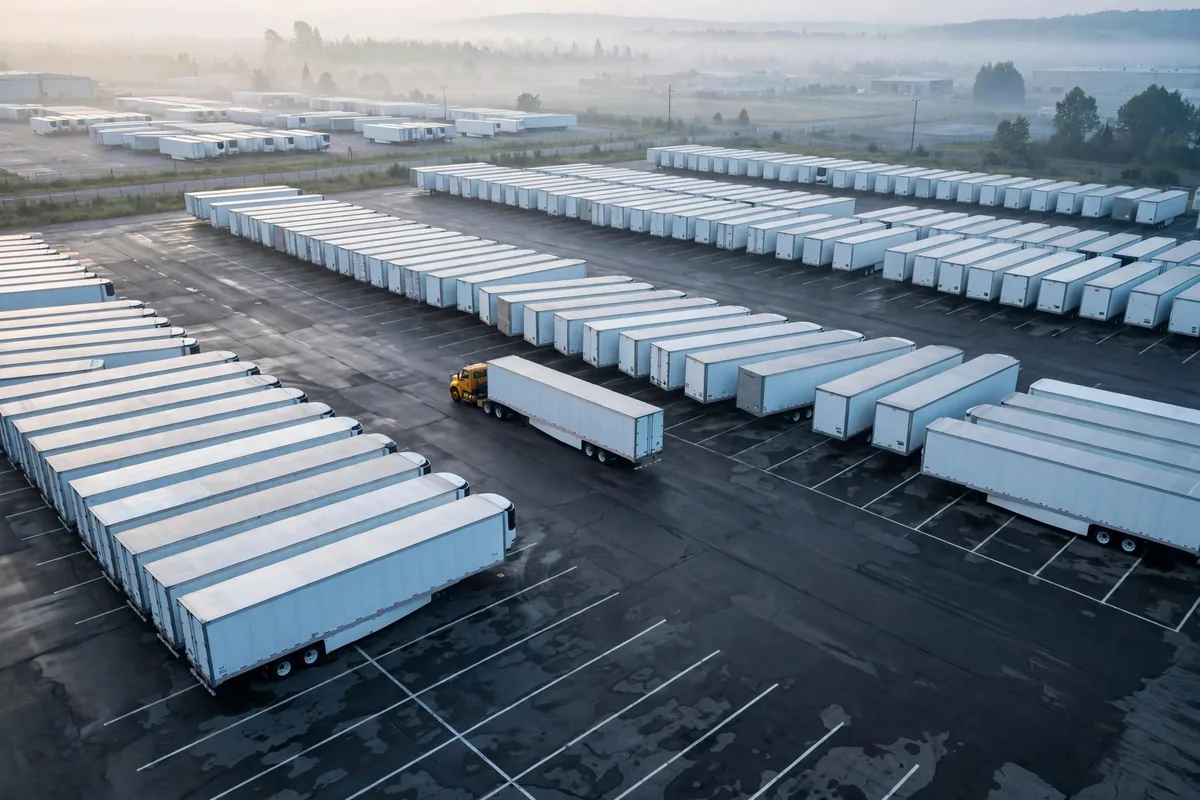
Cheap tools have a ceiling, and volume finds it. Anyone can edit a shared sheet, and someone eventually edits it wrong. The whiteboard only works if the night shift wipes it. And nobody knew how many trailers were in the yard, empty or loaded, without walking out to count — by the time you finished in peak season, the picture had changed. That is when we asked the harder question behind yard management system driver wait time: would software cut the wait, or just give us a nicer screen to watch it on?
What the system genuinely fixed came down to three things. Appointments now land on a door and a time slot, so we see a crowded hour coming. Doors and trailers are visible on a screen, no walking the yard to count. And the time stamps record themselves, so when we sit down with a carrier or our own crews, we argue from a record, not from memory.
Now the part vendors leave out. A system cannot fix bad paperwork at the source. It can flag a mismatch earlier; it cannot make a shipper write a clean bill. It cannot fix a carrier who books ten and shows up at two — that is a contract problem. And it cannot fix a short crew. A door you can see clearly is still just a door with no forklift driver to work it. If anyone promises the wait will halve at go-live, smile and slow down. That is the trade-off: a system buys one stretch of the problem. Paperwork habits, rosters, and carrier agreements still have to change with it. Buy the system and change nothing else, and the system gets the blame.
There is a second trade-off in how tight you book. Pack the schedule full and one exception blows up the day. Book it loose and doors sit empty while crews swing between rushed and idle. In peak season we leave a door or two flexible for late trucks and exceptions. The first time a problem load lands in that flex door instead of blocking the plan, you stop calling it waste.
What stuck, and a word for anyone running a dock
Today we run the cheap tools and the system together. Appointments still lock a day ahead. Paperwork is still checked a day ahead. The whiteboard is still at the gate, because networks go down and screens go black, and a board does not. Zhang reads it at a glance, and new hires learn the flow from it before any software. Door status lives in the system, but at shift change the night lead still hands over face to face: stuck trailers, a door down, paperwork open.
We also changed rostering. We used to staff to outbound volume alone. Now the appointment book drives it. Heavy inbound tomorrow means receiving and forklift crews staffed up in advance. The book says full, the floor is staffed for a normal day — that mismatch is why many yards keep drivers waiting.
Once a month we pull the wait record and sit down with our carriers: which trucks waited, how long, whose problem it was, all on one sheet. If a door was not cleared, that is ours and we say so. If the paperwork was wrong, the record shows it. Numbers keep that conversation civil; arguing burns the relationship you need in peak season. That review is where yard management system driver wait time stops being a complaint and becomes a number both sides can work on.
Get the order right. Break the wait into segments and time each one. Run the cheap tools first, properly. If you still stall because nobody can see the doors, count the trailers, or prove the times, then look at a system — clear-eyed about which stretch it fixes. Do it backwards, software first and habits later, and it ends like this: money spent, gate jammed, everyone blaming the tool. Drivers do not come back because your software is impressive. They come back because your dock does not waste their day.
By Chen Feng, Warehouse Operations Manager