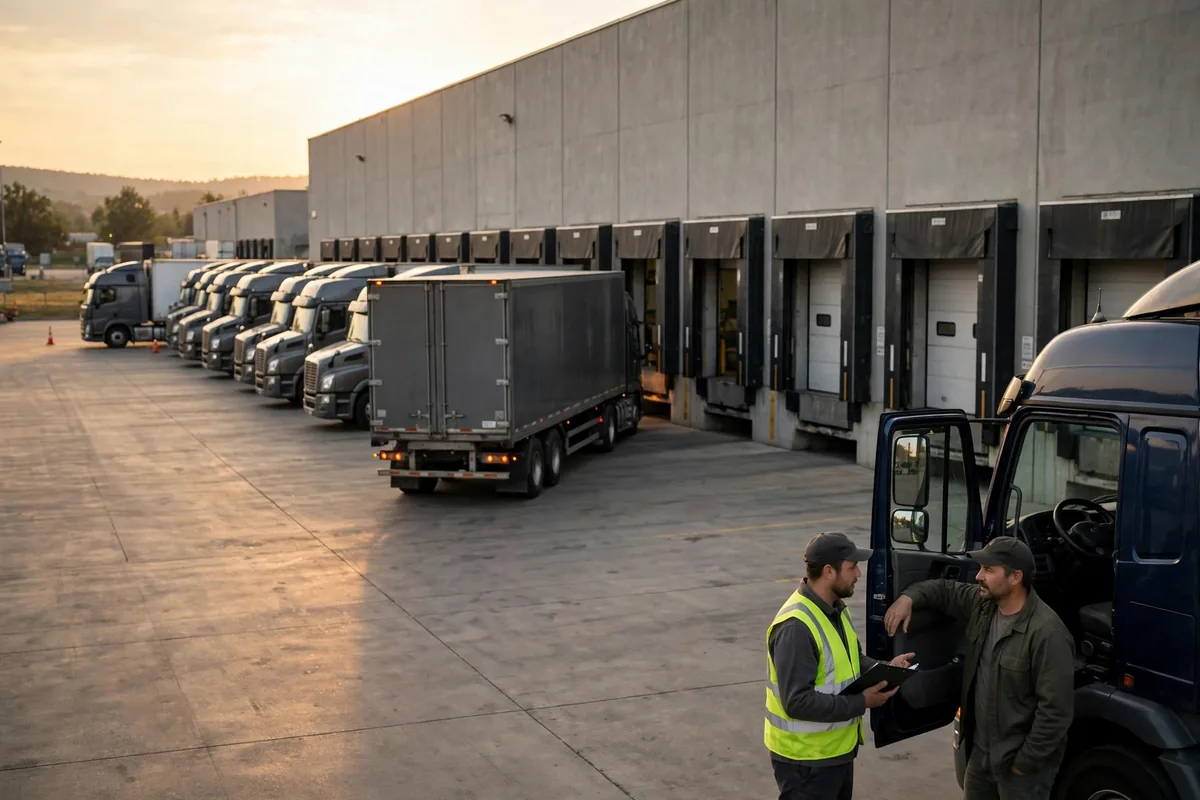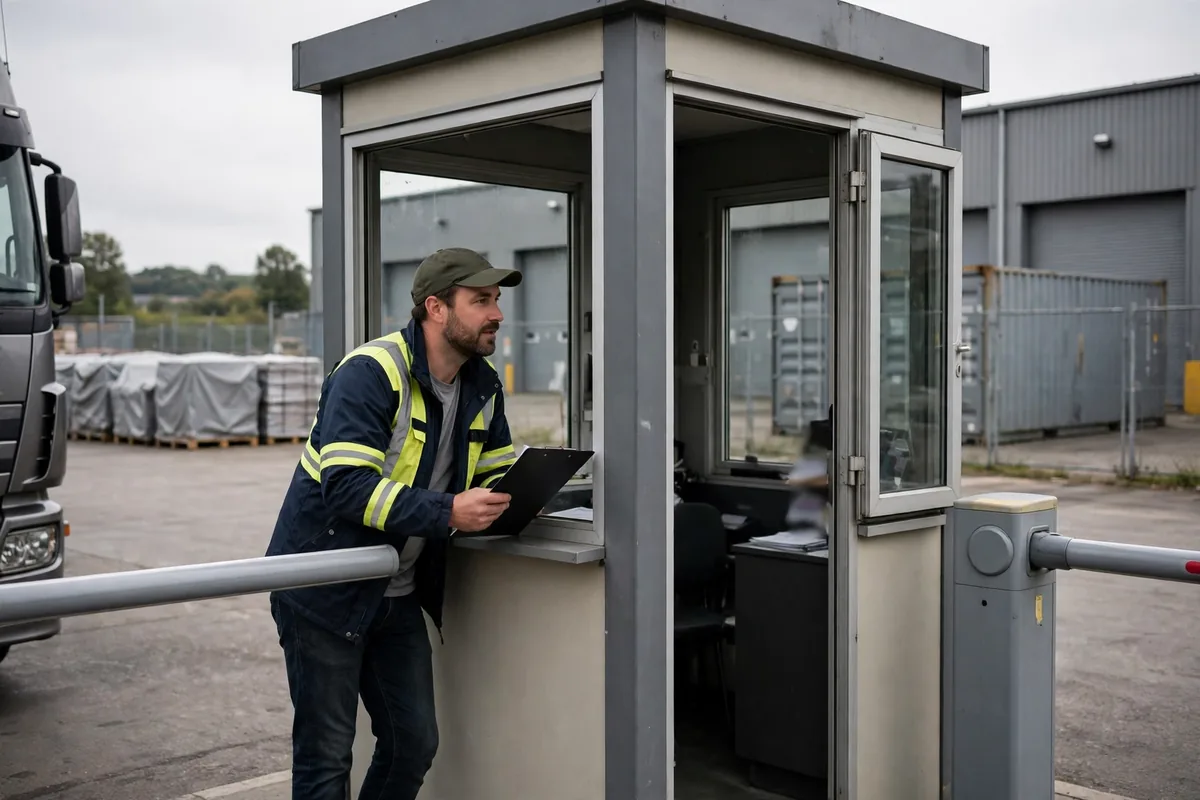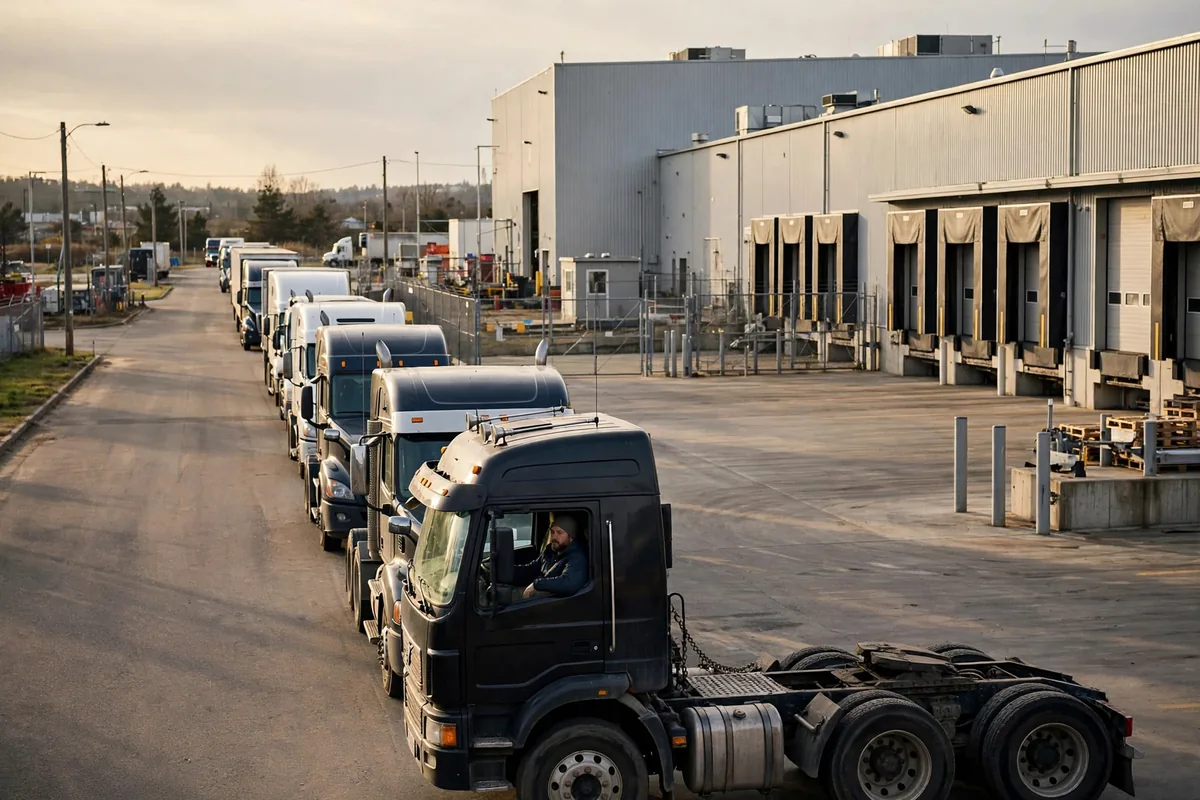
Two in the morning, my phone rang — a lesson in driver wait time yard management I never forgot. The driver at the gate had been waiting almost four hours and wanted to know if we were unloading tonight or not. Let me be straight with you: driver wait time used to look like the driver's problem to me — traffic, bad timing, a wrong turn. After years of running a warehouse, I'll say this plainly: when a driver sits at your gate for hours, nine times out of ten it's our problem, not his.
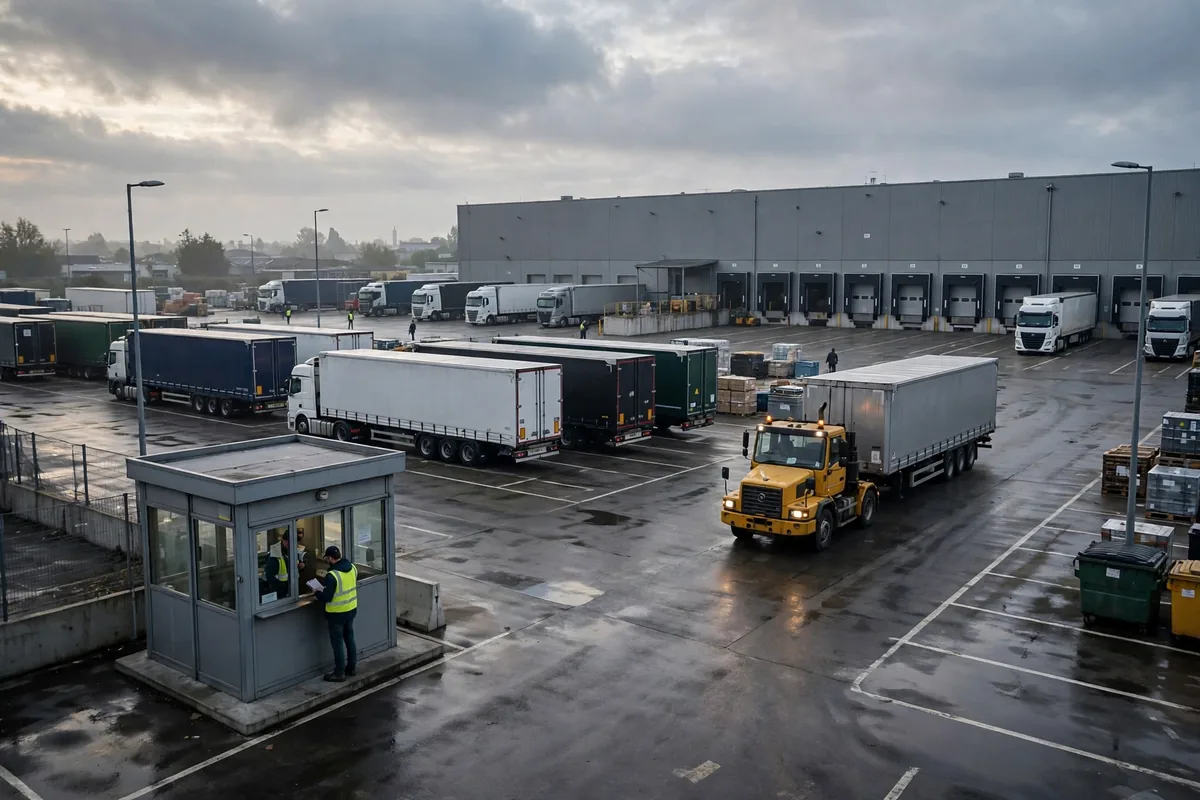
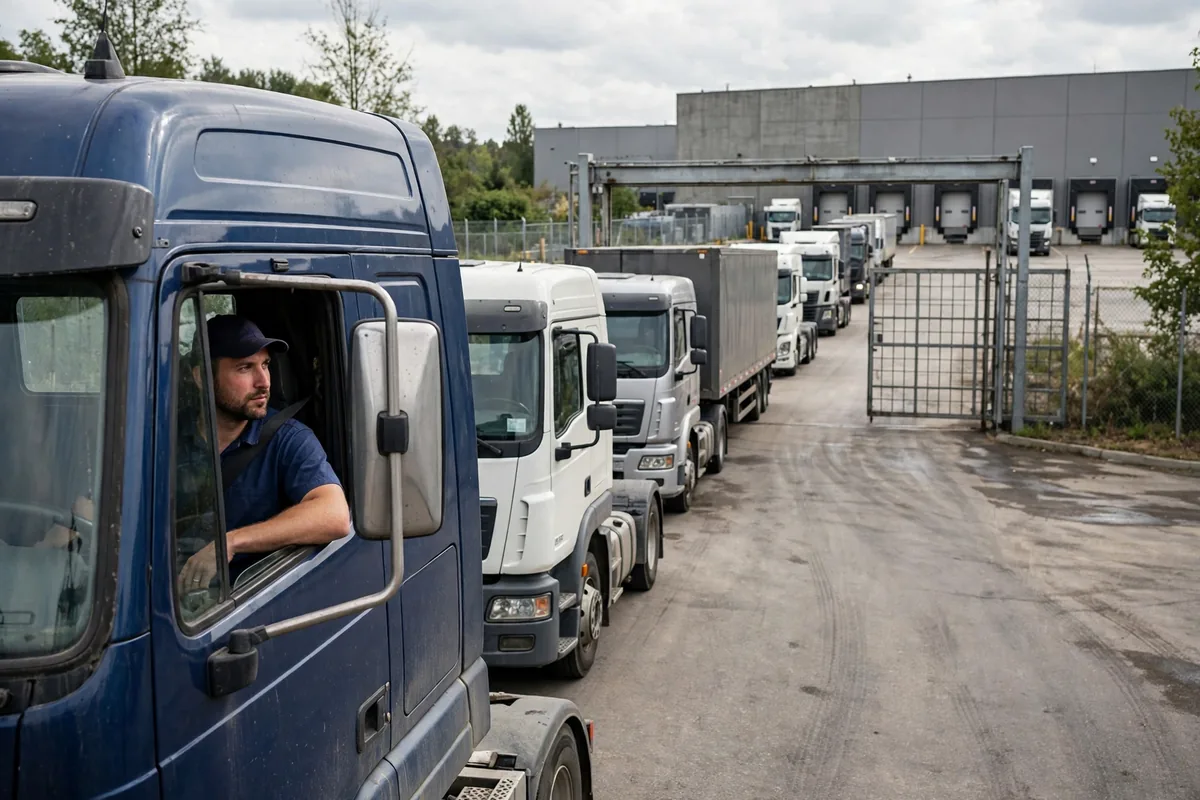
That night was November 2025, peak season just starting. We had six dock doors and twelve trucks piled into the same evening. The appointment sheet was full, but half the trucks didn't show up when they were supposed to. Early arrivals queued at the gate, late ones cut in, three trucks waited inside for a forklift while nine waited outside for a door. One driver sat from 6 p.m. to 10 p.m. — four hours, engine running, clock ticking, not one carton unloaded. He came to the door and asked if he could just park on the side and sleep, and we'd unload first thing in the morning. I said sure. By morning he was gone, freight and all, and the customer filed a delay complaint against us.
Here's what those four hours actually cost the driver. Under U.S. federal hours-of-service rules, a truck driver can drive at most 11 hours after 10 hours off duty, and those 11 hours have to fit inside a 14-hour on-duty window that starts the moment the driver clocks in — waiting at your dock, fueling, eating, all of it counts. Four hours at your gate burns nearly a third of a driver's legal working day. By the time he's finally unloaded, there may not be enough hours left to reach the next stop, so he parks near your warehouse for 10 hours. That load's pay, the next load's schedule — all of it falls apart.
Driver Wait Time Yard Management Starts With the Driver's Side of the Ledger
Most people add up driver wait time and stop at detention fees. The industry norm is two hours free, then $50 to $100 an hour after that. That looks small until you add it up. The American Transportation Research Institute's 2024 study found drivers hit detention at 39.3% of stops, and in 2023 the industry lost about 135 million hours to detention, worth $15.1 billion. Another figure making the rounds, cited from DHL's analysis, puts the average wait at 2.5 hours just to get loaded or unloaded.
But detention fees are only the visible bill. The hidden one is bigger: drivers who wait too long stop taking your loads. Carriers mark your warehouse as a hard-unload site and raise their quotes. In peak season, the good drivers take the jobs that don't involve sitting at a gate, and your freight waits for whoever is left. After that November, I added up our hidden bill: three regular drivers quit on us in one month because of gate waits, and every replacement truck cost us $200-plus more per trip. Over one peak season, that extra money would have paid for an appointment system with change to spare. That is the number driver wait time yard management is supposed to move — not the software bill, the money leaking out of the gate.
Here's a worked example — a hypothetical scenario of 20 trucks a day, each waiting an average of 3 hours: the first 2 hours are free, the extra hour bills at $75, so that's 20 trucks × $75 = $1,500 a day, or about $33,000 over a 22-day working month. And that counts none of the cost when a driver gives up, reschedules, or files a complaint. Every hour you cut from driver wait time takes a real bite out of that number.
What Driver Wait Time Yard Management Actually Changes
We brought in a yard management system to run dock appointments and gate traffic. To be honest, I didn't believe it at first. How does software make a driver wait less? What I learned is that it doesn't save you dock doors — it saves you from chaos. Drivers used to show up whenever they felt like it and arrive in a pack. Now the appointment slots are spread out, and there are rules for early and late: show up early, you wait in an assigned spot until your phone tells you to come to the door; show up more than half an hour late, your slot goes to the next truck and you rebook. That one rule alone cut the line at the gate by more than half.
Something else mattered even more than the software: getting the dock ready before the truck arrived. Freight picked, labeled, and staged at the door before the appointment time, so the moment a truck backs in, the forklift is already moving. A job that used to take over an hour now takes about 30 minutes. DHL's analysis noted the same thing: an experienced crew can unload 24 pallets off a 48-foot trailer in 30 minutes. Our experience matches: do the preparation up front, and unloading time gets cut in half.
By March 2026, we had locked this routine in, and average driver wait time dropped under an hour. In our busiest week, at most four trucks waited at the gate at once — it used to be twelve. Drivers get a text when they arrive: which door, what time, no getting out of the cab to ask, no guessing in line. Complaints dropped, the regular drivers came back, and the money we spent on last-minute replacement trucks dried up.
What a Yard System Actually Runs — and What It Doesn't
People ask me what a YMS actually is. Put simply, it's the gate's dispatcher and notebook in one: appointment scheduling, truck check-in and check-out, live dock status, arrival notifications. Four jobs. It doesn't unload your freight and it doesn't run your inventory. It runs when trucks come, where they park, and when they get a door.
Here's the counterintuitive part: the worst day at the gate is usually not the day with the most trucks — it's the day with the messiest appointments. A lot of trucks is manageable. Twelve trucks arriving at the same hour, then leaving at the same hour, is not: doors sit empty one hour and jammed the next. Spreading arrivals across the day does more than adding two dock doors ever will. And building a door costs real money — concrete, seals, levelers, lighting. Fixing the schedule costs management effort and saves real cash.
That said, a YMS isn't magic. It can only manage the trucks that follow the rules. The ones that show up unannounced, the freight that isn't ready, the paperwork that doesn't match — the system can't fix those, a person has to. Our rule now is: the system runs the plan, the shift lead runs the exceptions. Every morning's huddle starts with the appointment sheet — which time slots are heavy, which customer's freight tends to go sideways — and we move people there before the trucks arrive. Software plus people watching. You need both.
Brothers, When the Gate Flows, the Warehouse Flows
Driver wait time yard management comes down to a simple question: does your warehouse give a driver his dignity or not? Four hours at the gate costs a driver his pay for the day, his schedule for tomorrow, and his willingness to ever take your load again. When the gate flows, the warehouse flows. When the driver is looked after, your freight moves.
Tomorrow morning at huddle, do one thing: pull yesterday's arrival log and check how long every truck actually waited. Anything over two hours, chase down the reason, truck by truck. Was it a clashing appointment, freight that wasn't staged, a door blocked by someone else's load? Once you know where the problem sits, you'll know what the yard system should handle and where you need more hands. Get the gate's numbers straight, and the warehouse numbers start making sense.
By Chen Feng, Warehouse Operations Manager