Start with the arithmetic. A yard with 12 dock doors schedules 40 appointment slots a day. At a 30 percent no-show rate, 12 slots sit empty every day. The idle cost of one dock door — labor, equipment depreciation, and lost opportunity — runs to hundreds per day by any rough estimate. Twelve empty slots add up to tens of thousands a month in direct losses, before counting the time that punctual drivers waste queuing at the gate. Once you work out that number, the picture is clear: no-shows are not a minor annoyance. They are a leak that drains money every month.
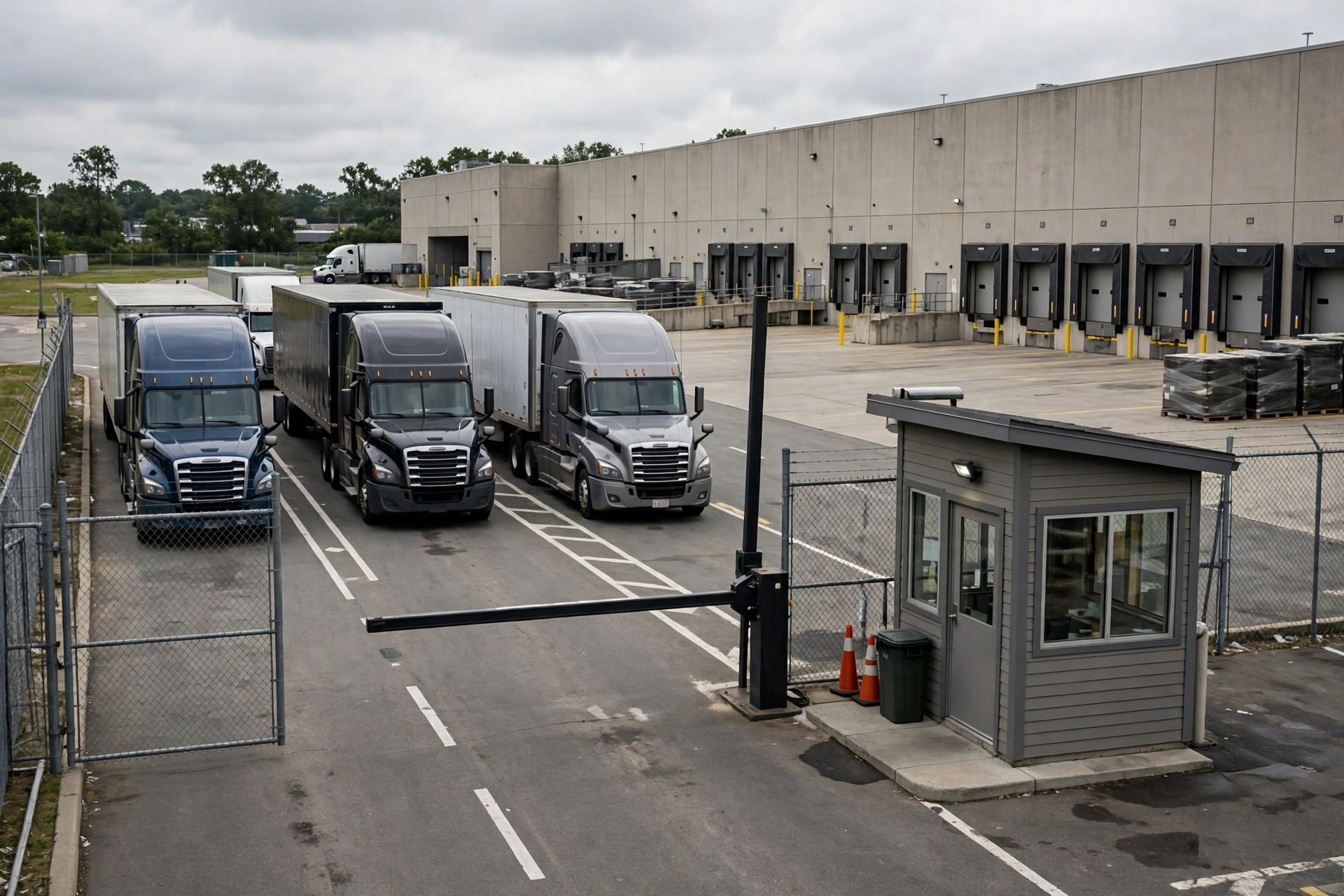
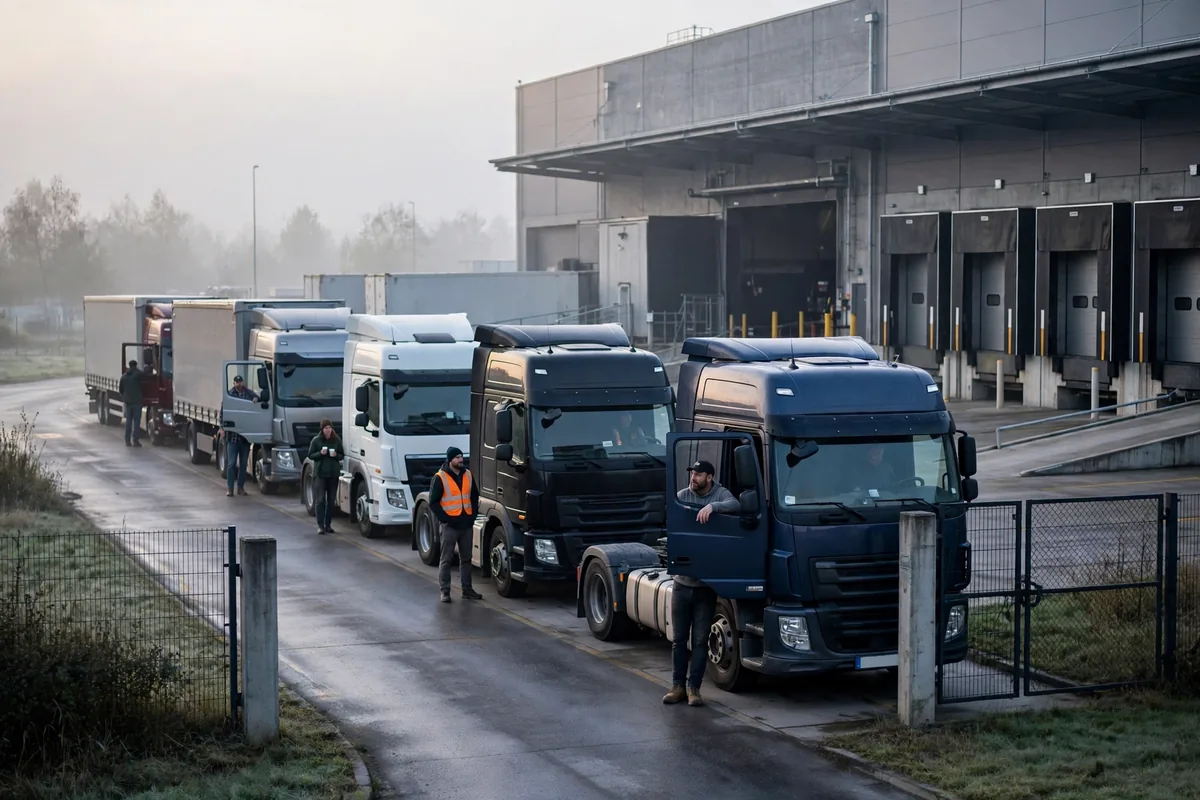
I worked with a yard in the Yangtze River Delta where the no-show rate hit around 35 percent in early 2025. The dock supervisor set the day's schedule each morning, and when the hour came, the trucks did not. A phone call got "stuck in traffic." Half an hour later, "loading ran late." Then the phone went unanswered. The supervisor shuffled the later trucks forward, the whole schedule collapsed, and punctual drivers waited more than two hours at the gate. The following month, the yard lost two long-term carriers. The cost of no-shows was never just the empty slots.
A high no-show rate usually traces back to the appointment system, not the drivers. I have broken the common causes into four groups: drivers book two yards at once and go to whichever releases them first; slots are set so rigidly that any delay on the road means missing the window, so drivers do not bother coming; rescheduling is painful — phone calls, finding the right person, rebooking — so drivers skip it; and there is no consequence at all, so a no-show costs nothing and showing up is treated as a favor.
Classify the No-Shows Before You Treat Them
Different causes need different cures. Treat them as one problem and you will spend money and fix nothing. My approach is to sort yards into three bands by no-show rate and match the treatment:
| No-show rate | Diagnosis | Treatment |
|---|---|---|
| Under 10% | Normal fluctuation | No major change; watch repeat offenders individually |
| 10%–25% | System design problem | Fix slot design and rescheduling, see below |
| Over 25% | Systemic failure | Change the mechanism — the three measures below |
Under 10 percent is normal everywhere — drivers hit surprises on the road. Talk to the individual repeat offenders and move on. Between 10 and 25 percent, the problem is usually slot design: slots cut too tight, no buffer between them, so one late link collapses everything behind it. Over 25 percent, patching will not do. The mechanism has to change.
The Yangtze Delta yard was in that top band, and I gave them three measures. First, widen the slots: the old rule treated a truck 15 minutes late as a no-show; the new rule allows arrival within 30 minutes, with buffer time between slots. Giving drivers room for error cut the no-show rate by 8 points in the first month. Second, self-service rescheduling: instead of calling the supervisor, drivers reschedule on their phones — free up to two hours ahead, a small fee for last-minute changes. When rescheduling is easy, drivers with a problem reschedule instead of disappearing. Third, reward punctuality: carriers with five consecutive on-time arrivals get priority booking for prime slots next month. The reward costs nothing — those slots had to be scheduled anyway — but drivers and carriers feel the difference.
Three months later, that yard's no-show rate had fallen from 35 percent to around 12 percent. Not a single fine was issued. Not one driver was blacklisted.
The Counterintuitive Part: Reward Punctuality Instead of Punishing No-Shows
Most people's first instinct is to punish: fine the first no-show, blacklist the second, ban the third. It feels satisfying, but the math does not work. Fines only reach drivers who already failed to show; they do not recover the empty slot. Blacklisting a carrier loses a long-term source of capacity. And punishment turns drivers against the yard — given a choice, they will go somewhere easier to deal with.
Rewarding punctuality works in the opposite direction: you reward the behavior you want, and the reward costs almost nothing. Priority booking for prime slots, faster dock handling, a monthly punctuality board — none of it costs money, but punctual drivers feel valued. A carrier's dispatcher, planning the day's runs, will favor yards where drivers do not queue and do not lose time, because the next job starts on schedule too. It becomes a virtuous circle.
Rewards are not a cure-all. For the small minority that books slots maliciously and no-shows repeatedly, restrictions still have a place. My recommendation is tiered management: reliable carriers get priority, occasional no-shows are treated normally, and repeat offenders beyond a set threshold lose booking privileges for a period. Tiering keeps the majority unaffected, imposes a cost only on the few, and keeps management overhead low.
One more thing most yards overlook: read no-show data together with dock utilization. The headline rate alone can mislead. A yard at 15 percent no-shows looks fine — but if the empty slots are all morning prime time, its real loss is bigger than a yard at 20 percent whose gaps fall in quiet afternoon hours. Break the data down when you review it: which time slots no-show most, which carriers no-show most, which cargo types no-show most. The breakdown shows where the problem actually lives. Morning slots going empty may mean drivers never finished the previous day's work; one carrier dominating the no-shows is a relationship problem; one cargo type no-showing repeatedly points to trouble at the loading end.
Once the data is split, the treatment gets precise. Move some morning slots to the afternoon if mornings are the problem. Talk to the one carrier directly. Fix the loading process with the shipper if that is where the delay starts. The worst way to fix no-shows is a vague instruction to "strengthen management" — the vaguer it is, the less anyone knows what to do.
Here is a conclusion you can calculate. Before fixing no-shows, work out three numbers for your yard: the current no-show rate, the number of idle slots per day, and the all-in cost of each idle slot. Recalculate monthly after the fix. Every 5-point drop in the no-show rate is money saved in hard numbers. Once that calculation is visible, yard management has a real incentive to keep investing; without it, fixing no-shows never gets past "we emphasized it in a meeting."
Whether the money was wasted — the numbers will tell you.
By Lao Zhou, Logistics Cost Analyst