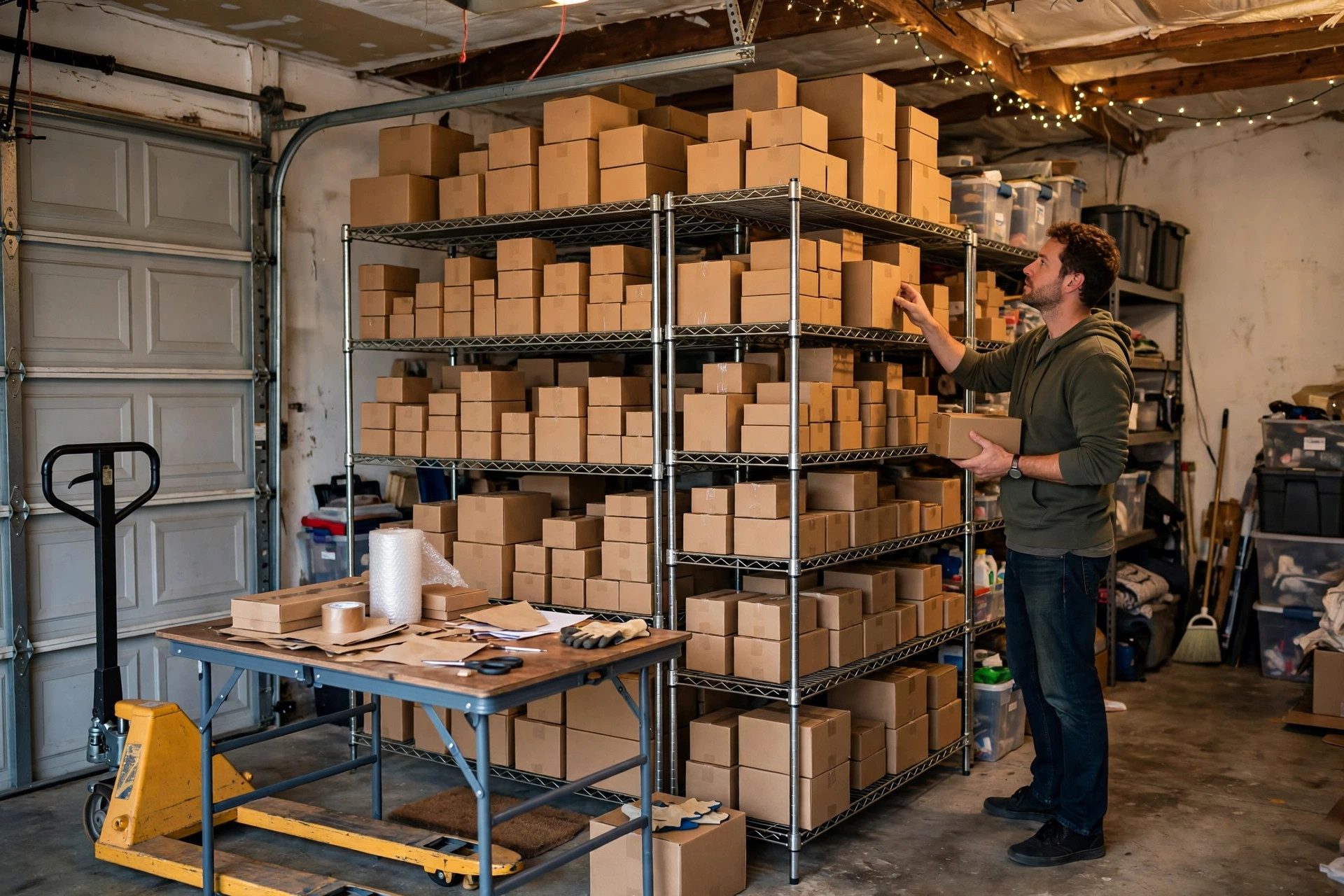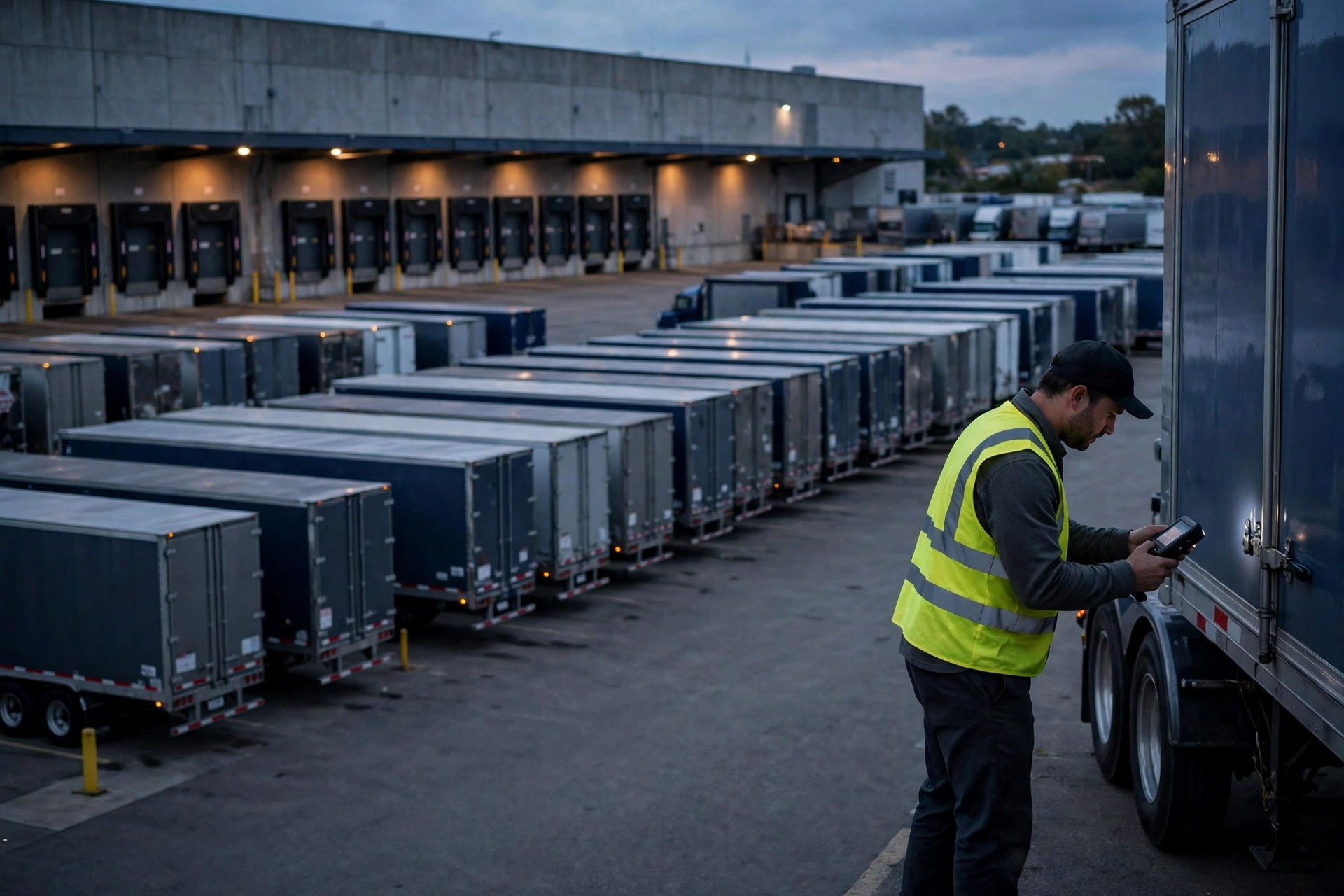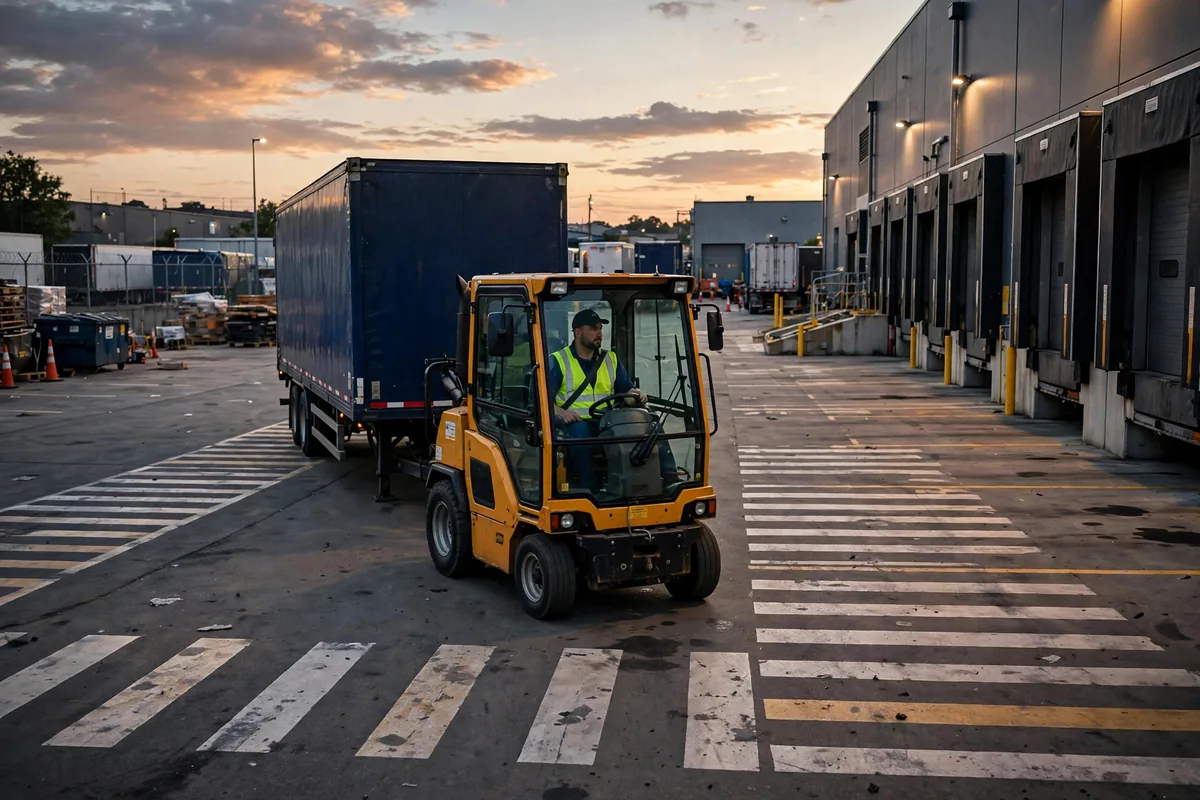
Let me be honest: warehouse yard hostler safety in a small warehouse like mine has never been solved by buying a nicer truck, because we cannot afford one, so we solve it with fixed drivers, stubborn routines, and cheap paint. Our place is about three thousand square meters, the yard is tight, and one yard tractor shuttles every trailer. The driver also receives freight and prints labels. That sounds like a joke until you realize part-time driving is exactly where blind spots and sloppy handovers turn into injuries.
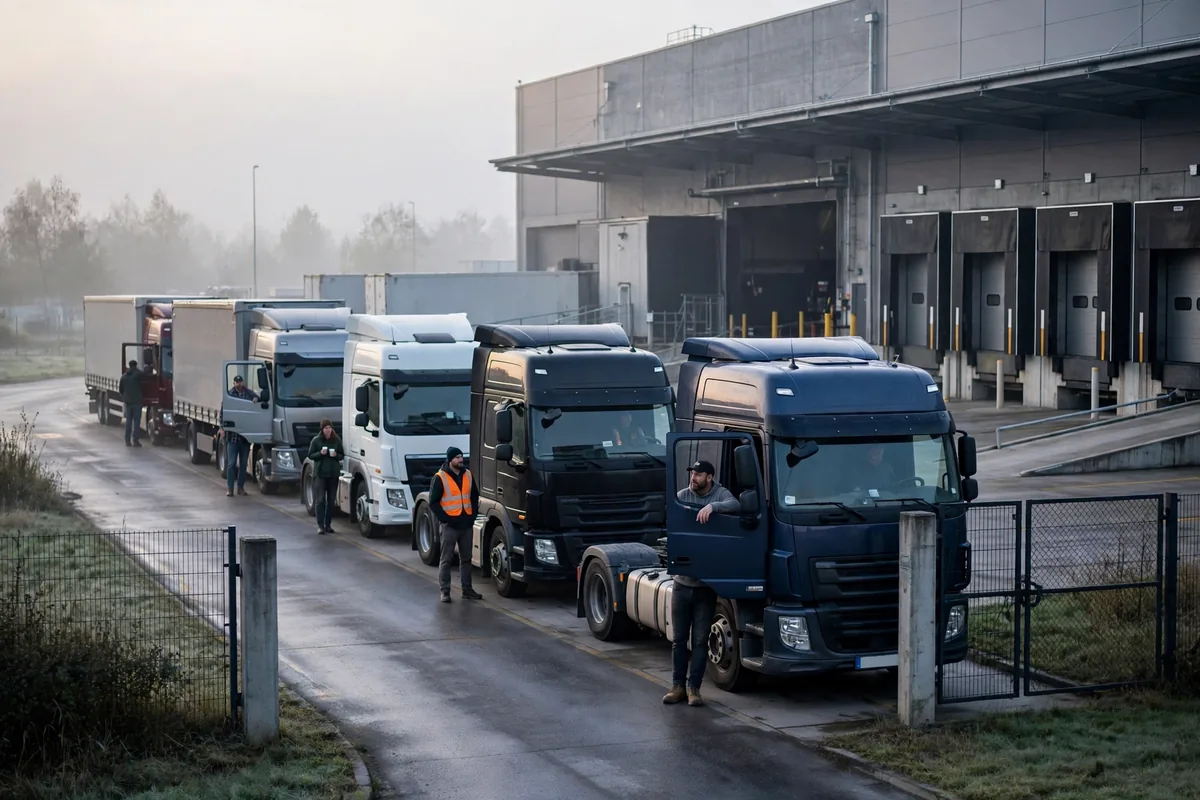
A yard hostler moves trailers inside the yard: pull a loaded trailer to a door, pull the empty away, spot the next one. The work looks simple. It is not. The tractor plus trailer has huge blind areas, and the yard is shared with people on foot. Forklift drivers set wheel chocks, receiving staff check seals, and the driver himself climbs down to check door alignment. People and trailers share the same concrete. That mix is the whole problem.
Start warehouse yard hostler safety with blind spots and people on foot
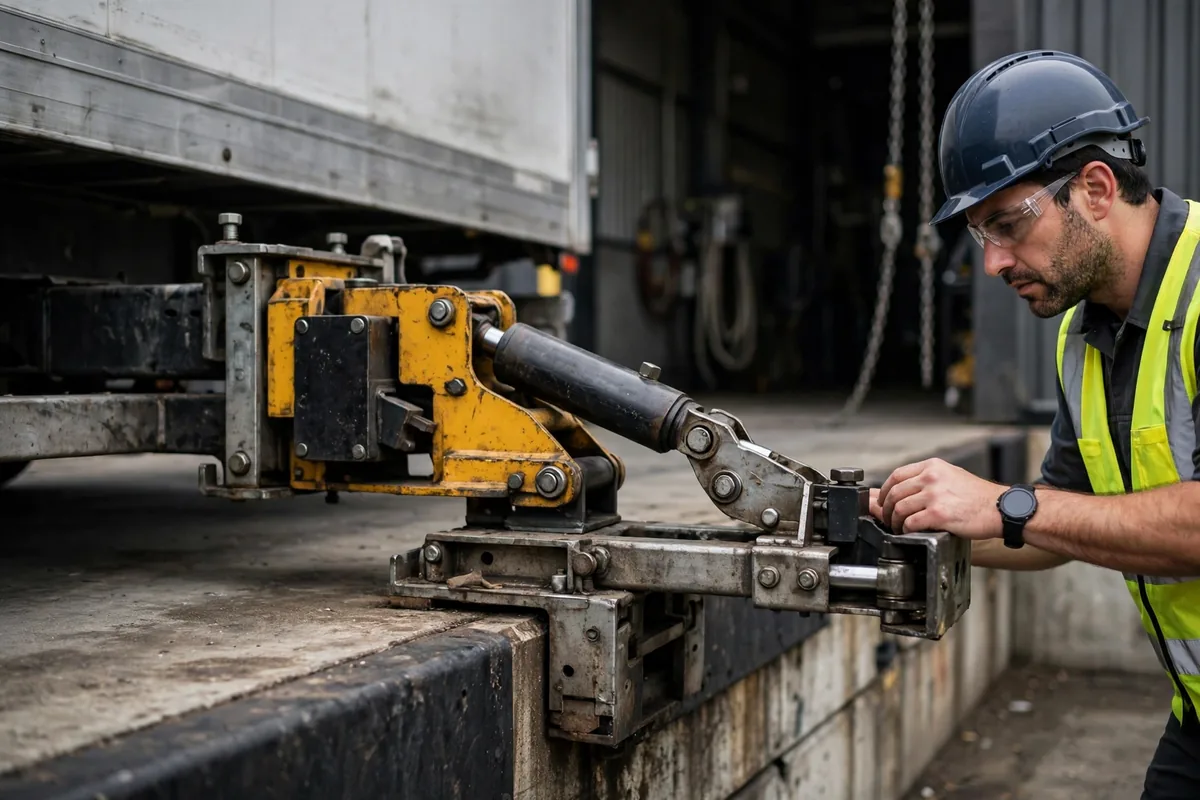
Once a trailer is hooked, the driver cannot see low ground ahead, the rear sides of the trailer, or the area directly behind it. Mirrors help, but they do not cover the sweep of a turning trailer. Our fixes cost almost nothing and have to happen every single day. First, we painted a pedestrian walkway with the cheapest paint we could find. People walk inside the lines. Anyone cutting across the driving lane gets told, on the spot, in front of everyone. Second, before any trailer moves, the driver walks a full circle around the rig: chocks removed, air lines secure, nobody crouching in front of the door tying a shoe. That lap takes a minute. Third, backing to a door requires a spotter standing in a safe side position. No spotter, no backing. The driver waits, even if the dock is screaming.
One evening still sticks with me. In August 2024, at a small warehouse like ours in Jiaxing, a rush load arrived at dusk and one yard light was out. Our part-time driver backed up watching only one mirror and nearly swept into a receiver walking behind the trailer. The receiver shouted in time. After that night I made a rule I enforce on myself: after dark, no spotter means the truck does not move, no matter who is pushing for the freight. Usually the person pushing is me.
Night work is its own trap. People are tired, light is poor, the yard feels empty, and drivers relax because it seems quiet. Our night rule is a fixed pair: the same two people, one driving and one spotting, never strangers rotated in. Reflective vests are mandatory in the vehicle area, no exceptions. In the two darkest corners we skipped a full lighting project we could not afford and installed two cheap motion lights instead. When a truck moves, the light fires, and anyone on foot gets a warning. It cost very little and works better than ten safety speeches.
Shifts, pace, and the handover check behind warehouse yard hostler safety
Most people think safety lives in the minutes of driving. In my experience the handover is more dangerous. Where did the last shift park the tractor? Which trailer has a brake quirk? Which door has an oily patch on the ground? If the new shift does not know, the first move of the day is a guess. We cannot afford a system for this, so we use a whiteboard and a paper check log, which is embarrassingly low-tech and completely effective. Every handover covers five things, face to face: lights and horn working, tires visibly sound, landing gear and chocks in place, no stray pallets blocking the lanes, and any change to the trailer move list. Both people sign. The signature can be ugly. What matters is that two humans actually said the words out loud.
Pace matters too. Trailer moves are not better when they are faster. In peak season the dock pushes, the driver rushes, and steps get skipped. Our house rule is blunt: after the fourth consecutive move in an hour, the driver gets out, drinks water, and walks the circle again. It looks like a break. It is a fatigue control. Yard driving is still driving, just slower and shorter, which is exactly why people underestimate it. In November 2023, a fellow small warehouse in Dongguan ran one driver through a full day shift without a break. On the last door spot of the day he misjudged the angle and clipped the dock door frame. The repair and downtime ate several days. After hearing that, I stopped apologizing for our forced pauses.
Now the part nobody likes to discuss: part-time hostlers. A dedicated driver is a luxury we do not have, so an experienced hand doubles as the driver. The risks are specific. His mind is still on receiving. Whoever is free grabs the wheel, so technique changes by the hour. Small scrapes get shrugged off because nobody was hurt, and bad habits compound. Our answers are, again, stubborn rather than expensive. Only two named people may drive, ever. While one of them is driving, all his other work is handed off and his phone goes away. Every scrape, even paint-deep, gets one line in the check log and a review at month end. The log is not for punishment. It is so the crew can see what a bad habit actually looks like on paper.
A quick decision guide we use, as an illustrative house rule rather than any industry standard: daytime with no foot work in the yard, a fixed part-timer may drive with a spotter present. Night or rain means a fixed pair and every light on. Peak-season continuous moves are allowed only with the forced pause built in. A new hand or a fill-in never touches the wheel; spotting is how they learn.
If there is one lesson here, it is that warehouse yard hostler safety for a small operation is decided by whether the owner will stop the truck while freight is waiting, and whether a near miss gets a real review instead of a laugh. The truck can be old, the lights can be cheap, and the whiteboard can be battered. The walk-around, the spotter, and the signed handover are not negotiable. Minutes saved by skipping them always come back, with interest.
Small warehouses have their own way of surviving.
By Xiao Ma, Small Warehouse Owner