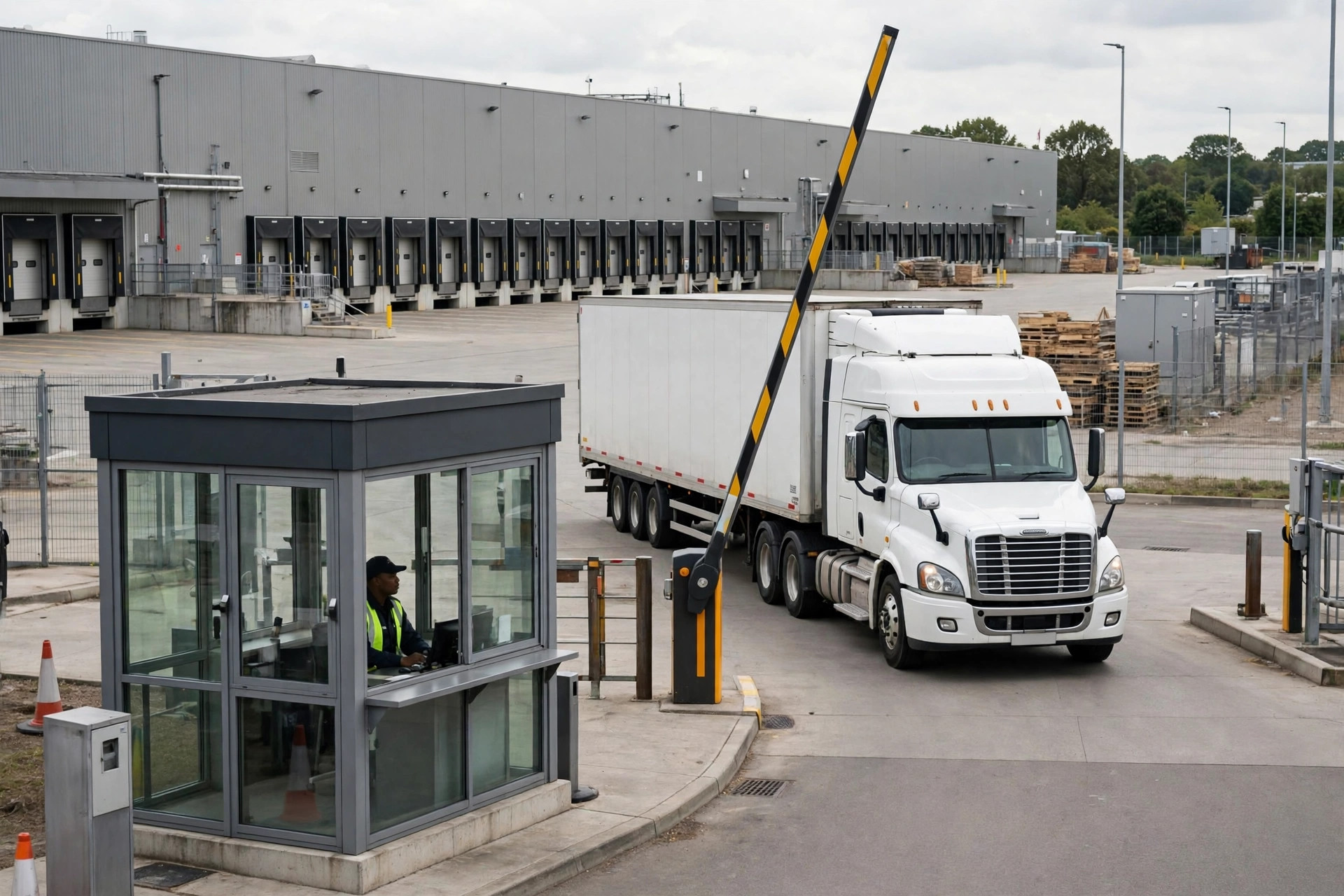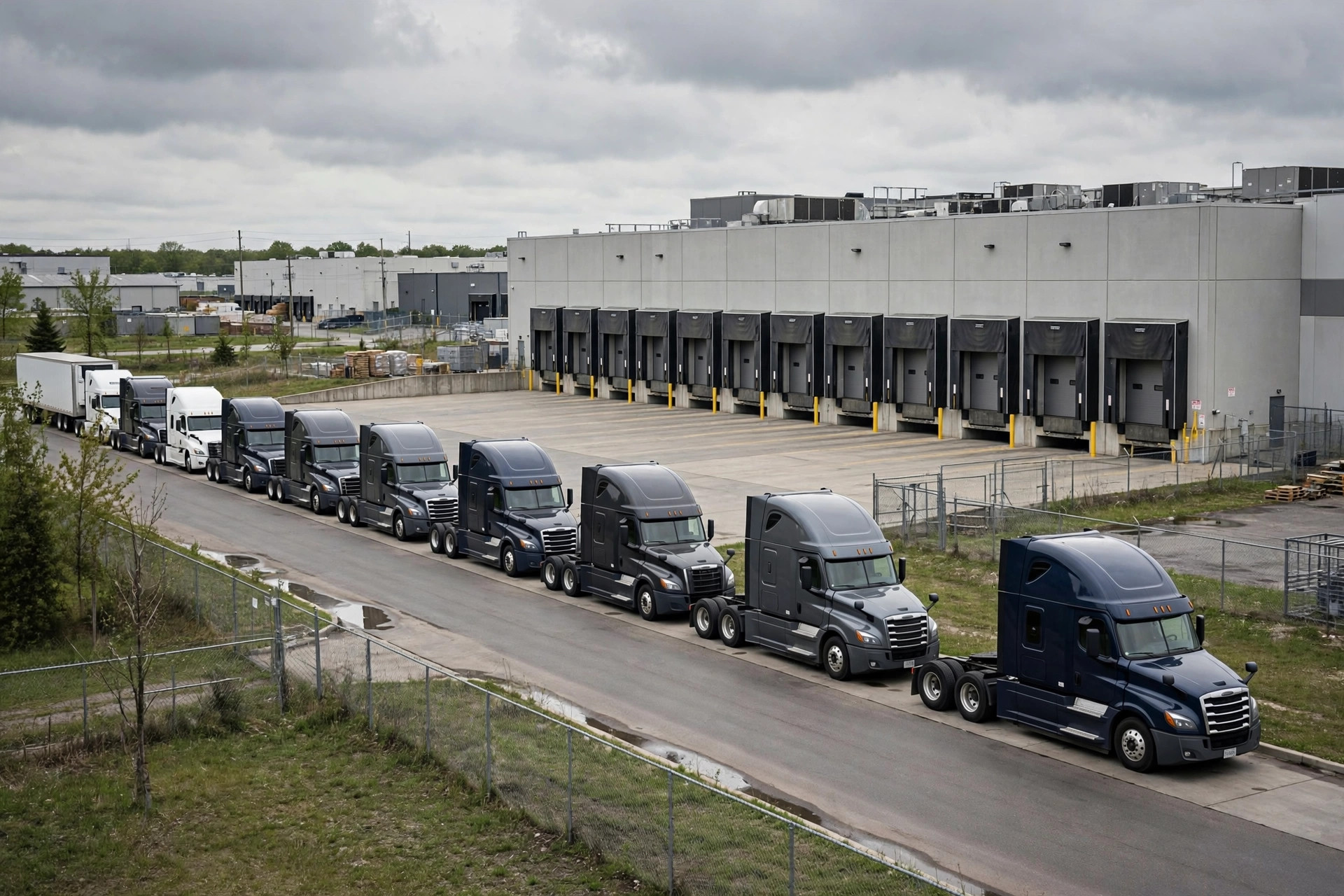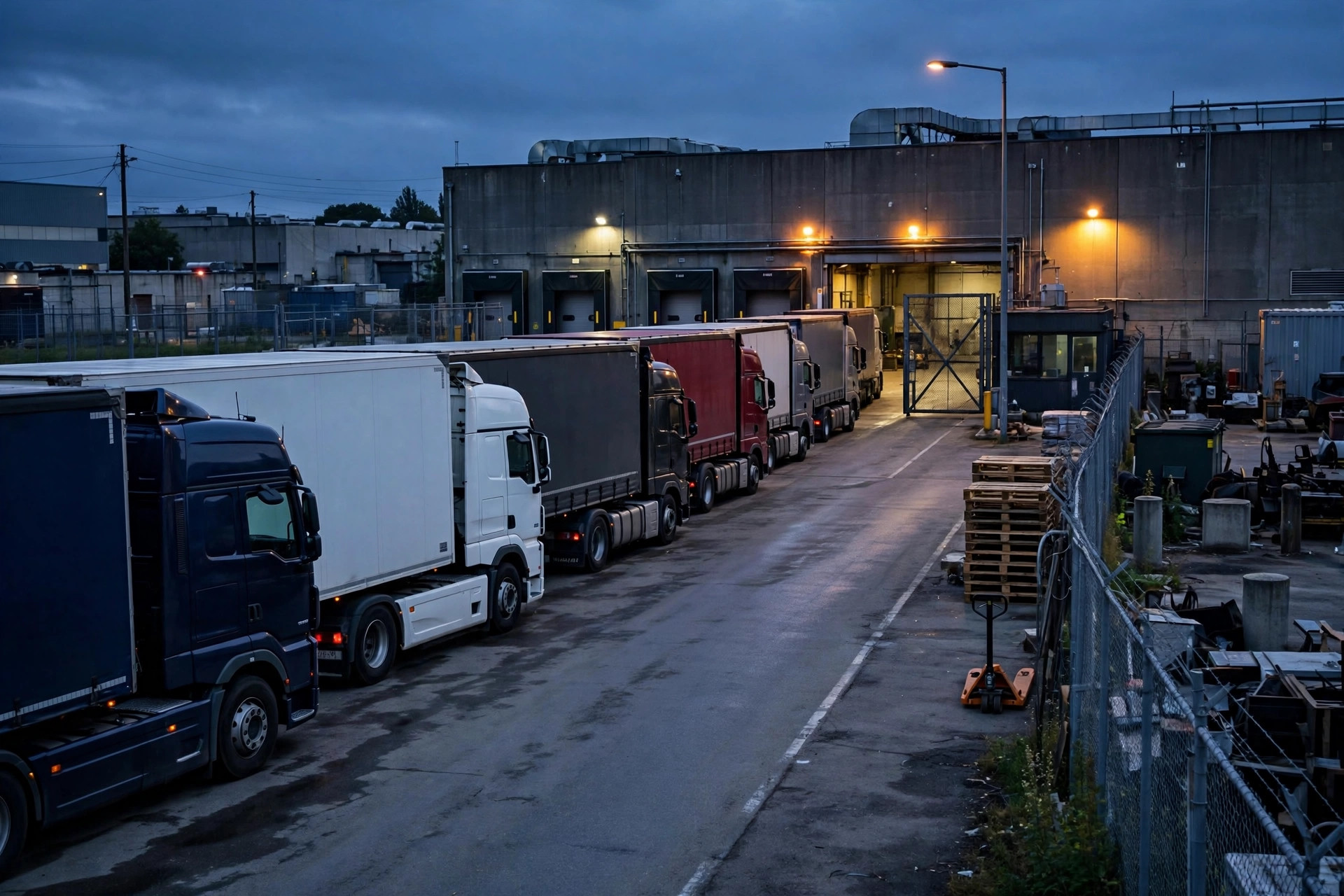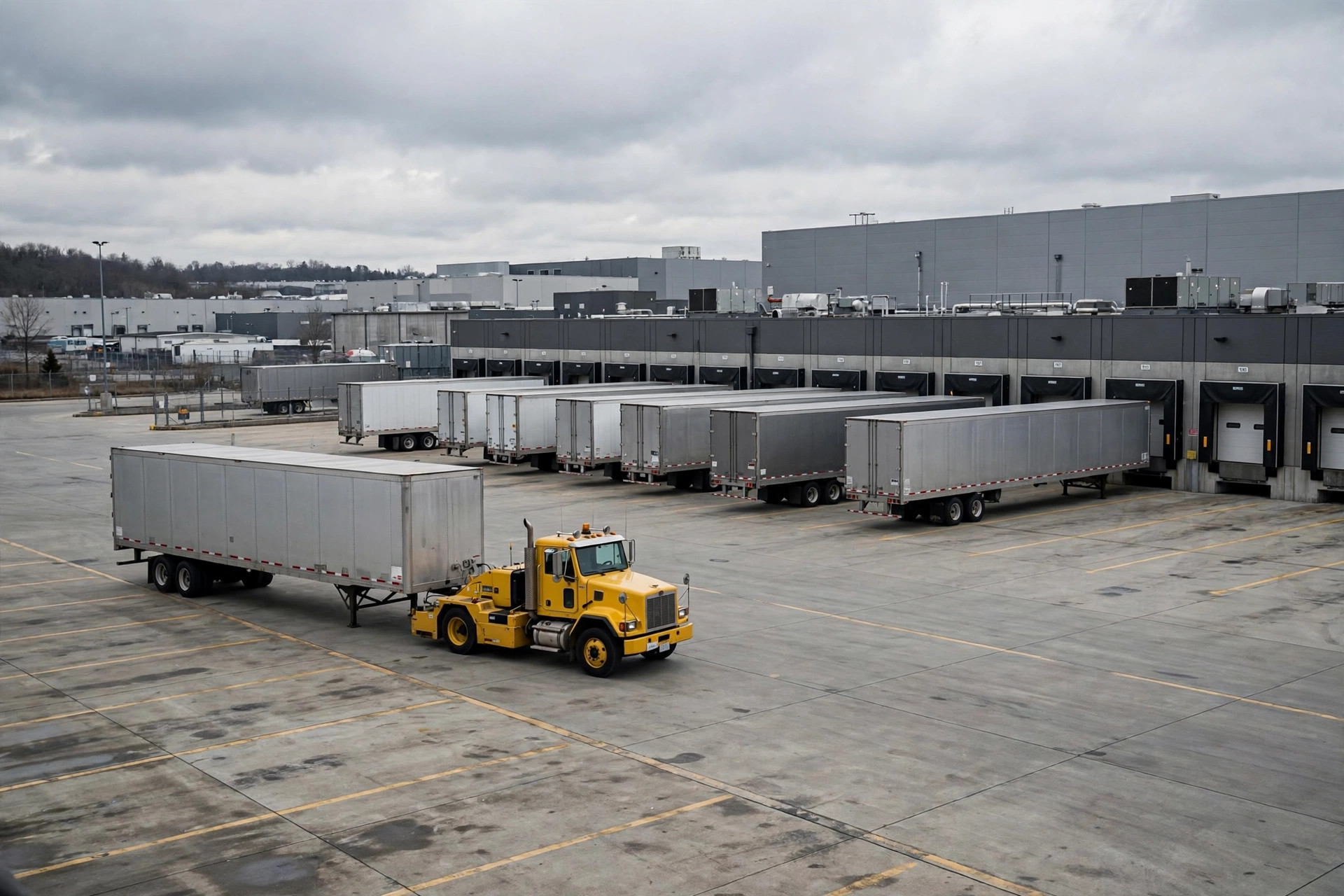
Last month I walked a DC outside Atlanta — 120 dock doors, about 90 outbound loads a day. The operations manager was tearing his hair out: on-time shipment rate stuck below 95%, the guard shack phone ringing nonstop, drivers sitting at the gate for two to three hours, and detention charges burning through $140k over one peak season. I took a look at the yard. Three hostlers total. The empty trailer pool ran dry on a regular basis. Finished pallets queued at the door waiting for a power unit, one hostler sprinting back and forth across the yard. Shipments weren't late because loading was slow — they were late because there was no trailer to load.
That's the piece of drop-trailer math most DCs get wrong: the ratio of hostlers (yard jockeys) to the empty trailer pool. Let me break it down the way I run it.
A hostler isn't a loader — they're the bottleneck of the whole outbound operation
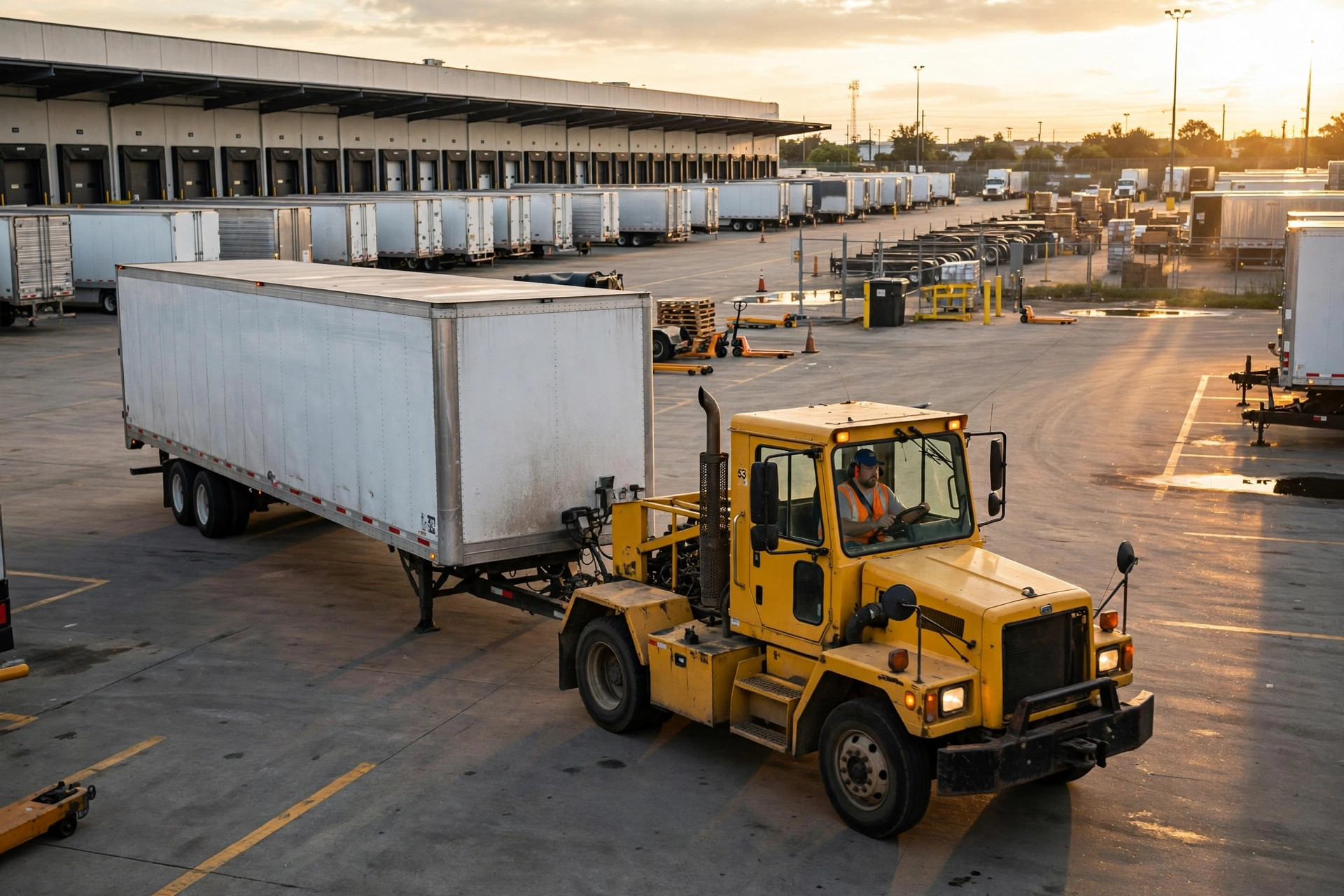
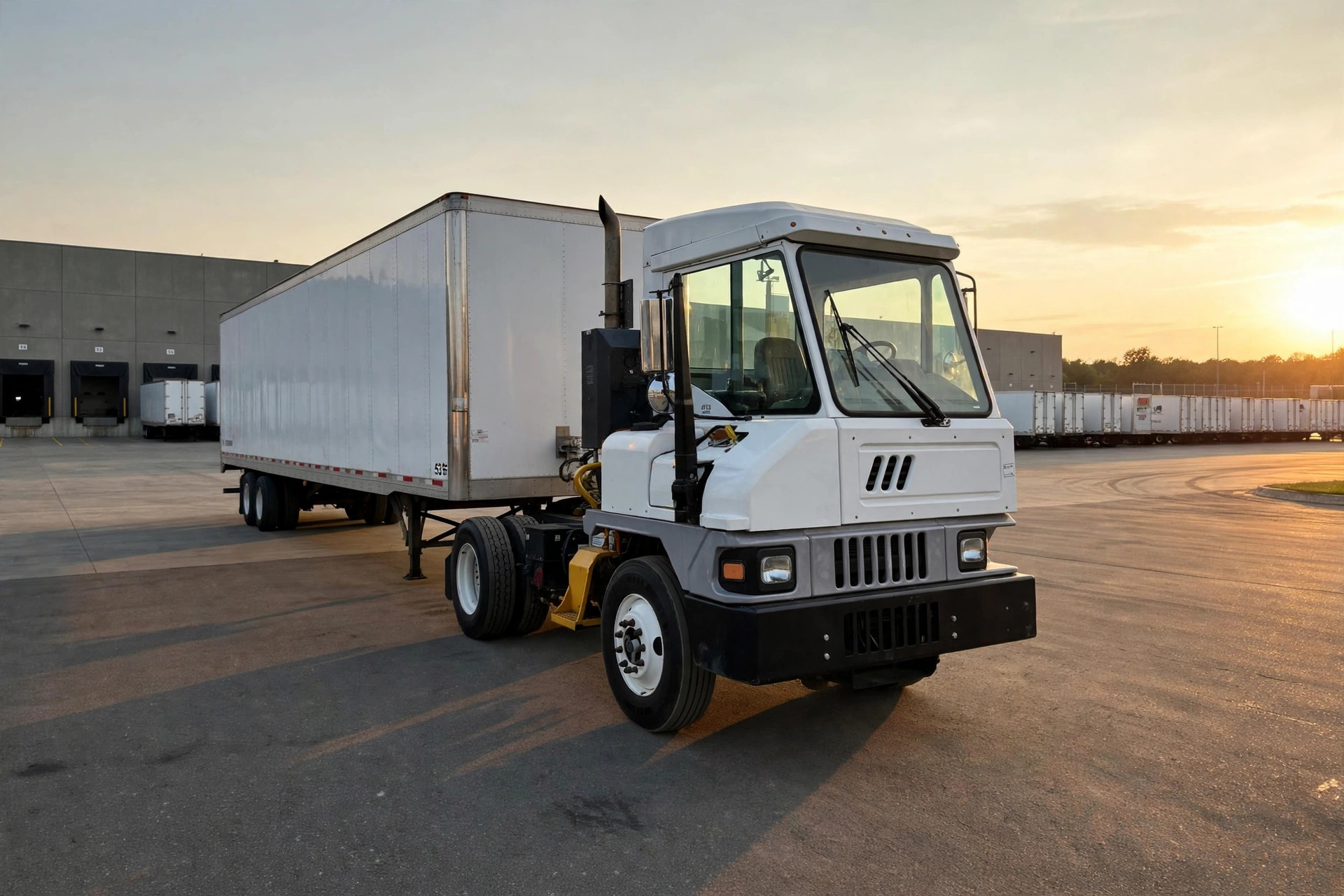
First, what a hostler actually does. Under drop-trailer arrangements, the carrier drops an empty trailer in the yard and leaves. The hostler, driving a terminal tractor, owns three jobs: spotting an empty trailer at a door that's ready to load, pulling a loaded trailer to a staging spot or to the yard exit for the road driver, and telling dispatch when a door zone is running dry.
The unit of hostler work is the "move": taking a trailer from point A to point B. From industry experience, one move — hooking up, driving, unhooking, plus the paperwork check — takes roughly 8 to 15 minutes. So a hostler completes about 4 to 7 moves an hour. Plan on 5.
The staffing formula is dead simple: moves needed per hour ÷ 5 = hostlers needed on shift.
Example: peak hour pushes 12 loads, each needing at least 2 moves (spot the empty, pull the loaded). That's 24 moves, 24 ÷ 5 = 4.8, so you need 5 hostlers. A slow hour with 5 loads needs 10 moves — 2 hostlers covers it.
One trap to avoid: don't count live loads. The road driver sits on the trailer while it gets loaded — the hostler never touches it. Only dropped trailers consume moves. Split your outbound plan into "dropped" and "live" before running the formula, or you'll overstaff.
One more practical note: move volume swings wildly on nights and weekends. Plenty of DCs run fine with 3 hostlers on day shift, then the night crew faces 1.5x the move count with trailers piled up at the doors. Never schedule peak season with a one-size-fits-all headcount.
The empty pool is insurance, not cost
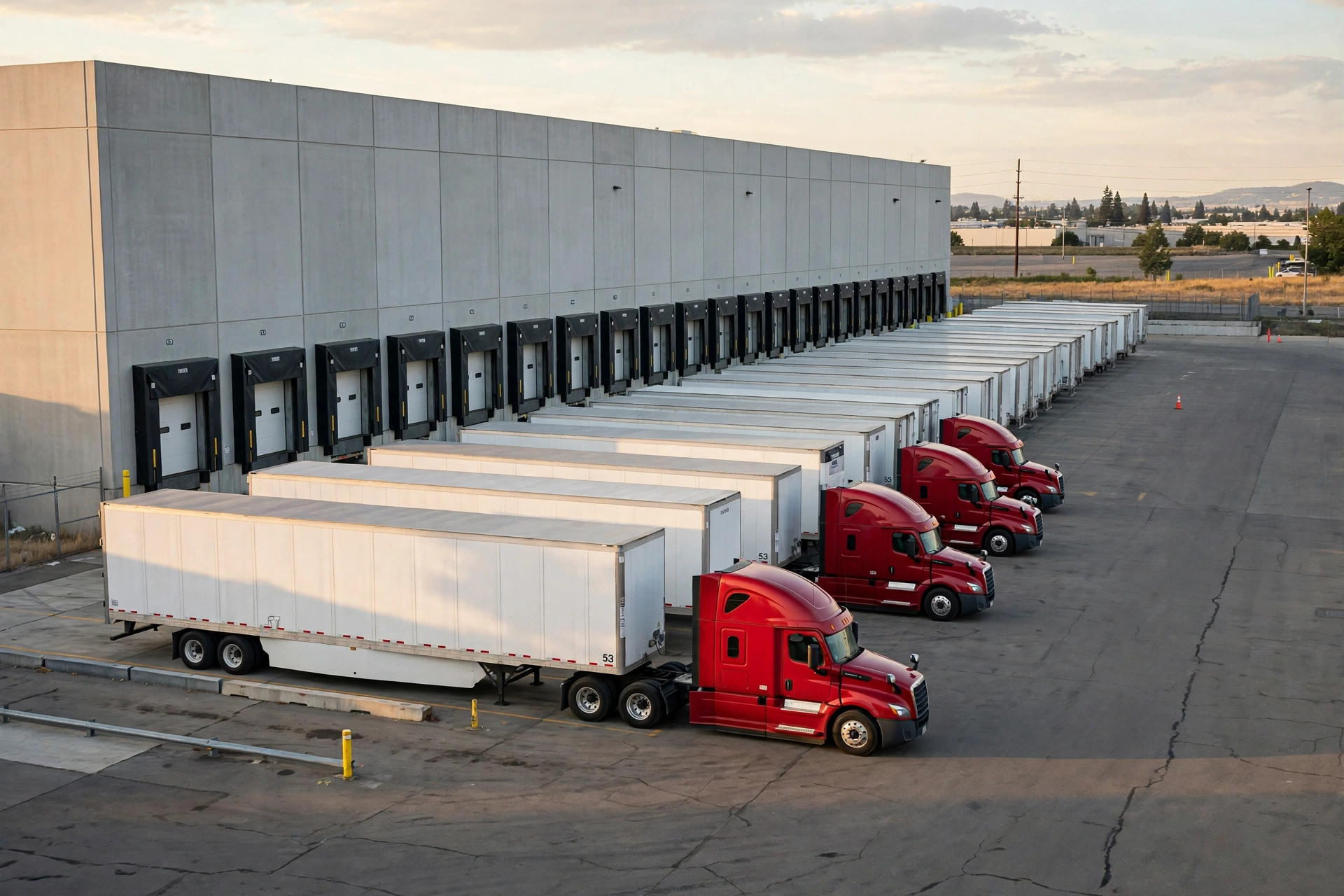
Staffing is only half the battle. The second trap is the empty trailer pool. Many DCs manage it by feel — whatever the carrier drops is what they work with. Then the loading peak hits, one lane's empties run out, the loading team stands around, and detention starts ticking on trucks stacked at the gate.
Here's the rule I give my clients: keep 1.5 to 2x your average daily departures per lane in the empty pool. A lane that ships 6 loads a day should sit on 9 to 12 empties. Why 1.5x? Because loading takes 2 to 4 hours, trailers need time to cycle — a finished trailer gets pulled, the carrier hauls it away, and a replacement comes back, often a full day later. 1x is living on the edge, 2x is a luxury, 1.5x is the sweet spot.
Now the trailer math. A dry van leases for roughly $150 to $250 a month — call it $200. Adding 6 extra empties to a lane costs $1,200 a month. But one yard-wide dry spell can burn past that $1,200 in detention charges in a single bad afternoon. The empty pool is insurance logic, not cost logic — but don't over-insure either. Past 2x, you run out of parking spots, the door area turns into a trailer lot, and hostlers crawl between parked rigs. Move efficiency gets cut in half.
And watch carrier drop compliance. The contract should spell out how many empties each lane gets dropped per day, with penalties for shortfalls. Half the empty-pool problem is your dispatch; the other half is the carrier. Don't take the blame for both.
Write down the drop-hook triggers — don't shout them over the radio
The classic chaos on an outbound dock: dispatch yells over the radio, hostlers run on instinct. My advice is to write the trigger rules down and pin them to the dispatch room wall:
- Door-status trigger: once loading at a door hits about 80% (or the seal is on), dispatch issues the move order immediately — the hostler pulls the trailer to its staging spot.
- Empty-positioning trigger: two hours before loading starts at a door, the next empty for that door must already be spotted. If a lane's pool drops below 1x daily departures, dispatch flags it and calls the carrier.
- Congestion trigger: more than 3 trailers queued at the door zone waiting for a move means dispatch activates the "hot queue" — hostlers work trailers by cutoff time, pulling the closest-to-late ones first.
Written rules have a second payoff: a new dispatcher doesn't need six months of shadowing to feel confident issuing orders. Before a YMS, paper rules are the cheapest "system" you can buy.
Five numbers worth watching — and no more
Track more than five KPIs and nobody looks at any of them. Here's my short list, reviewed monthly:
- Average dwell time: gate-in to gate-out per trailer. Over 4 hours means your yard flow has a problem.
- Cost per move: total hostler labor cost ÷ total monthly moves. At $25 to $35 an hour, if cost per move lands above $8, go check whether routes are too long or someone's coasting.
- Door-zone congestion events: times per month when more than 3 trailers queue at the doors. Over 10 — either your pool or your headcount is short, or both.
- Total detention: monthly, broken down by lane. The worst lane gets its empty pool and carrier drop compliance checked first.
- On-time shipment rate: below 95% — go back and re-check the four numbers above.
When to replace the whiteboard with a YMS: my verdict
The verdict first: under 60 doors and under 40 loads per shift — don't buy a YMS. A whiteboard, a radio, and the written rules above are enough. YMS software, implementation, and the WMS/TMS integrations run into tens of thousands of dollars a year, and a small operation can't amortize that.
When should you start evaluating? Any two of these and it's time:
- Two or more shifts, 8+ hostlers, and dispatch can't keep up by voice anymore;
- Door-zone congestion more than 3 times a week, and adding people doesn't fix it — the problem is the dispatch logic;
- More than 10 carriers, and drop compliance plus detention reconciliation can't be done in Excel anymore;
- Compliance requirements (like reefer temperature records or seal management in a food DC) that paper can't handle.
What a YMS really buys isn't "records" — it's seeing every trailer's location and destination in real time. The whiteboard's problem is information that's half an hour stale; a YMS is 30 seconds stale.
Six weeks before peak: the temp-hostler checklist
Peak season (Thanksgiving through Christmas) is where drop-trailer operations blow up. Six weeks out, do these:
- Re-run the headcount formula using last year's peak move volume. Start recruiting temps 4 weeks out — hostlers need yard driving experience, don't grab whoever's available.
- Temporarily raise every lane's empty pool to 2x for the season. Drop it back down in January. The extra lease money is insurance.
- Renegotiate peak drop commitments with every carrier: minimum daily drops per lane, with penalties, in writing.
- Carve out "peak staging lanes" in the yard so outbound trailers and the empty pool don't fight for the same space.
- 15-minute standup every morning at shift start: today's outbound plan, empty-pool level per lane, which lane might run dry. Three numbers, aligned.
And don't run hostlers seven days straight through peak — a fatigued driver sideswiping a trailer costs more in repairs and insurance than one extra headcount.
Here's the thing about drop-trailer that fools a lot of managers: it feels like once the trailer is in the yard, you don't have to think about it anymore. The opposite is true — the moment the carrier drops it, full responsibility lands on you. Get the hostler math right and the empty pool disciplined, and on-time shipments take care of themselves. One thing to do tomorrow: split last month's detention bill by lane. The worst lane is the first hole in your empty pool you need to patch.