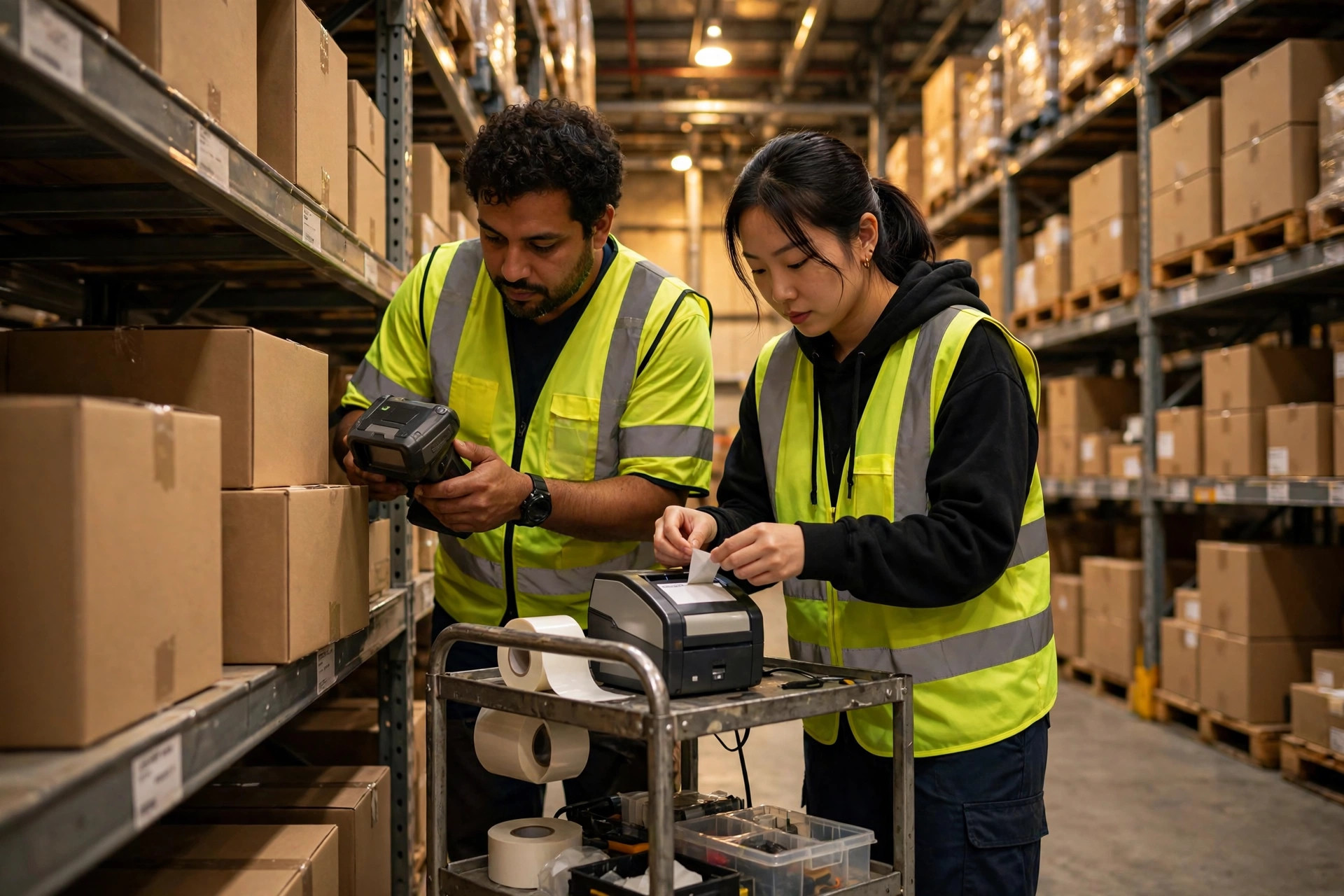
Last October I was picking up a load at a warehouse in the City of Industry. Three in the afternoon, and the dock was a mess — a box truck sitting at door 7, the driver speaking Spanish, the receiving clerk speaking only Chinese. Both of them holding up their phones, running everything through a translation app, understanding exactly nothing.
I'm telling you, after all these years on the road, I've seen this scene more times than I can count. American warehouses these days run on a mixed crew: the drivers speak Spanish, the receivers speak Chinese, the supervisors speak English. Everybody talking past everybody. And the system? Still the same all-English setup from ten years ago. You want to call that a software problem? I call it an owner's problem — the people changed three times over, and the system never changed once.
That day it ended with the shift lead running down from the third floor, taking one look at the paperwork: this load was supposed to go to door 9. Wrong door. A full trailer of pallets sat on the dock for nearly two hours while dispatch reworked the schedule. Driver detention time, warehouse overtime — all of it lands on the owner's tab. All because nobody could read one English error message.
Why a Truck Driver Has Opinions About WMS Multilingual Setups
Why should a trucker get a say in this? Because we're the outsiders. The warehouse folks stare at that system every day — even if they can't read the English interface, they've memorized where every button is. But us drivers? We show up twice a month. The handheld throws an English prompt at us, the carton label prints a wall of English, and we're lost.
There's a warehouse near San Diego I deliver to all the time. Half the crew speaks Spanish, half speaks Chinese, and the owner came up with a plan: put one bilingual lead on every shift, run everything through that person. Sounds nice. Two years in, that lead was the busiest person in the building. Lead takes a day off, the whole shift falls apart. Peak season brings in temp workers who only speak Spanish, the lead is shouting herself hoarse, and mistakes keep happening anyway. Then they switched to new handhelds — the system let you flip the interface to Spanish or Chinese with one tap, and carton labels printed bilingual. That lead finally got to breathe again.
See, you can't staff your way out of a language problem. People quit, people take vacations, people lose their voices. Systems don't.
Three Approaches, Honest Math
There are really only three ways warehouses handle the multilingual problem. Here's the honest math — owners can decide for themselves:
| Native multilingual WMS | Bilingual leads covering | Half-done translation | |
|---|---|---|---|
| Upfront cost | High — project and implementation both cost | Almost zero | Medium — pay someone to translate the screens once |
| Day-to-day | Best: interface, labels, and voice all covered | Depends entirely on whether the lead is there | Workers still guessing most of the time |
| Biggest risk | Long implementation | One resignation collapses the shift | Translations go stale the moment the system upgrades |
| Fits | Warehouses in it for the long haul | A ten-person shop | Nobody — don't take this road |
The expensive route first. A natively multilingual system: one-tap language switching on the interface, label templates per language, voice prompts in the worker's language. Yes, it stings upfront — the project costs, the implementation drags. But it's a one-time investment that pays off for a decade. And I'm telling you, don't just count the upfront cost — count what language mistakes cost you in a year: wrong shipments, wrong doors, wrong picks. Every single one of those has a price tag.
Then the human workaround. A ten-person warehouse that can't afford a big system puts a bilingual lead on each shift. Cheapest short-term fix there is. But you're betting the whole operation on one person's throat — the lead walks, and you're right back where you started. Fine as a bridge for a small shop, not a long-term plan.
And the half-done job — this is the one that makes me mad. The owner pays to translate the screens into Spanish and calls it done. But the voice prompts are still English. The printed carton labels are still English. The error messages are still English. The picker works with a headset on — what he hears in his ears is what he works by. Whether the screen shows Spanish or Martian doesn't matter one bit to him. Translate the interface but leave voice and labels in English, and you've done nothing. That's the most wasted money of the three.
The Trap Nobody Sees Coming: Translations That Rot
Here's another trap most owners never think about: translations that can't keep up with upgrades. The system adds a new feature, the English version ships first, and the Spanish and Chinese packs show up three months later. For those three months, your Spanish-speaking crew is staring at a new interface and guessing. Guessing wrong means mispicks and mis-ships.
Ask about this before you sign the contract: when a new feature ships, how fast does the language pack follow? Same release as English, or "as soon as possible"? When a salesperson tells you "as soon as possible," get it in writing — with a number of days. Verbal promises don't count. I've been in this business too long to believe those.
One more thing: don't translate half the label template. The product name gets translated but the location code doesn't, and the driver still can't find the spot. And voice prompt speed is adjustable — a new Spanish-speaking temp hears the prompts slower, makes fewer mistakes. Walk through every one of these details during implementation. Don't rush it.
Four Straightforward Suggestions for Warehouse Owners
First, count your people. How many languages on the floor, how many speakers of each, where do your peak-season temps come from? Get the real numbers before you talk solutions. No guessing.
Second, do the interface, the labels, and the voice prompts together. Doing just one is throwing money away — like I said, it amounts to nothing.
Third, don't bet everything on a bilingual lead. People leave; systems don't. A lead is for handling exceptions, not for serving as a full-time translator.
Fourth, pin down the update cadence in the contract. If the language packs can't keep up with version upgrades, everything you spent goes down the drain.
There's an old saying: if the words aren't clear, the accounts won't add up. A warehouse where people can't understand each other bleeds real money. Next time you walk your own floor, look at the dock — if you see anyone waving a translation app around and gesturing, that's your sign. The money needs spending, and it needs spending soon.
 By Shifu Zhao, Trucking Veteran (15 yrs)