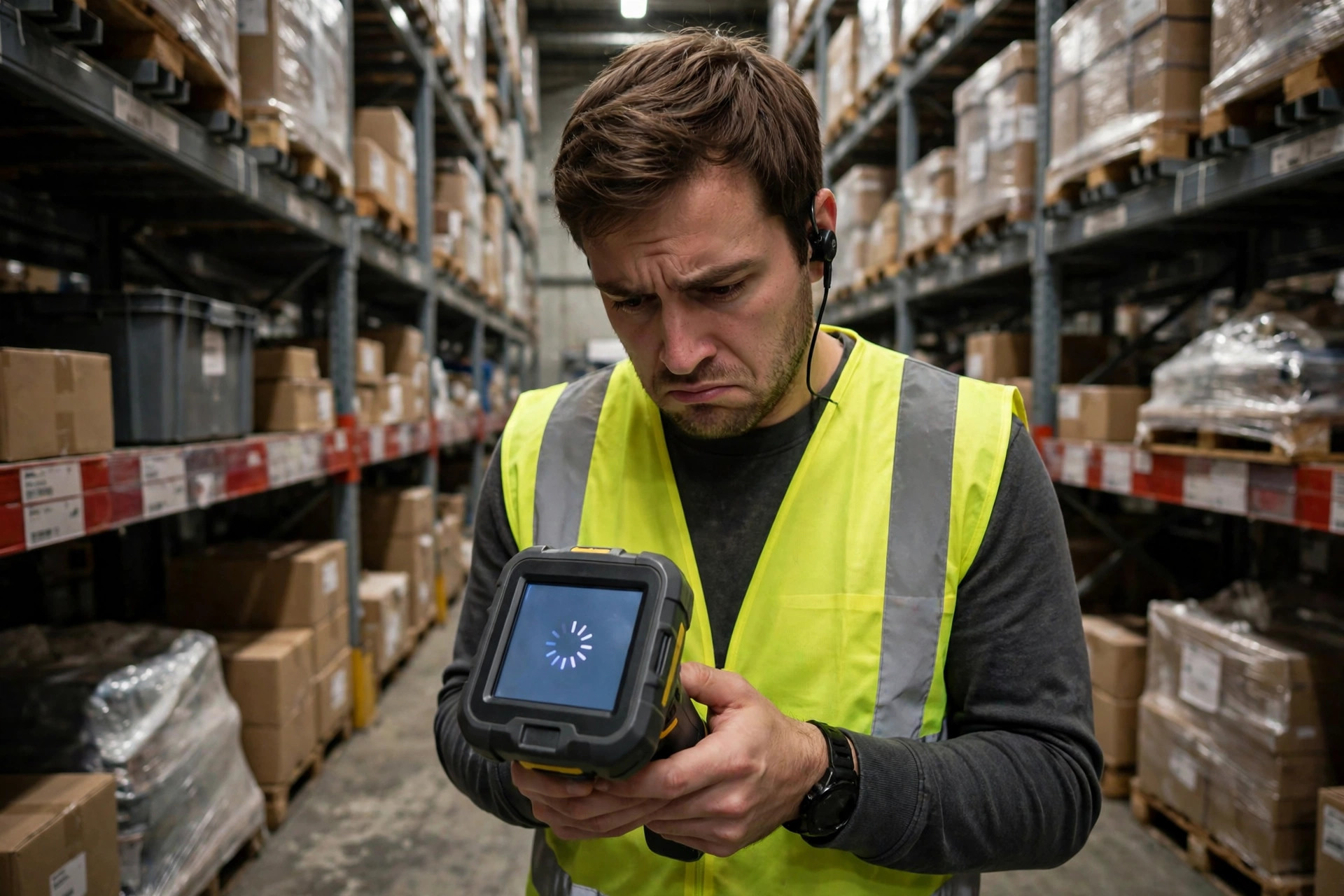
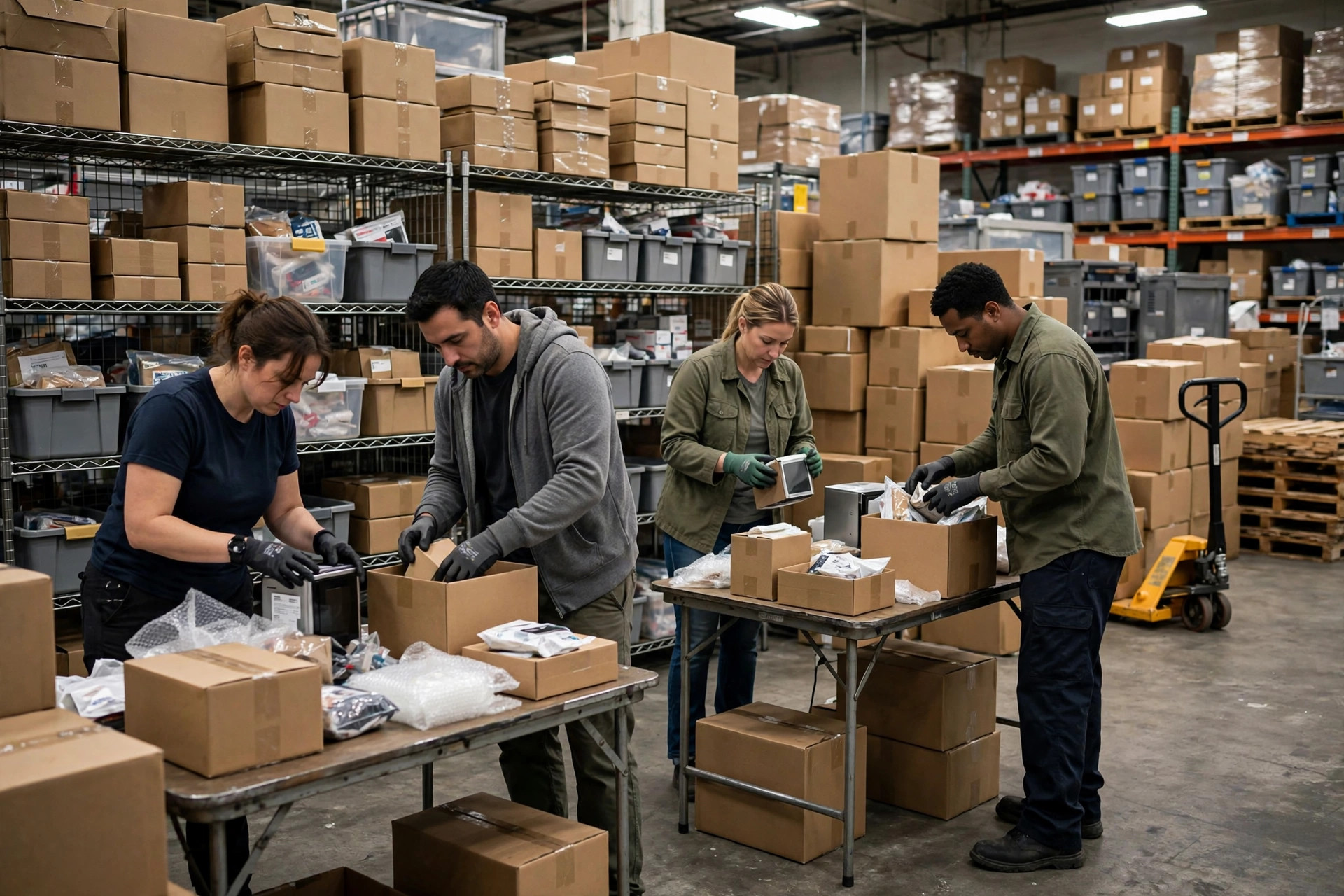
We had a client who learned how to set up returns processing in WMS the hard way. Last October, I walked into their 3PL warehouse in Ontario, California — 80,000 square feet, small-appliance fulfillment, pushing 12,000 orders a day at peak — and found three trailer-loads of returns piled up in the returns area. The dock door could barely close. Boxes everywhere, RMAs tracked on a CSR's spreadsheet, and the warehouse team receiving goods they couldn't match to anything. Their WMS returns module had never even been switched on.
Here's the thing most people get backwards: returns don't start in the warehouse. They start with the RMA.
Where RMAs Actually Come From (and Why It Matters More Than the Warehouse)
Here's a little insider truth from the 3PL side of the table: whether returns run smoothly is about 70% decided before the warehouse touches a box. It comes down to RMA quality, and RMAs arrive from three sources, each messier than the last.
First, platform push. A return request on the marketplace flows via API or EDI into the OMS, which drops an RMA into the WMS — order number, SKU, quantity, return reason, all attached. The dream scenario: scan and receive.
Second, manual CSR entry. Returns that come in by phone or email, keyed in by customer service. Data quality depends on how rushed that rep was. One wrong digit in a SKU and the warehouse hunts through piles to match it.
Third, blind returns. The carrier drops a parcel at the dock with no RMA on file. The warehouse receives it as an unknown, then chases the merchant to claim it — the worst of the three, and the source of most returns disputes.
That Ontario client later ran the numbers: CSRs building RMAs by hand in a spreadsheet had a 12% error rate, and the warehouse spent an extra 4 minutes per unit just reconciling information. Blind returns were worse — more than double the labor of an RMA-backed return.
So here's the counterintuitive take: the most expensive step in returns processing isn't warehouse labor — it's RMA data quality. The cleaner the ticket, the faster the floor moves. When you negotiate a 3PL contract, don't just haggle over storage rates — ask who builds the RMAs and who owns the errors.
How to Set Up Returns Processing in WMS: Receive, Grade, Disposition
When the box arrives, don't rush to open it. Step one is receiving into a dedicated returns staging area — separate logical locations in the WMS, physically segregated on the floor. Why am I so insistent? I've seen a warehouse tuck returns into a corner of the good-stock area to save space — a picker shipped a returned defective unit to a new buyer, and the complaint escalated all the way to the marketplace. One location configuration would have prevented it; the cost was a major account.
After scan-in comes the highest-ROI step in the whole returns flow: QC grading. We typically use four grades:
- Grade A: packaging intact, unused — straight back to sellable stock.
- Grade B: packaging damaged but product fully functional — rebox or mark down, route to the open-box area.
- Grade C: functional issues — to the repair zone, pending fix or vendor return.
- Grade D: dead on arrival — scrap process, photograph everything, wait for the merchant's sign-off.

Grading can't run on gut feel. Define the standards: what counts as "intact packaging" — seal unbroken, or just no crushed corners? Powered-on test or visual check only? Write it into the SOP and tape it above the QC bench.
Early this year, a home-goods client in Texas defaulted every return to Grade A, straight back to stock. Three months later their negative review rate had doubled — buyers receiving someone else's "like new" as brand new — and the re-return rate hit 31%. After mandatory grading, only 42% qualified as Grade A, but re-returns dropped to 9%. Grading looks slow; it saves the entire cost of a second return. Mis-grade one unit and the price isn't an extra step — it's the whole cycle repeated, plus a one-star review.
Once grades are set, take humans out of the disposition decision. Make it automatic in the WMS: Grade A auto-creates a putaway task, Grade B routes to markdown, Grade C goes to repair and pings the merchant, Grade D freezes pending sign-off. Hard-code the rules so people stop improvising — one inspector lenient, another strict, and your data is worthless.
The 5 WMS Configurations You Can't Skip
Process is half the story. Five things must be configured in the WMS — miss one and it stalls:
- Returns locations. Dedicated logical locations plus a physically segregated zone, with every movement scanned. Mixing returns with good stock is the number-one returns disaster.
- QC workstations. Scanner, camera, scale. The camera is your evidence — when a merchant says "it was fine when it came back," the photos are the answer. Attach them to the RMA.
- Reason codes. Configure at least 8-10: defective, wrong item shipped, buyer's remorse, carrier damage, wrong size, not as described, damaged packaging — and one iron rule: never include "Other." Give people "Other" and within three months 60% of your returns will be coded "Other." Your data is dead.
- Disposition rules. Reason code times QC grade, auto-routed to the right action. The more granular the rules, the fewer judgment calls, the fewer arguments.
- OMS and finance reconciliation. QC complete, WMS pushes back to OMS, OMS triggers the refund — that chain must be automatic. Whether the 3PL bills by the unit or the labor hour, the invoice must drill down to individual RMAs. One more insider confession: returns handling is the highest-margin, most-disputed line item in a 3PL quote. If the billing basis isn't nailed down, month-end reconciliation becomes a three-hour argument.
The Math Nobody Shows You
After that Ontario warehouse straightened out its process, we timed one experienced operator for two weeks:
| Step | Measured time |
|---|---|
| Scan and register | about 40 seconds per unit |
| Unbox, inspect, grade | about 3 minutes per unit |
| Photograph and label | about 1 minute per unit |
| Putaway / route to disposition | about 2 minutes per unit |
| Total | about 7 minutes per unit |
Blind returns? Double it — about 14 minutes a unit.
That's why returns has a hard KPI: the 48-hour reshelve rate. From dock receipt to back-on-sale within 48 hours. Why 48? That warehouse averaged $60 per order and 500 returns a day — $30,000 of merchandise dead in the returns zone daily. Three days late and nearly $100,000 of inventory is asleep on the job, still eating floor space. Every extra day a return sits there burns three kinds of money: tied-up cash, occupied locations, and customers who get tired of waiting for their refund and never come back.
Second counterintuitive take: plenty of operators think slow returns don't matter — "the goods aren't going anywhere." Wrong. Returns velocity directly determines how much that inventory is still worth. Consumer electronics, seasonal goods — a week late back on sale can push the markdown down a whole tier. The returns area isn't the warehouse's junk drawer. It's a second sales opportunity, and the 48 hours decide whether you capture it.
Three Questions to Ask Before You Sign the 3PL Contract
In my years on the 3PL sales side, I've watched merchants spend 90% of contract talks haggling over storage and outbound rates, then skim the returns section in two minutes. So before you sign, ask these three:
One: how are returns billed? RMA creation, QC, photography, putaway — bundled rate or itemized? "Small stuff" like photography gets its own line on the invoice if you don't pin it down.
Two: is the 48-hour reshelve rate in the SLA, and what happens when it's missed? A KPI that isn't in the SLA is a wish. One that is, is a commitment.
Three: who has final sign-off on scrap and markdown disposition, and who keeps the residual value? Leave this vague and your Grade C and D units will sit in dispute until they're obsolete — and the merchant eats the loss.
Returns are a mirror: however smooth your outbound operation is, if reverse logistics is a mess, profit leaks out through the returns dock. Get RMA, QC grading, disposition rules, and reconciliation configured in the WMS, and returns flip from cost center to second revenue stream. Before you renew that contract, go stand in the 3PL's returns area for ten minutes. The answer is right there.
By Susan, 3PL Sales Director