Last month I sat at a DC gate in Ontario, California, waiting two and a half hours for a load. Watched the forklifts: plenty went in loaded, every one came back with empty forks. An old-timer said they'd just switched on WMS task interleaving — built to kill exactly that empty running. After all these years on the road, I've seen every trick at the warehouse gate, but this "combo job" idea was the first that made me really think.
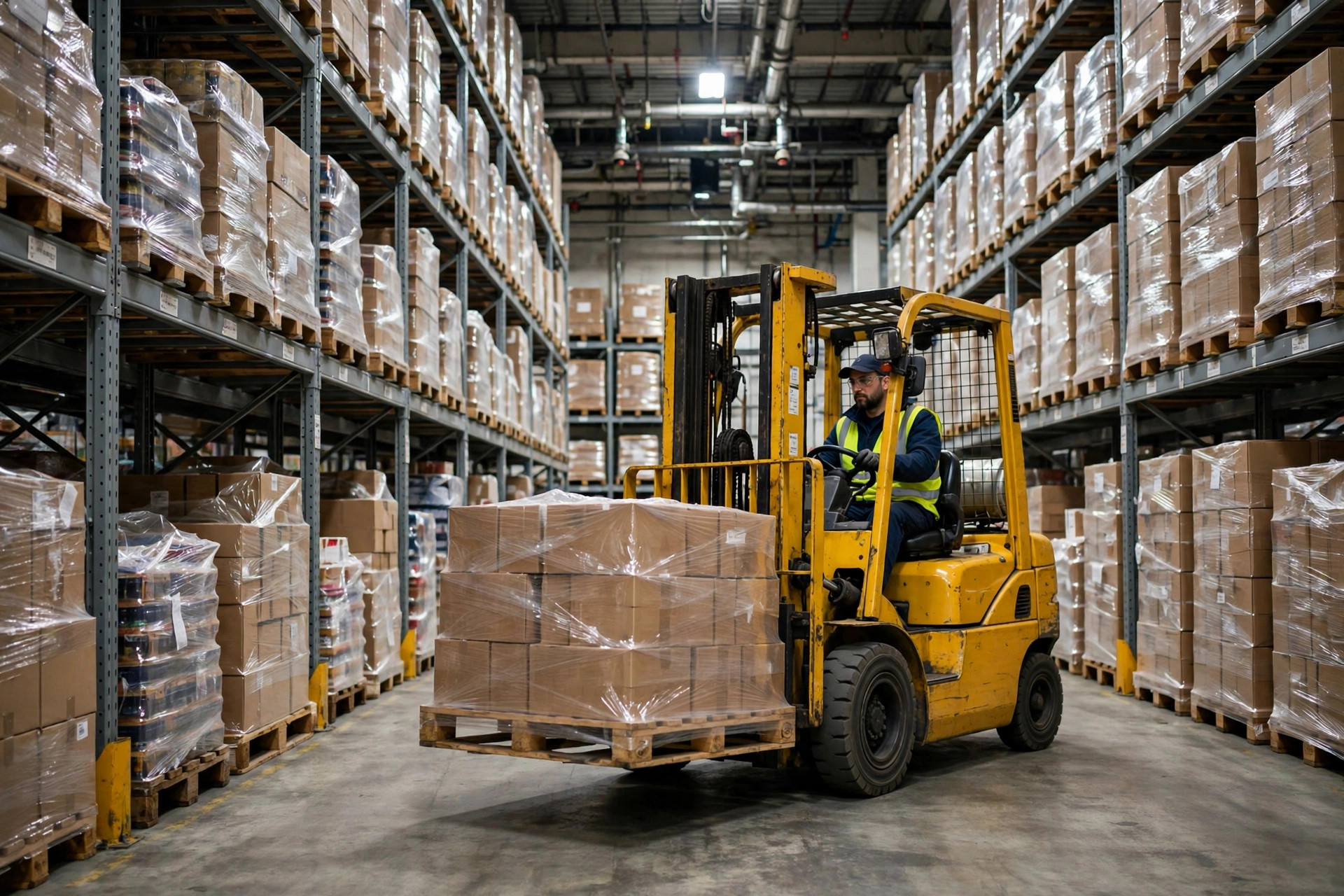
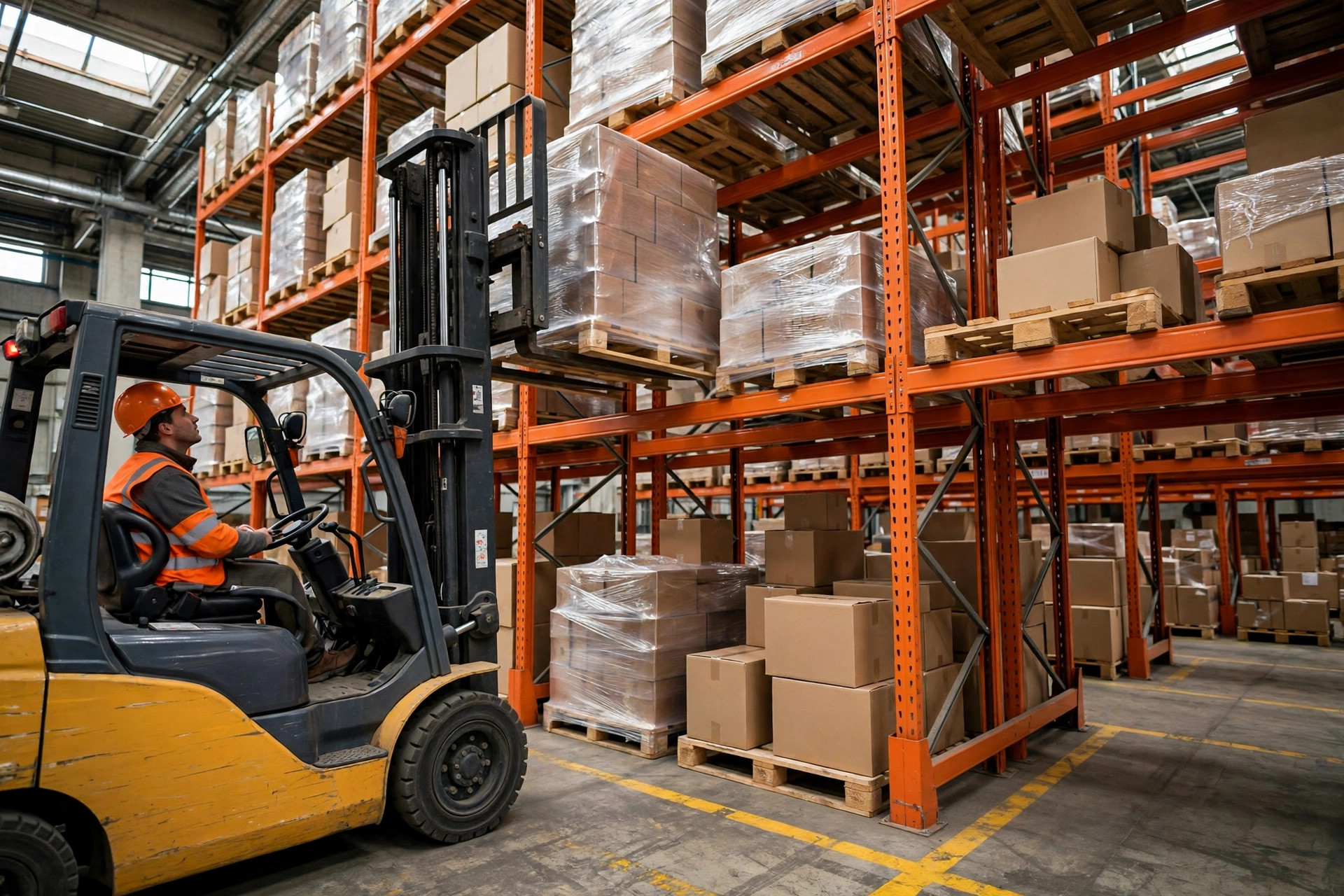
The man — call him Ah Qiang — has driven forklifts nine years. Half his day used to be empty travel: pallet in, empty back, empty out to fetch the next job. Now the system bundles work — a replenishment pallet grabbed on the way to putaway, a two-minute barcode stop in an aisle due for counting on the way back. End of shift: several kilometers less driving, and a battery that needed two charges now needs one.
Reminded me of a small Dallas warehouse I saw in winter 2023. No system — everything shouted over the radio, putaway crew and replenishment crew each doing their own thing. Peak season, the aisles jammed forklift-to-forklift, and one rushing rookie clipped a rack upright. That aisle shut three days for repairs; damage plus downtime cost the owner tens of thousands of dollars. The drivers weren't bad — the dispatching was dumb, and every truck ran around half empty.
Two warehouses, one with the feature, one without. The difference isn't forklift prices — it's whether whoever assigns the work uses their head.
What WMS Task Interleaving Actually Is, in Plain Words
Plain version: the forklift never travels empty. Old way: putaway meant putaway — grab a pallet at receiving, drop it in its slot, drive back empty; replenishment was somebody else's job. New way: the system scans the whole pool of waiting tasks, checks where each truck is and where it's headed, and bundles same-route jobs into one assignment.
Say it's 10 a.m. Truck 3 must put away 2 pallets in aisle 12. Staging has 1 pallet bound for a pick slot in aisle 14. The return path passes aisle 9, where 3 slots are due for counting. One assignment: truck 3 swings by staging first (a 40-meter detour), drops putaway pallets in aisle 12, sets the replenishment pallet in aisle 14, and stops two minutes in aisle 9 to scan three barcodes on the way back. One trip does the work of three; the only empty stretch left is the short hop home.
Anyone who's run long haul knows this logic — backhauls, grabbing freight along your route, that's the brokerage game. They just wrote it into software: every truck, every job, hundreds of times a day. No human brain does that math.
How Much Empty Travel Does Task Interleaving Really Cut?
A forklift operator in a U.S. warehouse makes $20 to $30 an hour — the going rate. An electric forklift, purchase plus upkeep, costs tens of thousands a year. Neither is cheap, so every empty mile burns money.
One industry figure comes up a lot: roughly three to four in ten forklift miles are empty — fetching a load or coming back after a drop. Every warehouse differs, but "at least thirty percent" is a number every warehouse manager I've asked nods at.
How much does task interleaving squeeze out? I won't hand you a precise number as gospel. Vendor case studies commonly claim another ten to twenty percent off the empty miles — that's percent of the empty miles, not of total travel. Plain words: 35 empty kilometers out of 100 becomes around 28. Sounds small? Over a year, one truck saves thousands of kilometers and dozens of labor hours — half a driver's workload handed back.
The more honest savings aren't electricity — they're congestion. Separate queues meant three trucks wedged in one aisle at peak, nobody moving. Interleaving spreads tasks and traffic flows. Ah Qiang said the biggest change wasn't "faster," it was "no more jams." Dock waits that stretched two to three hours came down to about one. For us drivers, gate waiting is the worst part of the day — that saved hour beats an extra short haul.
| Warehouse without it | Warehouse with it | |
|---|---|---|
| Share of empty forklift travel | 30–40% | Can cut another 10–20% off that |
| Aisles at peak | Jam up, trucks fighting for space | Tasks spread out, traffic flows |
| Driver's day | Lots of waiting and empty running | Always a next job along the route |
| Dock wait (our view) | Routinely 2–3 hours | Around 1 hour |
What Size Warehouse Should Bother Turning It On?
Counterintuitive part first: task interleaving is not for small warehouses. Too few jobs in the pool, and the system can't find combinations worth bundling. Force it on and you get weird routing, angry drivers, worse efficiency than before.
A simple rule of thumb:
| Daily pallet moves | My take |
|---|---|
| Under 100 pallets/day | Don't bother. The task pool is too thin. Get slotting and barcode scanning solid first. |
| 100–500 pallets/day | Depends. Big single floor, long aisles (100+ m one way)? Worth it. Small tight site? Not much point. |
| Over 500 pallets/day, or multi-shift | Turn it on. The pool is deep enough for route combinations all day, and the saved hours show up. |
Two hard prerequisites. First, location codes and barcodes must be solid — if the system can't tell where things sit, interleaving is confident misdirection. Second, drivers need vehicle-mounted terminals or handhelds for real-time assignments. Without those two, it's a castle in the air.
From the Driver's Seat: Are These "Combo Jobs" Any Good?
This is the part I most wanted to talk about — it's people doing the work, not software.
Bottom line: veteran drivers love it. Rookies go through a rough patch.
What's good? The waiting used to be the worst — drop your load, sit empty, wait for the radio, half an hour of thumb-twiddling a day. Now there's always a next job along your route. The truck keeps moving and so do you. Ah Qiang: "My back used to hurt from all the bouncing. Now I'm tired from real work. It's an honest tired."
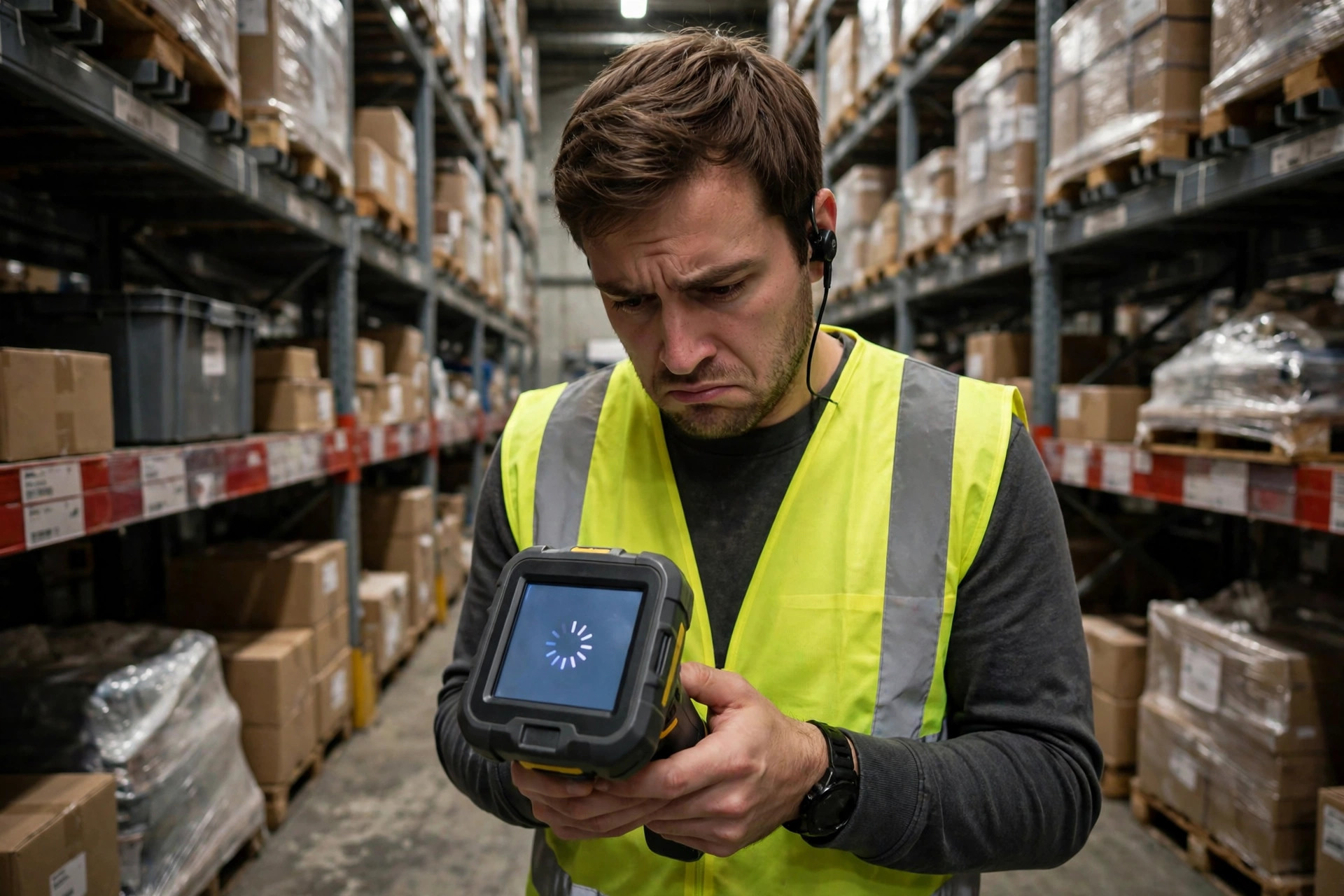
What's rough? The job got complicated. One job, one thing, no thinking — that's gone. Now one assignment mixes three: putaway, replenishment, counting, each in different aisles with different codes. The rookie trap isn't driving. It's putting a pallet in the wrong slot — aisle 12 getting what belonged in aisle 14. Sneakier than hitting a rack: three days pass before anyone notices, and finding it again is a nightmare.
Here's what nobody tells you: interleaving raises the bar for drivers, not lowers it. Driving skill and aisle knowledge used to be enough. Now you read assignments on a terminal, scan to confirm, read location codes, do basic counts. A supervisor told me their new hiring line for forklift drivers sounds funny but is dead serious: must scan barcodes with a smartphone. That's the bar now.
Three pieces of hard-won advice for rookies. First, don't complain the route "looks roundabout" — it may look twisty, but total distance is shorter. Trust it. Second, at every slot: scan, check the screen, then move. One misplaced pallet costs ten times the effort to find. Third, don't fake counts — a count done "along the way" becomes the inventory record, and if it's wrong, it's on you.
Straight Talk for Shippers and Warehouse Owners
Three things for owners. First, measure empty-travel rate before deciding: run two weeks, pull every truck's empty mileage — under twenty percent empty, this won't save you much. Don't spend it. Second, location codes, barcodes, vehicle terminals are the foundation; shaky foundation means the feature just confuses the system and frustrates drivers. Third, no productivity quotas in month one. Let drivers find the rhythm of multi-task assignments first — quota too early and the rookies all quit.
For us shippers and drivers auditing a warehouse: don't just look at rent and square footage. Squat by the dock half a day and watch the forklifts — "busy but orderly" or just "busy and chaotic"? Dock wait time is the litmus test, more honest than any brochure.
At the end of the day, task interleaving isn't fancy technology. It's five words: don't let the truck run empty. Making those five words true for every job and every truck takes a system doing the math all day, not driver willpower. Same as trucking: every old hand knows to find a backhaul, but landing one every trip takes a dispatcher. The system is the dispatcher that never gets tired.
Old saying fits here: an empty truck burns the same diesel as a full one. Every empty kilometer you save is money picked up off the ground.
By Shifu Zhao, Trucking Veteran (15 yrs)