Let me tell you something. After fifteen years behind the wheel, there are four words in warehousing I've come to respect: the golden zone.
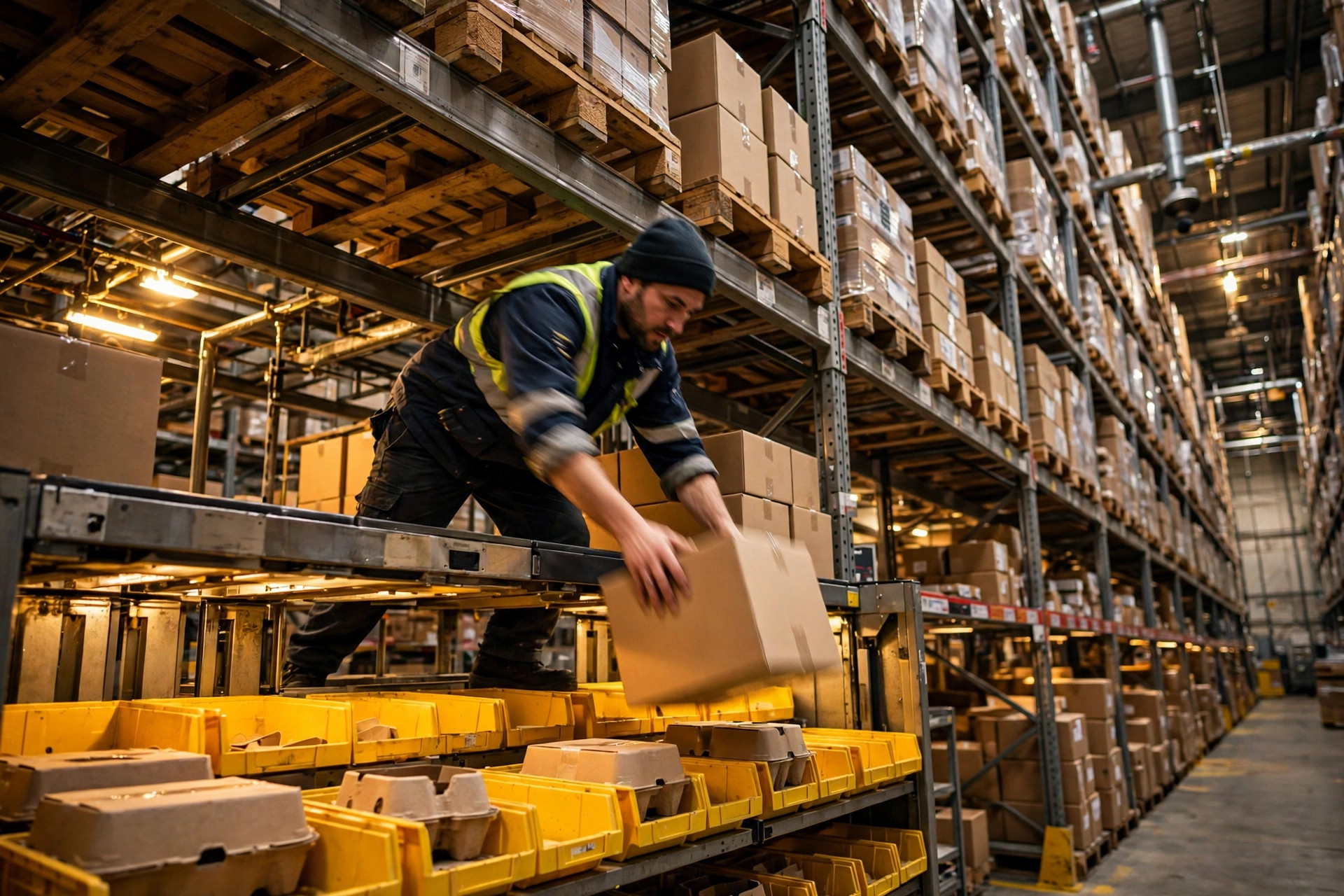
Last summer I was pulling a load out of a warehouse in Ontario, California. Appointment was 2 PM. They didn't get me loaded until 4:30. With nothing to do, I sat by the dock and watched their pickers work. That warehouse did auto parts — heavy stuff. Their best-selling brake rotors were all on the bottom shelf. The picker had to bend double to drag them out, forty, fifty pounds a box. After twenty-some boxes the kid couldn't straighten up, hands on his knees, breathing hard. And the two shelves above? Dead stock that hadn't moved in six months, covered in dust. I asked the supervisor why they didn't move the fast sellers somewhere reachable. He just laughed: the slots were set three years ago, before this rotor even existed. Easiest thing was to shove it on the bottom.
That wasn't even the worst I've seen. Years ago running a dedicated lane, I used to pull out of a warehouse in Texas that had it backwards: the heavy fast-movers on the top shelf, and the golden waist-height row stocked with tissue paper and packing peanuts — "because light stuff is easy on the arms." Then one day a picker lost his footing pulling a heavy box down from the top. The box came down on him. Seven stitches, two days shut down for the investigation. Heavy goes at the waist, light goes up high. That's a rule written in blood, not brainstormed in a meeting.
What does that tell you? A lot of warehouses are sitting on a gold mine and begging for change.
Where the Golden Zone Actually Is
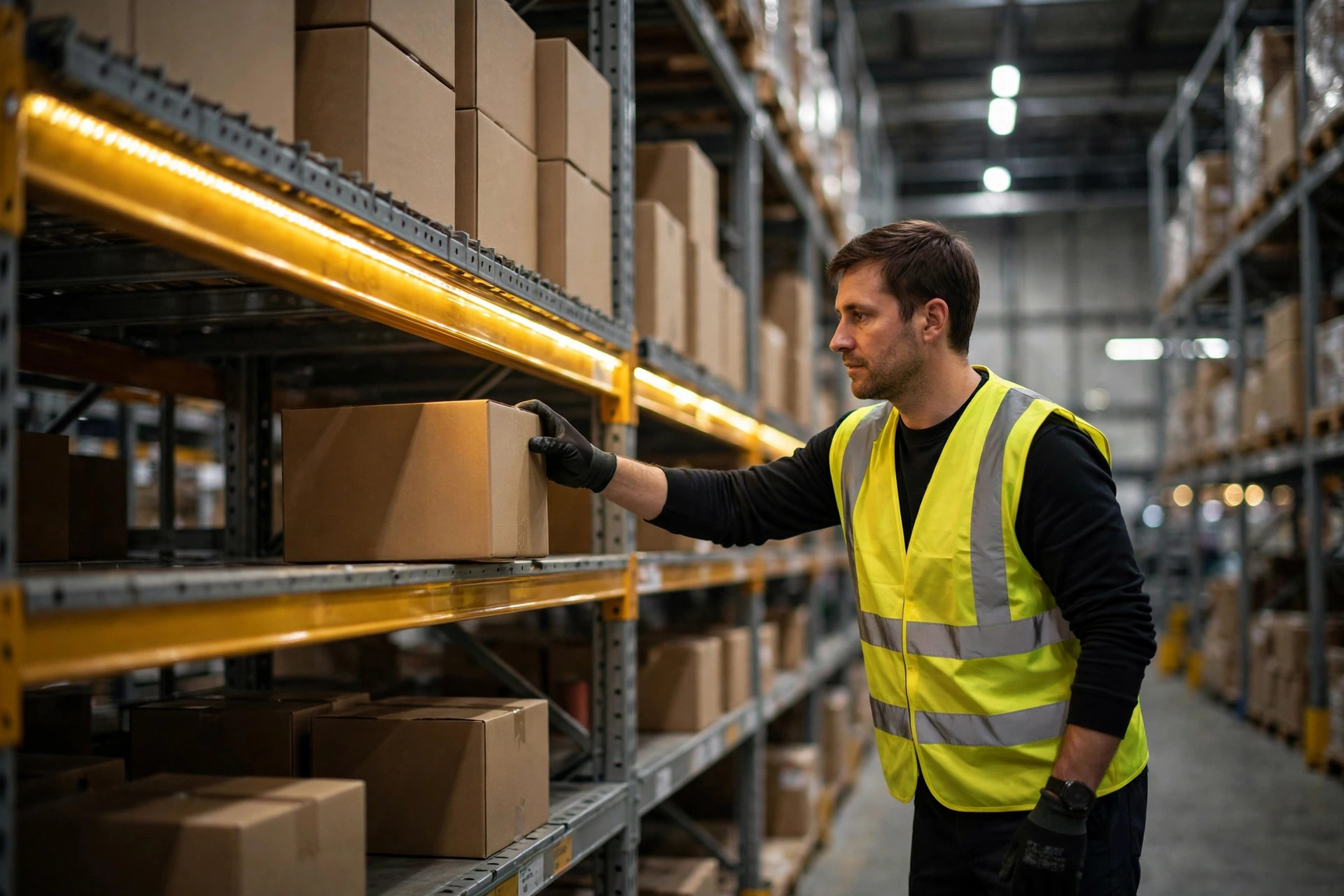
The human body has opinions. Between the knees and the shoulders, around the waist, is where your hands work best — no bent back, no sore shoulders. That's the golden zone. The physics is simple: the farther the load and the more twisted the posture, the harder your lower back works. Bend ninety degrees to drag a fifty-pound box and your spine takes several times that weight. Do it a few hundred times a day and no back survives. At waist height, the hand just reaches out, grabs, turns, sets it down. Force travels in a straight line. Easiest path there is.
The fastest-moving SKUs and the heavy ones belong there. Slow, light stuff goes up. Heavy but slow goes down low. Remember it like this: fast and heavy lives at the waist, fast and light at the chest, slow and light at the top, heavy and slow at the bottom.
I went back to that Ontario warehouse three months later. The supervisor had actually listened — the brake rotors were moved to the waist-level row, and the bottom row got the slow heavy stuff. Same kid, standing upright this time, grabbing a box and turning it onto the conveyor like a different person. Loading time went from two and a half hours down to a little over one.
The Golden Zone Is Economics: Pennies Saved Are Dollars Earned
Some people say, how much can bending over really cost? Let me do the plain math. A picker does two thousand picks a day. Each bend costs two extra seconds. That's four thousand seconds a day — over an hour, gone. Twenty-six working days a month, one person burns nearly thirty hours. Ten people on a line, three hundred hours — like paying one and a half people to do nothing. And that's before injuries. One bad back, medical bills plus lost time, and over here in the US that's enough to pay somebody's wages for the better part of a year. Worse is hiring. Warehouse workers are hard to find these days, especially young ones willing to do picking. You finally hire one, his back gives out in two months, he quits, and you're recruiting and training all over again — weeks down the drain. A warehouse that uses its golden zone right keeps its people longer. The money saved on hiring and training alone can beat the labor-hour savings in a year. If the warehouse manager won't do this math, the accountant will do it for him eventually.
There's another hidden bill: mispicks. Bending into a dark bottom shelf, labels hard to read, grabbing the wrong box is way more likely than at waist height. In my years hauling freight I've seen too many "wrong item" fights — customer refuses the load, re-ship, freight both ways, all of it money. At waist height the label is right in front of your eyes. You look before you grab. Error rates drop on their own.
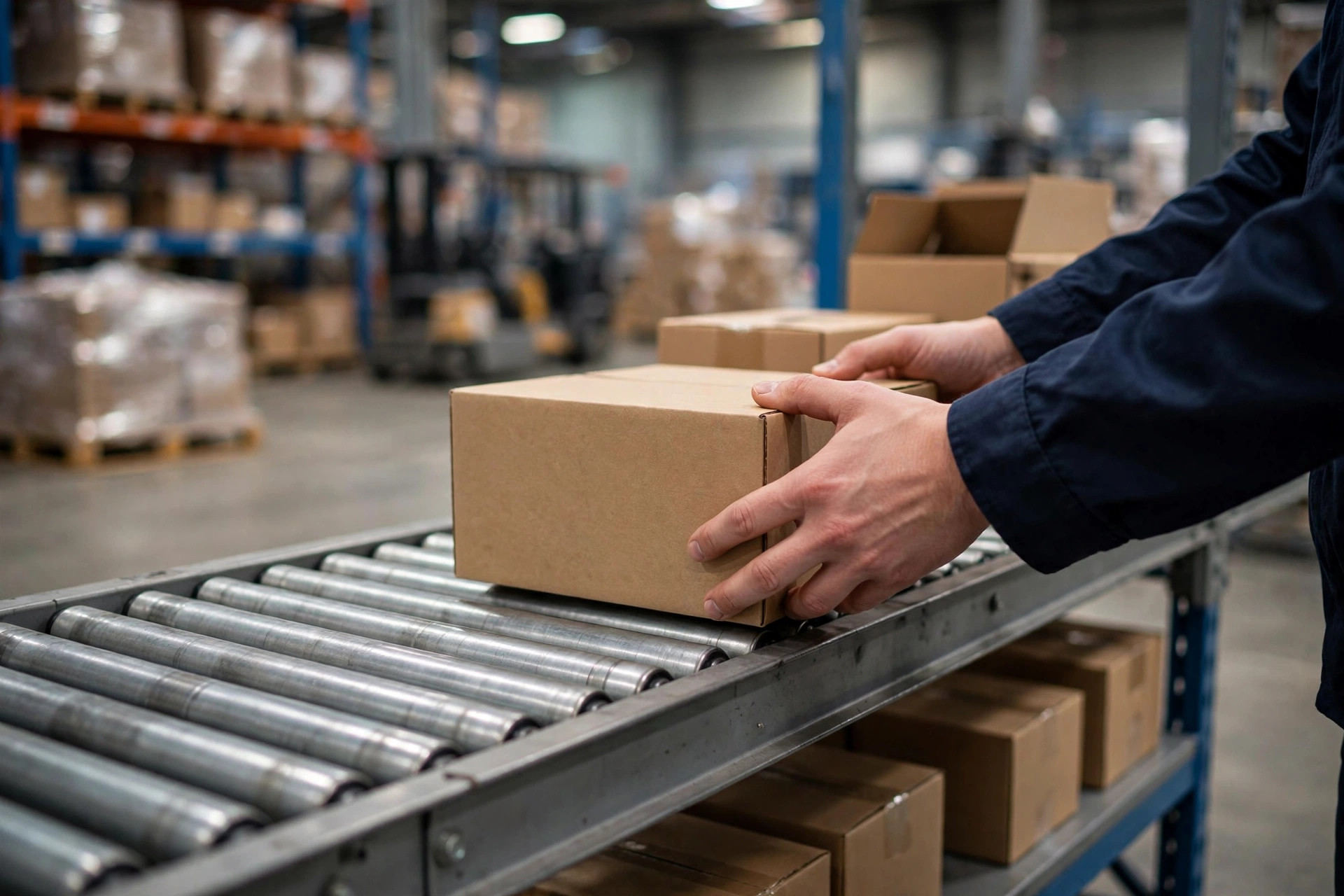
Here's a counterintuitive one: plenty of folks believe "heavy stuff is safest on the bottom." Wrong. Heavy and fast-moving belongs at the waist. The bottom bends your back, the top wrecks your shoulders. Heavy-but-slow down low, light-but-slow up high, and the golden middle for the "heavy and fast." Stability comes from how you stack and secure, not from which shelf it's on.
The golden zone has one natural problem: there's only so much of it. One or two waist-level rows per rack section, and every fast SKU wants in. So you grade ABC and review on a schedule, or the bestsellers rot on the bottom forever. How to grade? Keep it simple: look at the last three months — how many order lines and how many units per SKU. High on both, that's A, it moves into the golden zone. Occasional movers are B, somewhere reachable but not prime. Dead for six months is C, up high or far away. And don't set it and forget it. Bestsellers change. Seasons change, promotions come, and ABC has to be re-graded. I know a 3PL in LA where the slotting guy re-slots every quarter: fast A's at the waist, heavy at the waist, light and slow up top. I've pulled out of there a few times — loaded in forty, fifty minutes, every time. Was that saving my time? No. It was their picking time, and it ended up as competitiveness on their rate sheet.
Three ways to run it — see which one is yours:
| Approach | Pick speed | Wear on people | Who it's for | | Fast movers at the waist, heavy at the waist | Fast | Low | Most warehouses | | Slot wherever the freight lands | Slow | High | Warehouses where nothing moves anyway | | Everything up high, fetched by forklift | Medium | Medium | Full-pallet bulk operations |
Straight Advice for Warehouses
A cheap trick first, for the small guys. An old buddy of mine who runs his own little 20,000-square-foot warehouse couldn't afford fancy ergonomic racking. What did he do? He put his few dozen most-used SKUs on pallets stacked two high — a wood pallet is about six inches, two of them a foot, and the goods sitting on top land right at waist height. Didn't spend an extra dime. Picking speed jumped. So the golden zone has nothing to do with how much money you have. It's about whether you care.
First, grade your SKUs ABC by movement and move the A's into the golden zone. Don't let bestsellers suffer on the bottom. Second, heavy goes at the waist, period — forget the old "bottom is stable" idea; stability comes from stacking and securing. Third, re-slot every quarter. Bestsellers change, so slots have to move. Fourth, your pickers' backs are your profit. Adjust workstation heights wherever you can. Don't make a person bend eight hundred times a day.
And one for the shippers: next time you visit a warehouse, don't just look at the price. Watch whether the pickers work standing up or bent over. A bent-over warehouse will dent your goods, mispick your orders, and ship late — and you'll pay for all of it. One more trick: when you're negotiating a contract, ask "how often do you re-slot?" If they can't answer, the slots were probably set three years ago. If they can, that warehouse is probably run right. Picking a warehouse is like picking a driver — you watch whether they sweat the small stuff every day, not how pretty they talk.
There's an old saying: sharpen the axe before you chop. Get your slotting right, and every penny saved is real money. Don't wait until the backs break and the people walk out to start re-slotting — by then it'll cost you a lot more than a re-slot ever would.
By Shifu Zhao, Trucking Veteran (15 yrs)