Pick the wrong pallet racking type and you'll burn half your warehouse rent and labor budget for years. A friend who distributes food products called me last week. He'd just leased an 8,000-square-meter warehouse, and a racking vendor handed him four proposals — selective, drive-in, shuttle, and gravity flow — with quotes differing by nearly 3x. He asked which one to choose. I told him to stop looking at the quotes. These four aren't even the same species. Choosing racking isn't about finding "the best" — it's about finding the one that matches your freight.
Four Racking Types, One Sentence Each
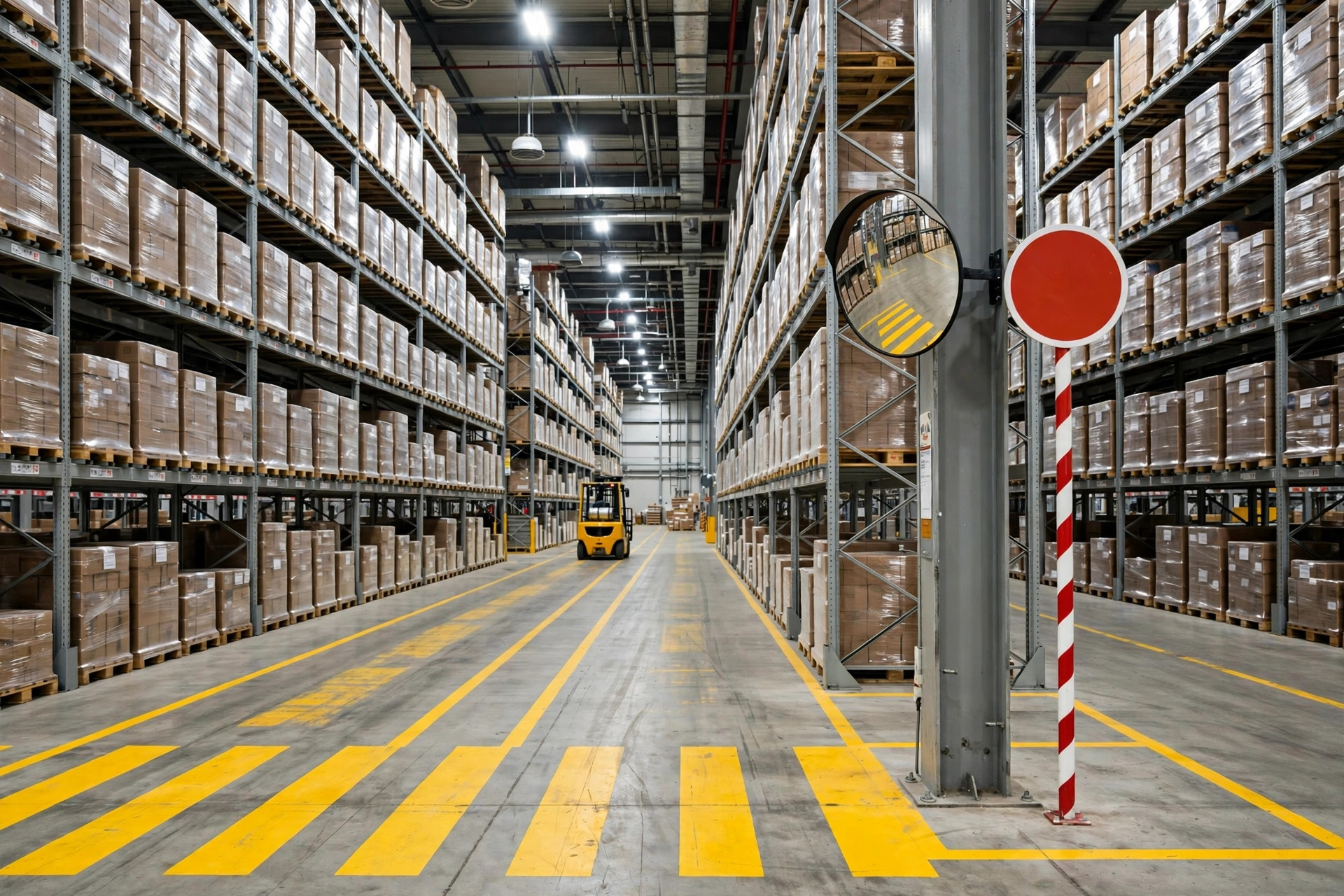
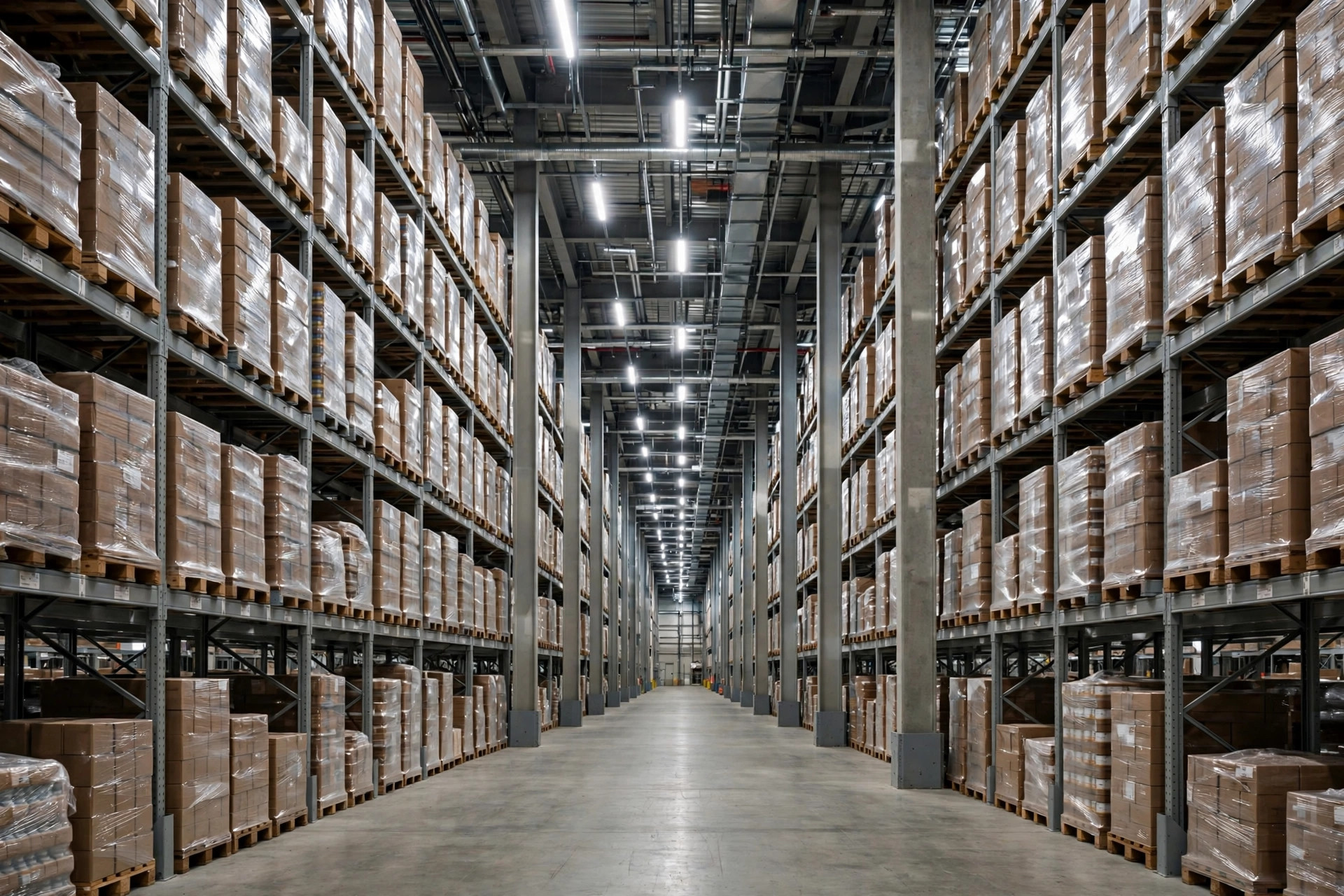
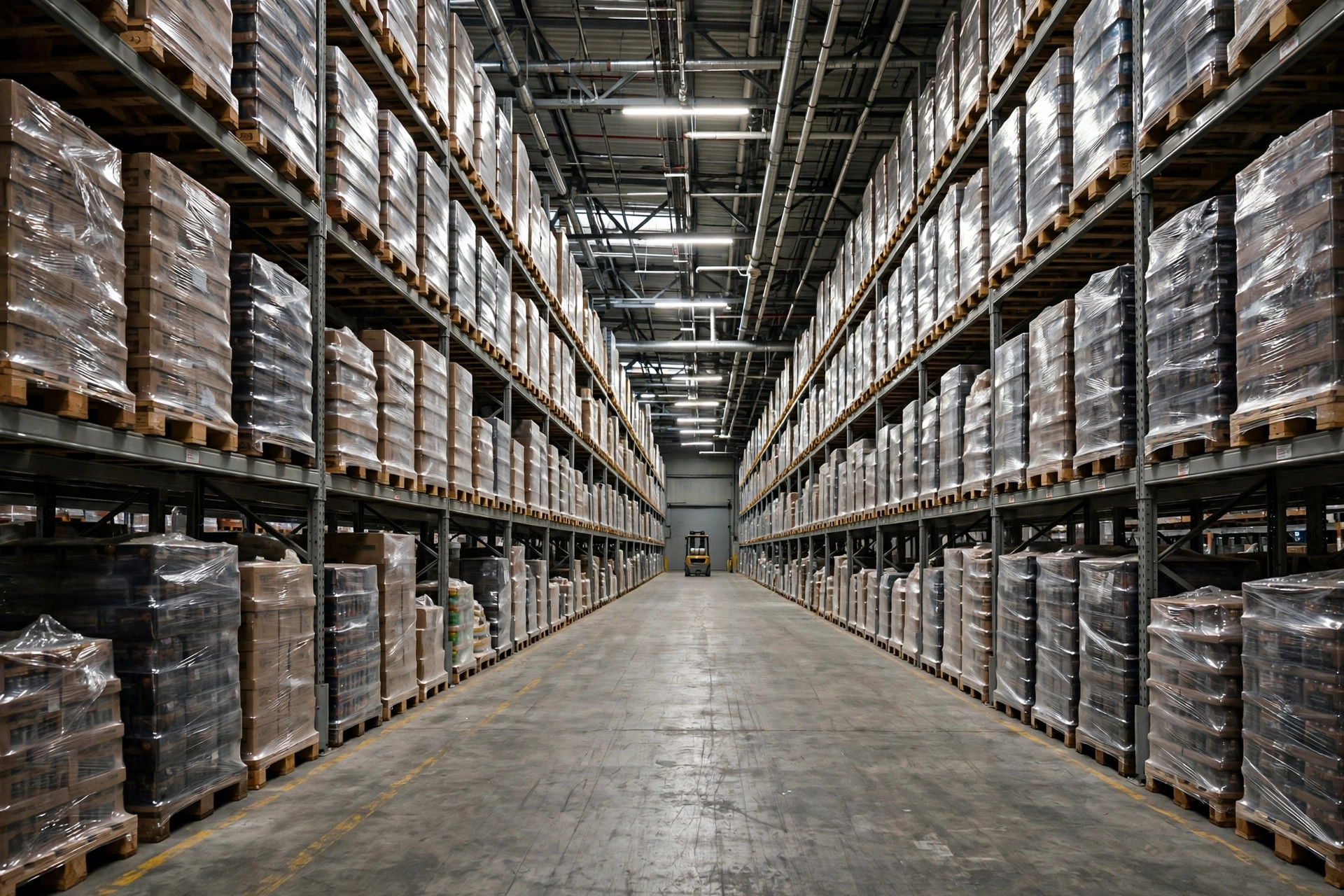
Selective racking: every pallet gets its own address. Think of it as a multi-story parking garage — each space is independently accessible, the forklift works from the aisle, and any pallet can be grabbed without moving another. The price you pay is aisle space: roughly half your floor area goes to forklift lanes.
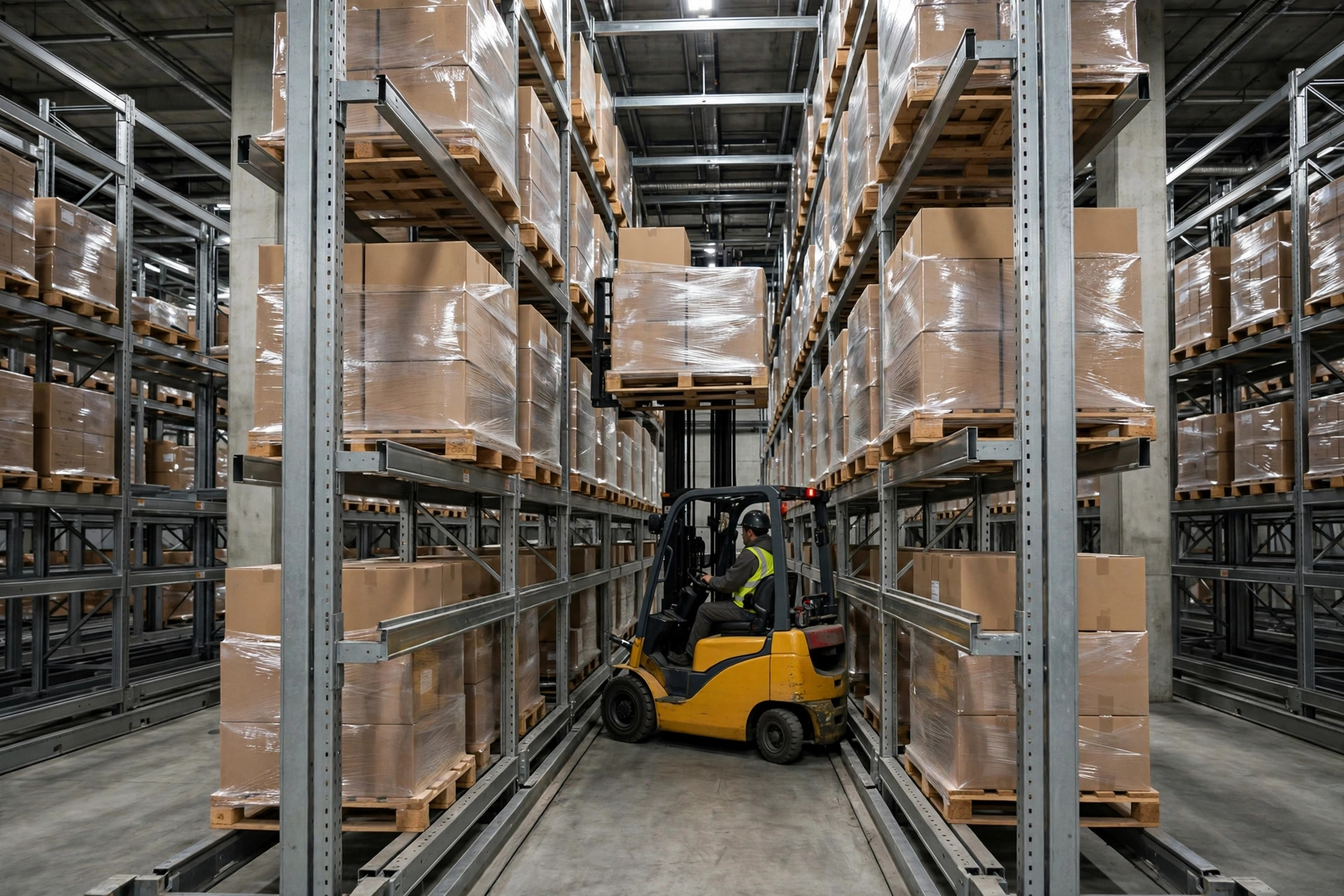
Drive-in racking: the forklift drives into the rack itself. Think of it as a deep parking structure where the truck drives down the lane, stacking pallets one behind another. Density goes way up and you only need one aisle, but the rules change: it's last-in, first-out. Lanes typically run 6–10 pallets deep — any deeper and the driver can barely turn around inside.
Shuttle racking: a small cart does the running for the forklift. Think of it as drive-in racking with a subway installed in each lane. The forklift drops a pallet at the lane entrance, and the shuttle cart carries it deep inside and comes back on its own. The forklift never enters the rack, so speed and safety both improve — but now you're maintaining another machine: the cart, the rails, the charging system.
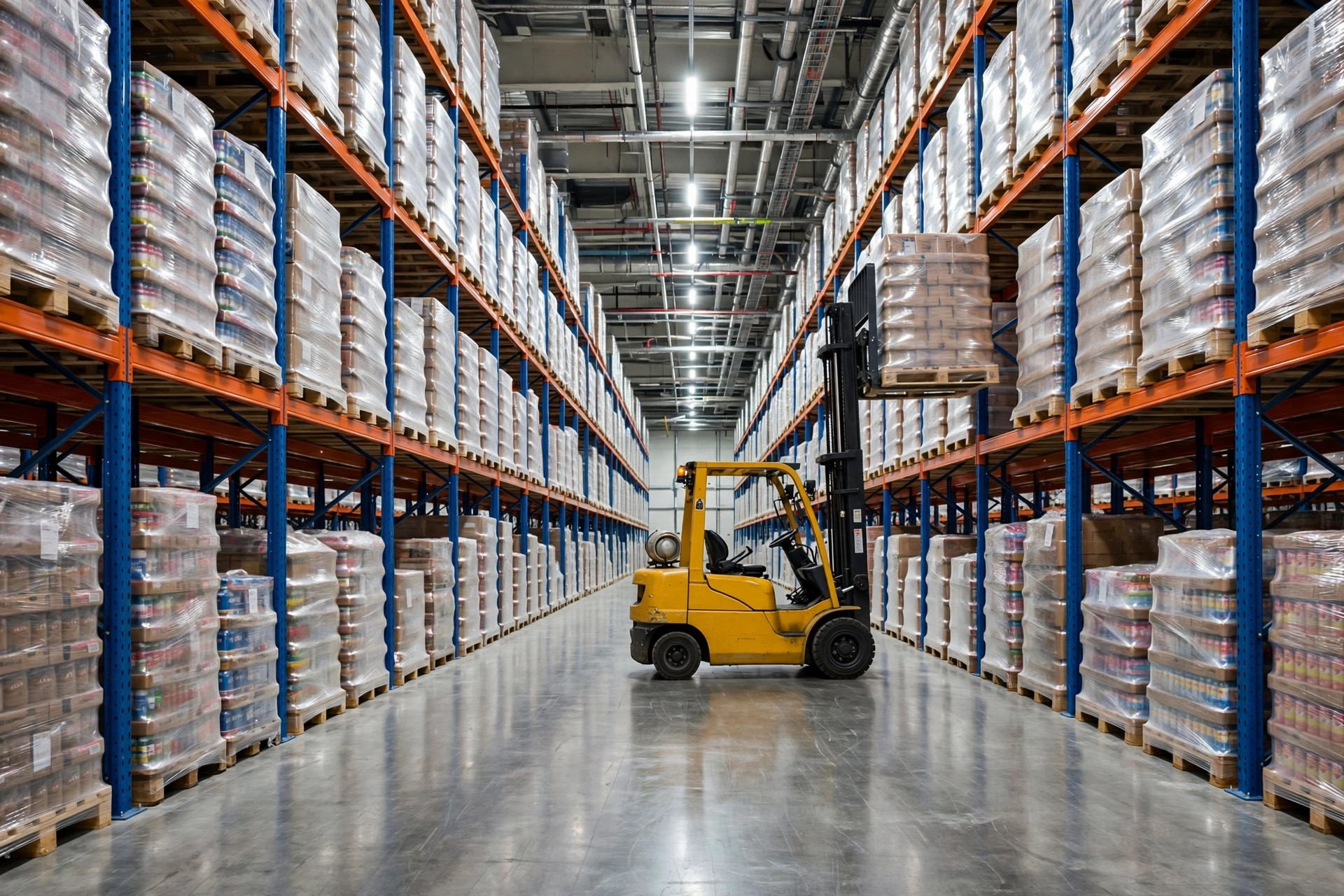
Gravity flow racking: pallets slide downhill by themselves. The lane is a sloped bed of rollers or skate wheels; you load at the high end and pallets glide to the picking face. Think of it as a giant slide — first in is always first out, which is exactly what date-sensitive products need. The structure is the most complex of the four, and the per-pallet cost sits near the top.
Whenever a warehouse owner opens with "I want fully automated, maximum density," I push back hard. A facility with two or three hundred SKUs and a few hundred pallet moves a day buying shuttle racking is like buying a sports car to drive to the grocery store — great car, wrong roads, money wasted. Racking has no ranking of good and bad. It only has fit and misfit.
Choosing Between Racking Types: Three Numbers That Decide
Forget the sales pitch. Pull these three numbers from your operation and judge for yourself:
| Decision factor | Selective | Drive-in | Shuttle | Gravity flow |
|---|---|---|---|---|
| SKU count | High (hundreds to thousands) | Low (dozens) | Low to medium | Low |
| Pallets per SKU | Small, mixed | Large, full lanes per SKU | Large, full-pallet moves | Large, continuous flow |
| Turnover pattern | High-frequency picking | Low-frequency, bulk in/out | Medium-high, full pallets | High-frequency, FIFO required |
| Inventory principle | Free access | LIFO | LIFO | FIFO |
| Forklift demands | Standard | Skilled drivers needed | Dock-at-entrance only | Easy picking at face |
Three dividing lines, memorize them: over a hundred SKUs, start with selective. If one SKU can fill an entire lane, drive-in and shuttle enter the conversation. If the product has a shelf life and FIFO is mandatory, gravity flow is the only honest answer.
A food distributor in eastern China learned this the expensive way in 2023. Fewer than 100 SKUs, fast-moving beverages and condiments — they chose drive-in to save on rent. LIFO collided with expiry-date management and near-expiry stock piled up; drivers making dozens of in-and-out trips a day took two to three times longer per pallet move than before, so labor costs climbed instead of falling. Within a year they tore out half the drive-in lanes, went back to selective, and put gravity flow on the SKUs with the worst expiry problems. The lesson: the rent they saved got paid back in labor and write-offs.
Running the Numbers: 10,000 Pallet Positions, Four Options
Take 10,000 pallet positions as the benchmark and rank the four options by magnitude (local supply chains and installation costs vary — treat these as relative relationships, not quotes):
Floor space (most to least): selective > gravity flow > drive-in ≈ shuttle. Selective needs a forklift aisle for every two rows of racking, and aisles eat close to half the floor. Drive-in and shuttle merge multiple aisles into deep lanes, cutting the footprint for the same pallet count by roughly a third.
Racking hardware cost (cheapest to priciest): selective (1x) < drive-in (~1.5x) < gravity flow (~2–2.5x) < shuttle (~2.5–3x, including carts and rail systems). Note that the shuttle multiplier is mostly equipment — the more lanes you run, the more carts you buy, and the number keeps climbing.
Labor time per pallet move (fastest to slowest): selective < gravity flow (at the pick face) < shuttle < drive-in. Of all the pallet racking types, drive-in looks cheapest on hardware until you price in the labor. A drive-in driver entering the lane, reversing, and confirming corbel positions routinely takes two to three times longer per pallet than a selective pick.
Here's the counterintuitive part: the highest-density option usually carries the highest labor cost. The math has to include seconds of labor per pallet move × total annual pallet moves × hourly labor cost. Plenty of owners only discover after signing that the rent saved by drive-in doesn't cover the extra forklift hours. That's why I always ask for "average daily pallet moves" before discussing any design — without that number, every selection is a guess.
Don't Get Burned on Maintenance: Bent Corbels and Dead Batteries
Installation day is the easy part. The maintenance traps come later.
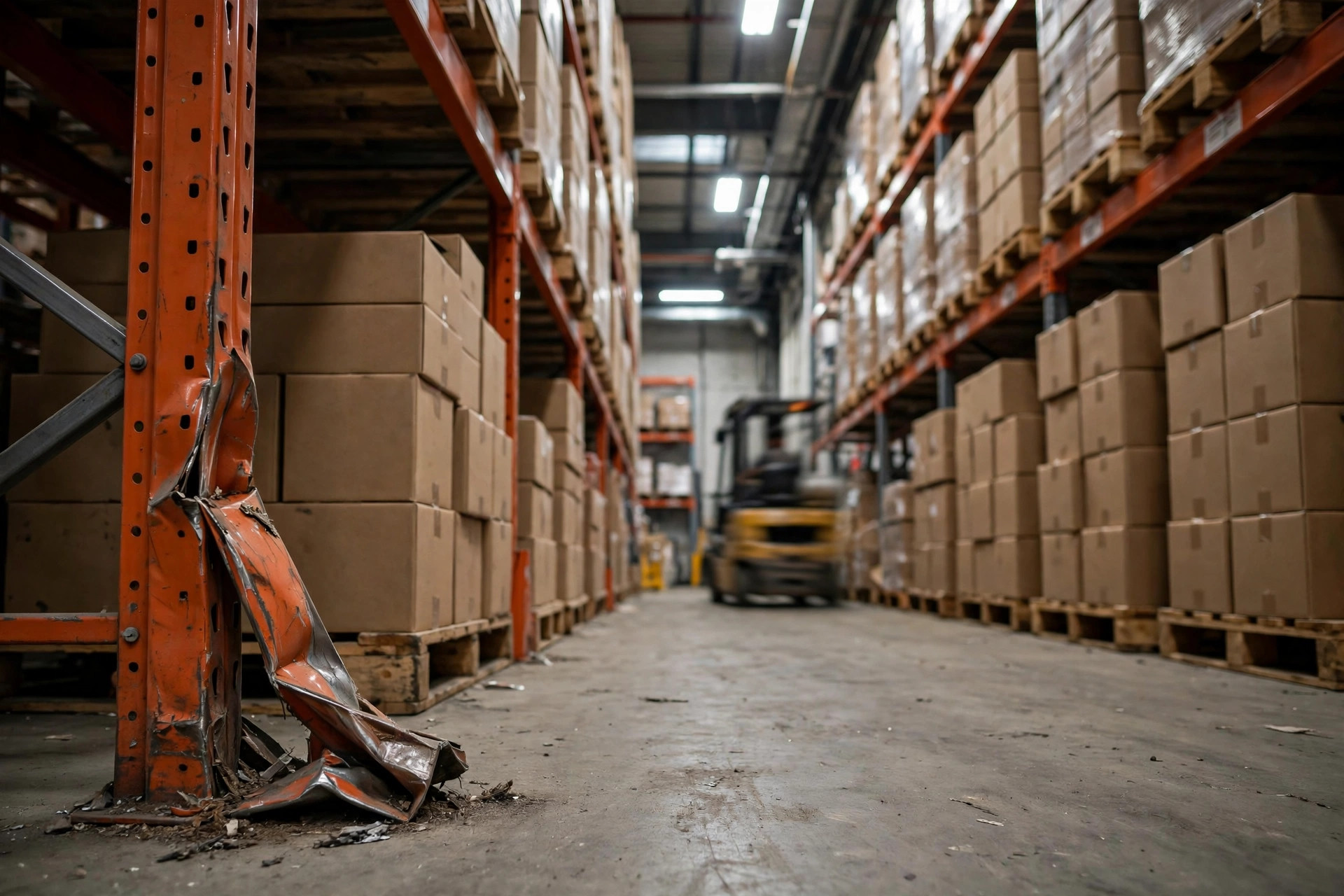
Drive-in corbel arms hate impacts. Forklifts run in and out of the lanes all day; one scrape and a corbel bends a few millimeters, and pallets start slipping and sagging on it. The worst case I saw: deformed corbels nobody inspected, and a loaded pallet slid off the third level — luckily nobody was underneath. Drive-in warehouses need scheduled corbel inspections — every three months, a level gauge on every arm, replace anything bent on the spot. If that sounds like too much trouble, don't buy drive-in.
Shuttle cart batteries are the other landmine. Most carts run on lithium batteries needing one or two charges a day. In 2022, a 3PL warehouse in southern China left charging to driver discipline — charge when you remember, swap when it dies. During peak season a cart died deep inside a lane, locking dozens of pallets behind it. The forklift couldn't get in or out, and it took two days to drag the cart free. Shuttle systems demand a charging discipline: fixed charging bays, rotation schedules, battery health logs. One dead cart paralyzes a whole lane — price that risk in before you buy.
Gravity flow has its own trap in the roller beds: dust-clogged rollers and failed brakes mean pallets either stall or slam forward. And all three high-density types share one rule — they demand good pallets. Broken or warped pallets are banned from the lanes, because a jammed pallet is worse than any other failure.
Whether the money was well spent comes down to one number: total annual cost per pallet position = rent share + labor share + equipment depreciation share. Run all four options through that formula and the numbers will make the decision for you. There is no perfect pallet racking type — only the least-bad one after the math is done.
By Da Liu, Automation Engineer