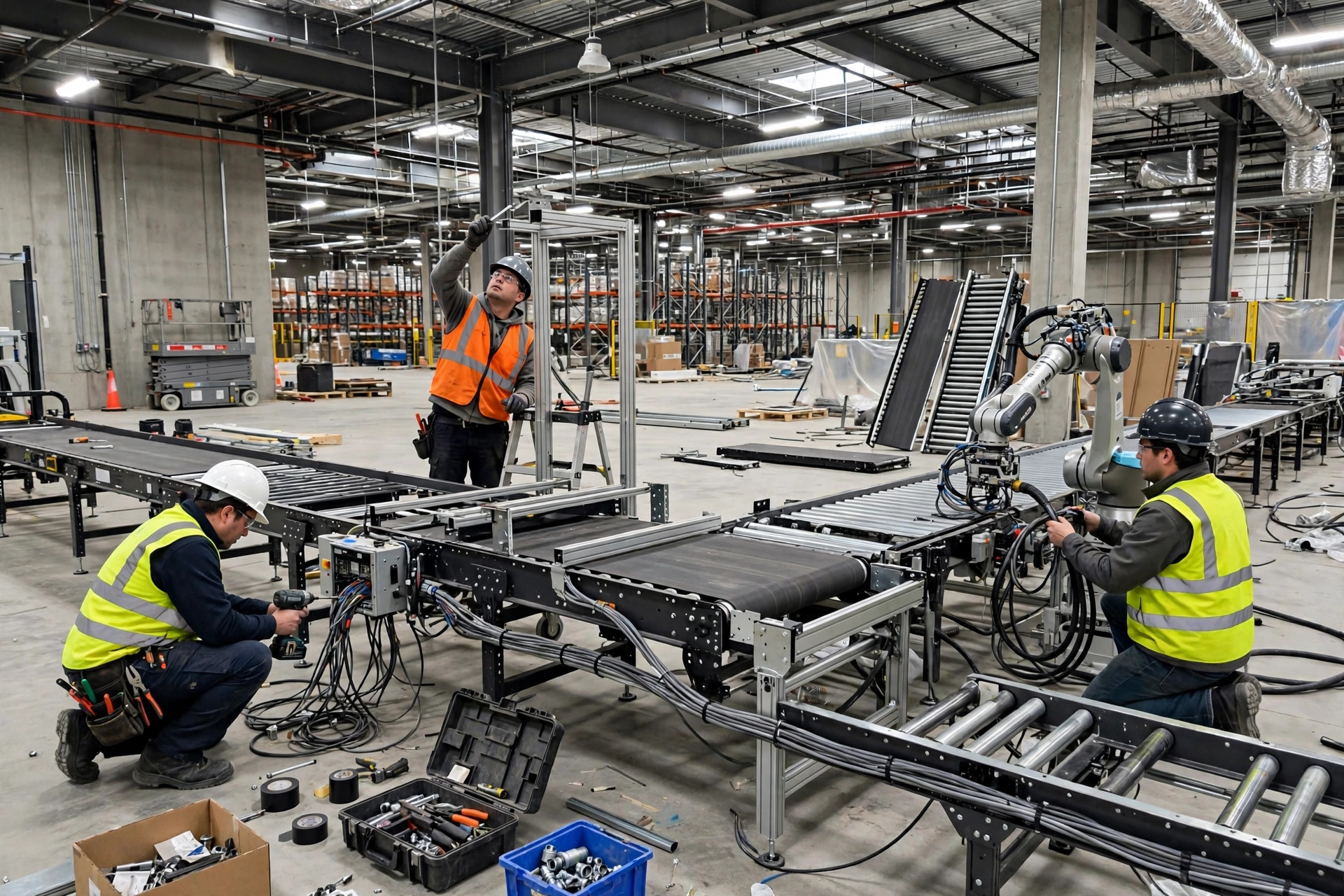
Let's start with the numbers. A cross-belt sorter that cost $1.2 million. The vendor's quote said "estimated annual maintenance: 5% of equipment investment." Sounds gentle, right? But here is real data from three 3PL warehouses I work with: by year three, their actual maintenance spending was $112K, $138K, and $165K — 9% to 14% of the original investment. The 5% on the quote didn't even cover spare parts.
That's what I want to talk about: automation maintenance costs. They are not a footnote in the equipment contract. They are a recurring charge against your profit, every single year. Nobody budgets for them before buying; everybody complains about them after. Today I'll break the number apart — spare parts, labor, and downtime — and show exactly how much of your ROI automation maintenance costs eat annually.
The Three Ledgers of Automation Maintenance Costs
After years of cost analysis, I sort automation maintenance costs into three separate ledgers. Mix them together and the math never works.
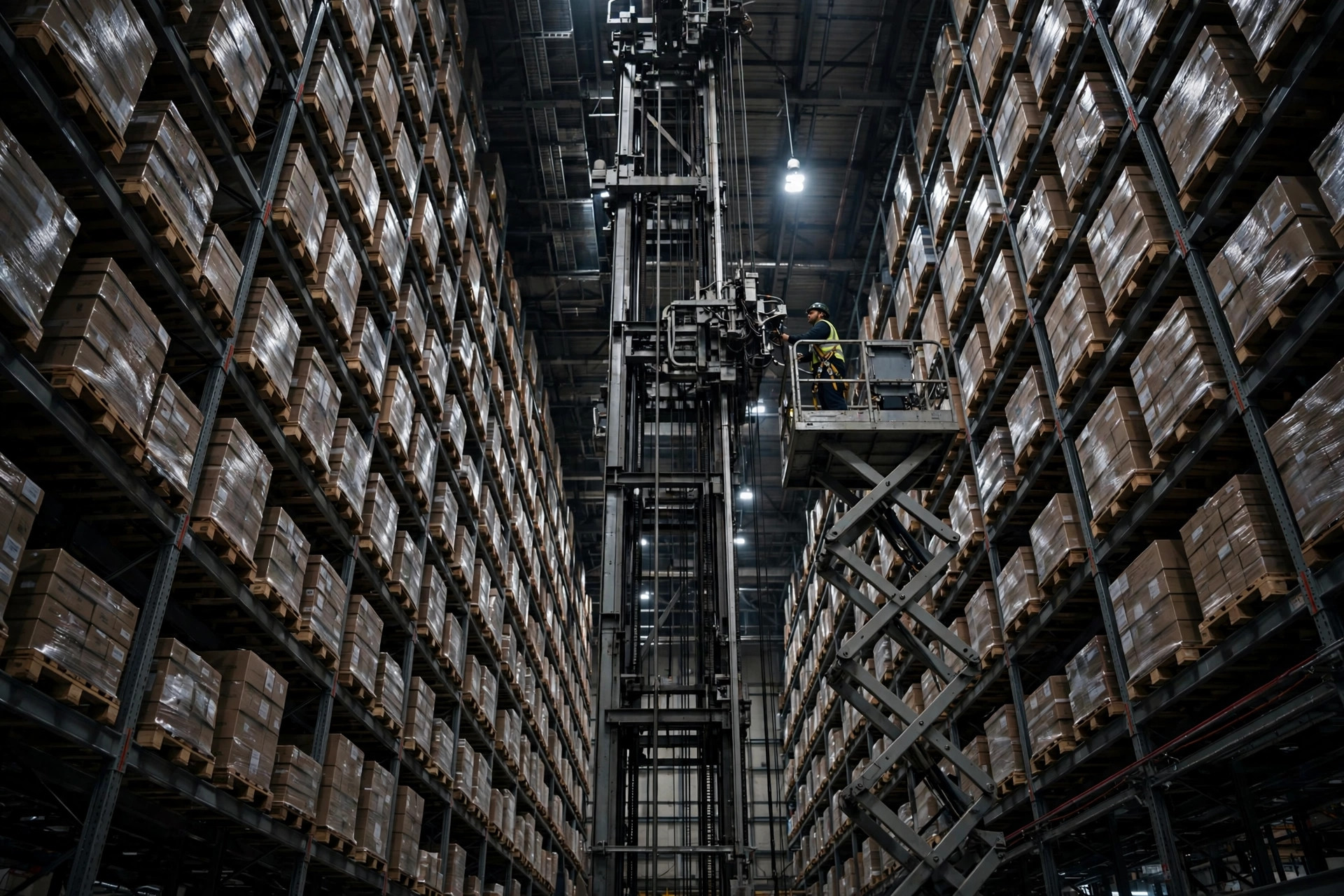
Ledger one: spare parts. Sorter cart wheels, belts, divert arms; AMR drive wheels, batteries, lidar units; stacker crane chains, guide wheels, encoders. These aren't "replace when broken" items — they have defined life cycles and scheduled replacement intervals. An e-commerce warehouse in Ontario, California runs 60 AMRs; drive wheels get replaced every 8–10 months at tens of dollars per wheel, which adds up to thousands per cycle. The pattern here is "visible but underestimated" — the vendor's spare-parts list only ever shows the easy wear items. In real operation, sensors, cables, and connectors fail far more often than the list suggests.
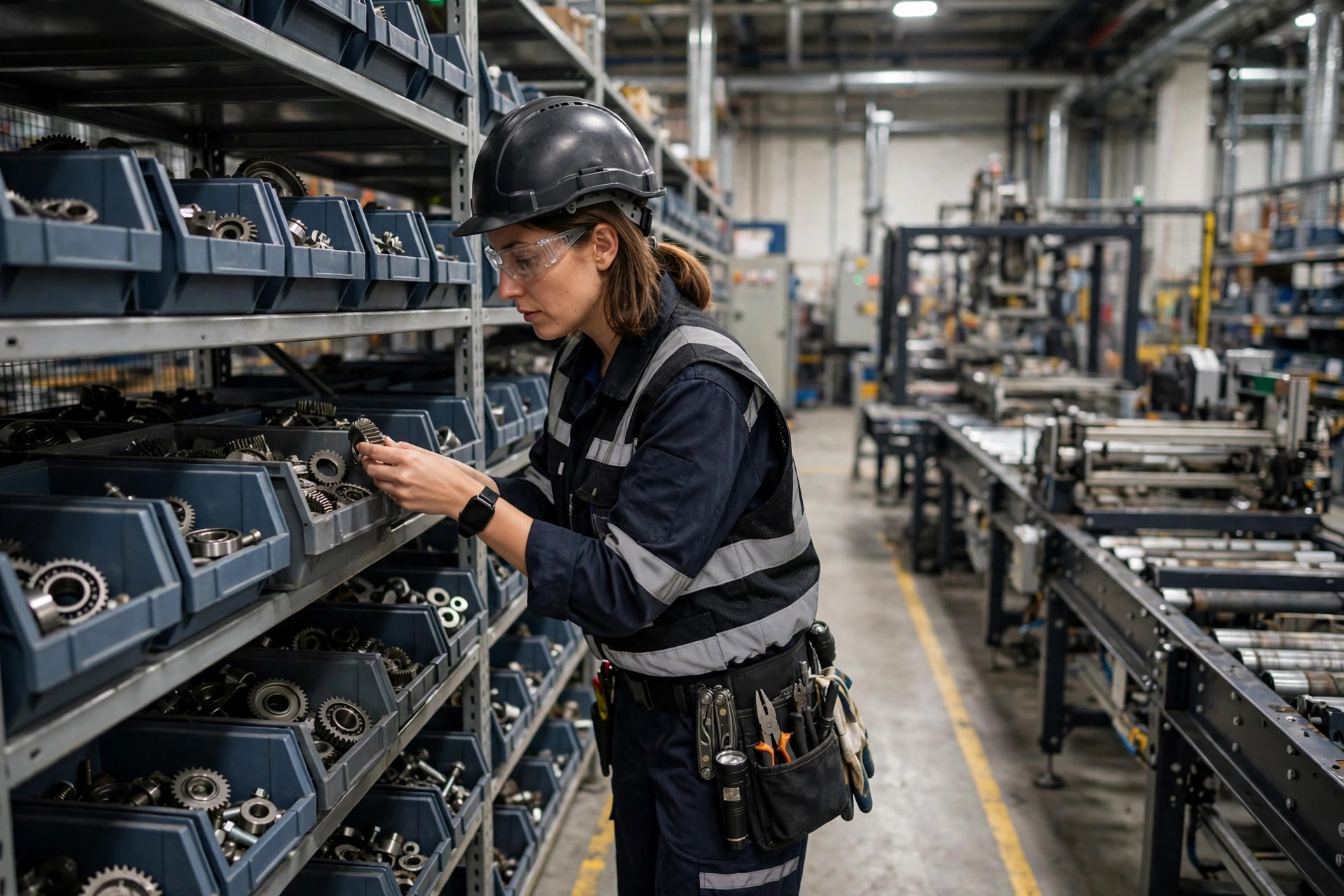
Ledger two: labor. Two flavors. One is the vendor's service contract: typically 5%–8% of equipment price per year, with response times in the SLA. But many warehouse owners skip the full contract to save money, buying only phone support plus per-visit service — and end up spending 30% more on emergency visits than the full contract would have cost. The other flavor is your own maintenance team: a technician who can independently troubleshoot a sorter costs $70K+ a year in the US; two of them is $140K. The pattern here is "penny wise, pound foolish" — I saw a warehouse in Dallas skip a $60K service contract, then pay $40K+ in a single year on three emergency vendor visits (travel and expediting fees alone), downtime losses not included.
Ledger three: downtime. The most expensive ledger, and the easiest to ignore. A sorter down for one hour in peak season means 8,000 fewer parcels shipped that day. At a few dollars of margin per parcel, plus customer SLA penalties, one peak season's downtime losses easily exceed $100K. But this money never appears in any maintenance budget — it hides inside "operations losses." I once reconciled the books for a Midwest 3PL: $120K in direct annual maintenance spending, plus $90K in overtime catch-up, temporary outsourced sorting, and customer credits caused by three unplanned outages. Their true automation maintenance cost was $210K, not $120K.
| Cost item | Typical share (of equipment investment/year) | Pattern |
|---|---|---|
| Spare parts | 2%–4% | Schedulable, but the real list is longer than the vendor's |
| Maintenance labor / service contracts | 3%–6% | Cutting corners here costs more later |
| Downtime losses | 2%–5% (equivalent) | Never in the maintenance budget, but very real |
| Total | 8%–15% | The vendor's 5% is just the starting point |
The Year-by-Year Curve of Automation Maintenance Costs
Here's the counterintuitive part: automation maintenance costs are not flat. They follow a low-then-high curve, and year three is the cliff.
Year one is under warranty — the vendor carries the big items, you mostly pay for routine inspections. Cheapest year. Year two, warranties expire one by one, wear parts enter their replacement cycles, and costs start climbing. Years three through five, core components (motors, gearboxes, control systems) start failing, and single repairs jump an order of magnitude — a replacement main control board for a sorter runs thousands of dollars; a new hoist chain for a stacker crane, counting downtime and labor, easily passes $10K.
A real case. In 2021, a 3PL in Phoenix, Arizona installed an $850K shuttle system. I helped them reconcile five years of maintenance spending: $21K in year one (under warranty), $48K in year two, $76K in year three, $93K in year four, $115K in year five. Five-year total: $353K, averaging $70.6K per year — 8.3% of the equipment investment. But year five alone was already 13.5%.
So when you model ROI, never project year-one maintenance costs across a decade. The correct approach: build a 5-year maintenance cost curve, discount it into TCO, then compute the payback period. I've seen too many feasibility reports with one line — "maintenance estimated at 5% of equipment price per year" — producing a 3.2-year payback that gets the boss's signature. Re-run it with the real curve and payback becomes 4.5 years. That 1.3-year gap is exactly what underestimated automation maintenance costs ate.
Three Levers to Pull
Books reconciled — now, how to save. There are three levers on automation maintenance costs, and the order matters.
Lever one: third-party spare parts (saves 20%–40%). Many wear parts carry pure brand markup. Belts, rollers, sensors in standard sizes are available from third-party suppliers at a fraction of the price. Two red lines: never substitute safety-critical components (brakes, limit switches, e-stop circuits); and always run a small-batch validation first — one month of clean operation before switching over. An apparel e-commerce warehouse switched its sorter belts from OEM to third-party, saving $18K a year, with two years of trouble-free operation since.
Lever two: preventive maintenance rhythm (turn firefighting into checkups). The biggest waste in maintenance isn't overpaying for repairs — it's replacing what shouldn't be replaced and ignoring what should be. Schedule by the MTBF data in the equipment manual: high-frequency wear parts on fixed cycles, core components on condition monitoring (vibration, temperature, current). I recommend every automated warehouse build a "maintenance calendar" — all planned downtime maintenance scheduled for the year, steered clear of peak season. Four hours of planned downtime to swap a batch of wear parts costs a few thousand dollars; four hours of unplanned downtime can cost ten times that.
Lever three: service contract negotiation (don't buy the most expensive — buy the right one). Full-service contracts suit warehouses with no in-house maintenance team; warehouses with two or more dedicated technicians do better with a hybrid — parts plus remote support plus an annual major service. In negotiation, watch three clauses: response time (4 hours vs. 24 hours is a big price delta), whether major parts are included (many "full coverage" plans exclude them), and a cap on renewal price increases (get it in writing, or year two brings a 20% hike you can't fight).
One calculable conclusion to close: when budgeting an automation project, model maintenance at 10% of equipment investment per year on a 5-year rising curve, folded into TCO. If the resulting payback exceeds 5 years, the equipment probably isn't worth buying. Automation maintenance costs aren't collateral damage from owning equipment — they are part of the equipment's cost. Put the number in before you decide, and your ROI will be real.
By Lao Zhou, Logistics Cost Analyst