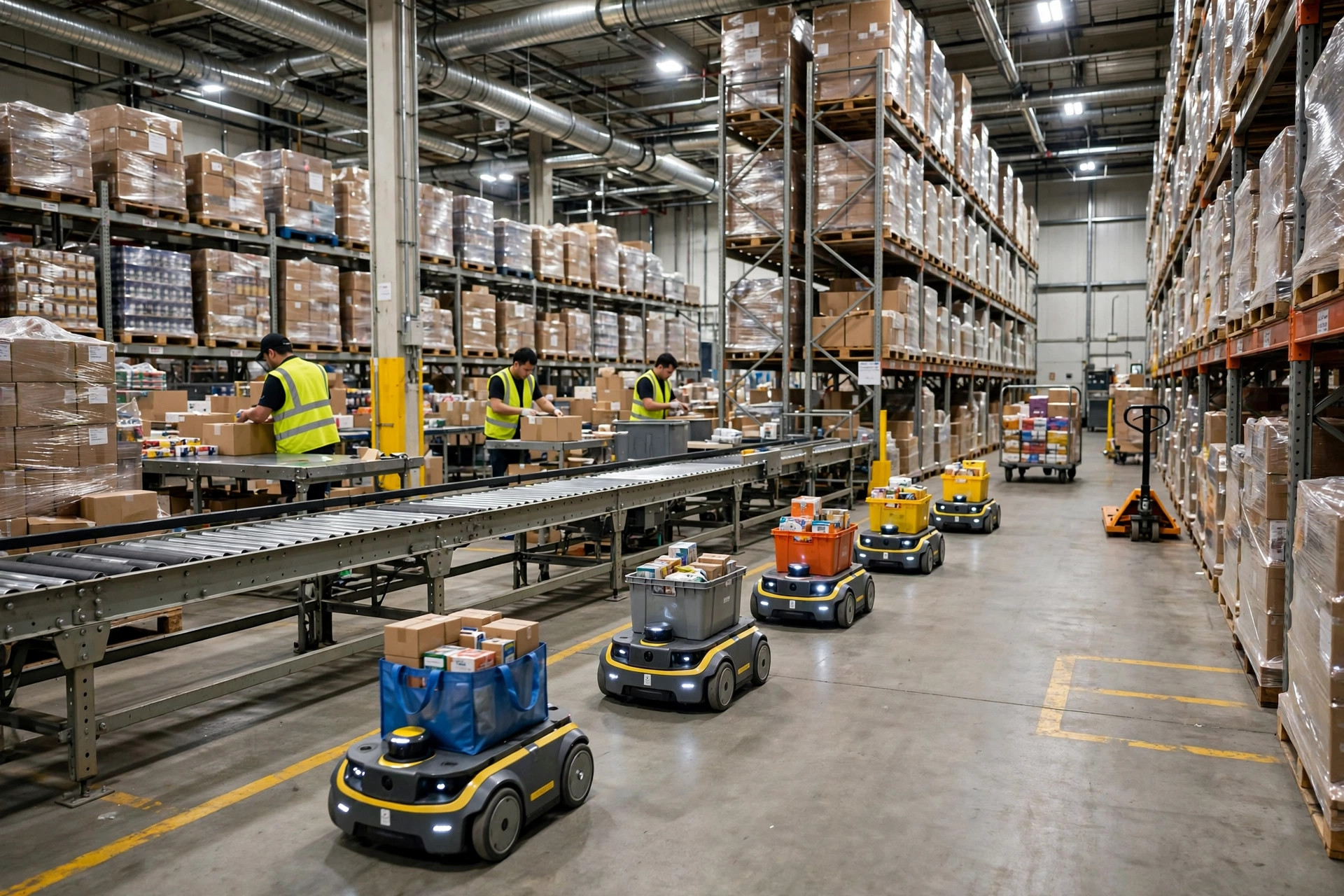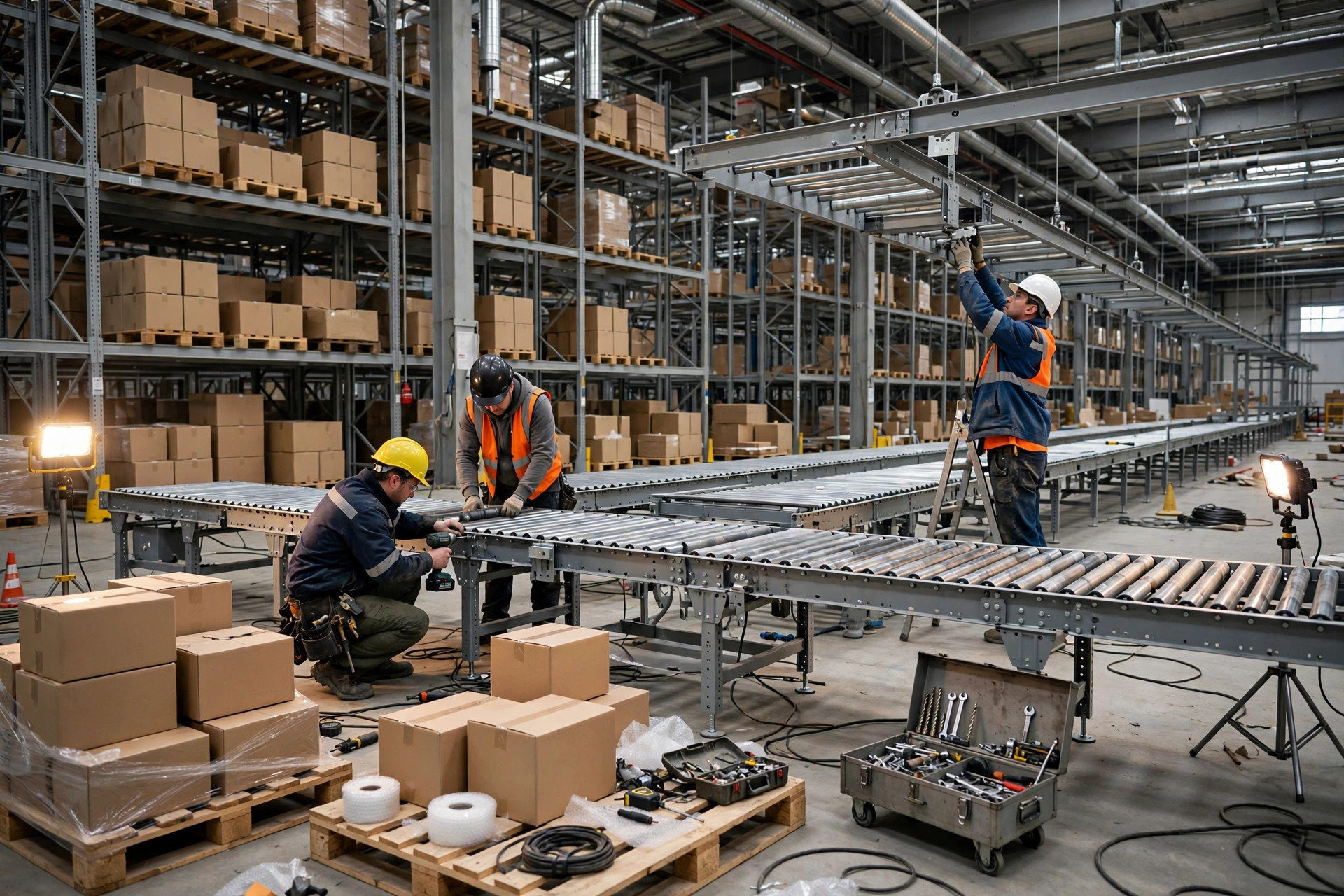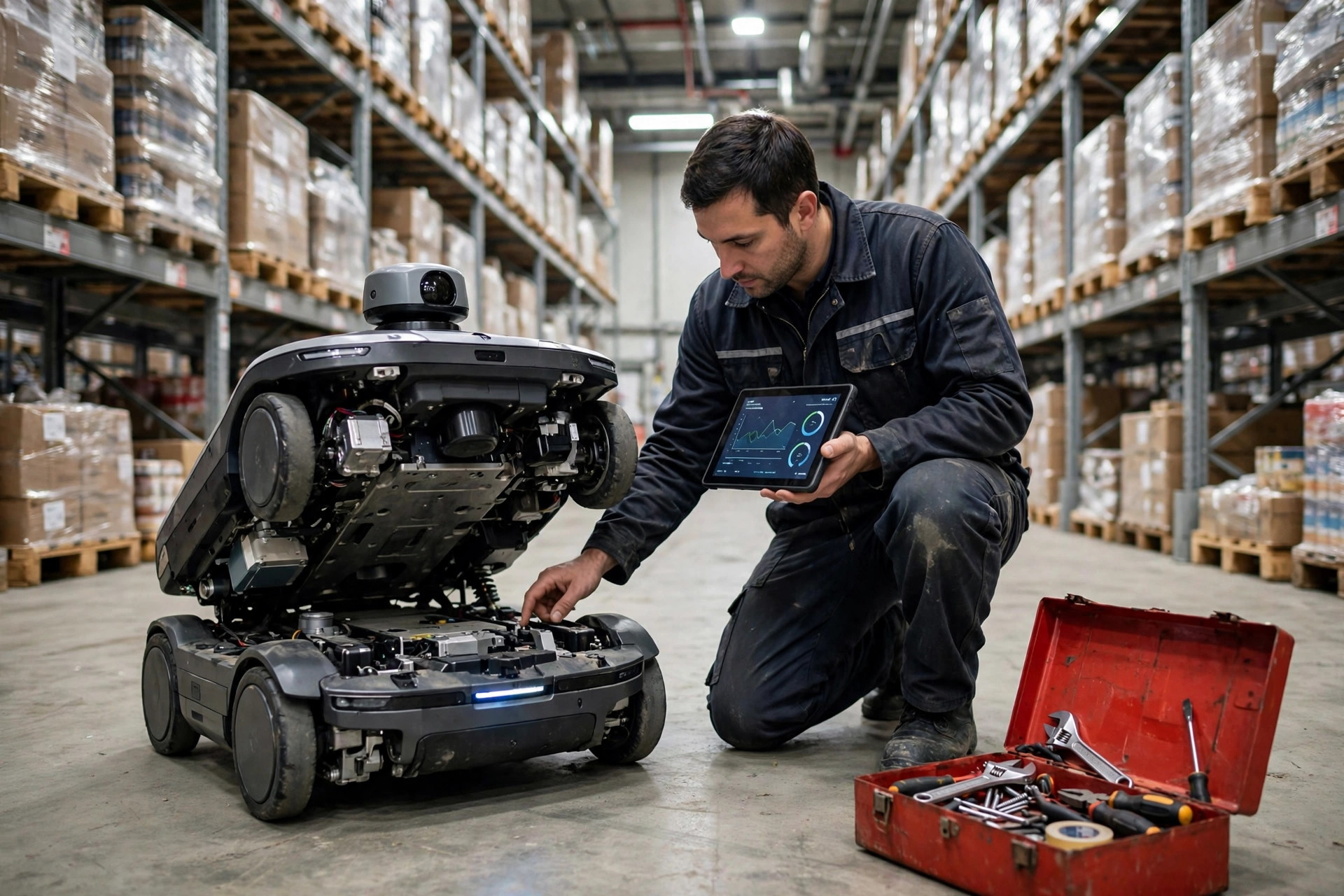
A $2M AMR fleet. The boss spent three months grinding the equipment price down by $120K, and the whole company applauded. I was looking at a different page: the maintenance cost quote for five years — $625K to $1.1M. On a $2M system, five-year total cost of ownership (TCO) lands between $2.63M and $3.1M. The money burned on maintenance is 5 to 9 times what the negotiation saved.
The math is simple, using industry-standard benchmarks: hardware maintenance runs 5–8% of equipment cost per year; software maintenance (fleet management systems, WCS licenses) runs 10–20% of software cost per year. For this system: $1.5M in hardware × 5–8% = $75K–$120K a year; $500K in software × 10–20% = $50K–$100K a year. Add it up and you're paying $125K–$220K per year in maintenance costs — $625K to $1.1M over five years. Once you see that number, the conclusion writes itself: cutting the equipment price by 5% matters less than cutting the maintenance rate by a single point.
Where $125K–$220K a Year in Maintenance Costs Actually Goes
The typical maintenance cost structure looks roughly like this (industry common practice; your contract may vary):
Spare parts take the biggest slice, roughly 30–40%. The three most expensive consumables on an AMR: battery packs, drive wheels, and LiDAR navigation modules. A single battery pack costs five figures; run a fleet for three years, and once batteries degrade below 80% capacity, replacement is unavoidable. Stacker cranes are worse — one main motor plus gearbox, and the spare part alone is a five-figure line item.
Labor runs 20–30%. Either hire resident technicians (a US maintenance tech at $70K–$90K a year is normal) or buy the OEM's response SLA — and note that 4-hour on-site response versus 24-hour can double the quote.
Software licenses account for around 20%. Fleet software is billed per robot or per site annually, and whether major upgrades are included is the most disputed clause in every contract I've reviewed. Nail it down at signing.
Then there's the hidden cost that 90% of companies leave out of the maintenance budget: downtime. One stacker crane down for four hours during peak season — the unshipped orders, the temp labor, the customer penalties — can exceed your entire annual maintenance bill. If you don't count this, your maintenance budget is a guess.
Two Warehouses, Two Real Ledgers
In 2023, I audited a 3PL warehouse in California's Inland Empire running 40 AMRs. Equipment cost: $2.6M. OEM maintenance contract: $180K a year, about 7% of equipment cost. In 2024 they switched to in-house maintenance: two technicians at $75K each, plus $40K in spare parts the first year — $190K total, $10K more expensive than the OEM. The boss was not happy. But year two changed the picture: the techs learned the machines' quirks, parts usage became predictable, and parts spend dropped to $28K. Total: $178K — cheaper than the OEM. The lesson is clean: the break-even point for in-house maintenance sits around 30 robots. The smaller the fleet, the worse in-house looks — two salaries spread across 10 robots doubles your per-robot cost.
In 2022, an e-commerce warehouse in Pennsylvania ran four stacker cranes, $1.6M in equipment. A new finance director cut the annual maintenance budget from 6% to 4%, saving $32K — a beautiful slide for the board deck. In Q3, one crane's main motor burned out. Six days of downtime, right in peak season: 12,000 fewer orders shipped per day, $90K in temp labor and overtime — not counting lost-order compensation and customer penalties. Saved $32K, lost nearly $200K.
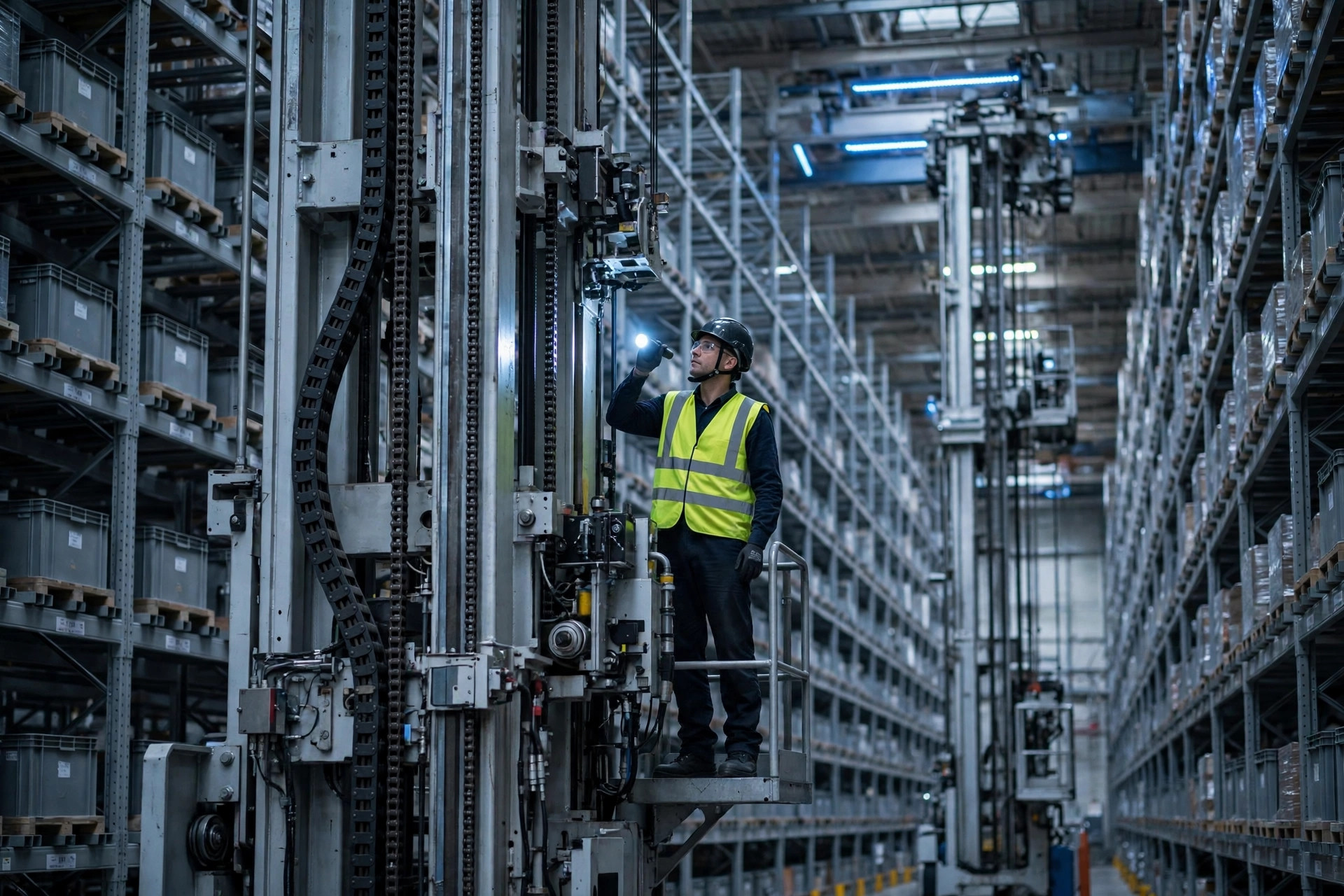
Here's the counterintuitive takeaway: cutting the maintenance budget by 2% can multiply downtime losses fivefold. That's not fear-mongering, it's arithmetic — maintenance saves certain small money; downtime loses uncertain big money. Betting certain small money against uncertain big money is money spent foolishly.
Three Maintenance Cost Models, One Table
| In-house team | OEM contract | Third-party provider | |
|---|---|---|---|
| Annual rate (industry benchmark) | 4–7% | 5–8% | 3–6% |
| Response time | Your own people, predictable | Per SLA, 4–24 hrs on-site | Uneven — trial before signing |
| Spare parts | Stocked yourself, ties up cash | Genuine OEM, expensive | Aftermarket common, verify quality |
| Technical depth | Fine for routine work, not overhauls | Firmware-level | Mid-range |
| Best for | Fleets of 30+ robots | Critical kit: AS/RS, cranes | Tight budgets, mixed brands |
There is no best option, only the best fit. My rule of thumb: OEM for critical equipment like stacker cranes, in-house for large AMR fleets, third-party for small warehouses with mixed brands. A combination beats a one-size-fits-all.
The table has a second use: take the third-party quote back to the OEM. I've watched a warehouse take a 4.5% third-party bid to the OEM, and the renewal dropped from 7.5% to 6% the next day. The information gap in the maintenance market is far bigger than in equipment sales.
Three Levers That Actually Save Money
First, pool spare parts across sites. Same-brand AMRs share drive wheels, batteries, and sensors — one shared pool across warehouses halves your tied-up capital. The biggest cost of spare parts isn't the purchase price; it's the batch that's sat untouched in the stockroom for three years.
Second, lock three things into the contract: SLA breach penalties, a cap on spare-part price increases over three years, and whether major software upgrades are included in the annual fee. Without these in writing, you have zero leverage at renewal time.
Third, train your own people for first-line maintenance. Daily inspections, drive-wheel swaps, system reboots — routine work makes up the bulk of OEM callouts. Handle it in-house and service-visit fees drop by tens of thousands a year. A technician's salary is a fixed cost; the OEM's visit fee is per incident. Easy math.
Before signing any maintenance contract, calculate one number: annual maintenance rate = annual maintenance total ÷ equipment cost. Above 8%? Go back and negotiate three things — SLA breach penalties, a three-year locked parts price list, and software upgrade inclusion. If they won't move, get a third-party bid. Below 4%? Don't celebrate yet — check whether parts and downtime compensation are actually covered. The cheapest maintenance contract is often the most expensive one.
The equipment price is about face. The maintenance rate is about substance.
By Lao Zhou, Logistics Cost Analyst