
A warehouse is missing two systems and the budget covers one. The owner asks me: YMS or WMS first? My answer is to stop talking about systems and start doing the math. Get the sequence right and one system's budget delivers the value of two. Get it wrong and the software license is the small part of the bill. The rework is the big part.
YMS or WMS First: Start With the Bottleneck
There is exactly one test that matters: which bottleneck is burning money every day, and can you put a number on the burn? Feelings do not count. The ledger counts. A chaotic yard and chaotic inventory both look like disorder, but they burn money in completely different ways.
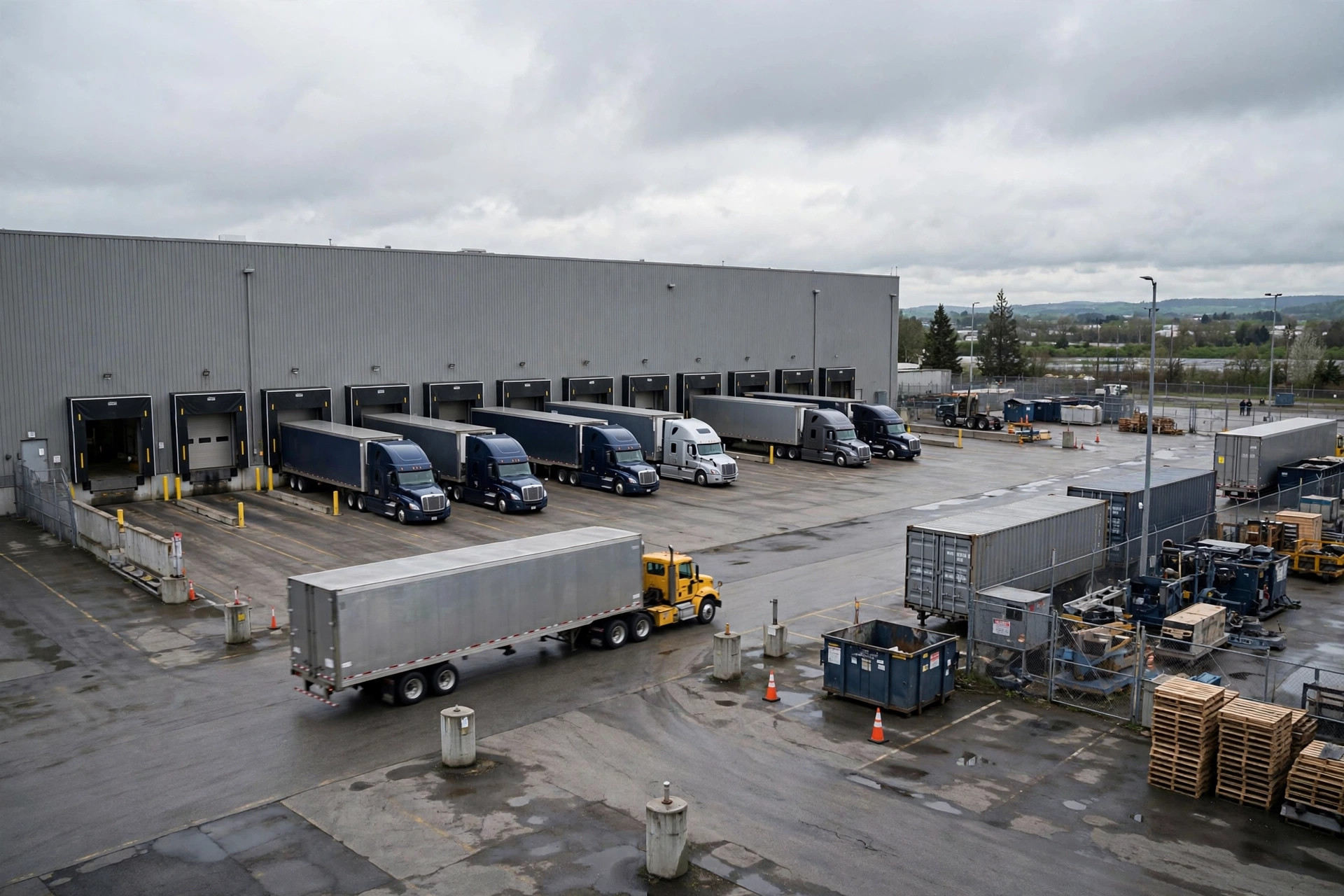
Case one: the yard is jammed. Take a warehouse with 30 dock doors and 120 truck visits a day, where each vehicle waits an extra hour on site on average. That is 120 truck-hours burned per day. Detention charges come from the contract. Driver hours come from the actuals. A door blocked by a waiting truck cannot receive the next one, so the loss shows up in throughput. Add the three together and the yard's daily burn rate fits in a spreadsheet. For a warehouse like this, YMS goes first: appointments, dock scheduling, and yard positioning straighten out truck flow, and the payoff shows up in weeks.
Case two: the inventory is wrong. Take another warehouse shipping 8,000 orders a day, with a mispick rate one percentage point above target. That is 80 wrong orders a day. Every wrong order drags along return freight, a second pick, customer service time, and overtime recounts when the cycle count does not reconcile. For a warehouse like this, WMS goes first: inventory, waves, and picking get the numbers inside the building right. However bad the gate queue is, at least the goods are correct. If the goods are wrong, a smooth yard is worth nothing.
There is a simple way to price each loss. Yard losses have three components: detention, idle time, and blocked doors. Inventory losses have four: mispicks, returns, recount overtime, and emergency replenishment. Fill in each line with last month's actual numbers from your own warehouse. Leave a line blank if you cannot fill it, and do not invent a figure. The more blank lines, the less you actually understand that bottleneck, and the more you need to get the numbers straight before deciding.
Both cases point to the same conclusion. Which system goes first has nothing to do with which one is more fashionable. It depends on which bottleneck costs more and pays back faster.
YMS or WMS First: Two Bills Side by Side
| Dimension | YMS first | WMS first |
|---|---|---|
| Pain it fixes first | Trucks queuing in the yard, door conflicts, appointments out of control | Inaccurate inventory, wrong picks, counts that never reconcile |
| Fastest visible gain | Average truck wait, door utilization | Inventory accuracy, mispick rate |
| What the first investment covers | Appointments, dock scheduling, yard positioning, carrier integration | Inventory, waves, picking, cycle counting, ERP integration |
| How the return shows up | Less detention, less idle time, more trucks through the same doors | Fewer mispicks, less counting labor, fewer emergency replenishments |
| Biggest risk | The yard runs smoothly while the building still cannot keep up | Trucks still queue at the gate, choking the efficiency gained inside |
| Cost of adding the other system later | Yard events drive inventory pre-advice, a fairly contained interface | Inventory events drive yard appointments, and every change point needs checking |
The most underestimated row in that table is the last one: the cost of adding the second system later. YMS first means yard events have to drive inventory pre-advice in reverse. WMS first means inventory events have to drive yard appointments forward. Both paths need interfaces, and the scope of change is not the same. My judgment is that interfaces sourced from inventory events are usually more contained, because inventory is the foundation and yard data ultimately lands on inventory events. That judgment deserves its own argument in the selection meeting. Do not assume both paths cost the same.

What Rework Costs When the Sequence Is Wrong
Getting the sequence wrong costs more than a second implementation fee. The system that goes in first sets the process, shapes the reports, and trains the habits. Six months later, when the second system arrives, interfaces have to change, processes have to be rearranged, training has to be redone, and both systems have to be reconciled in parallel during cutover. No vendor will volunteer that bill, but it will appear in the second phase quote. In my experience, the rework from a wrong sequence often comes close to the implementation cost of a second system. That money is wasted, because one table of honest numbers could have prevented it.
Here is the counterintuitive part: starting the second system six months later often costs less than running both at once. Doing both together sounds like getting it over with, but integration, training, and cutover windows all collide, problems get bounced between two vendors, and diagnosis costs double. Stagger the rollout and the first system is stable before the second one arrives, giving the second system's interfaces and processes a fixed anchor. Unless the team has the bandwidth and both bottlenecks are already on fire, I do not recommend going live with both at once.
One more bill that usually gets missed: master data. Whichever system goes first, item, location, carrier, and door master data all need cleaning. A warehouse that starts with YMS tends to clean only carrier and door data, leaving locations and items for the WMS phase. A warehouse that starts with WMS tends to clean only item and location data, leaving carriers for the YMS phase. Data left for phase two does not get cheaper to clean. It gets harder, because by then both systems are already live and every correction has to land in two places. Pay the master data cleanup bill once, in phase one.
A Calculable Conclusion: Three Questions
- Over the past month, which cost more: waiting in the yard, or inaccurate inventory? Use your own warehouse's actual numbers on both sides, not industry averages.
- Which bottleneck's loss can be recovered week by week? The one that pays back faster goes first, so cash flow turns positive sooner.
- If system A goes first and system B follows, how many interface points change? List every change. For the path with the bigger change surface, reserve rework money in the budget.
The decision rule writes itself: if yard losses are clearly bigger, YMS goes first. If inventory losses are clearly bigger, WMS goes first. If the two are close, WMS goes first, because inventory is the foundation and yard data ultimately lands on inventory events. YMS or WMS first has no standard answer. It has only your own warehouse's ledger. Once the numbers are clear, the sequence decides itself.
By Lao Zhou, Logistics Cost Analyst








