Catch weighing warehouse packing is not complicated at all: before a carton is sealed, it goes over a scale, and if the weight does not match the theoretical weight in the system, the carton gets pulled for a check. Think of it as the security gate on the packing line — cheap to install, and the last chance to stop a short shipment before it leaves the building. Plenty of warehouses would rather hire one more person to spot-check orders than put a scale at the end of the line. I think that math is backwards.
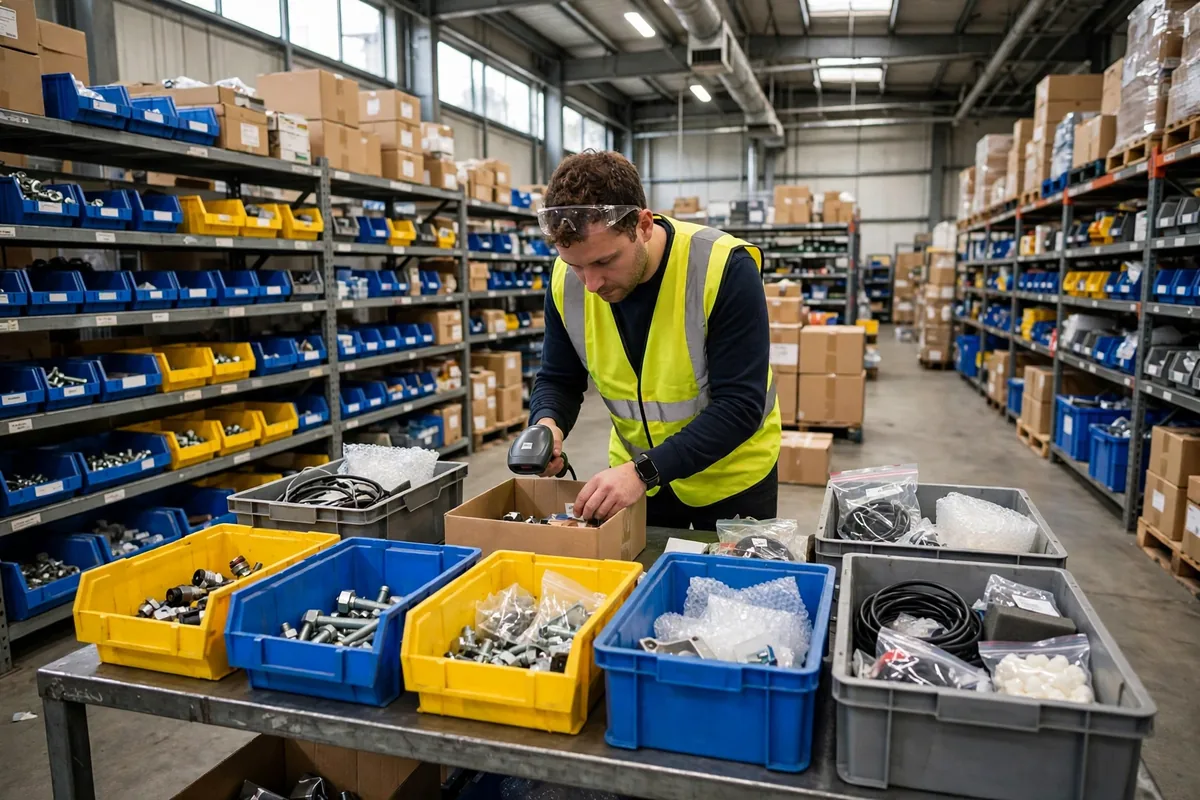
Here is a scene I watched with my own eyes. In a hypothetical example, I was doing an inspection round at an e-commerce warehouse selling household goods, running more than 6,000 orders a day, with verification done by manual sampling — one order checked out of every 50. Right in the middle of a peak promotion, the sampling team fell behind, and a carton missing one bottle of shampoo went straight through sealing and shipping. The customer complained, the warehouse refunded the order, and the platform logged a shipping error against them. Afterward we traced it back: the missing bottle weighed a little over 400 grams, and an ordinary verification bench scale would have caught it on the spot. Manual sampling had a one-in-fifty chance of catching it. Catch weighing does not stop exotic errors. It stops the dumb, frequent ones — the short shipment.
Catch Weighing in Warehouse Packing: What It Actually Catches
Catch weighing in warehouse packing stops three kinds of errors. The first is the short shipment: picking missed an item, or picked one too many, and the weight gives it away at once. The second is the wrong item: a look-alike product in a different size got picked, like a large bottle instead of a small one, and the weight is off by a clear margin. The third is a packing anomaly: missing fill material, or a double gift insert, and the weight drifts again. Of the three, the short shipment hurts most, because the customer counts the goods the moment the box opens, and that is where complaints come from.
Here is the counterintuitive part: the biggest value of weighing is not stopping bad cartons. It is telling you where picking actually goes wrong. Plenty of warehouses use the scale only as an alarm — it beeps, someone opens the box, and if it stays quiet, everyone forgets about it. I tell them to log every weighing alarm: which product code, which location, which picker, and how many grams off. Collect a month of that, and the pattern shows itself. In a hypothetical example, the household-goods warehouse I mentioned did exactly this and found that sixty percent of its weight alarms came from just three product codes — items whose packaging looked alike and weighed almost the same. The warehouse swapped in color-coded location labels for those three codes, and alarms dropped by half within a month. The scale is cheap hardware. The data it throws off is worth more than the hardware.
Choosing the Scale: Catch Weighing Without Killing Throughput
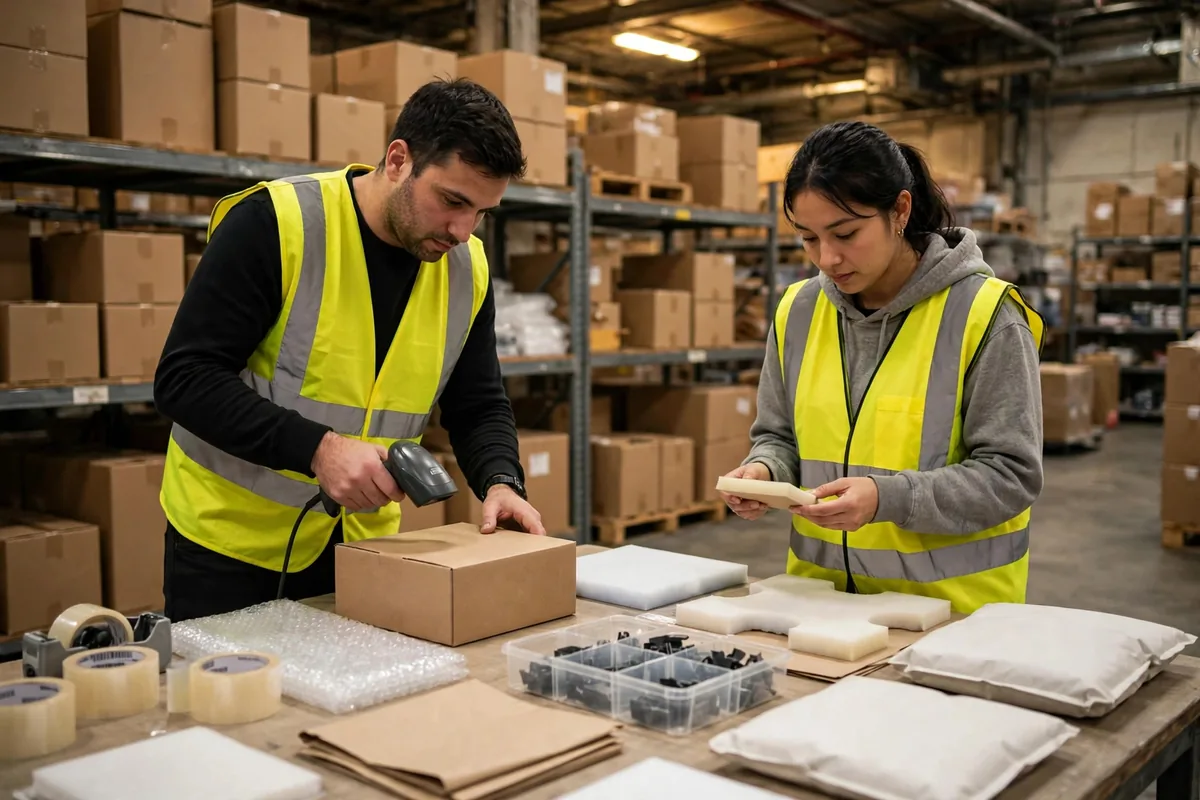
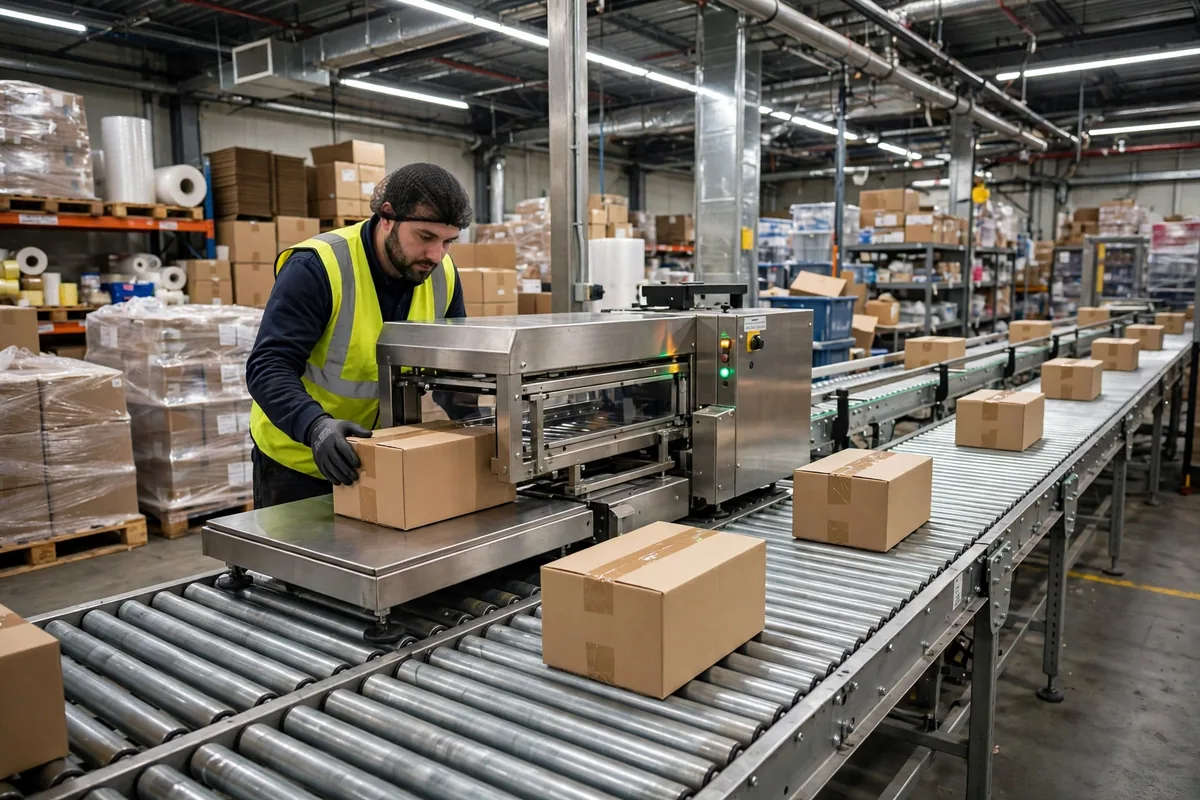
Selection starts with a dividing line. A bench verification scale and an in-line checkweigher are two different animals, and picking the wrong one is worse than installing nothing. A bench scale is loaded by hand: high accuracy, low cost, small footprint, and it fits a line with modest volume and mixed carton sizes. An in-line checkweigher sits on the conveyor and weighs each carton as it passes: it fits high-volume lines with fairly uniform cartons. The dividing line is throughput. In a hypothetical example, a single line running under 300 orders an hour is fine on bench scales; above that number, the manual loading motion becomes the bottleneck, and in-line weighing starts to pay.
Accuracy and speed trade against each other, and you cannot have both at their best. A bench scale commonly reads in the range of tens of grams, which is plenty for household goods, apparel, and small appliances. But if your product itself weighs only a dozen grams, tens of grams of resolution cannot catch a single missing piece — you need a finer scale, and the price and maintenance cost climb with it. An in-line checkweigher is rated on dynamic accuracy: the carton is weighed while moving on the belt, and the faster it moves, the worse the accuracy gets. Before you touch the speed setting, ask what your tolerance is. And do not buy on the spec sheet alone: take your own cartons, run ten filled cartons across the scale, and watch whether the readings hold steady before you sign anything.
Three approaches side by side (hypothetical example):
| Approach | Cost per check | What it catches | Effect on throughput | Fits |
|---|---|---|---|---|
| Manual sampling | Low | Only the orders sampled | Almost none | Small volume, low order value |
| Bench scale, 100% check | Medium | Every weight anomaly | A few extra seconds per order | Medium volume, mixed carton sizes |
| In-line checkweigher | High equipment cost | Full check, no extra labor | Barely slows the line | High volume, uniform cartons |
My advice: before your volume reaches the in-line threshold, start with bench-scale full checks. The bench scale is the best value in catch weighing warehouse packing, and plenty of warehouses skip it and jump straight to in-line weighing — spending far more money for results barely better than a bench scale. That is where the pseudo-demand lives: a line running bench-scale volumes has no business buying a fully automatic checkweigher, and the machine ends up idle half the day.
False Rejects vs. Misses: Catch Weighing Forces a Trade-Off
How to set the weight tolerance is the question that starts the most arguments in catch weighing. Set it too tight, and false rejects flood the line — verifiers open box after box, and throughput collapses. Set it too loose, and misses slip through, and the scale is decoration. You cannot drive both to zero. You pick a balance you can live with.
The method is simple: run two weeks of data before you set the number. In a hypothetical example, weigh 2,000 normal outbound cartons, look at the spread between theoretical and actual weight, and set the tolerance where it covers more than ninety percent of normal orders. Packing material variation belongs in the number too: carton batches differ, fill material differs, and the weight floats with them, so the tolerance has to leave room for that. And once set, it is not set forever — review it every quarter. When the product mix changes or the packaging changes, the tolerance moves with it.
False rejects need a standard routine of their own: open the carton, find the cause, log it, and re-weigh to confirm. In a hypothetical example, one warehouse found that thirty percent of its false rejects were just extra fill material, not picking errors — those cartons needed a log entry, not a full rework. Sort your false rejects into causes, and the verifiers' workload drops while throughput holds.
Then there is the maintenance trap: scales need regular calibration. A bench scale gets calibrated at least once a month; an in-line scale follows the manufacturer's recommended interval. Never go by feel. In a hypothetical example, I saw a warehouse where the bench scale had not been calibrated for six months. Its zero point had drifted by 80 grams against a tolerance of 50 grams, and the false reject rate doubled before anyone realized the scale was the problem. The scale is cheap, the calibration weights are cheap — what costs money is nobody remembering to calibrate. Write calibration into the equipment checklist and tie it to shift handover, so it never gets forgotten.
Is the money worth it? Look at one number: what you pay every month for short shipments — refunds, complaint handling, lost customers — against the cost of one scale plus one verifier. In a hypothetical example, the household-goods warehouse ran that calculation and found its monthly short-shipment costs were roughly equal to the price of two bench verification scales. The scales paid for themselves in two months. Catch weighing warehouse packing is not high technology. It is the cheapest quality gate on the packing line, and with it installed, a short shipment gets at least one more chance to be caught before it leaves.
By Da Liu, Automation Engineer