Fragile-goods packaging looks, from the outside, like a craft problem — add another layer of bubble wrap and move on. In practice, fragile goods warehouse packaging cushioning is an accounting problem. According to industry sources, compliant packaging can prevent up to 20% of transit damage, while an untested packaging design fails only after goods reach the customer — by which point every broken unit has generated four costs at once: lost product value, reshipment freight, customer-service hours, and a bad review. Add those four together and every cent saved on packaging can come back several times over.
This article is about fragile goods warehouse packaging cushioning: the three damage mechanisms of drops, compression, and vibration, how the four mainstream cushioning materials — bubble wrap, honeycomb paper, air pillows, and foam — trade off cost against protection, and how the damage-rate math should actually be done.
Three damage mechanisms fragile goods packaging must fight
Across the journey from warehouse to customer, a parcel faces impact from three directions, and the protection logic for each is different.
Drops are the most visible mechanism. A parcel slides off a sortation line, falls from a shelf edge, or slips from a handler's grip, and the impact concentrates on one face, one edge, or one corner. The International Safe Transit Association's ISTA 3A is the general simulation procedure for parcel-delivery shipments; its sequence includes drops, random vibration, and atmospheric conditioning, and it applies to individually packaged products weighing up to 150 lbs (70 kg). The free-fall drop method itself is described by ASTM D5276. Amazon's requirements are more specific still: its ISTA 6-Amazon protocol requires a packaged product to survive a 3-foot drop test, and fragile items must send five identical samples to a certified lab — all five must pass. Notably, Amazon discontinued all in-house FBA prep and labeling services in the United States as of January 1, 2026, which means fragile goods must arrive at the fulfillment center fully prepped and compliant; there is no longer a safety net.
Compression is the second mechanism and the most commonly underestimated. Parcels stack layer upon layer inside a truck, and the bottom cartons carry a sustained static load. More insidious is the environment: corrugated cardboard loses up to 50% of its strength in high-humidity conditions, so a box that holds its load in a dry warehouse can collapse outright at a transfer hub in the rainy season. Compression damage often does not shatter the product on the spot; the carton deforms, inner items press against each other, and the customer discovers the crack only when opening the box.
Vibration is the third mechanism and the hardest to judge by intuition. Sustained vibration in a moving truck lets inner items shift by millimeters again and again: ceramic glaze gets abraded, the rim of a glass gets chipped. This kind of damage is nearly invisible at outbound inspection. ISTA 3A lists random vibration as a mandatory test element precisely because vibration damage is cumulative — negligible in a single instance, enough over several hundred kilometers to turn a "perfectly packed" item into a defective one.
Once these three mechanisms are understood, material selection has a basis: drops demand energy absorption, compression demands structural support, vibration demands immobilization. No single material is best on all three dimensions. Selection is, in essence, a matter of ranking priorities according to which force your product fears most.
Four cushioning materials for fragile goods packaging: the cost-protection trade-off
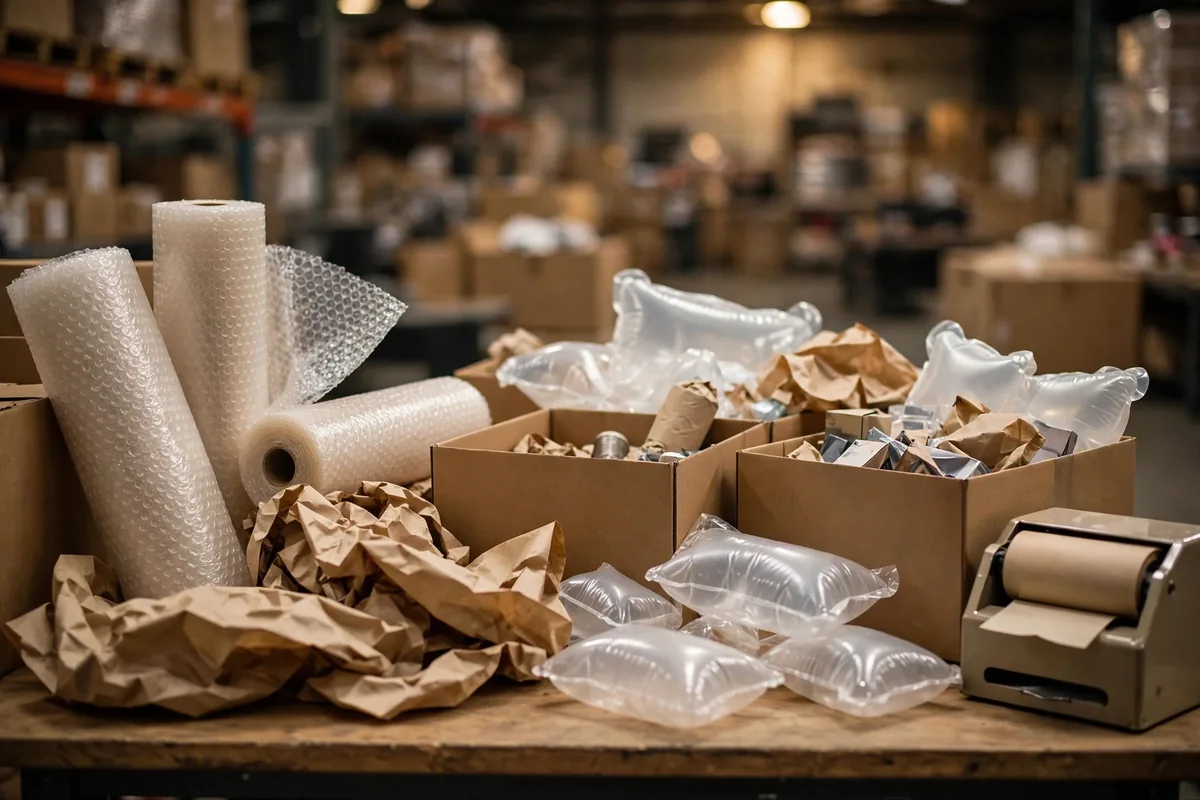
Four materials dominate the market, and each has sharply defined strengths and weaknesses. The table below compares them on protection profile, cost, and fit; price relationships are relative indications only, and actual procurement should follow the supplier's latest quotation:
| Material | Best at defending against | Weakness | Relative cost | Best fit |
|---|---|---|---|---|
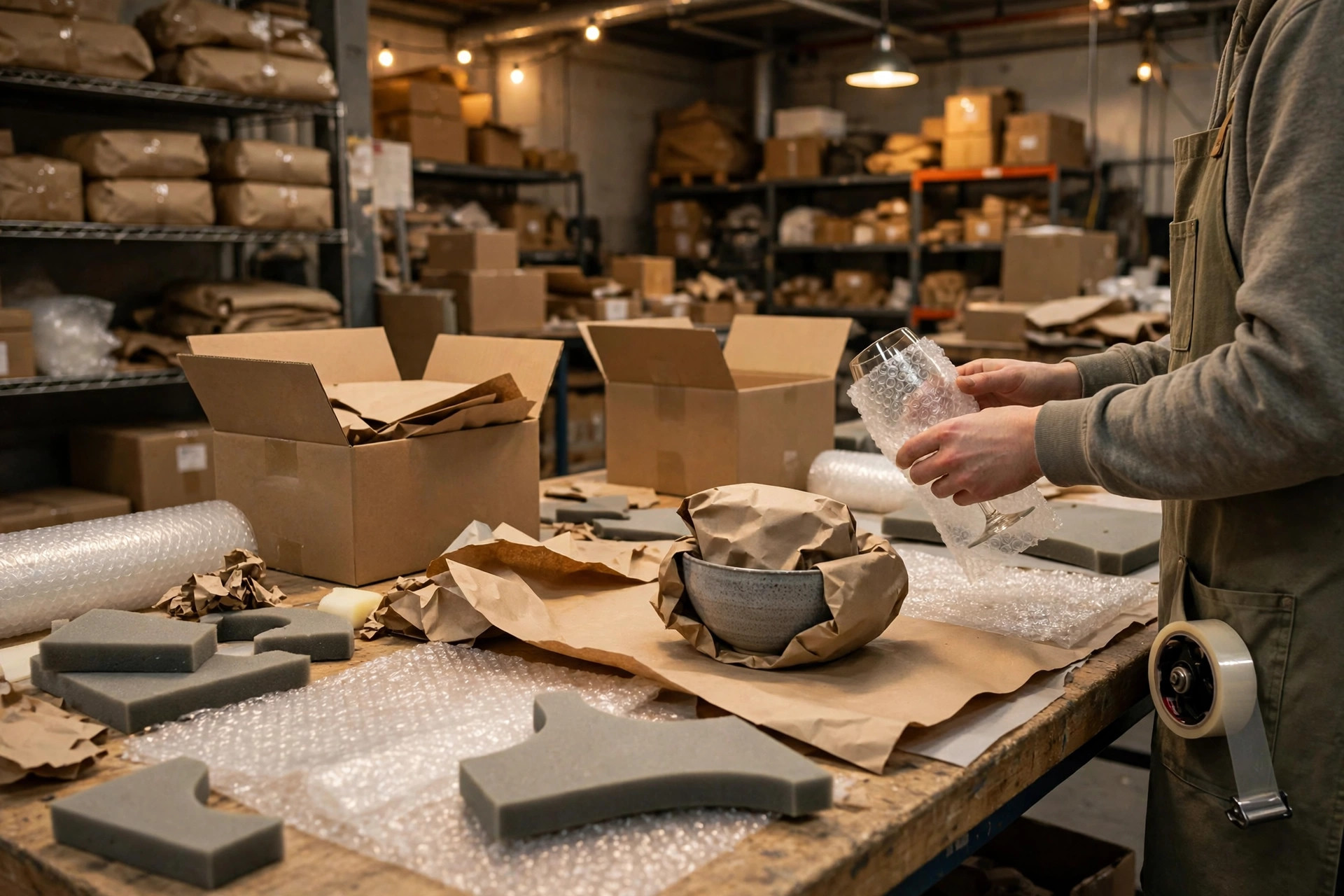
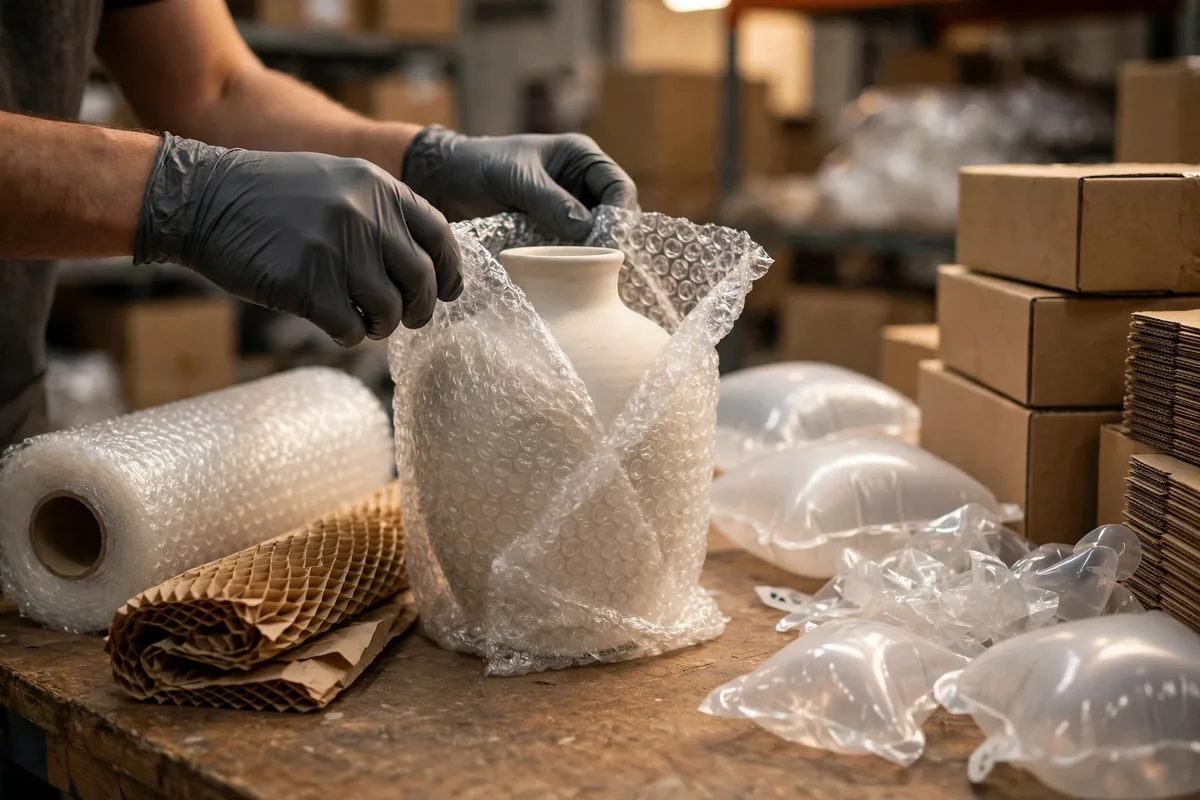
| Bubble wrap | Drop impact, conforms to irregular shapes | Weak against compression; too few layers equals no protection; bulky to store | Medium | Single-piece wrapping of ceramics and glassware; Amazon FBA calls for 2–3 layers |
| Honeycomb paper | Compression and dividers, good structural support | Weak energy absorption; drop protection depends on structural design | Low–medium | Dividers for wine and glass bottles, channels with environmental requirements |
| Air pillows | Void fill, prevents shifting | Vulnerable to puncture; once deflated, protection drops to zero | Low | Void fill for light parcels, mixed-SKU e-commerce cartons |
| Molded foam / EPE | Comprehensive protection, custom inserts | Highest cost, fixed volume, hard to store | High | High-value, irregular, precision fragile goods, typically above several hundred dollars per unit |
Here is a counterintuitive finding: thicker cushioning does not necessarily mean a lower damage rate. What determines the damage rate is not the thickness of the cushioning layer but whether the inner item can move inside the box — the single most misunderstood point in fragile goods warehouse packaging cushioning. A vase wrapped in three layers of bubble wrap, left with two fingers' width of empty space in the carton, will keep striking the carton walls under transport vibration; the extra wrapping only delays the breakage. Air pillows that fill the void and hold the item perfectly still can be more effective. The trade saying is blunt: immobilization matters more than cushioning.
Another trade-off worth noting is the pull between sustainability and cost. Honeycomb paper and paper-based cushioning are clearly more recyclable than plastic alternatives and have become a de facto entry requirement in European markets and on some platforms; but paper performs poorly against moisture and needs extra attention on high-humidity lanes. Judged on unit price alone, paper solutions often look cheaper; once damage claims and channel-compliance costs enter the calculation, the conclusion can flip entirely.
The damage-rate math: cost per saleable unit, not per carton
The formula the industry uses to calculate damage rate is simple enough: damaged units divided by total shipped units. Published guidance indicates that ISTA 3A-compliant packaging can bring damage rates below 0.5%. The formula is simple; the way people run the numbers is where it goes wrong.
The common mistake is comparing packaging materials by unit price alone: one roll of bubble wrap costs a few cents less than a roll of honeycomb paper, so bubble wrap wins. The correct calculation is total packaging cost per saleable unit — material cost, packing labor, damage compensation, reshipment freight, and returns handling all added together, then divided by the number of units delivered intact. Professional guidance in the glassware export sector makes the same point: packaging decisions should be based on cost per saleable unit, not on the lowest carton price or the highest number of pieces loaded into a container.
Consider a hypothetical worked example, included to show the method; all figures are illustrative. A ceramic tableware seller ships 10,000 units a month at a $30 unit price. Under the original design, packaging costs $0.60 per unit with a 2% damage rate: 200 broken units a month, $6,000 in product value lost, and roughly $7,500 a month in total damage cost once reshipment freight and service handling are added. Under an improved design, packaging rises to $1.10 per unit and the damage rate falls to 0.5%: 50 broken units, about $1,900 in total damage cost. Packaging costs $5,000 more; damage costs $5,600 less — a net saving of $600, and, more importantly, 150 customers did not receive a shattered parcel, with reviews and return rates improving alongside. The rates in this example are assumed values; every warehouse's real numbers differ. But the framework is universal: packaging is not a cost center, it is the control valve on the damage rate.
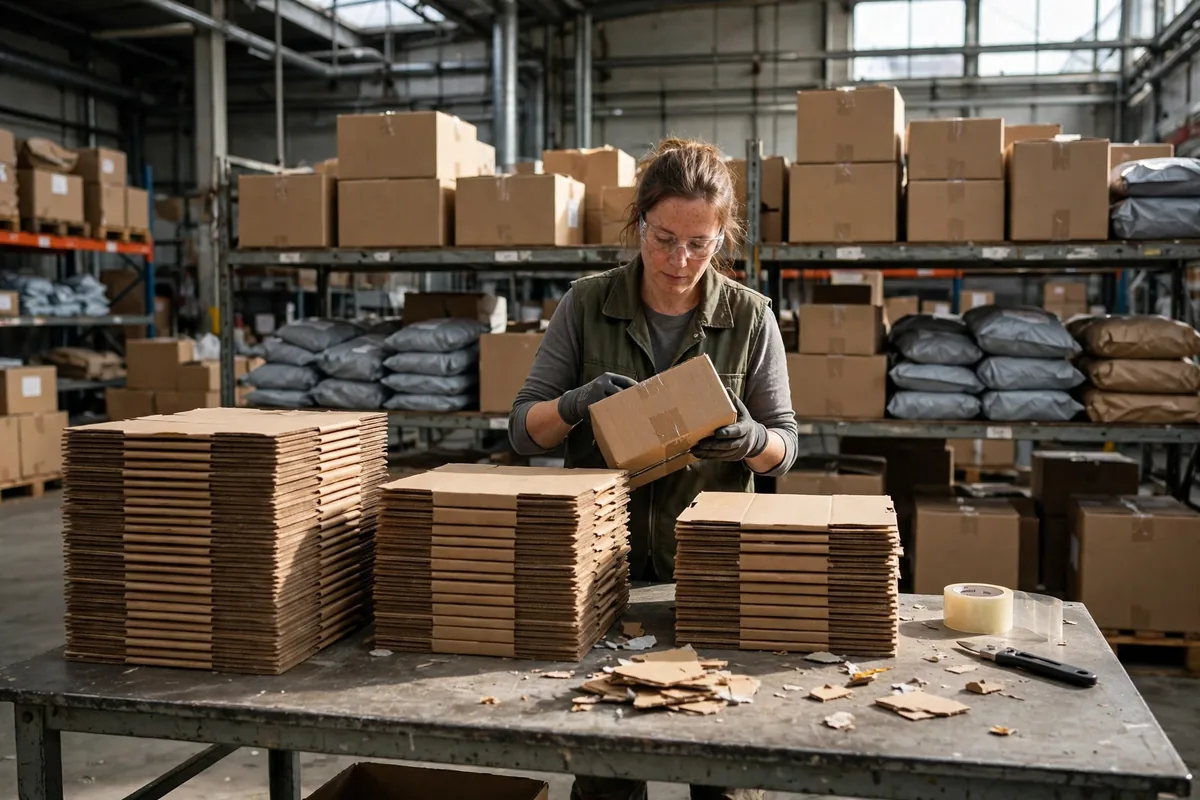
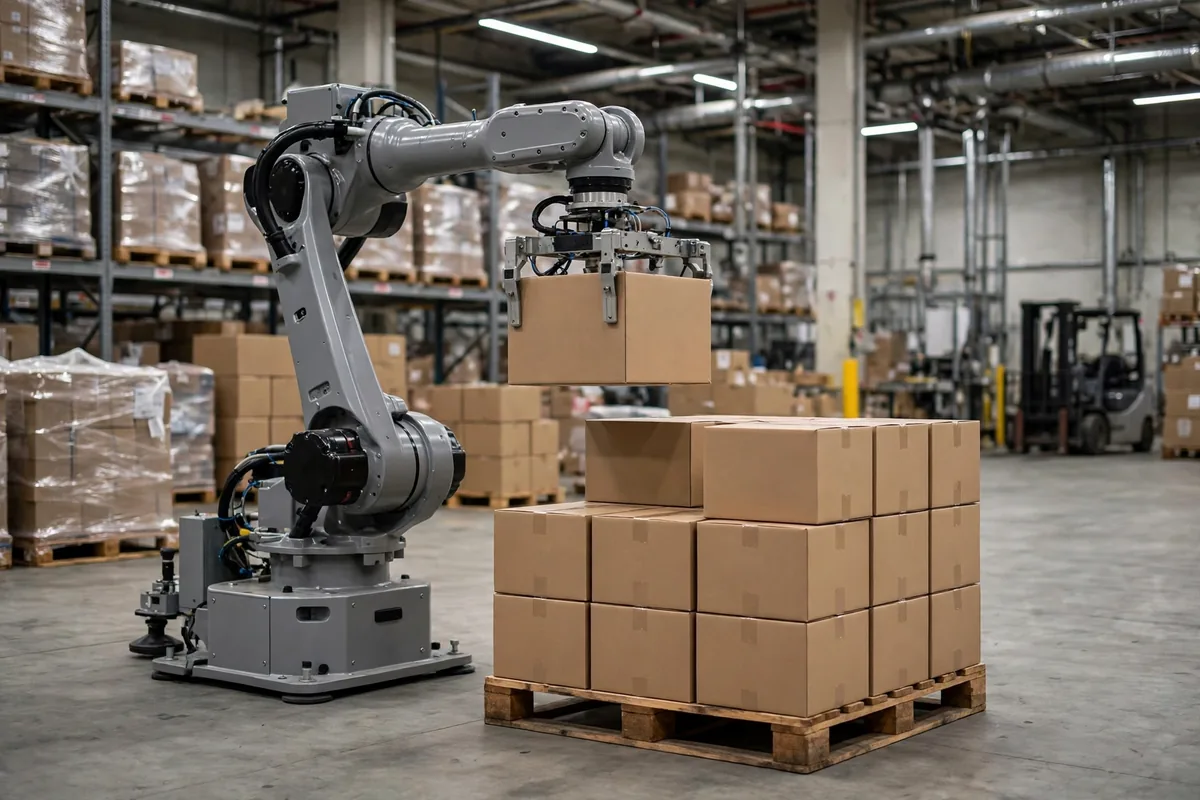
Looking at the trend, fragile-goods packaging is converging in two directions. The first is testing up front: more sellers now run ISTA 3A or ISTA 6 laboratory tests before mass production, spending a few thousand dollars on testing instead of learning from tens of thousands of shipped units. The point of testing is not the certificate; it is knowing in advance where the packaging will fail. The second is standardization combined with automation: packing steps written into standard work instructions, with cushioning quantities, layer counts, and void-fill methods all quantified, so that the variability of manual packing — and with it, the volatility of the damage rate — narrows.
Back on the warehouse floor, choosing cushioning material ultimately comes down to three questions: does your product fear drops, compression, or vibration most? Does your channel impose mandatory test certification? And is your damage math calculated per carton, or per saleable unit? Answer those three clearly and the choice in fragile goods warehouse packaging cushioning answers itself. As for warehouses still packing on the rule of thumb that "an extra layer never hurts," one question is worth asking: over the past year, how many units actually broke — and has anyone truly counted?
By Dr. Chen, Supply Chain Researcher