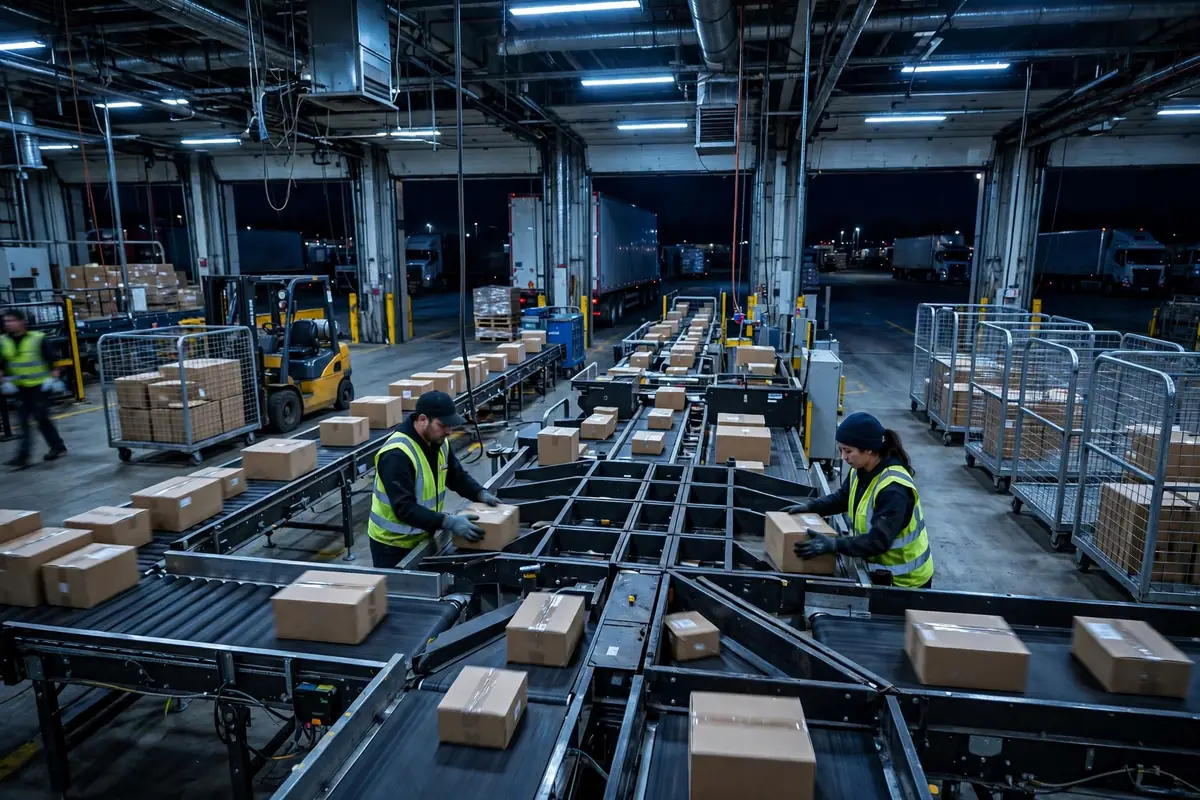
Last Wednesday, 6:40 in the morning, I had barely walked into the building when customer service called. The customer on the other end was polite, which somehow made it worse. One carton short, one carton that belonged to somebody else. The order came out of our building. The box was sealed in our building. And the verification record for that order was blank. Night shift was chasing volume, the verifier had been pulled over to help load a truck, and the second check simply never happened.
Here is the honest truth: mis-ships are not an act of God. They happen because nobody is standing at the gate. Industry-wide, manual picking runs at a 1 to 3 percent error rate, and adding scan verification at pack-out can push that below 0.5 percent. Those two numbers tell you everything about whether a second check is worth the money. And yet, on the floor, verification is usually the first thing cut when volume spikes. Why? Because it looks like it produces nothing and only slows the line down. Let me say this plainly: verification does not slow the line down. It keeps the line honest.
Warehouse Order Verification: Where to Put the Second Check
We have tried all three spots, and we landed on one: right before packing. Verify right after picking, and the verifier ends up standing behind the picker waiting, and the picker ends up waiting for the verifier. Two people waiting on each other kills throughput fast. Verify at the truck, and it sounds like the safest option, until you find an error and have to break down a sealed carton, reopen a finished pallet, and rebuild the whole thing while a driver leans on his horn. Rework at the dock costs three or four times what it costs at the pack bench.
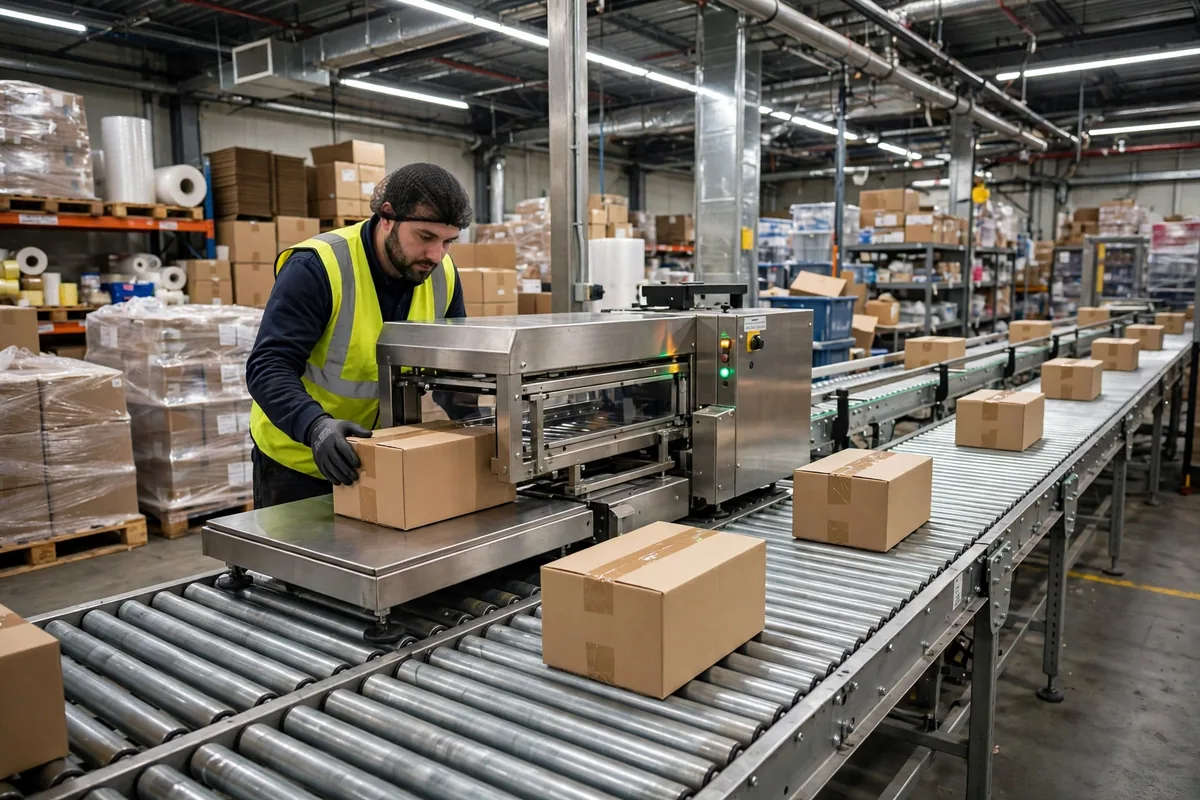
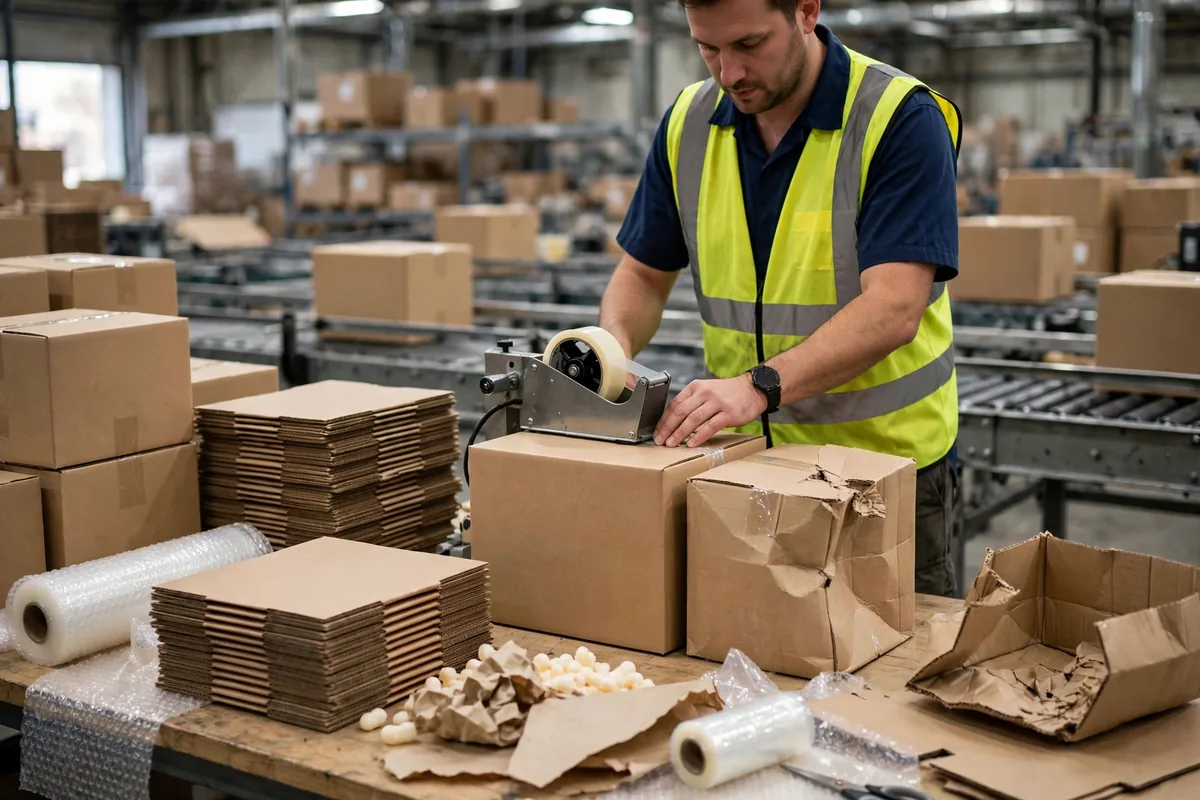
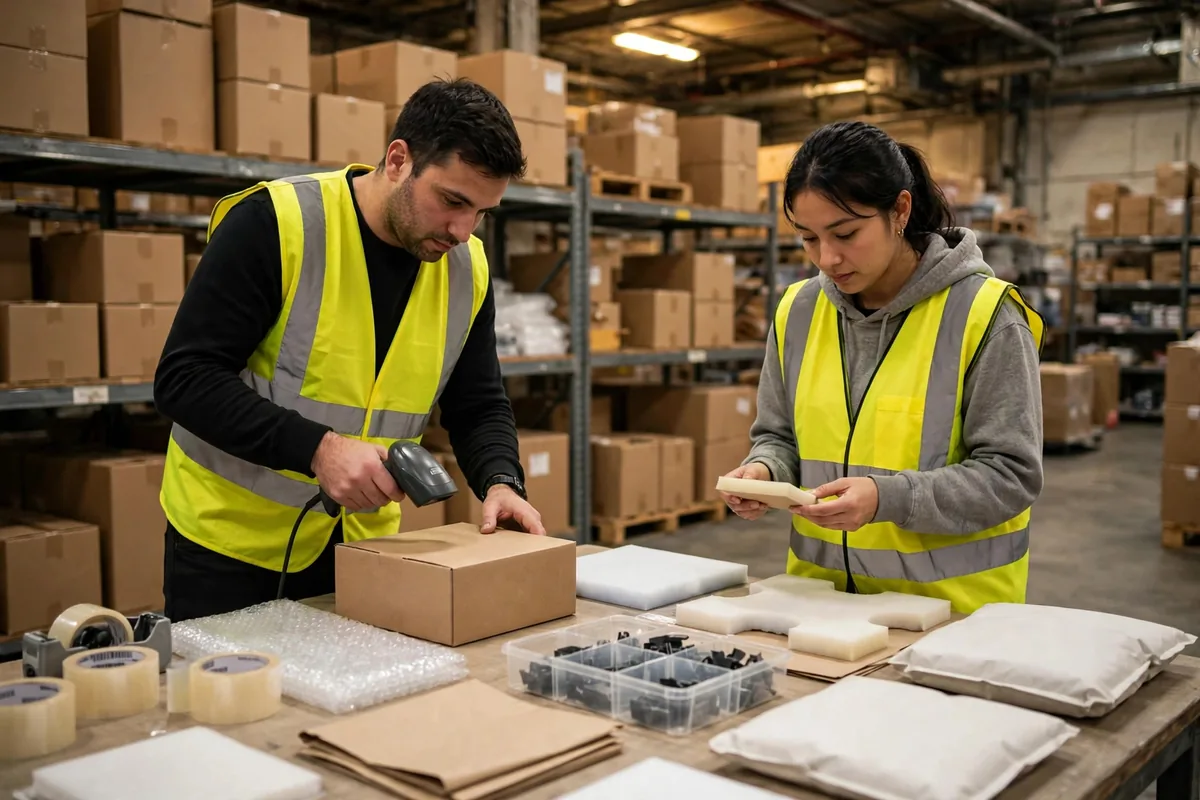
Before packing is the least-bad spot, and in this business least-bad is usually right. The goods are spread out on the bench, the order is in hand, and a mistake gets fixed on the spot before the tape goes on. Here is how we run it now: the picker brings the items to the pack bench, the verifier scans the barcode on the order, then scans each item, and the system matches quantities automatically. If the count is off, the bench light turns red and the box does not get sealed. That adds about six seconds per order on average in our building. Six seconds to keep a bad order from leaving. I will take that trade in peak season and in slow season alike.
One exception. Orders with more than 15 lines do not get a full check. They get a sample check plus a weight check. A full check on a big order takes two or three minutes, and that bench would jam up the whole line. Exceptions like that have to be written into the process. You cannot leave them to the verifier's judgment on the fly.
Scan, Weight, or Sample: Picking the Right Order Verification Check
I have run all three. None of them is a cure-all. The trick is matching the method to the mistakes you actually make.
| Method | What it catches | Extra time per order | Best for | | Scan verification | Wrong item, wrong quantity, missing item | About 5–10 seconds | Many SKUs, lots of look-alikes | | Weight check | Missing or extra items, wrong item when weights differ | About 2–3 seconds | Standard products with stable weights | | Sample inspection | Only what the sample happens to catch, mostly systemic issues | Depends on sample rate | Low volume, tight headcount |
Now, a word about weight checks, because people overrate them. Two different SKUs can weigh almost the same, and a scale cannot tell them apart. We had a batch of phone cases and a batch of earbud cases, nearly identical in weight. The weight check ran for three months and never flagged a thing, while mis-ships kept going out the door. We switched to scan plus weight together, and that is when the mis-ship rate actually fell. Here is the counterintuitive part: the best verification method is not the most expensive one. It is the one that matches your most common mistake. If you do not know what you get wrong most often, any system you buy is money down the drain.
Our current setup is three tiers, written into the SOP so a new hire can follow it without asking: regular orders get a full scan check, big orders get a sample check plus weight, and high-value orders get a scan check plus a visual look. No guessing.
What Happens When the Second Check Finds a Problem
Finding a discrepancy is not the scary part. The scary part is nobody on the floor knowing what to do next. We learned that in November 2024, peak season. A verifier found a quantity mismatch and ran back to the rack to hunt for the missing piece herself. Twenty minutes gone, the order sitting on the bench, seven or eight orders backed up behind it. Mis-ships did not spike that night, but on-time rate took a real hit.
Our exception process now has four steps, posted on the wall above the pack benches. One, the box does not move; it gets a red tag where it sits. Two, the verifier taps "discrepancy" in the system. No running, no hunting. Three, the order goes to an exception queue, owned by a dedicated exception handler. Four, the handler clears every discrepancy before the shift ends, and anything left over gets a written reason at handover.
The key is steps two and three. The verifier's job is to find problems, not to solve them. Send her off to hunt for stock and the bench stops, and the whole line's pace falls apart. Solving is the exception handler's job. He has the inventory records and the cycle-count authority, and he finds the answer faster than the verifier ever could. Since we split the work this way, the pack benches have not jammed once.
The Math on the Second Check
I am no finance analyst, but I can do my own building's math. Here is a hypothetical example, clearly labeled as such: 3,000 orders a day at a 1.5 percent error rate is 45 bad orders a day. What does one bad order cost? A 2013 industry survey put the average at about $22. Some 3PLs now estimate it closer to $100, once you count return freight, reshipping, customer service time, and lost customers. Call it $50 an order and that is $2,250 a day, roughly $50,000 a month over 22 working days.
And the cost of the check? Six seconds an order, 3,000 orders, about five labor hours. Two verifiers cover a shift. Their wages plus the system cost come nowhere near $50,000 a month. I have run this math more than once, and the answer never changes: verification is not a cost. It is the cheapest insurance in the building.
But one more honest word before I wrap up. The building with the strictest verification does not always have the lowest mis-ship rate. I have seen a building with three verifiers still shipping bad orders, because the pick face was a mess: look-alike SKUs sitting side by side, pickers grabbing by feel, verifiers desperately plugging holes downstream. A second check can catch one bad order. It cannot fix a system that produces bad orders all day. Verification data has to flow back to picking every week: which locations error most, which SKUs get confused, which shift is the worst. That feedback is the real product of verification. Check without review is like hiring a goalkeeper and never fixing the leaky defense.
So do not treat the second check as a decoration for customers. Put it before packing. Match the method to your mistakes. Write the exception handoff down in stone. And use the data to fix picking, week after week. That is how we run it now, and our mis-ship rate went from 1.5 percent to under 0.5 percent, and customer service has not called me at 6:40 in the morning since.
If your building still runs without a second check, do not wait for a disaster to add one. Start with one thing tomorrow: at the morning huddle, ask your verifier to read out last week's discrepancy count. You will find the problem has been sitting there all along. Nobody was looking at it.
By Chen Feng, Warehouse Operations Manager