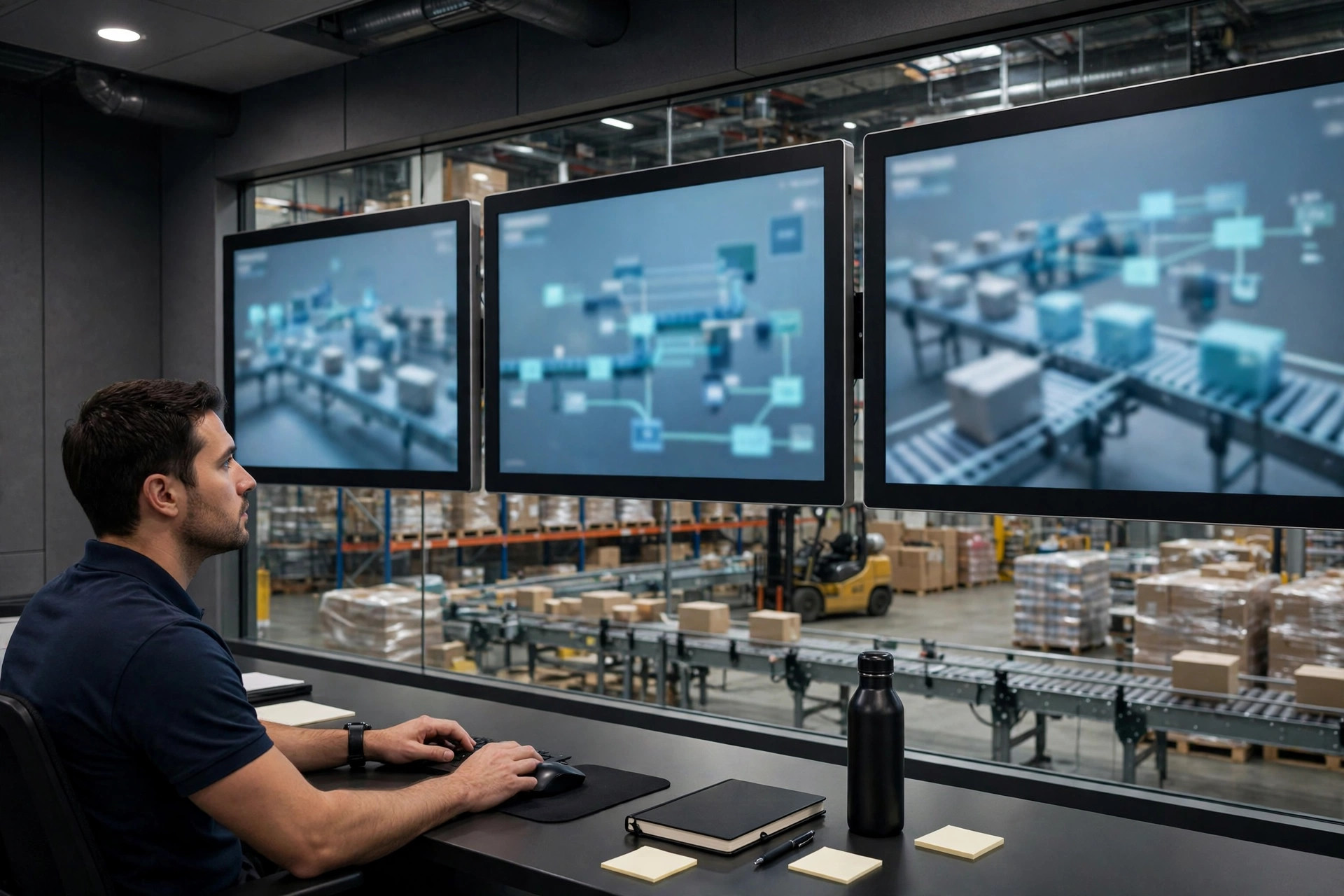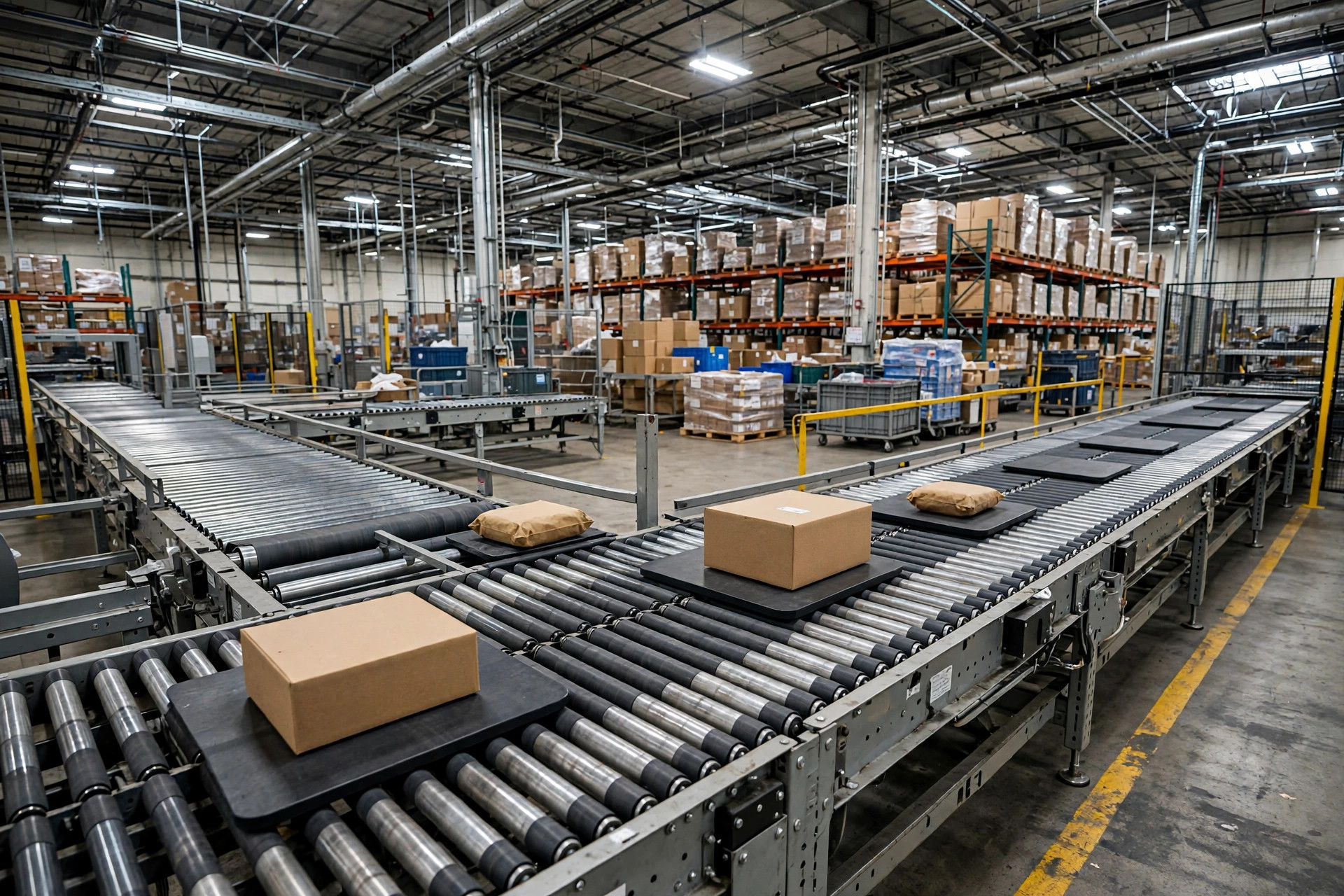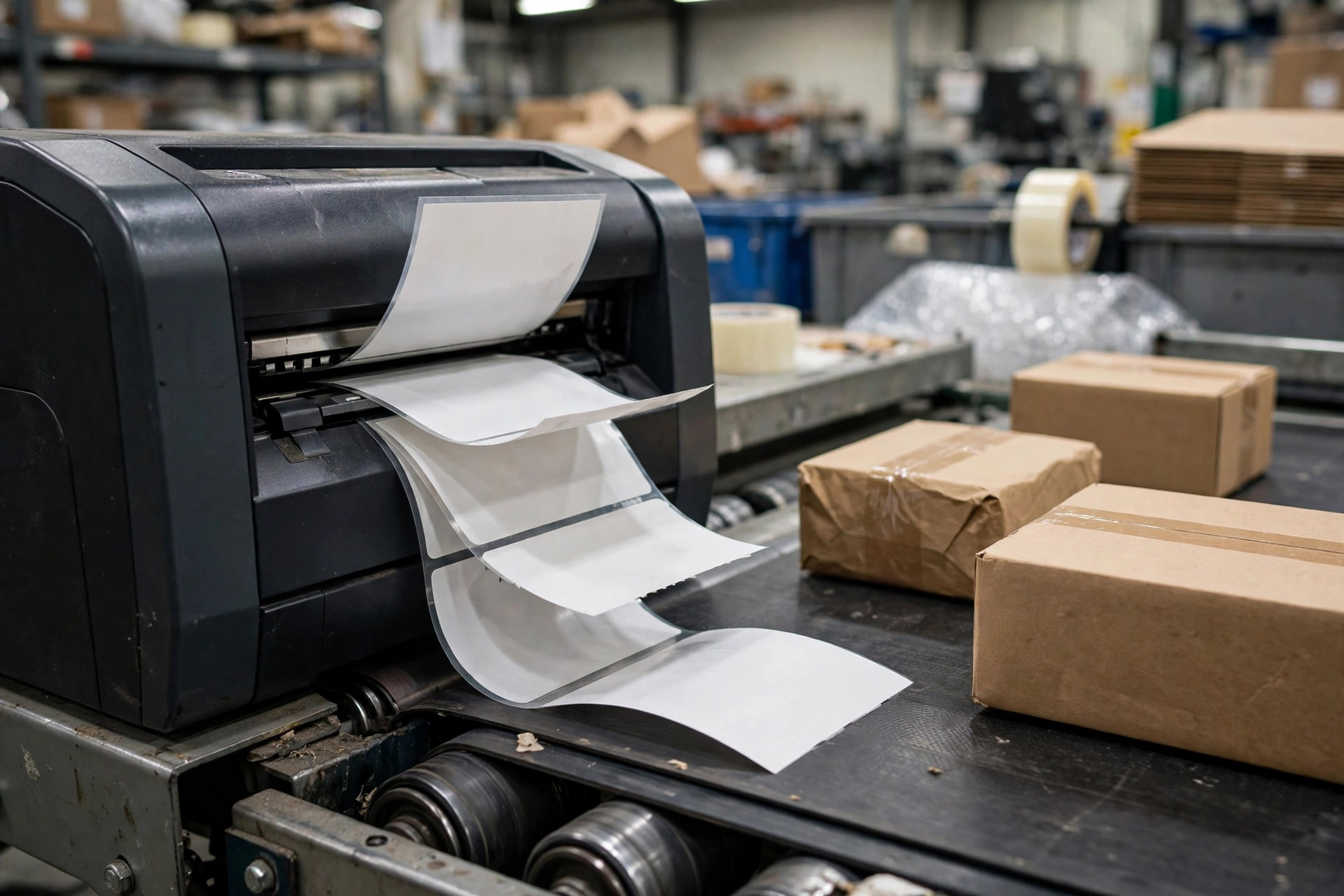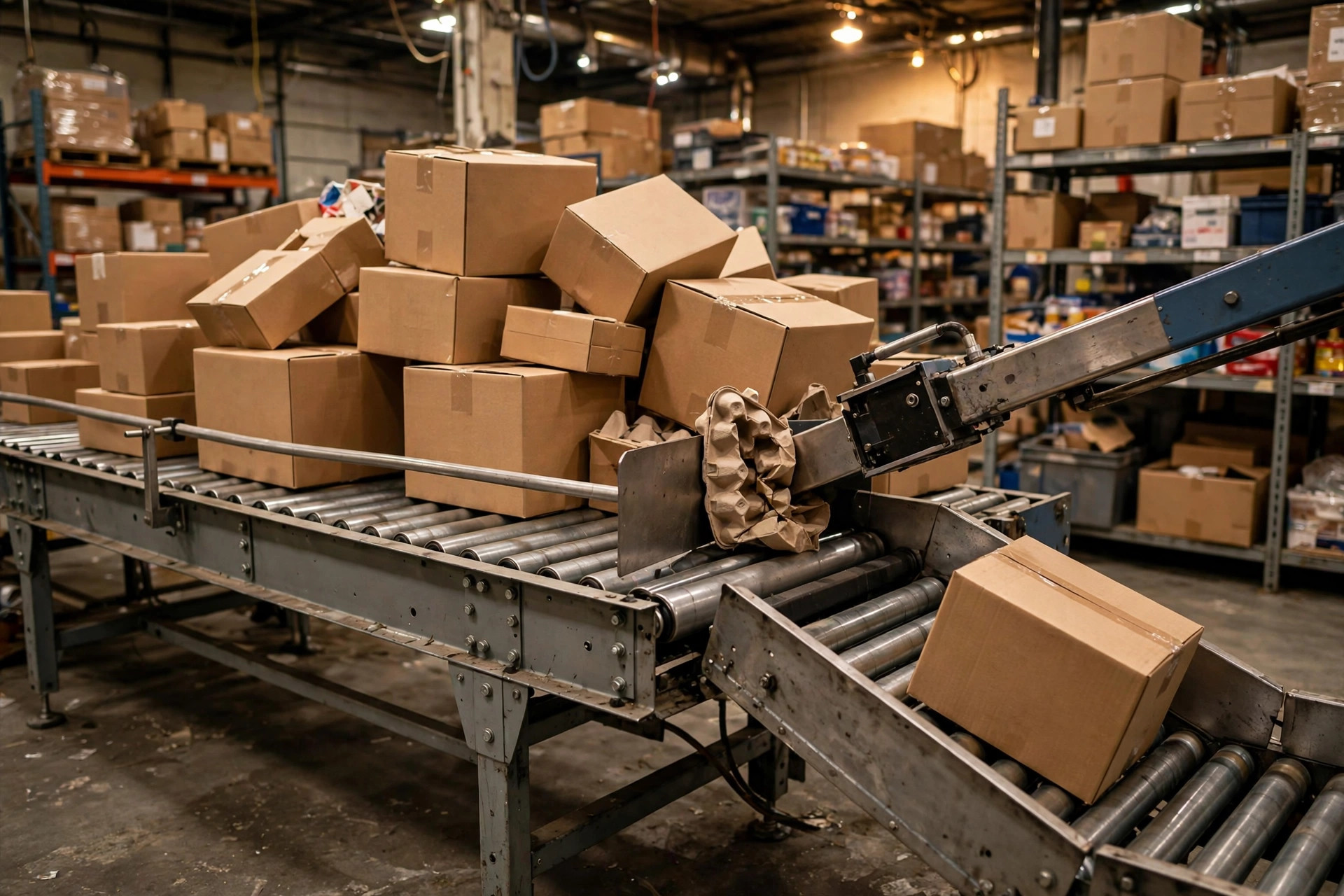
I'll say it without shame: our little warehouse's WCS exception handling was once so useless that a single poly mailer took down the whole sortation line. November 8, 2025, peak Black Friday prep. My two new temps were still learning how to slap on shipping labels. At 9:40 AM, the scanners at the divert started screaming no-read. Somebody had inducted a soft parcel whose crumpled bag flap covered the label completely. No scan, no divert decision, so the WCS just parked it right at the chute entrance. Parcels piled up behind it. Three minutes, the whole line was dead. The three of us killed the belt, yanked the bag out by hand, and burned about forty minutes getting back online. That day's outbound plan? Gone.
That day I learned that the "exception consolidation" logic in the WCS isn't decoration for enterprise slide decks. It's the line's lifeline. The difference is, the big-warehouse version costs money we don't have and needs staff we don't have, so we run the homebrew version. And the homebrew version has its own tricks.
Meet the Three Regulars That Kill Your Divert
After a few years of this, I've found there are really only three types of exceptions that choke a divert chute. First, no-reads: damaged labels, wrinkles, glare, labels stuck on crooked or upside down. Second, oversize and overweight pieces that exceed the chute width or the slide's weight rating. Third, the sneakiest one: data mismatches — the barcode scans fine, but the system has no such order, or the order status is wrong, so the system has nowhere to send it.
Oversize pieces are the deadliest. March 15, 2026, afternoon: a batch of home goods came through, and one carton was about two fingers wider than the chute. The divert arm shoved it, it wedged sideways in the wheel-sort, and the whole line slammed into an emergency stop. The kicker? Our system had no concept of "oversize prediction" at all. Dimensional data lived in order notes that nobody read. I ended up climbing onto the belt and dragging the box out by hand — all on camera, and the clip circulated in our staff group chat all afternoon.
The lesson that stuck: exception handling is really one sentence — never let the exception piece reach the divert in the first place. Intercept it before it gets there.
Our Four-Stage Homebrew: Intercept Before the Divert, Catch After It
We can't afford a vision-based recheck station, so we built the logic into our existing WCS configuration and used humans as the execution layer. Four stages, each feeding the next:
| Exception Type | Trigger | System Automatic Action | Human Action |
|---|---|---|---|
| No-read | Same chute fails to scan 3 times in a row | Chute locks, piece returns to the main line and routes to the recheck station | Operator hand-scans, relabels, or keys it in manually |
| Oversize piece | Order flagged oversize / recheck tape measure says too big | Skips all divert chutes, goes straight to the manual bulk chute | Manual carry, separate load |
| Data mismatch | Barcode has no matching order / order status abnormal | Routes to the exception chute, order number pushed to the recheck tablet | Look up the order, call customer service, decide within 30 minutes |
| Physical jam | Chute photo-eye sees no parcel pass within timeout | Full line e-stop + exception alarm light | Clear the jammed piece first, then reset |
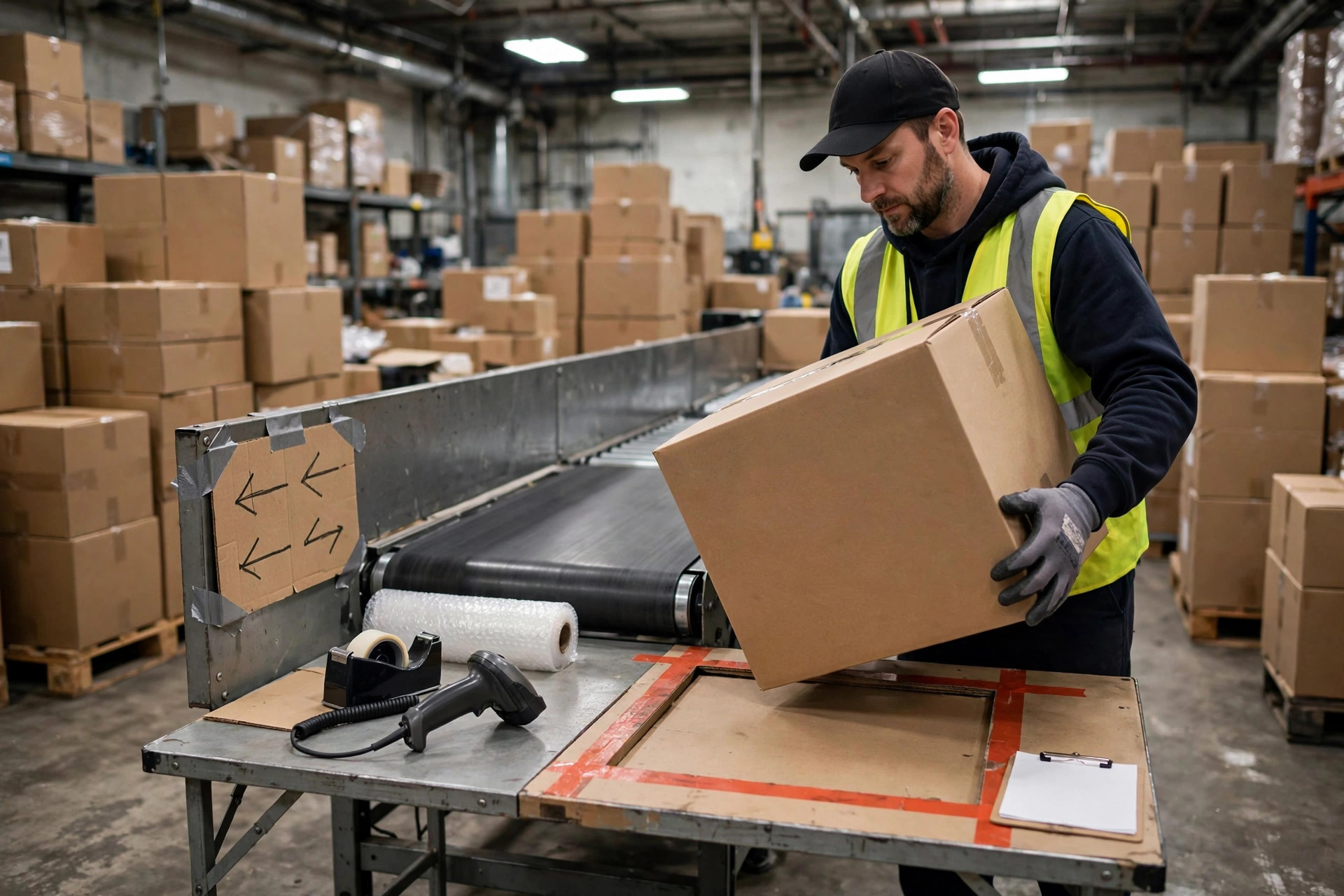
The table looks simple, but the homebrew details matter. First, the recheck station sits three steps from the line — never "the recheck area at the other end of the building." One walk costs three minutes; twenty walks a day is an hour of wages down the drain. Second, the station gets a cheap handheld scanner and a roll of spare label paper — negligible cost, but it rescues about 80% of no-read pieces on the spot. Third, our homegrown oversize detector: a string hung over each divert entrance, cut to the chute's minimum width. If a parcel can't pass the string, it's oversize — pull it off by hand. One piece of string, zero cost, and no more March-15-style belt climbing.
There's one more critical rule: exceptions must have an expiration time. Our recheck station has a rule — nothing sits in the exception chute longer than 2 hours. Miss the deadline and the system auto-pings my phone. Before this rule existed, the exception chute slowly turned into a junk pile that nobody recognized, and eventually someone wrote it all off as scrap. Those were customers' goods in there.
The Contrarian Take: Smaller Exception Chutes Beat Bigger Ones
This is the part I really want other small-warehouse owners to hear, because I used to believe the opposite too: a bigger exception chute feels safer, more margin for error, less likely to jam the line. Wrong. A big exception chute becomes a black hole — pieces go in, nobody touches them, the operator thinks "there's plenty of room, I'll deal with it tomorrow," the pile grows, and eventually you have to stop the line for a big cleanup anyway.
Our exception chute now holds exactly 6 slots. Full means alarm. That forces the recheck operator to clear as pieces arrive — average dwell time under 40 minutes. Fewer slots, higher processing cadence, and our exception throughput is more than triple what it used to be. The trade-off: a big exception chute buys you psychological comfort; a small one buys you processing discipline. Small warehouses run lean — discipline has to come from the mechanism, not from hoping people feel motivated.
The results speak for themselves. In six months on this homebrew system, exception-caused line stoppages went from two or three a week to barely one a month. Nothing like that forty-minute Black Friday disaster has happened again. Last month I ran the numbers: exception handling costs us a few thousand yuan a month in labor (mostly the recheck operator's hours), which is pocket change compared to what one line stoppage costs in missed outbound SLAs.
Three honest suggestions for fellow small-warehouse owners. First, don't worship "a better system will fix it" — the fanciest WCS exception module can't beat a standing rule of "exceptions cleared within 2 hours," and rules are free. Second, the recheck station should be as close to the line as physically possible; physical distance is money. Third, review your exception data weekly — we look at last week's exception mix every Monday. Lots of no-reads? Go check the label printer. Lots of oversize? Go talk to the packing team. Kill problems at the source; don't wait to meet them at the divert.
Big warehouses have their vision AI and recheck islands. We have a string, a handheld scanner, and a 2-hour rule. Whether your divert jams has never been about money — it's about whether you take exceptions seriously. Small warehouses have their own way of surviving, and when the way is right, even homebrew methods can run as smooth as the enterprise line.
By Xiao Ma, Small Warehouse Owner