Talk about WCS spare parts, and forget the technology for a minute. Talk money.
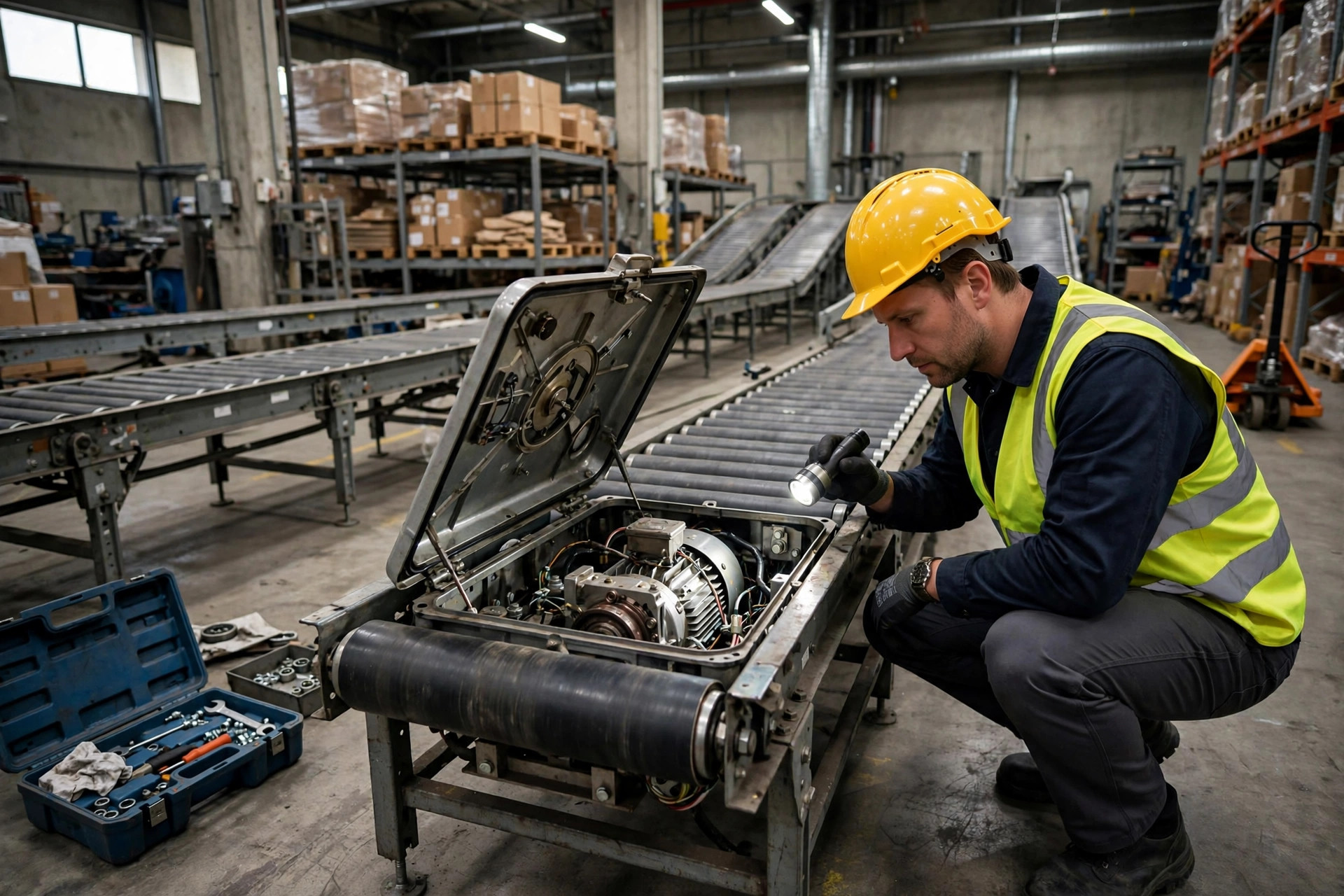
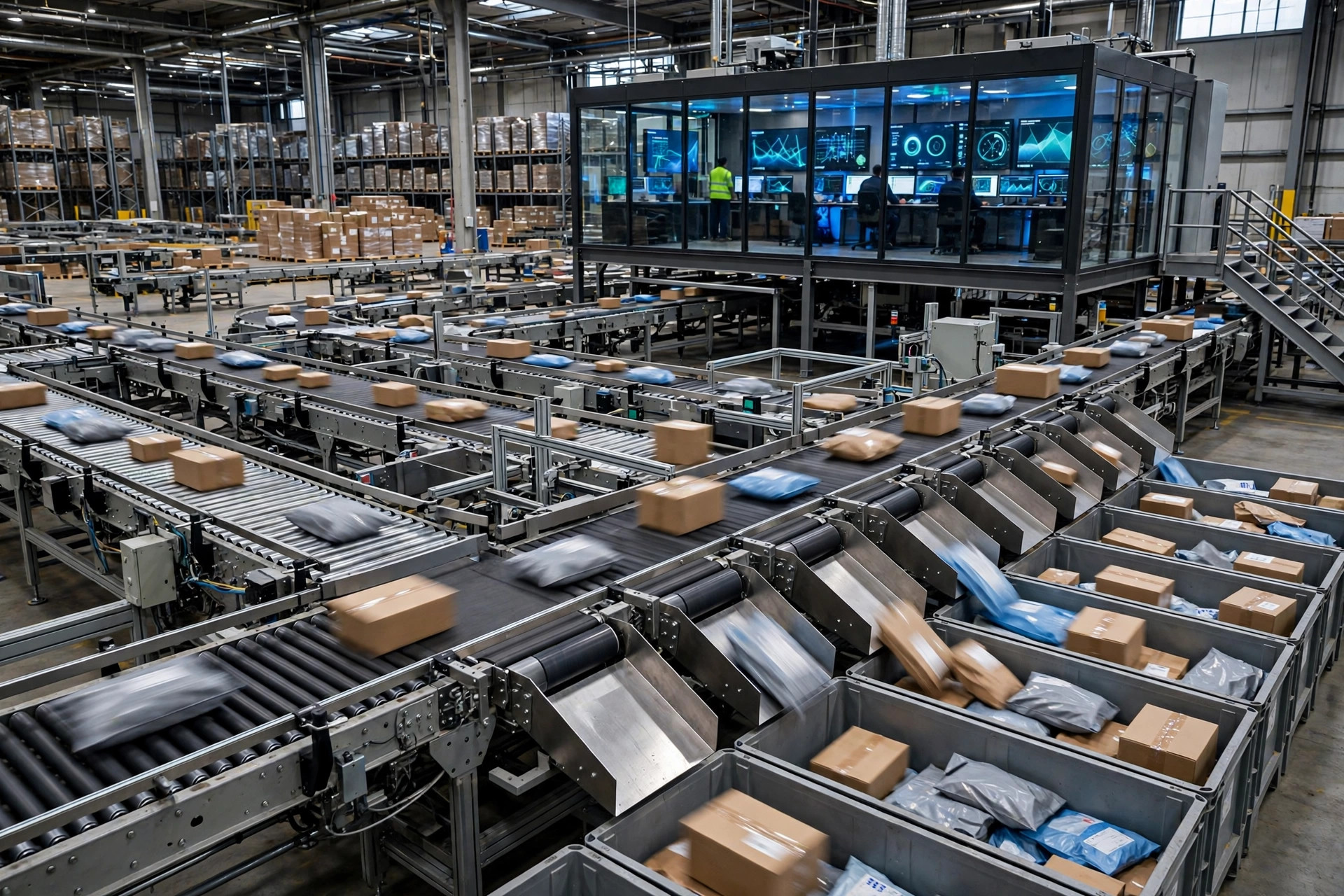
A week before the 2024 Double 11 shopping festival, an e-commerce warehouse in Guangdong lost the main control board on its sortation line. No spare on site. The distributor rushed one over from Shenzhen — six hours on the road. Swap and commissioning took one more. Seven hours, zero parcels out of that line, on the eve of the year's biggest sales peak, with order volume running at more than double the normal day. I ran the numbers for them afterward. The warehouse manager went pale.
The bill for seven hours without a spare board
Downtime cost is not one number. It is four:
Downtime cost = idle labor + overtime catch-up + SLA penalties + trust erosion
| Cost item | Math | This case |
|---|---|---|
| Idle labor | 40 sorters x 7 hours x 25 yuan/hour (site's fully loaded hourly rate) | 7,000 yuan |
| Rush freight | Emergency courier, Shenzhen to site | 800 yuan |
| The part itself | One OEM control board | 3,000+ yuan (check the latest vendor quote) |
| Overtime catch-up | Backlog cleared over two night shifts | ~6,000 yuan (site overtime rate) |
| SLA hit | Late shipments during peak, platform demerits | Per platform rules; the hidden cost runs higher |
Seven hours of downtime burned roughly 17,000 yuan, not counting the long tail of SLA demerits. One OEM board costs a little over 3,000 yuan — a single outage paid for that board five times over. The money was wasted stupidly. Not bad luck: the board simply was not on the spares list.
Every term in that formula is a number you can fill in yourself: your headcount, your hourly rate, your overtime multiplier. Do not use my numbers. Use yours, or the conclusion means nothing.
The three-tier WCS spares list
More spares is not better. Right spares is better. I sort every WCS-related spare by one question: how fast does its failure kill the line?
| Tier | Rule | Typical WCS spares | How many |
|---|---|---|---|
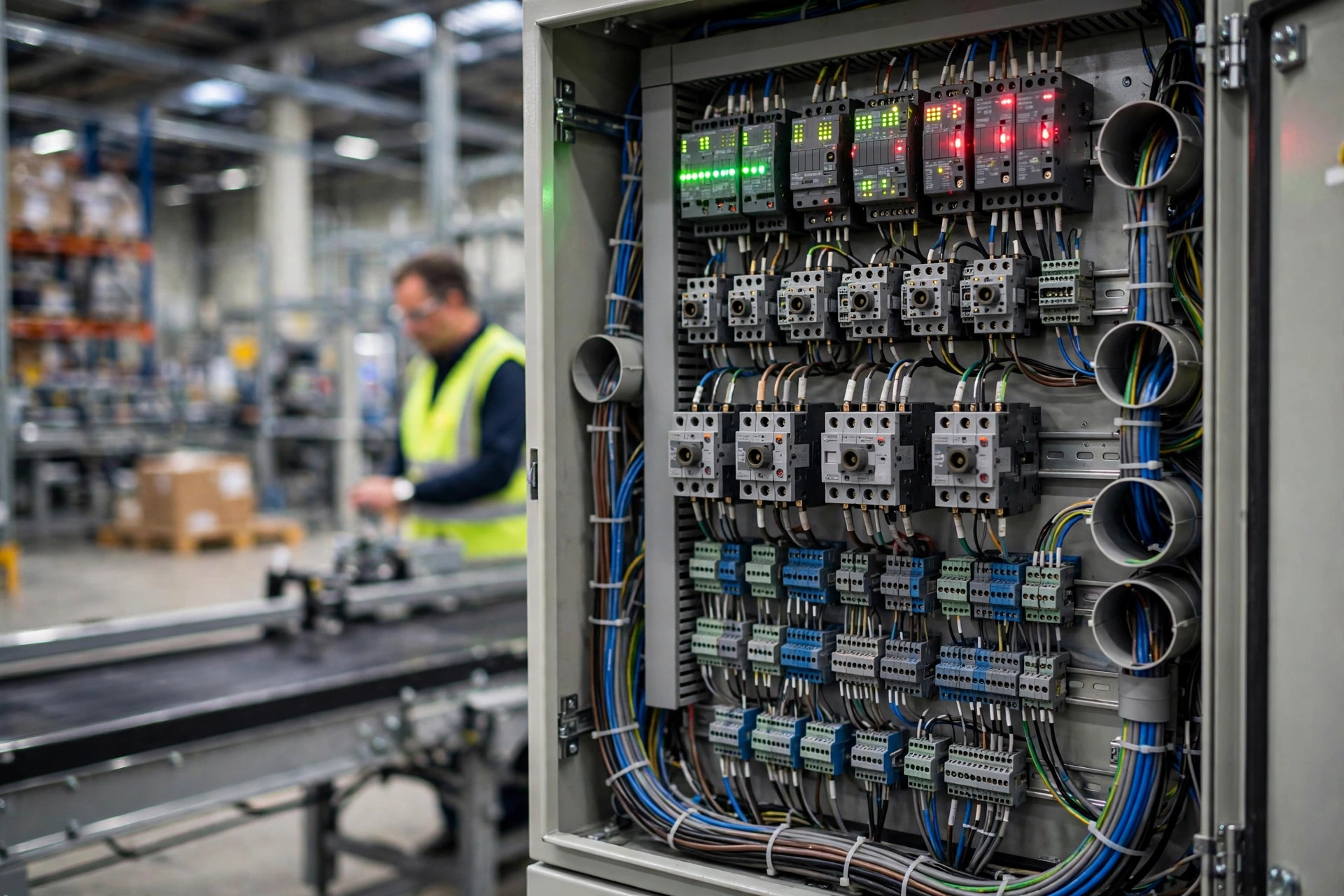
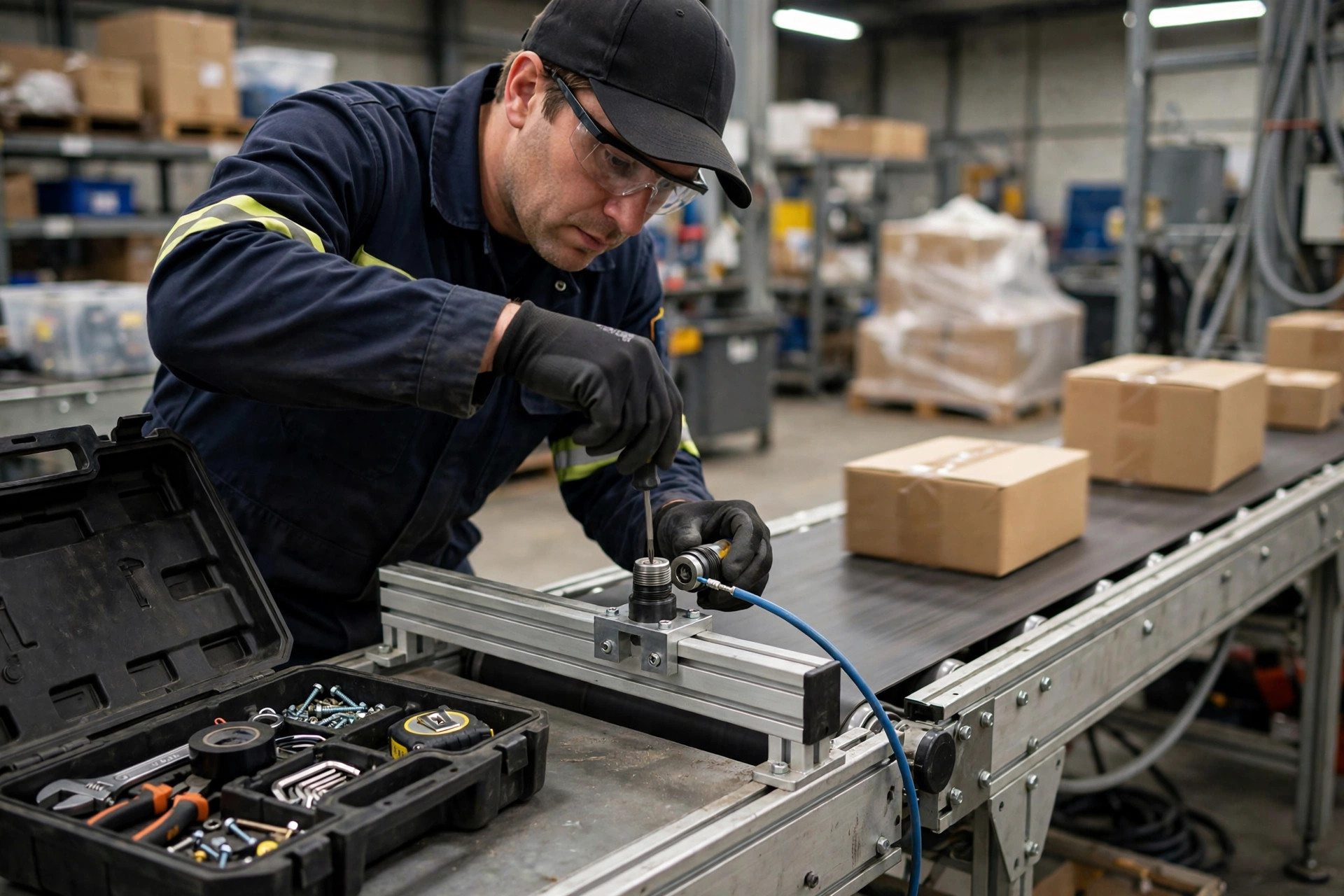
| Tier A | Line stops within 1-4 hours of failure | Main control board, primary scan head, critical photoelectric sensors, main power module | One each, in the on-site cabinet |
| Tier B | You can limp along 4-24 hours with a workaround | Standard photoelectric sensors, pneumatic parts, generic boards, cable connectors | Two of each critical spec, or a 4-hour delivery agreement with the supplier |
| Tier C | No impact on production for 3+ days | Housings, brackets, indicator lamps, non-critical cabling | Buy on demand, zero stock |
One logic only: work backward from "how long until the line stops" to "how far the spare may live from the line." Tier A spares must live zero distance away — in the cabinet on site. Tier B can live a four-hour drive away. Tier C can live days away.
A note on scan heads: the primary scan head on a sortation line is textbook Tier A. An OEM fixed-mount reader starts above ten thousand yuan; high-end vision models run several times that (check the latest vendor quote). Expensive, yes — but when it dies, the whole line goes blind. Meanwhile the humble photoelectric sensors scattered along the line cost a few hundred yuan OEM, tens of yuan for domestic generic equivalents. Those are Tier B's best candidates for generic substitution: same function, an order of magnitude cheaper.
The counter-intuitive part: over-stocking burns money too
Too few spares causes downtime. Too many spares? Burns money just the same — quietly, with nobody screaming.
In 2023, a 3PL warehouse in East China bought the integrator's "recommended spares list" in one shot: 120,000 yuan of parts. Three years later, the stocktake: half the part numbers discontinued, the manufacturer will not even repair them; another chunk never opened, OEM photoelectric sensors quietly aging past warranty on the shelf. 120,000 yuan sat in a cabinet, carrying cost accruing year after year, depreciation accruing year after year. Nobody ran that math, because "well stocked" always sounds correct.
Annual carrying cost of spares = spares inventory value x annual carrying rate. Cost of capital, warehouse space, model obsolescence, expiry — all inside that one rate; plug in your own finance team's number. That is why Tier C must be zero stock: it ties up cash and produces zero downtime-avoidance return. Pure capital sediment.
And a harsher one: the most expensive state is not "no spare." It is "spare arrived, nobody can install it." The board sits in the cabinet; the night-shift engineer cannot swap it, cannot reload the program, and the line waits for sunrise anyway. Every spares list needs a swap card next to it — who installs it, in how many minutes — or the spare is inventory, not insurance. Stocked the part, did not stock the person: same as not stocked.
After tiering, three levers compress the total:
First, stock generic, not OEM, for Tier B. Photoelectric and proximity sensors, ordinary cables: a few hundred yuan OEM versus tens of yuan generic, no functional difference. These parts dominate spares counts, and a 10x unit-price gap moves the total fast. Do not cheap out on Tier A core boards and primary scan heads — OEM there.
Second, repaired boards as spares. Do not throw away the burned board. A professional board repair typically costs about a third of a new one; tested good, it goes into the cabinet as a Tier B spare. A 3,000-yuan board repaired for around 1,000 (check your repair vendor's latest quote) is spares at a 70% discount.
Third, a shared spares pool across sites. If the group runs multiple warehouses, do not give each its own full Tier A set. One regional pool within a two-hour drive: three sites each holding a main board is three boards' money; two boards rotating in a pool saves one board's cost and adds mutual backup.
The break-even formula: is this spare worth stocking?
Run every spare through this before buying:
Annual carrying cost of one spare = unit price x annual carrying rate Expected annual benefit of one spare = annual failure probability x single-outage loss x hours of recovery the spare buys you
Expected benefit > carrying cost: stock it. Otherwise: do not; sign a rapid-delivery agreement instead.
Example: a primary scan head at 10,000+ yuan, carrying rate 15%, costs about 1,500 yuan a year to hold. When it fails the line goes blind; outage loss runs thousands of yuan per hour. If its annual failure probability tops 20%, stocking one is profitable. A Tier C bracket that fails once in three years has expected benefit zero — the formula tells you plainly: do not stock it.
Allergic to "failure probability"? Use the dumbest method available: ask the maintenance lead how many times it broke in the last three years. A veteran technician's memory beats any model.
The close: three numbers to compute at home. Do not let this article's numbers lead you around — they are someone else's. Go compute your own three:
- Your line's all-in loss per hour of downtime (labor + overtime + SLA, fill in the formula above yourself);
- The total price of your Tier A WCS spares list;
- Divide 1 by 2.
If 1 > 2, order the Tier A spares now — not tomorrow. If 1 < 2, your line can afford to wait; negotiate a 4-hour delivery agreement first and keep the cash. A spares list at its best is not a purchase order. It is an arithmetic problem. Get the arithmetic right, and the money stops being wasted.
By Lao Zhou, Logistics Cost Analyst