Let me tell you something about warehouse winter operations: the snow itself is rarely the worst part. After all these years on the road, I have watched plenty of warehouses run fine all summer and then come apart in one storm — not because the freight changed, but because the dock, the batteries, and the people all gave out at once.
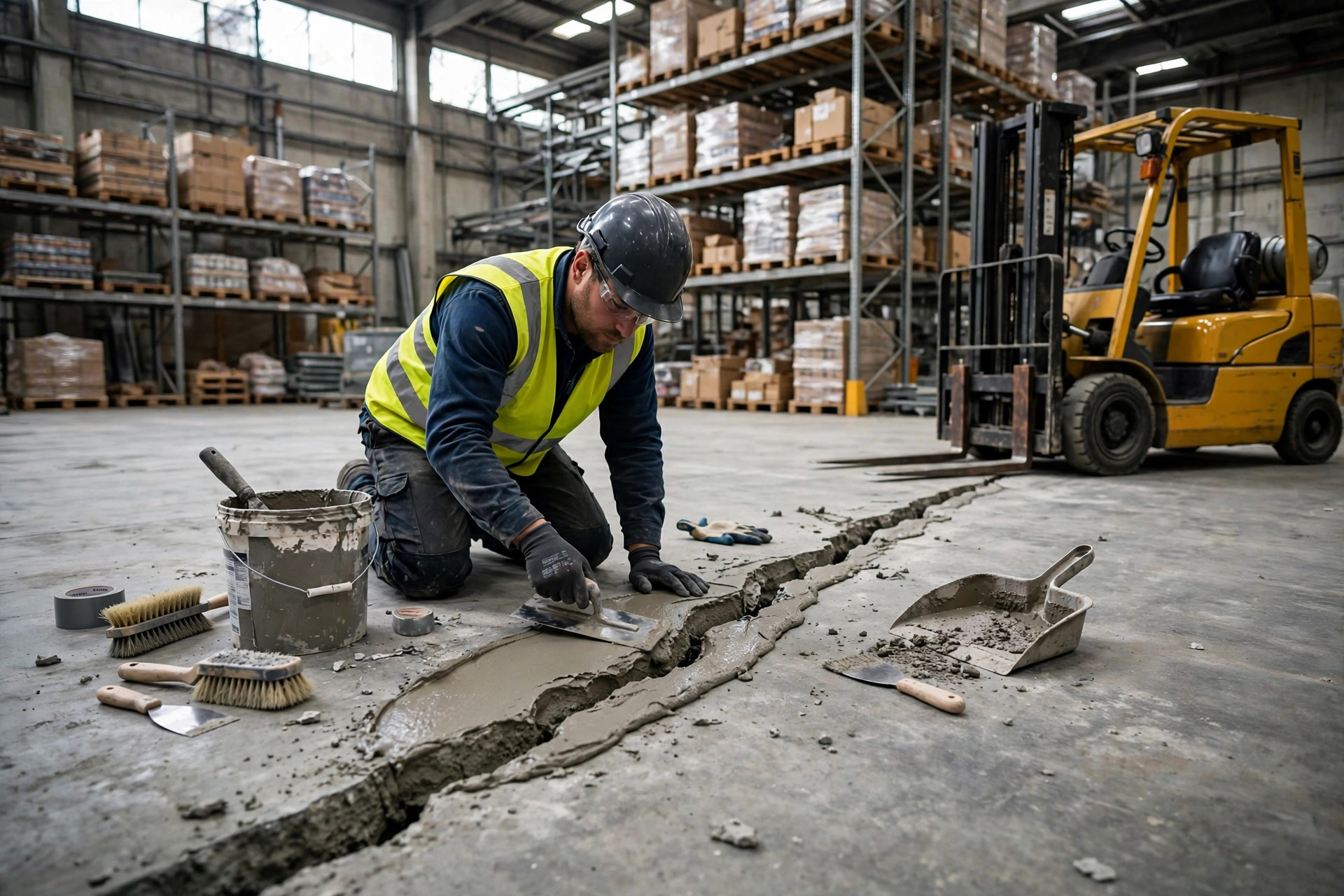
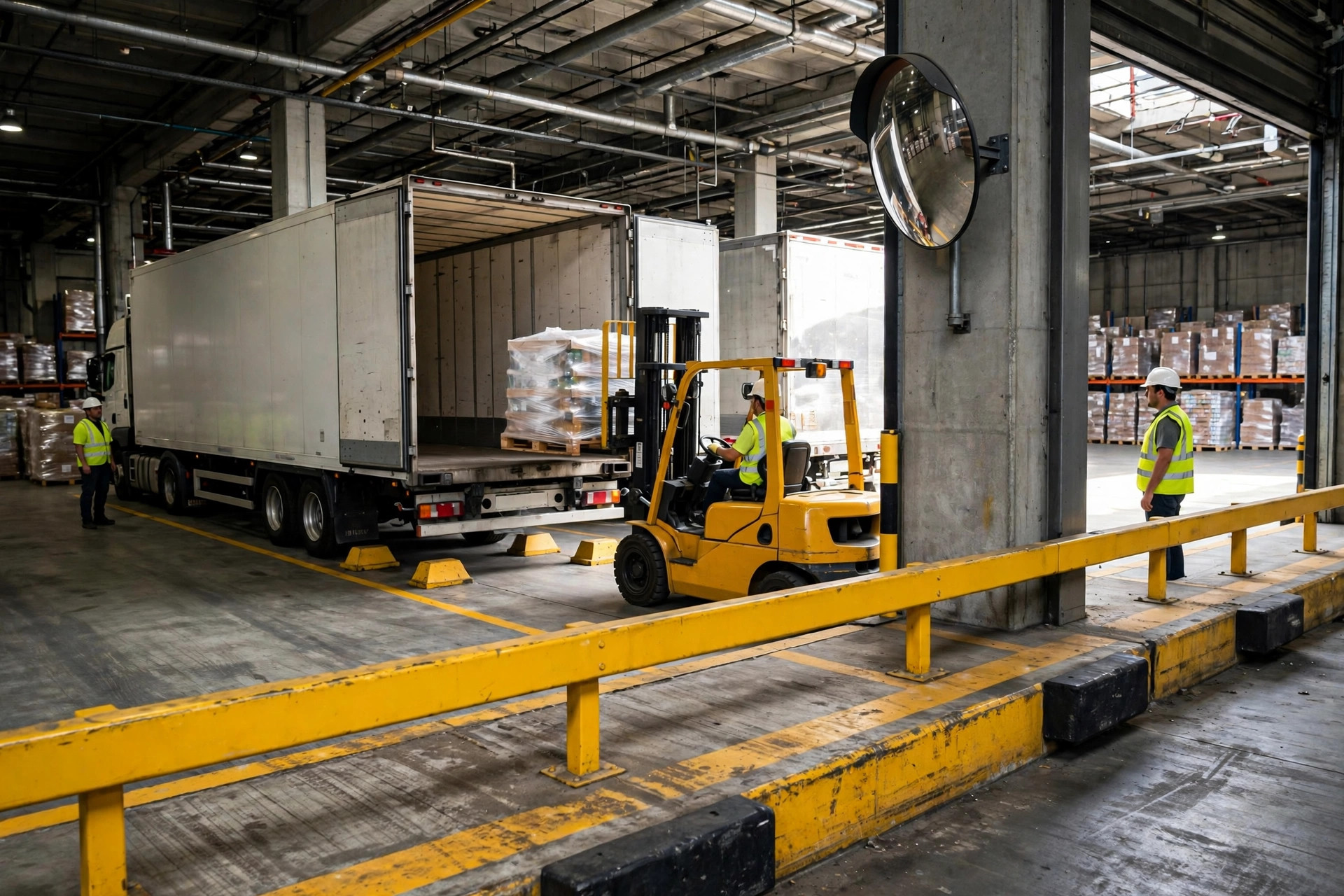
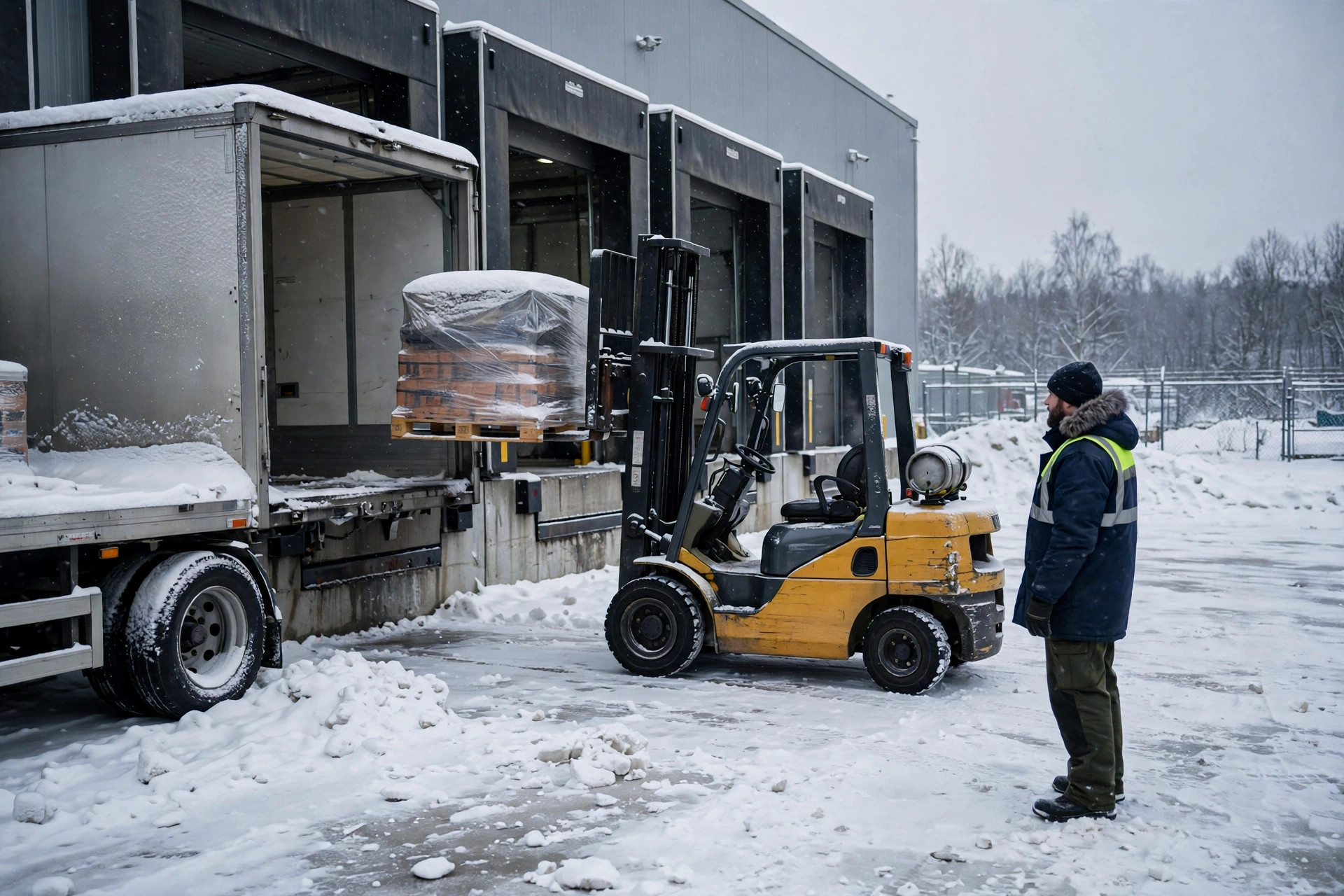
One January morning a couple of years back, I pulled into a warehouse south of Chicago before dawn. The yard had a thin skin of ice, and frost lined the edge of the dock. I backed in, set the brakes, chocked the wheels, and waited for loading like I always do. Two forklift trips into the trailer and something felt wrong. The gap between the trailer and the dock seemed wider than it had been a minute before. Any driver knows that feeling. On ice, brakes and chocks do not hold the way they do on dry pavement, and every forklift trip in and out pushes the trailer a little farther from the dock. That is trailer creep, and it turns a dock plate into a trap: the plate is still resting on the trailer edge, but the gap underneath it keeps growing. The forklift driver that morning was an old hand. He stopped, backed out, and called for help to re-spot the trailer and secure it again. That load left two hours late, and nobody got hurt and nothing got dropped. The dock supervisor later told me they had not been so lucky the winter before, when a trailer shifted on ice, a forklift wheel caught the gap, and a full pallet tipped onto the dock. It took them most of a morning to clean up.
That morning taught me what winter really does to a warehouse. It never sends one problem at a time. Snow lands in the yard, melts, refreezes, and leaves black ice on the dock, the ramp, and under the trailer wheels. My rule now is simple: when I arrive at a warehouse in snow, I walk the dock before I open the doors. I check whether the chocks are sitting on ice, whether meltwater has frozen along the dock edge, and whether the trailer has been secured with more than the usual single step.
Warehouse Winter Operations Start at the Dock and the Yard
The dock is where drivers and warehouse crews meet, and in winter it is where most trouble starts. I do not rush to open the trailer anymore. I walk around the truck, look at the ramp, and look at the path the forklifts will take. Packed snow is the sneakiest surface of all: it looks like a road, but it grips like ice. On the warehouse side, snow clearing has to cover more than the main driveway. The dock apron, the forklift turning areas, and the walkway from the parking lot to the dock all need clearing, and salt or deicer has to be bought before the storm, not during it, when every store is already out.
There is another winter problem shippers rarely think about: condensation. A warehouse is warm inside. Every time a dock door opens, cold air pours in; every time it closes, warm moist air settles on cold cartons and steel racking and turns to water. Cardboard goes soft and labels wrinkle. Keep one door for inbound and another for outbound where you can, so doors are not cycling for no reason. Do not stage freight hard against the door; leave a buffer zone. And if a carton comes out damp, do not ship it anyway. Rebox it, let it dry, relabel it. Losing half an hour beats sending a customer a soggy carton and an apology.
Warehouse Winter Operations and the Battery and Hydraulics Bill
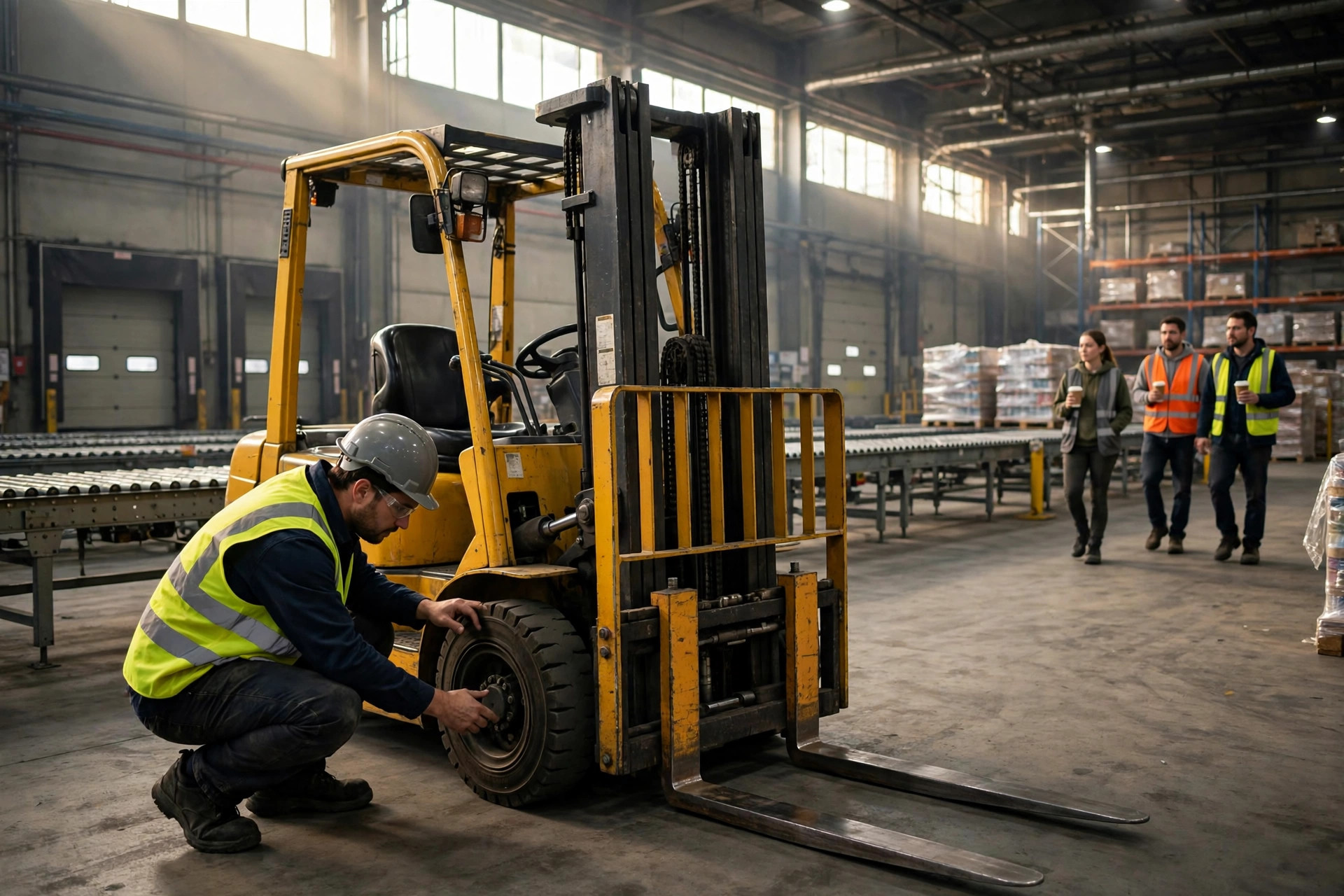
The second thing winter knocks down is equipment. An electric forklift in cold weather simply does not run as long. Drivers and warehouse managers both feel it: work that fits comfortably into one shift in October needs a battery swap by midday in January. The battery is not broken; it just has less fight in it when it is cold, and it fades faster as the shift goes on. Hydraulics go the same way. Cold oil is thick oil, so the lift moves a beat slower, and a driver in a hurry starts making jerky moves. My advice is plain and it works: put charging and battery swaps on the shift plan instead of waiting for a truck to die at the dock. Let forklifts warm up with a few empty cycles before the heavy work starts, and do not park your spare batteries in the coldest corner of the building.
Here is the bill, worked out the way a warehouse actually feels it. Say a dock runs six forklifts, and cold weather costs each one about an hour of useful work a day. That is six hours gone across the shift, showing up as trucks queuing at the dock and overtime at the end of the night. Plan the swaps ahead, warm the trucks up, and put the heaviest lifts in the morning when the equipment is at its best, and you win a good chunk of those hours back. Winter does not reward the warehouse with the newest equipment. It rewards the one whose schedule has slack in it.
People need the same slack. On a blizzard night, if half the crew makes it in, you are doing well. Staffing to a full roster anyway just means the people who did show up work twice as hard, get tired, and make mistakes. I remember a warehouse in Minnesota on a snow night with half a crew. The manager did not pretend otherwise. He reordered the night on the spot: urgent orders first, ordinary orders pushed back half a day, and a phone call to every affected customer to explain. They shipped fewer trailers that night, but they shipped nothing wrong and nobody got hurt, and customers barely complained. What shippers hate most is not a half-day delay. It is a wrong shipment, a damaged pallet, and silence.
When to Slow the Dock on Purpose
That brings me to the judgment most people get backwards: sometimes in winter you should deliberately slow down. All year we talk about trailers per hour, and in winter running to a summer pace is trading safety for a number. Slowing the dock is not slacking. It is a calculated choice, and here is the rough framework I have built up over the years. Warehouses and shippers can argue over it together:
| Situation | What to do | What it costs | | Black ice on the dock or yard | Clear the ice, spread deicer, re-secure the trailer before loading | Half an hour to an hour on that trailer | | Forklift batteries clearly fading | Swap early, move heavy work to the morning | One extra swap in the shift | | Blizzard leaves half a crew | Ship urgent orders first, push the rest back and call each customer | Fewer trailers that day, but no errors | | Condensation dampening cartons | Rebox and dry before shipping, never ship damp | A few dozen minutes on that order |
Look at that table and the trade becomes obvious. Slowing down costs hours and trailers. One accident costs days, and it can cost a person or a load. Shippers have a part to play too. Do not push a driver to make up time on an icy highway, and do not pressure a warehouse to load on ice just to hit a cutoff. That driver has already run hundreds of miles through snow to reach your dock. Asking the crew to rush on ice at the end of that run is how a bad day happens. Give the warehouse and the driver a little slack in winter, and freight actually arrives more reliably.
In the end, warehouse winter operations come down to whether a warehouse treats snow as a normal season to plan for — clearing, staffing, charging, and leaving slack — rather than an emergency to improvise through every year. Snow comes every winter. Being caught out once is inexperience. Being caught out every year is a choice. There is an old saying for that: slow work done right beats fast work done twice.
By Shifu Zhao, Trucking Veteran (15 yrs)