Let me tell you something. Fifteen years driving trucks, I have seen every trick in the warehouse book. But one thing really opened my eyes: value-added repacking.
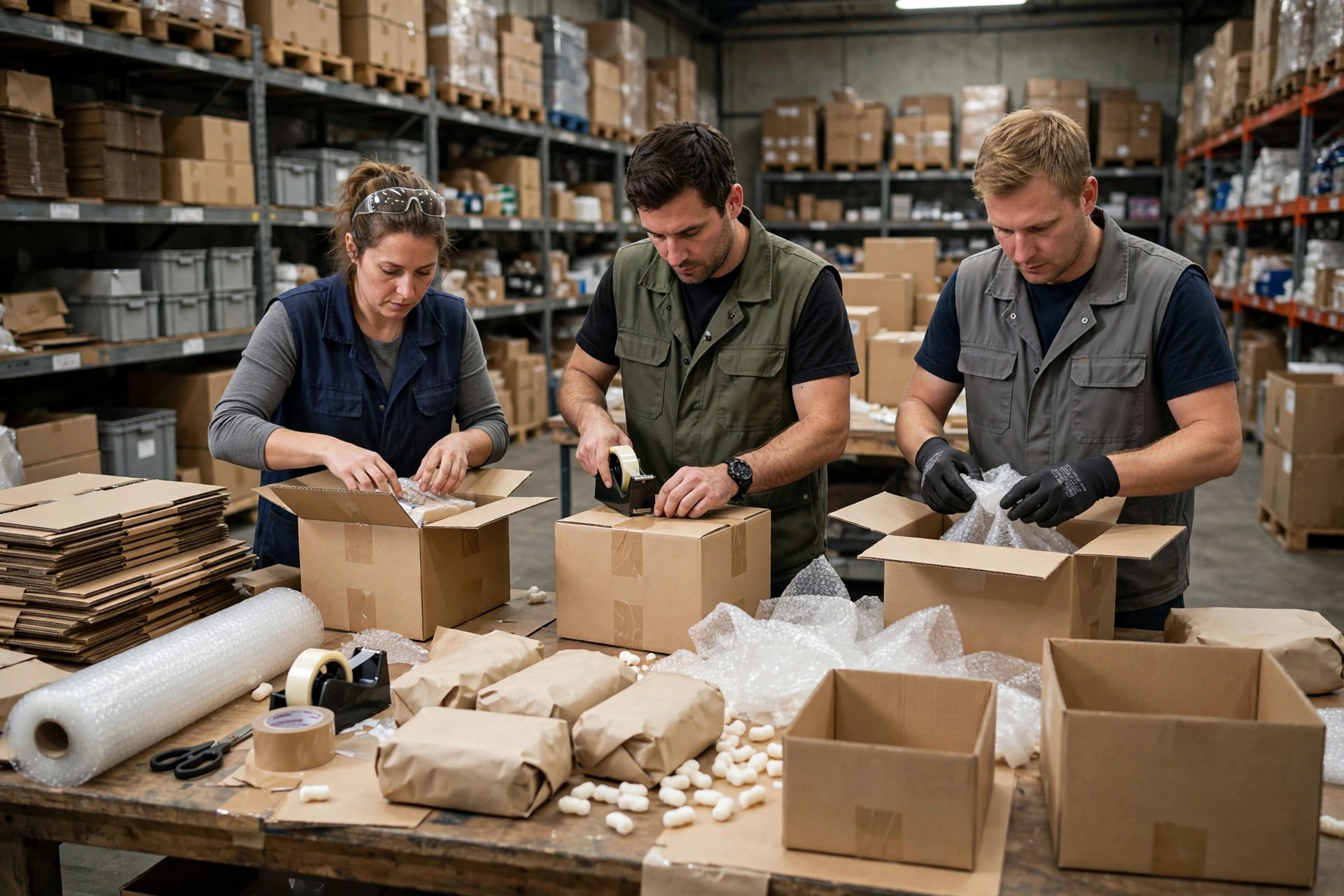
Last year I was delivering to a 3PL in Los Angeles. The dock was not stacked with full pallets — it was lined with small tables, a dozen workers swapping boxes, sticking labels, tucking free gifts into cartons. I asked the warehouse manager, Lao Wang, "What are you guys doing?" He grinned: "VAS. Value-added services. It makes more money than storage fees."
I started doing the math in my head: swapping a box, sticking a label — how much can that possibly make? Lao Wang broke it down for me, and I slapped my thigh — that money is earned almost too "conveniently."
What Repacking Actually Covers: Three Jobs
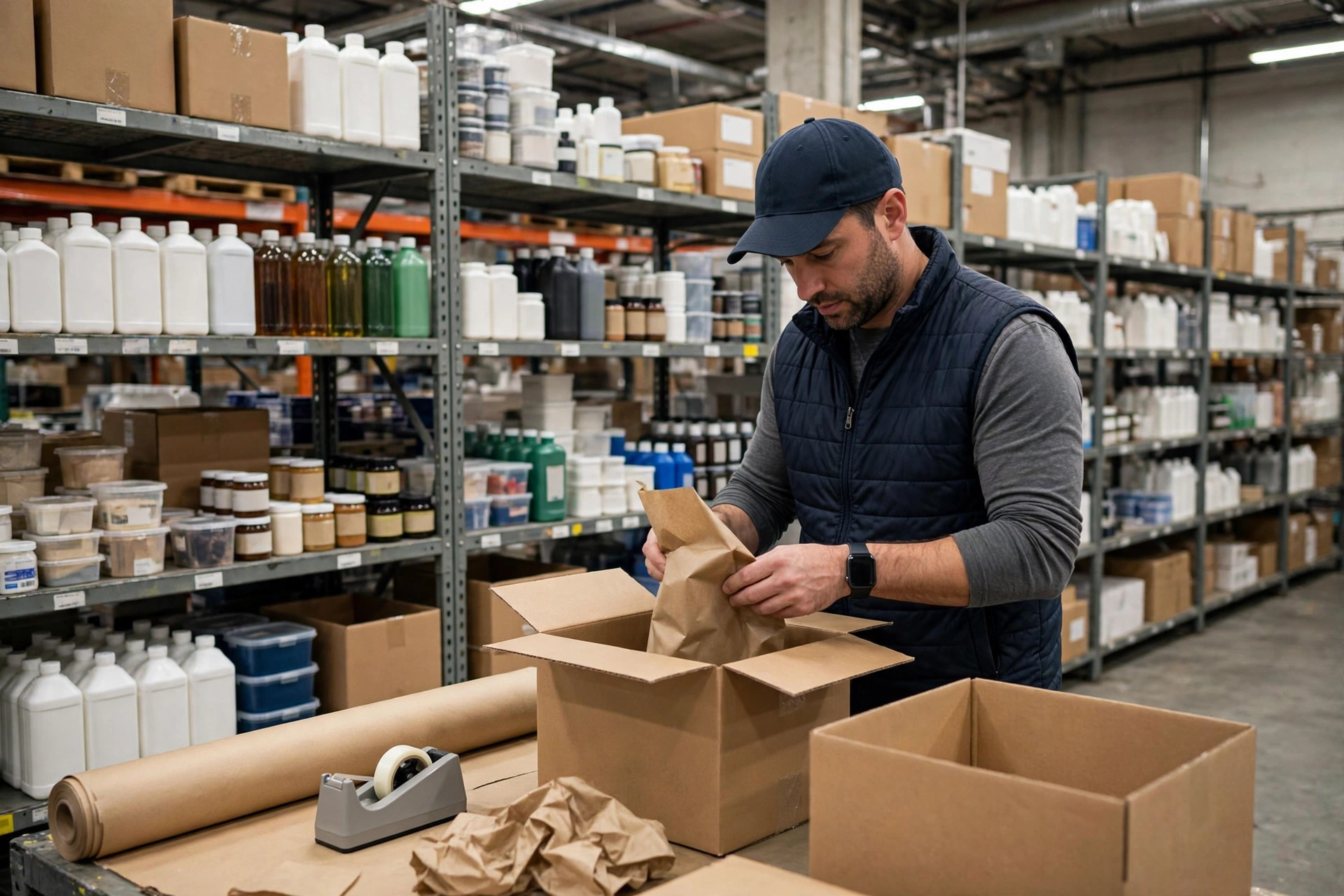
First, re-boxing. Cross-border shipments arrive with cartons torn, dirty, or marked with Chinese shipping marks that Amazon will not accept. Unpack, re-box, charge $1.50 to $2.50 per unit. Sounds small — but 2,000 cartons a day?
Second, labeling. FNSKU labels, country-of-origin marks, warning stickers, one by one. $0.30 to $0.50 a unit. Do not scoff at thirty cents — labeling cannot be automated (at least not at small-warehouse volumes). It is all hands.
Third, kitting and gift inserts. Beauty and 3C sellers do this most: buy-one-get-one bundles, gift sets, instruction manuals folded in. $2 to $4 per kit. In the month before peak season, that 3PL kitted 80,000 sets.

The Math: How VAS Margins Work
I got Lao Wang to open the books. Here are his real numbers:
| Job | Charge/unit | Labor cost/unit | Gross margin |
|---|---|---|---|
| Re-boxing | $2.00 | $0.60 (1 min/box) | $1.40 |
| Labeling | $0.40 | $0.10 | $0.30 |
| Kitting | $3.00 | $1.00 | $2.00 |
The margins look fat, but do not forget: floor space, packaging materials, supervision — after everything, net margin lands around 30%. Still, compare that to storage fees, where 15% net is a good year. VAS at 30% is double.
The real play, though: VAS work glues the client to you. Once a client does repacking with you, will they switch 3PLs? New warehouse means redoing all the packaging specs and gift-insert workflows. As Lao Wang put it: "VAS is not about the money. It is about the leash." Honest words.
Staffing for Peak: The Labor Trick Behind VAS
Repacking lives and dies on scheduling. A normal day is 500 units; before Black Friday it spikes to 5,000 — a 10x swing no full-time crew can cover.
Lao Wang's approach: keep 4 skilled hands year-round, start hiring temps two months before peak, one veteran mentoring two rookies. Temps only do the simplest job — labeling. Re-boxing and kitting stay with the veterans, because a crooked label can be peeled and redone, but a kit missing a gift means paying claims.
One more detail: keep the VAS stations physically separate from picking. Mix them and the moment peak hits, pickers get pulled into labeling and order cutoffs collapse. Lao Wang walled off a dedicated VAS zone — 20 tables go up for peak season, and in the slow months the space doubles as staging. One area, two uses, no wasted floor.
The Counterintuitive Part: You Are Not Selling Labor, You Are Selling Convenience
Most people think repacking is manual-labor money. Wrong. Let me tell you — it sells one thing: convenience.
The goods are already in your building. Unpack, re-box, put away — it is all right there. If you rented a separate facility and hired a dedicated crew just for repacking, costs would double. But inside the warehouse, workers do it in idle hours and go back to picking when it gets busy. Labor flexes. Call it the convenience economy.
Second counterintuitive lesson: the danger in VAS is not doing it badly — it is taking work you cannot do. One warehouse took a "gold-foil gift box" job with no equipment for it, outsourced it, the quality flopped, and they paid the client $20,000. Remember: only take work your current equipment and people can handle. The moment you buy equipment for VAS, it stops being "convenient" and starts being "reaching."
Three Checks Before You Start VAS
- Do you have idle hours? VAS is all peaks and valleys — slammed before peak season, dead in the slow months. No flexible labor (temps/part-timers), do not touch it.
- Who pays for packaging materials, and how? Cartons, labels, gift inserts — agree upfront: billed separately or baked into the unit price. Leave this vague and month-end reconciliation will end in a shouting match.
- Write quality standards into the contract. Crooked label — whose fault? Kit missing a gift — what is the penalty? Ugly words up front save table-pounding later.
There is an old saying: live off the mountain if you are near one; live off the warehouse if you run one. The goods are in your hands — one extra process, one extra cut of money. The repacking game works for 3PLs and for shippers running their own warehouses alike. It all comes down to how conveniently it fits your operation.
By Shifu Zhao, Trucking Veteran (15 yrs)
The Packaging Materials Question: Who Pays Is Where the Tricks Hide
The biggest fights in repacking are always about packaging materials. Who buys the cartons? Who buys the labels? Who supplies the gift inserts?
Three models. One: the client supplies everything — materials ship to your warehouse, you supply only labor. Easiest on you, but client-supplied materials constantly run short and delay jobs. Two: you procure and bill at cost — you buy, invoice the client with receipts. Most transparent, but it ties up your cash flow. Three: all-inclusive unit price — you quote one price and handle materials yourself. Highest margin, highest risk — a spike in material costs eats your profit.
Lao Wang uses model two, procurement at cost plus a 10% sourcing fee. His logic: "I make zero on the materials themselves, but I charge for the legwork." Fair enough — sourcing means quoting, comparing, chasing deliveries. Ten percent is honest money.
One more trap: material waste. Five percent of cartons arriving crushed in transit is normal. Who eats that 5%? Write it into the contract upfront: normal waste within 3% is the client's, beyond 3% is yours. Leave it vague and month-end reconciliation turns into an afternoon of arguing.