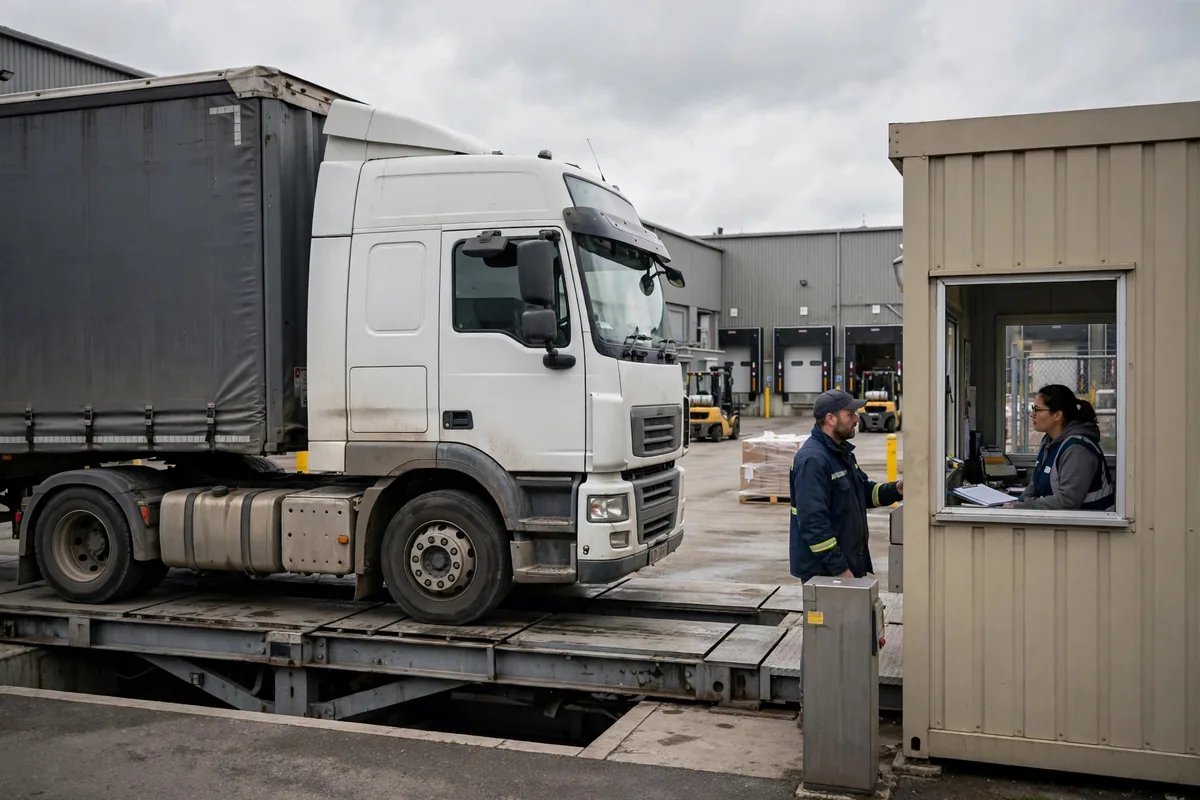
Let me tell you something about warehouse truck scale weighbridge accuracy that I have learned the hard way, over fifteen years behind the wheel: the fastest way to start an argument at a warehouse gate is not a late truck. It is a weight ticket that does not match. One September morning in 2023, I pulled a load of household goods into a warehouse outside Langfang, in Hebei. My empty weight on the way in was 14,320 kilograms. On the way out, loaded, the shipper did the math and said the cargo came up 210 kilograms short. The warehouse said the scale was fine. The shipper said the freight could not have shrunk. And there I sat in the middle, engine running, afraid to turn the truck off, because somebody was about to blame somebody and I was the easiest target.
It turned out nobody had stolen anything and the scale was not lying. The problem was me, and my truck, and the ordinary stuff nobody writes down. I had filled the fuel tank at a service area just before weighing in, and burned through more than half of it by the time I weighed out. I had stepped out for a cigarette, and the young helper riding with me had not climbed back in. Between the fuel, the missing person, and a layer of broken pallet wood and rainwater I had never swept out of the trailer, the 210 kilograms assembled themselves, piece by piece. That day taught me the first rule of warehouse truck scale weighbridge accuracy: the scale weighs everything on it, including the things you forgot were there.
Where Weighbridge Accuracy Goes Wrong
Here is the uncomfortable truth: nine times out of ten, a weight difference has nothing to do with the scale. It has to do with the truck and the people around it. Tare weight is the biggest trap. Whatever is on the truck when you weigh empty has to be on the truck when you weigh loaded, or the difference lands on the cargo. A water tank is the classic oversight, worth tens of kilograms on its own. A fuel tank is worse: full versus half can easily swing the number by more than a hundred kilograms. I once watched a driver weigh in on a nearly empty tank, fill up on the way out, and come back showing 180 kilograms of cargo that did not exist. The warehouse nearly impounded his truck over freight he had never loaded.
People are weight, too. The driver, a helper, anyone who steps on or off between the two weighings changes the number. So does the weather. Rain collects on a tarp, snow sits on a trailer roof, mud and ice cling to the wheels, and all of it is on the scale until it melts or falls off. Spare tires, toolboxes, dunnage, straps, and pallets left over from the last load all count, even though nobody thinks of them as cargo. And sometimes the cargo itself changes: cartons soak up moisture, bulk goods spill a little, liquids evaporate. Leave a load sitting overnight between two weighings and the numbers will drift on their own.
So when a gap shows up, do not start by accusing the scale or the other side. Start by walking around the truck and asking what changed since the first weighing. Most of the time, the answer is standing right there.
A Weighbridge Reconciliation Routine Both Sides Can Use
In April 2024, a warehouse foreman in Jinan, Shandong, showed me how this should be handled. A shipper claimed 160 kilograms short on my load, and instead of arguing, the foreman pulled out a reconciliation sheet and walked me through it, item by item: fuel gauge at tare versus fuel gauge at gross, water tank full or not, how many people were on the truck each time, and whether the loading record showed any spillage or returns. Within ten minutes the picture was clear. My helper had caught a cab home early, so one person was missing, and the fuel tank was a quarter lower. That explained nearly the whole gap. I have carried that habit with me ever since: before weighing tare, I photograph the fuel gauge, the water tank, the people on board, and the trailer floor, and I do the same on the way out.
Here is the routine I recommend to shippers and warehouses, kept deliberately simple:
| Check | Record at tare weight | Compare at gross weight |
|---|---|---|
| Fuel tank | Gauge reading, whether you just filled up | Gauge reading now |
| Water tank and gear | Tank full or empty, spare tire and tools present | Same items still present |
| People | How many aboard | Whether the count changed |
| Truck and weather | Tarp wet or dry, mud or ice on wheels | Whether conditions changed |
| Cargo condition | Spillage, damage, returns noted | Any new damage or returns |
What about the threshold, the number beyond which a gap stops being normal? I am not going to invent a universal figure here, because a fair tolerance depends on the cargo, the truck, and the scale, and pretending otherwise is how bad contracts get written. What I do recommend is writing one clear rule into the contract before the first load: gaps inside the agreed range settle on the shipping document, and gaps beyond it trigger a re-weigh first, then the checklist above, and only then a conversation about who pays. Re-weighing has its own discipline: park straight on the same scale, engine off, brake set, everybody out of the cab, and take a fresh tare weight. Never argue from a stale tare figure. And the scale itself must be calibrated on schedule, with records kept, following the local weights-and-measures rules in force. That part is not negotiable.
One more habit, and it has saved me more than once: sweep the trailer before weighing tare. Old pallet fragments, leftover straps, and packing from the last job are dead weight that you will pay for in an argument later. In June 2024, a fellow driver in Tianjin was accused of losing 90 kilograms, and he settled it on the spot by showing the fuel-gauge photo he had taken at tare. Evidence beats a loud voice, every time, in this business.
Stopping Cheating Without Starting a Fight
Now the part nobody likes to talk about: yes, some weight gaps are deliberate. The tricks are usually crude. A driver weighs tare with extra weight on the truck and unloads it before weighing gross, so the cargo looks heavier than it is. Or the reverse: weigh tare light, carry something extra out, and the cargo looks light. Water tanks get played the same way, drained at tare and filled at gross, a few dozen kilograms conjured out of nothing. Arguing about these cases gets nowhere. Rules stop them.
In the winter of 2022, a warehouse in Hebei noticed three loads in a row each coming up fifty or sixty kilograms short. The foreman went through the scale-house video frame by frame and found the pattern: one truck weighed tare with an empty water tank and weighed gross with the tank full, plus an extra jerrycan in the cab. It was a small fraud, but it taught that warehouse a lasting lesson, and its weight tickets now carry a water-tank field, reported at tare and again at gross. After that change, the pattern never came back.
The rules that work cost almost nothing. First, use the same scale and the same position for tare and gross, with the truck parked straight. Second, everybody steps out of the cab for both weighings, and the camera covers the scale deck and the trailer, not just the cab. Third, print and sign both tickets on the spot; tickets written up later do not count. Fourth, write fuel and water status on the ticket itself, not just two numbers. Fifth, follow the order: re-weigh, then checklist, then responsibility, and never reverse it. Reversed, the whole thing becomes a shouting match.
Here is the counterintuitive point I want to leave with shippers and warehouse managers alike: a scale that never shows a gap is more suspicious than one that shows a small one. Fuel, water, people, and weather are always changing, so honest operations produce small, explainable differences. A perfectly clean record, load after load, either means superb discipline or numbers that have been tidied up. Do not fear the gap. Fear the operation with no records, no photos, and no routine, because that is where a gap turns into a fight. Put the checklist into the daily routine, and a weight difference stops being an accusation and becomes what it should be: an account you can settle.
There is an old saying among drivers: clear accounts make for long friendships. Get the scale tickets right, and the rest of the relationship gets a lot easier.
By Shifu Zhao, Trucking Veteran (15 yrs)