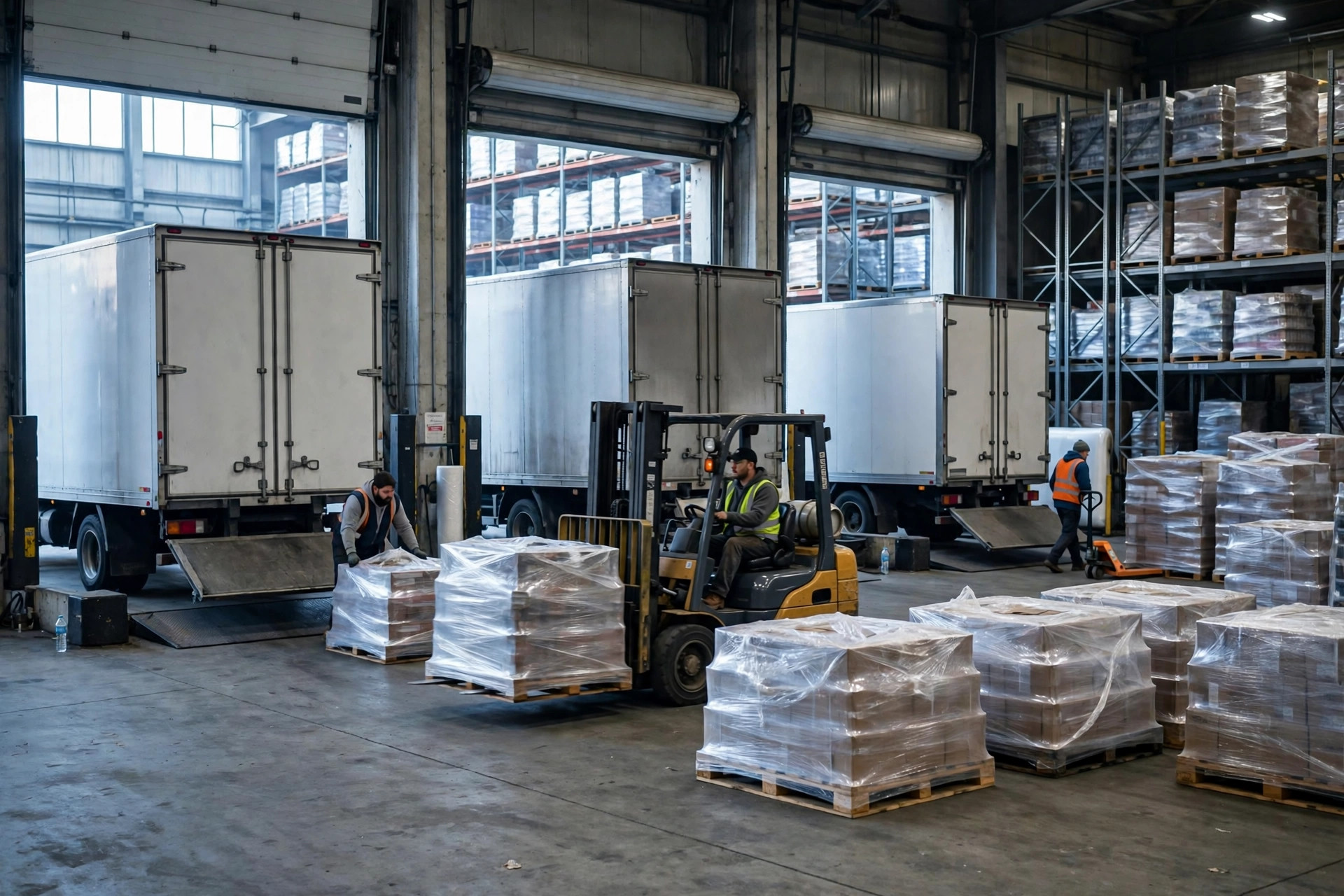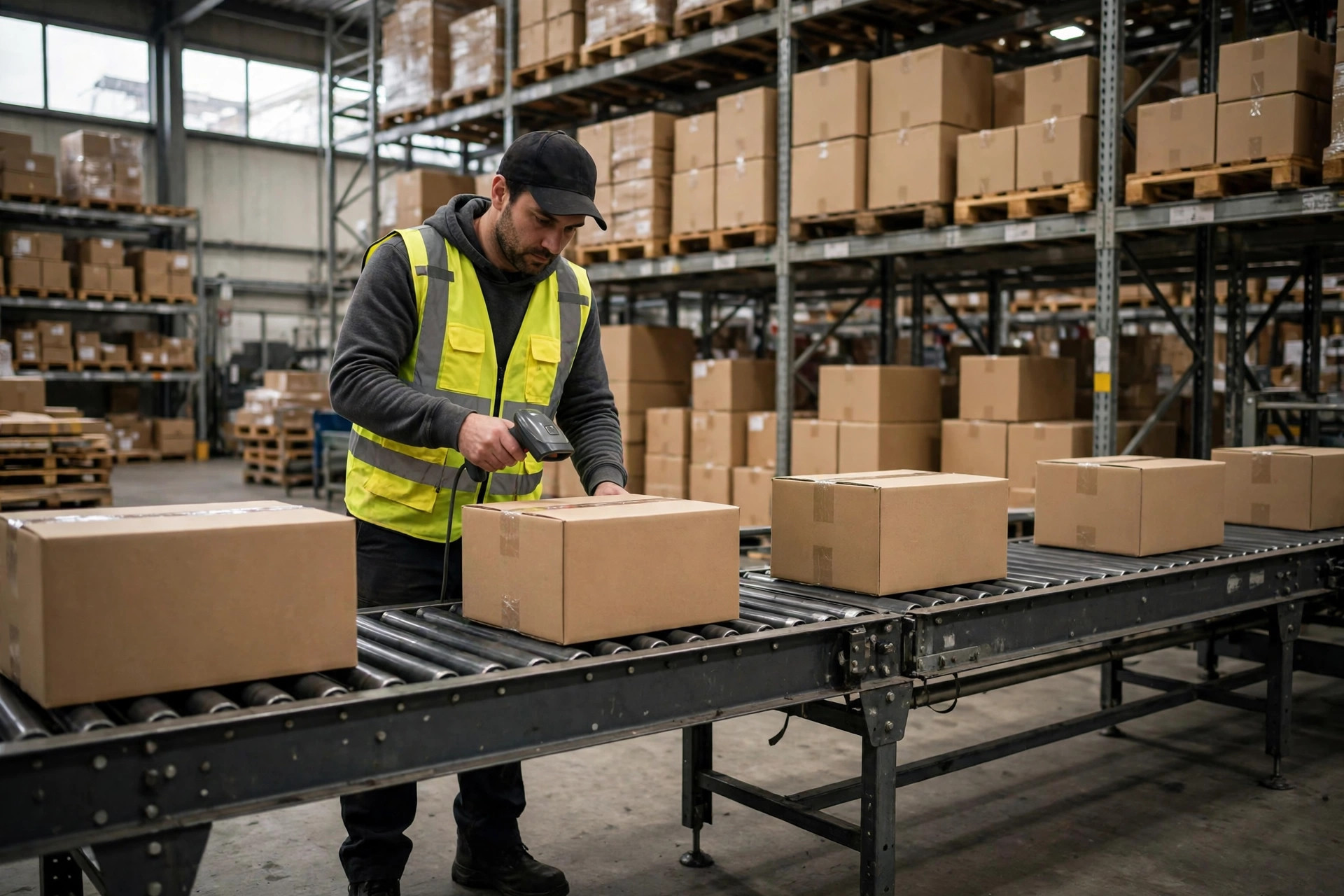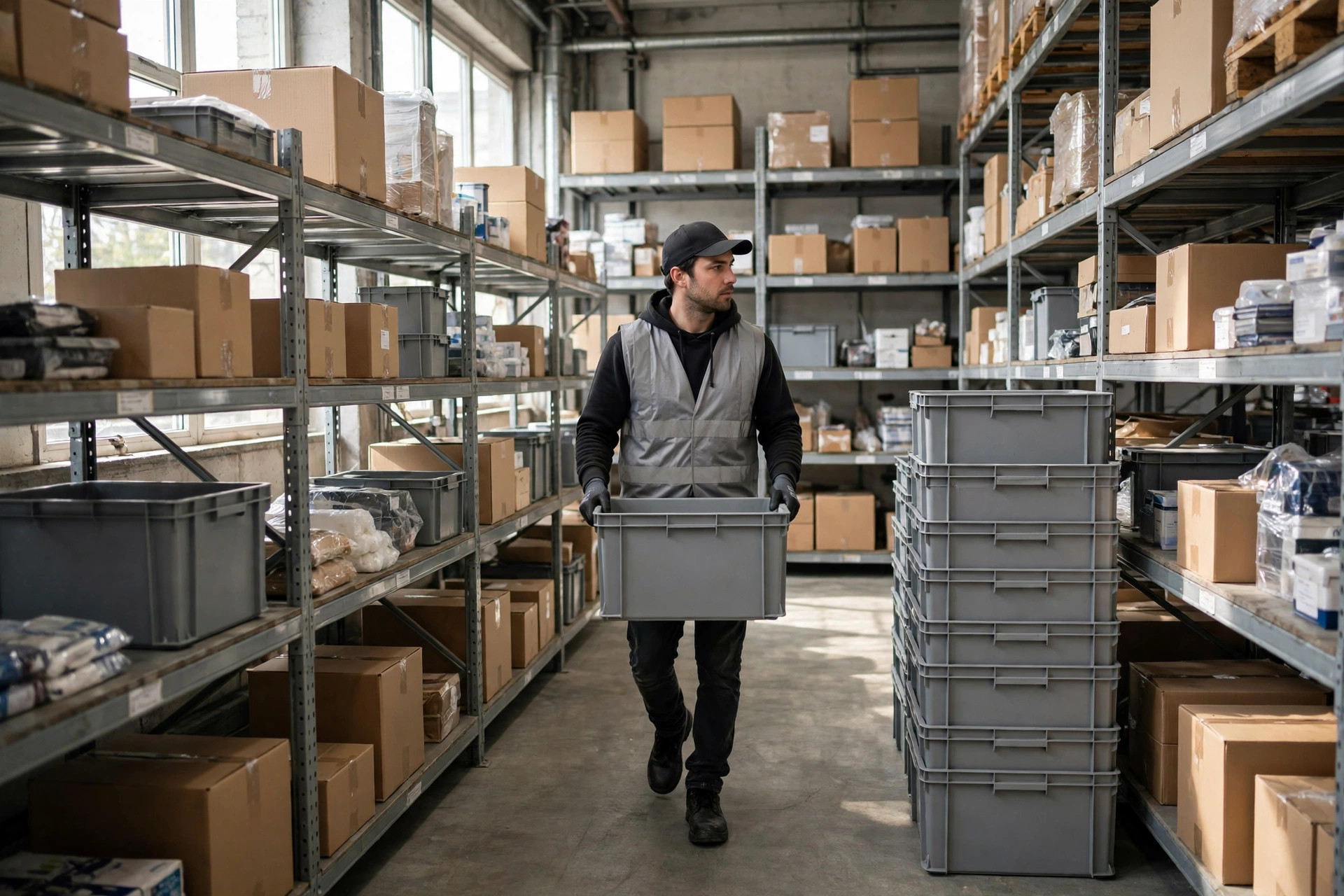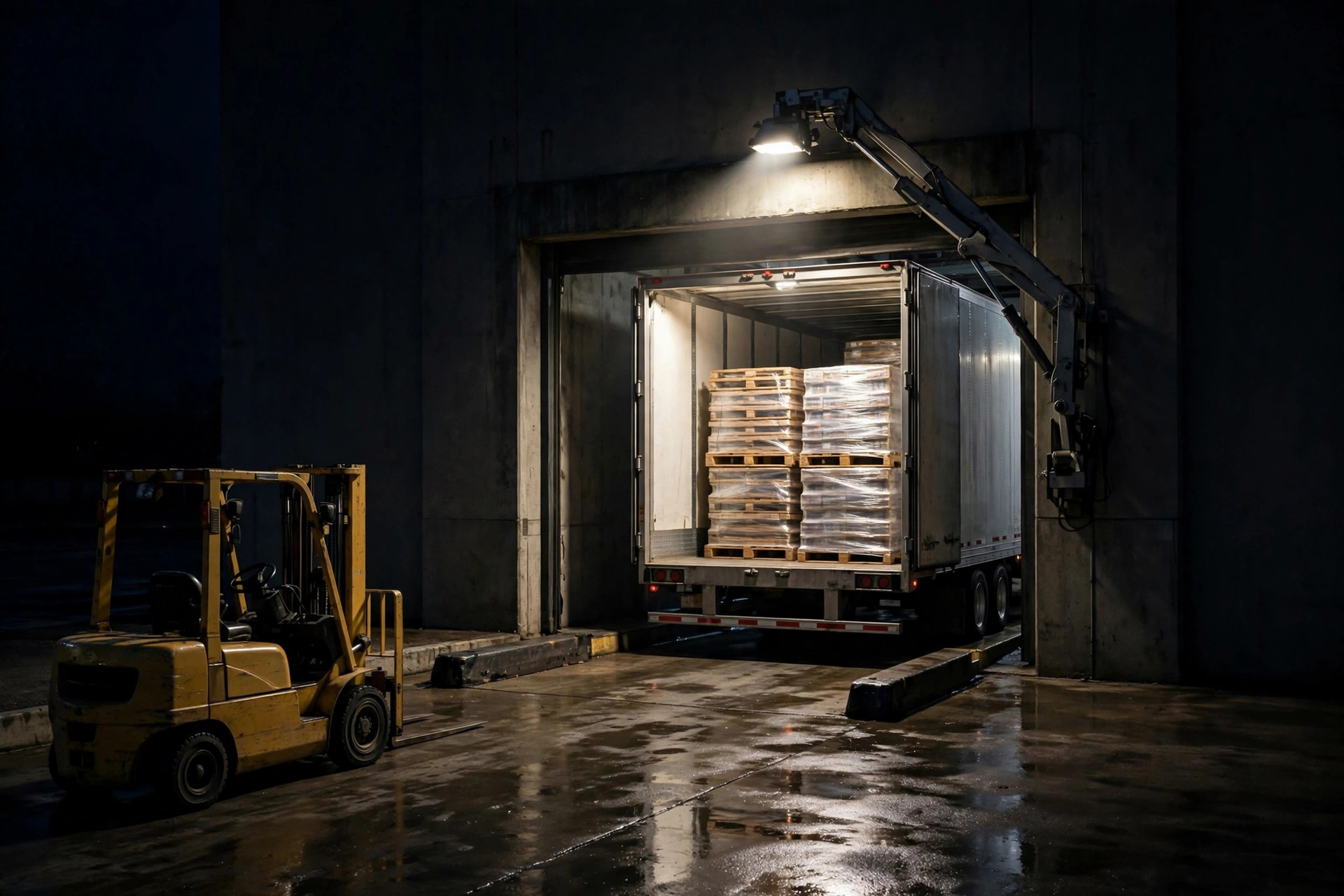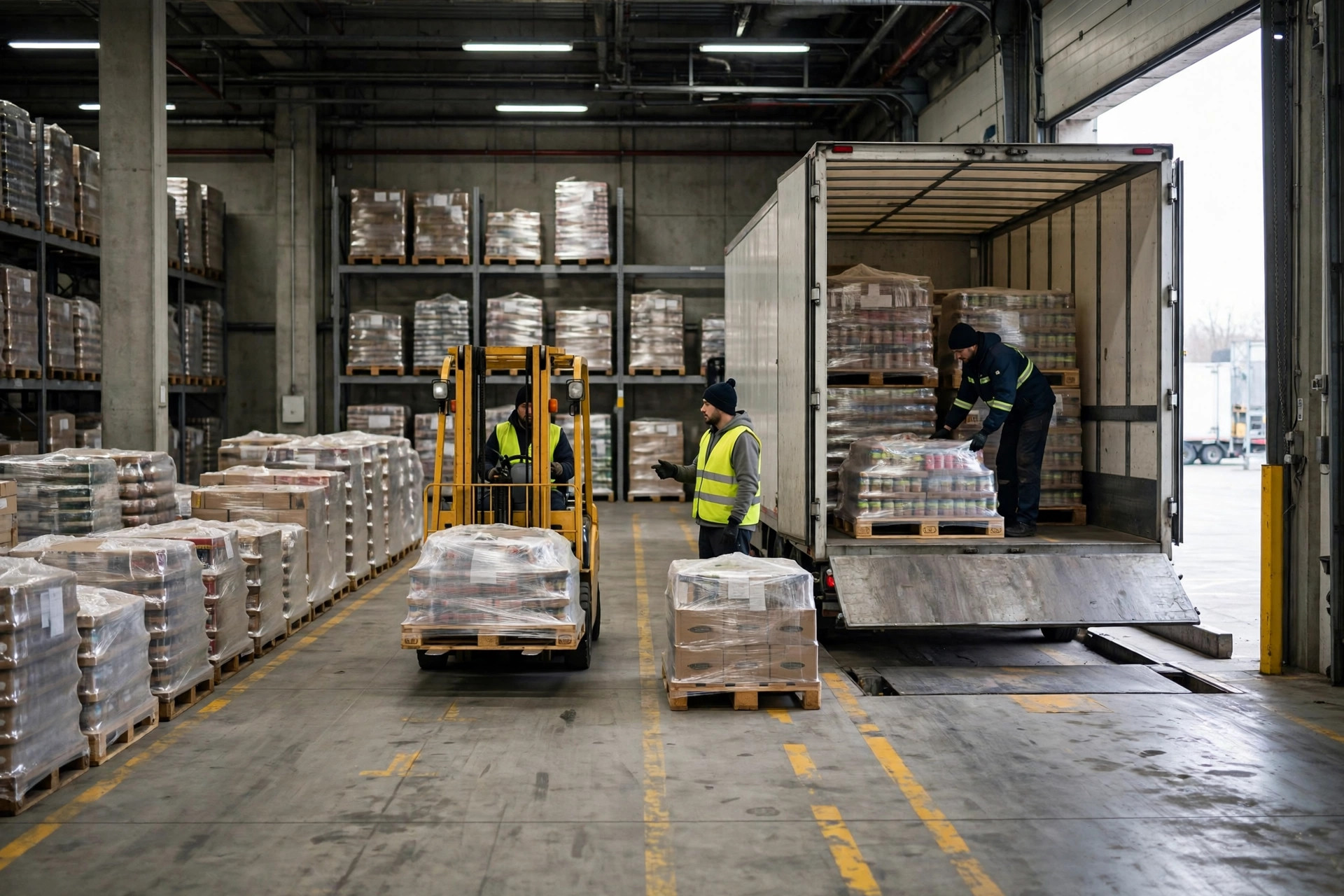
Let me tell you something about warehouse trailer load securing. After all these years on the road, the moment that still makes my back go cold was not a midnight run in bad weather. It was a delivery, in broad daylight, at a warehouse dock in California's Inland Empire one autumn a few years back. The warehouse crew opened my trailer doors and waved me to stop. The pallet of drinks nearest the door was leaning hard to one side, the corner cartons crushed, and the straps still sitting tight around it. Nobody had skipped the straps. The straps were tight enough. The load had still moved. That day taught me a lesson I have carried ever since: warehouse trailer load securing is not just about tying things down tight. The real work starts after the strap clicks.
That load was not especially heavy, just a dozen or so pallets, drinks on the bottom and paper towels on top. It looked sensible. What went wrong was a hard brake followed by a curve, and the freight did not surge forward so much as sway sideways. The straps held it up and down and front to back, but nothing was braced against the side wall, and nothing under the pallet feet was stopping a slide. So the pallet crept, a little at a time, until it was leaning. Two of us spent more than half an hour easing that pallet down safely. Nothing fell, nobody got hurt, and we got lucky.
Warehouse Trailer Load Securing Starts With the Center of Gravity
Before I reach for a strap, I look at the freight. Tall freight is the troublemaker, because it sways. Heavy on the bottom and light on top is the old rule, and it still holds, but top and bottom are only half the story. Front and back matter too. Braking throws weight forward, so heavy freight belongs toward the middle and front of the trailer, not stacked right by the doors. The doors are where unloading starts, and they are also where a load is most likely to work loose. Putting your heaviest freight by the doors is putting your biggest risk where everyone can see it.
There is another check people skip: whether the pallet itself is square. A crooked pallet goes into the trailer crooked, and a strap pulled over a crooked load just locks the crookedness in. These days I walk around before loading and look for broken pallet boards and cartons hanging over the edge. Anything hanging over gets squared up on the dock. A strap cannot straighten a crooked load, no matter how hard you pull it.
I also have a rough, hands-on test for a high center of gravity. Push the top edge of the pallet with your hand. If it rocks easily, the center of gravity is too high, and you either bring the height down or rebuild the pallet lower. Eyes lie under dock lights. A push tells the truth. Mixed pallets deserve the same attention: never put heavy cartons on one side and light cartons on the other, or the pallet will lean into every turn.
Load Securing Tools: Straps, Bars, and Dunnage Each Do a Different Job
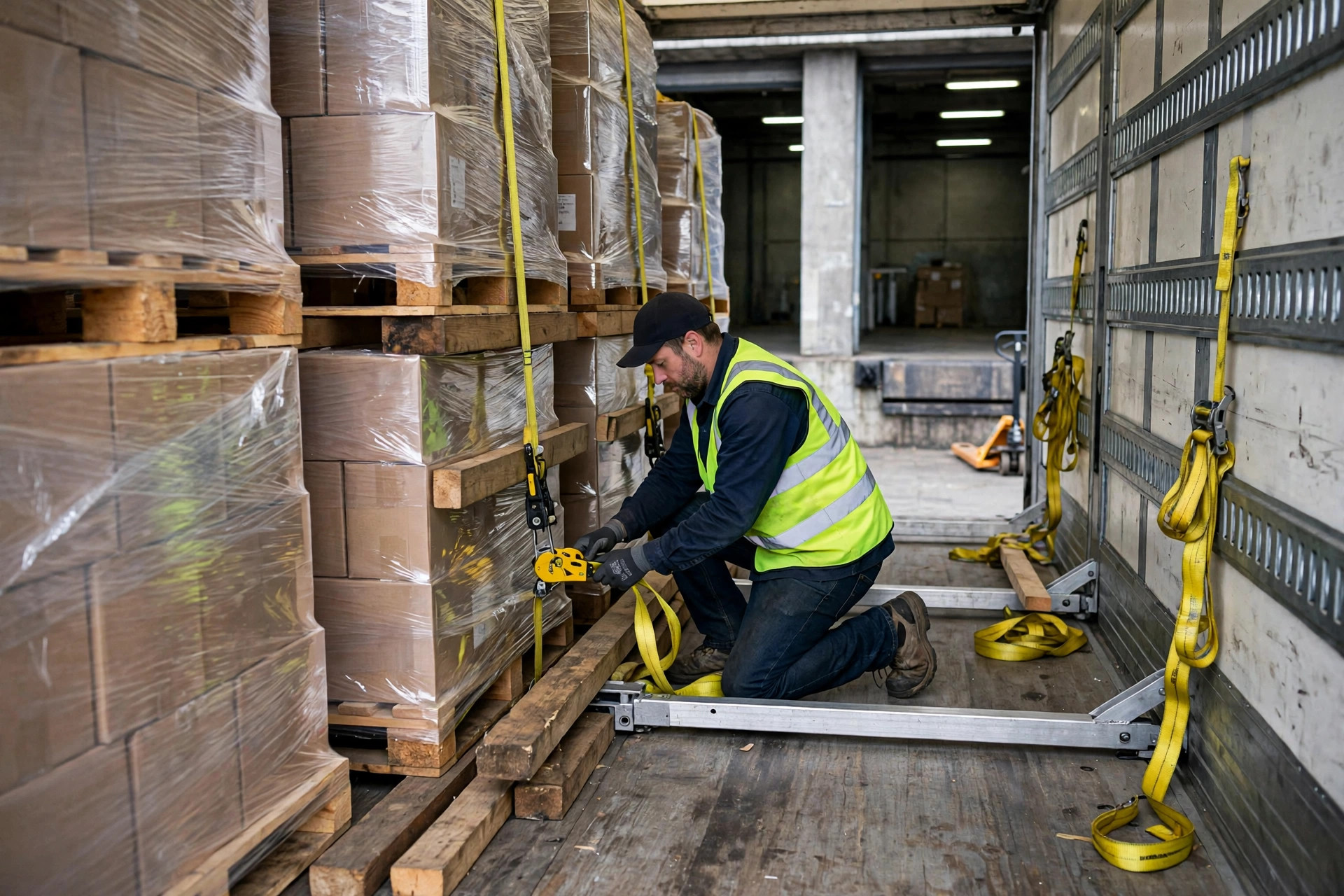
A lot of people treat a strap as the answer to everything. It is not. In warehouse trailer load securing, the strap, the cargo bar, and the dunnage each handle a different problem, and none of them can cover for another. Straps tie the freight, the pallet, and the trailer together so nothing jumps or comes apart. Bars and boards stop freight from sliding forward, backward, or sideways. Dunnage and anti-slip mats keep the feet of the load planted so it does not start sliding in the first place. Leave one of those jobs undone and the other two cannot make up for it, however well you do them.
Here is the math the way I do it on the dock. A trailer with twelve pallets, two straps per pallet, sounds like plenty, twenty-four straps in all. But if there is no bar on the side, a hard brake sends the freight forward at an angle, and the straps end up taking a sideways pull they were never meant to handle. Put the bar in place, put anti-slip material under the feet, and suddenly the straps only have to stop the load from bouncing up and coming apart. That is a much easier job. The shortcut is not using fewer tools. It is letting each tool do the job it is good at, instead of asking a strap to fight a force coming from the wrong direction.
| Tool | What it handles | Where it goes wrong |
|---|---|---|
| Straps | Holds the load together, stops bouncing and spreading | Only wrapped around the top layer, nothing holding the base |
| Cargo bars and boards | Braces front, back, and sides so freight cannot surge | Bar seated where it meets no real resistance, bracing thin air |
| Dunnage and anti-slip mats | Keeps the load planted and reduces sliding | Wrong size dunnage that tilts the load instead of leveling it |
When I am not sure what to reach for first, I run through three questions in order. Will it slide? If yes, deal with grip first. Will it surge? If yes, brace it. Will it come apart or bounce? Then strap it. Run that order backward and you get the most common dock mistake: everything strapped down tight, and the whole pallet sliding as one unit. The tools are all there, but the order is wrong, so the result is wrong. One more detail: never run a strap across the thinnest part of a carton. Put it where the pallet frame and the solid part of the load can carry the force. A strap across thin cardboard just cuts into the carton after a few hundred miles of vibration.
Tall, Light Freight and Heavy Freight Need Opposite Thinking
Here is the counterintuitive part. Light, tall freight can be harder to secure than heavy, low freight. Heavy freight mostly holds itself down. Its danger is surging forward under braking. Light, tall freight cannot hold itself down at all. Its danger is tipping sideways in a turn. So the fix is different. For heavy freight, brace the front hard and block the back. For tall, light freight, bring the center of gravity down, support both sides, and split the stack rather than building it high for convenience.
One winter on a state road in Oregon, a truck carrying empty plastic drums, stacked high but not heavy, reached a rest stop with its top layer already leaning. The driver rebuilt it one layer lower with side boards, and the rest of the trip was uneventful. Same freight, same truck; what changed was the thinking: make the load stable on its own first.
Mixed loads bring their own trade-off. When one trailer carries both heavy freight and tip-prone freight, do not put the tip-prone freight by the doors just because it unloads first, with the heavy freight buried at the back. Unloading order can be worked out with the dock crew. The physics inside the trailer cannot be negotiated. My habit is heavy freight centered and toward the front, tip-prone freight clamped between side boards, and any gap filled solid with dunnage. A gap looks harmless, but on the road it is running room. The bigger the gap, the harder the load hits the bar, and no bar enjoys being hit again and again.
Three Pieces of Plain Advice for Shippers and Warehouses
Put freight categories on the loading sheet in plain words: which items are heavy, which are tall, which cannot take weight on top, not just the carton count. Treat cargo bars and anti-slip mats as the cheapest part of the job, not an extra; one road incident costs far more in lost time and damaged freight. And treat the driver's walk-around as a real inspection: check the first pallet by the doors, check the bars are seated on something solid, and check no strap is cutting across a sharp carton edge, which can wear thin quietly over a few hundred miles.
After fifteen years, I have come to believe loading a trailer is a lot like driving itself: slow is fast. Ten extra minutes on the dock, squaring pallets, seating bars, and getting the grip right, buys a trip without that knot in your stomach. A strap can hold freight, but it cannot hold luck.
By Shifu Zhao, Trucking Veteran (15 yrs)