Here is my conclusion up front: warehouse outbound order verification scanning is the only check I trust before a truck leaves, and eyeballing a shipment is not a check at all. The system that works is unglamorous: scan every item, let the system compare it against the order, lock the carton the moment anything mismatches, and then run a second, independent check before sealing. Warehouses that skip this to save a minute per order pay for it later in returns, reships, and customers who quietly take their volume elsewhere.
I learned this the hard way in the autumn of 2023, in an e-commerce warehouse in eastern China shipping a couple of thousand orders a day. Their verification step was a visual glance: a checker looked at the picked goods against a paper pick list and sealed the box if it looked right. One order contained three items, and one of them was the same style in a different size, in near-identical packaging. Nobody could tell by looking. The customer returned it, and by the time we added the return freight, the re-pick, and the customer-service time, handling that single mistake had cost more staff time than carefully scanning a dozen orders would have. I have seen this exact pit three times, and the cause is always the same: it is not carelessness, it is asking human eyes to do a job they were never built for, telling near-identical variants apart at speed.
The second case still bothers me more, because nothing looked wrong on the day. In early 2024, an auto-parts warehouse I worked with stocked parts whose model codes differed by a single letter at the end. During a promotion peak, a picker grabbed the wrong carton and a checker waved it through on experience. The part reached a repair shop and did not fit, so a customer's car sat an extra day in a service bay. The customer did not shout. They simply split their next orders with another supplier. After that job, I made a rule I have not broken since: no scan, no seal.
Warehouse Outbound Order Verification Scanning, Done Properly
Warehouse outbound order verification scanning only counts when every step actually happens, in order, with no shortcuts. Here is the checklist I install on projects, written exactly as I train it:
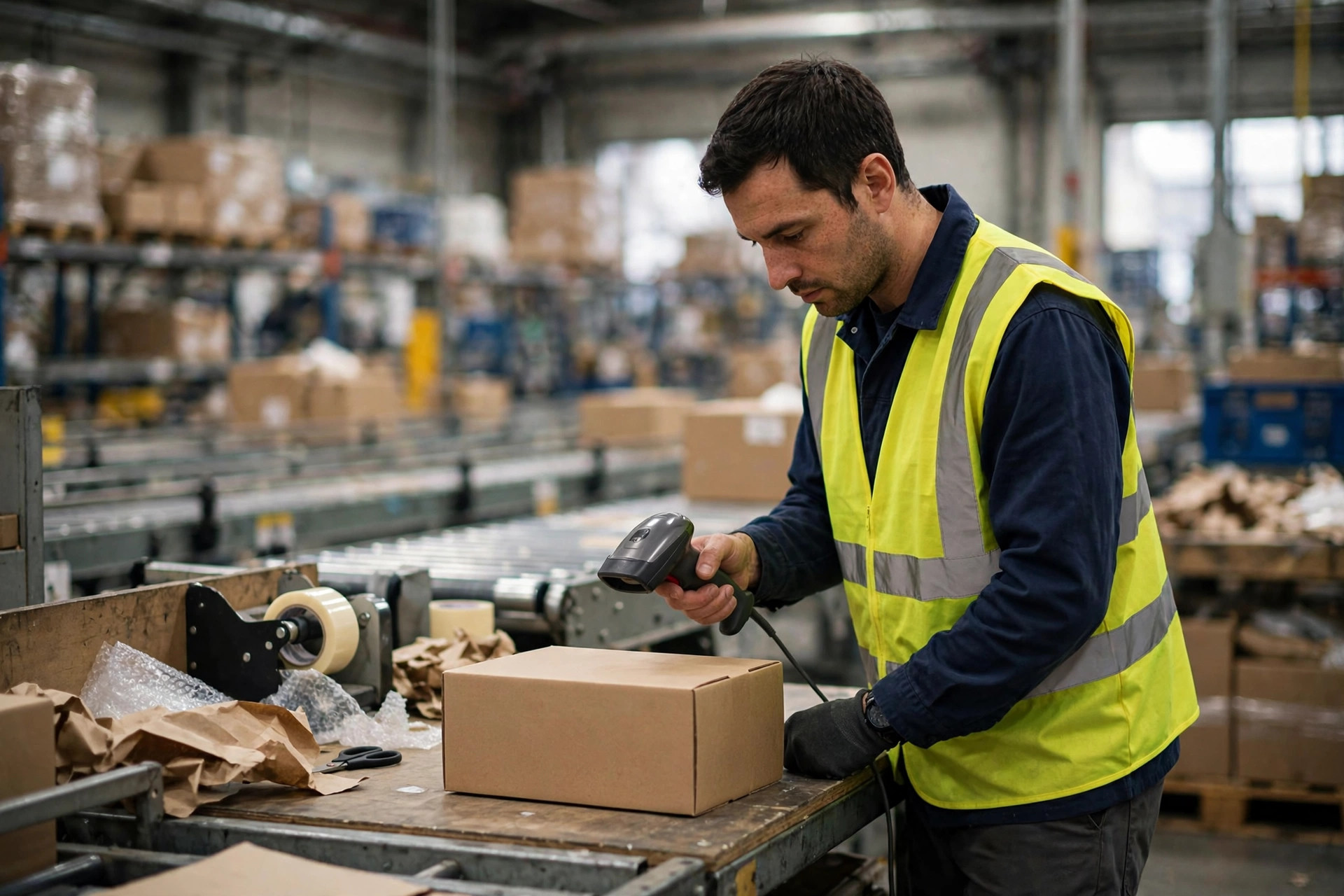
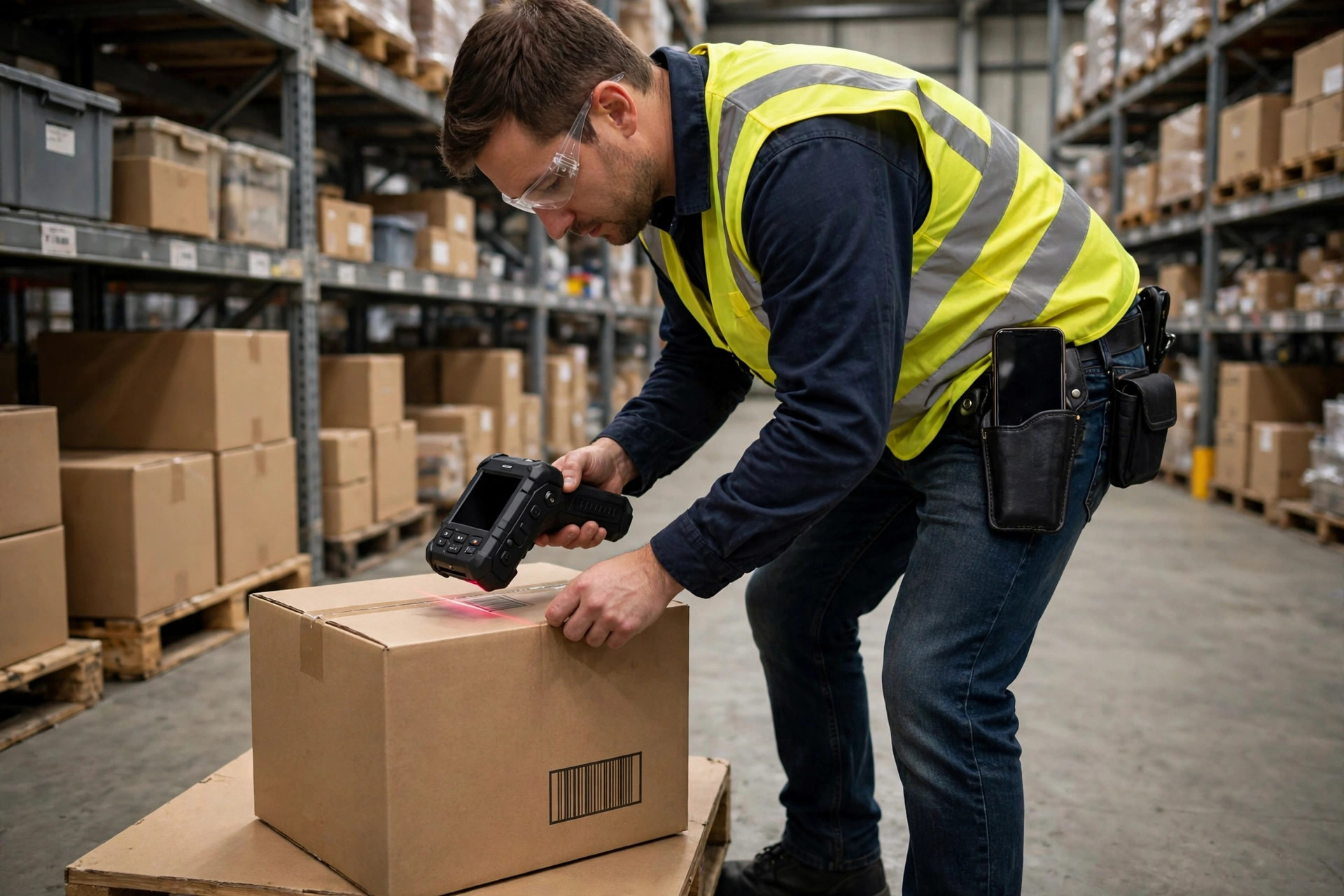
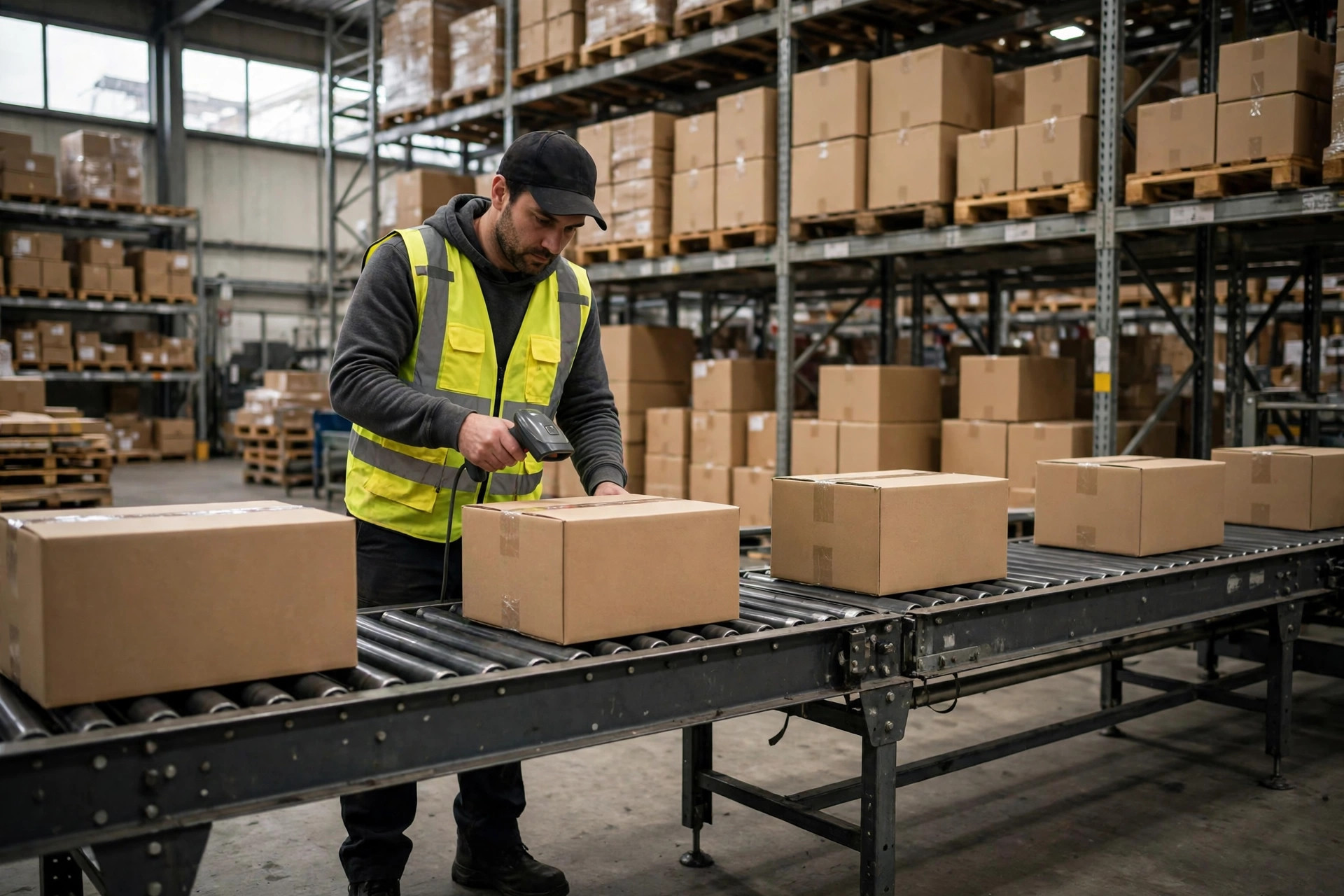
Scan each item individually at the verification station, not the carton and not the pick list. The system compares every scan against the order detail in real time, and a mismatch in item, variant, or quantity locks the order immediately. The screen must show what has been scanned and what remains, so the checker never counts from memory or flips back through paper. Any exception goes straight into a marked exception bin, never back onto the bench with a promise to deal with it later, because later is where errors escape. Only when the whole order scans clean does the system release the carton for labelling and sealing. Seal first and scan afterwards, and you have not verified anything.
The shortcut I watch for most is proxy scanning: someone scans one sample repeatedly to reach the required count. On the screen everything is green, while the carton holds the wrong goods. The defence is blunt and it works. If the same barcode is scanned twice for the same order, the system must raise an alarm. For high-value or easily confused categories, require a unique serial or unit code.
Warehouse Outbound Order Verification Scanning: What the Second Check Catches
Clients often ask why a second check is needed once everything has been scanned. The answer is that the two checks catch different mistakes. The first check catches the wrong item in the box. The second check catches mistakes that happen after the first check: a shipping label stuck on the wrong carton, two orders crossed on a conveyor, or someone dropping an extra free gift into a carton just before sealing. At the moment of the first check, the system was right. The error was created afterwards.
A second check does not need to be a full rescan of every order, which would choke a warehouse at peak and exhaust the checkers into making more mistakes. I use tiers instead. Ordinary orders get an independent spot check of the label against the first item in the carton. High-value orders, first orders from a new customer, and multi-item mixed orders get a full second verification. Crucially, the second checker cannot be the first checker, and cannot simply tick off the first result. They must scan the key items independently. Independence is the only valuable word in the phrase second check. The same person checking twice will only trust themselves more the second time.
The table below is the one I use when a client asks what this is worth. The figures are not an industry average; they are an illustrative record from one project's first month after go-live, included to show how the cost of an error changes depending on where it is caught, not to promise the same numbers in your warehouse.
| Caught at | Typical error | What happens | Cost scale |
|---|---|---|---|
| Scanning station | Wrong variant, size, or quantity | Swap the item and rescan on the spot | One verification pass |
| Second check | Wrong label, crossed orders | Reopen, re-verify, relabel | Under half an hour of rework |
| After delivery | Any of the above | Return, reship, service time, lost trust | Several times the in-warehouse rework, plus reputation damage |
Three Ways This Breaks in Real Warehouses
The first failure is unreliable barcodes. A worn code, a label covered by tape, or a supplier who changed code formats without telling anyone will leave the checker staring at a failed scan. That is exactly when people fall back on memory and wave goods through. My rule is strict: an unscannable item goes through the exception process, and any manual entry needs confirmation by a second person. Barcode quality is a receiving and supplier-management problem. Fix it upstream instead of asking the outbound station to improvise around it.
The second failure is a comparison that is too shallow. Some systems only compare the product name, so a scan passes even when the size, colour, or batch is wrong. Before go-live, test with the ten most confusable categories in that warehouse: same style in different sizes, same name in different batches, and old and new generations in near-identical packaging. If the system cannot stop all of them, the scanning step is decoration, not verification.
The third failure is measuring the wrong thing. If checkers are paid or ranked mainly on speed, they will find ways to skip steps, and the system will reward them for it. The first metric for a verification station should be the interception rate and the number of errors that escape to customers, with speed second. I would rather see a two-minute queue at the verification bench than a wrong carton on a truck. Once a truck has left, recovering the error always costs more than the queue did.
There is also a counter-intuitive judgment worth stating plainly: stricter is not always better. Applying full second verification to every single order will jam a warehouse at peak, and tired checkers will start missing things they would normally catch. The real trade-off is where to spend your strictness. Be strict on easily confused, high-value, and new-customer orders. For stable, low-value categories with a long clean history, scanning plus sampling is enough. Spend your effort where errors actually happen instead of spreading it evenly and thinly. That is the professional part of designing verification, and it is where most warehouses get it wrong.
If you want a starting sequence you can copy, here it is: first, write the comparison rules completely, covering variant and batch, not just product name, and run them for two weeks while recording what gets intercepted. Second, use that interception data to set your second-check tiers, rather than guessing them in a meeting. Third, write barcode quality, exception handling, and checker metrics into the operating manual, not just onto a poster on the wall. Building this check is not difficult. The difficult part is refusing to let anyone skip it during peak season. Hold that line, and wrong orders will struggle to leave your warehouse at all.
By Lin Xiao, WMS Implementation Consultant