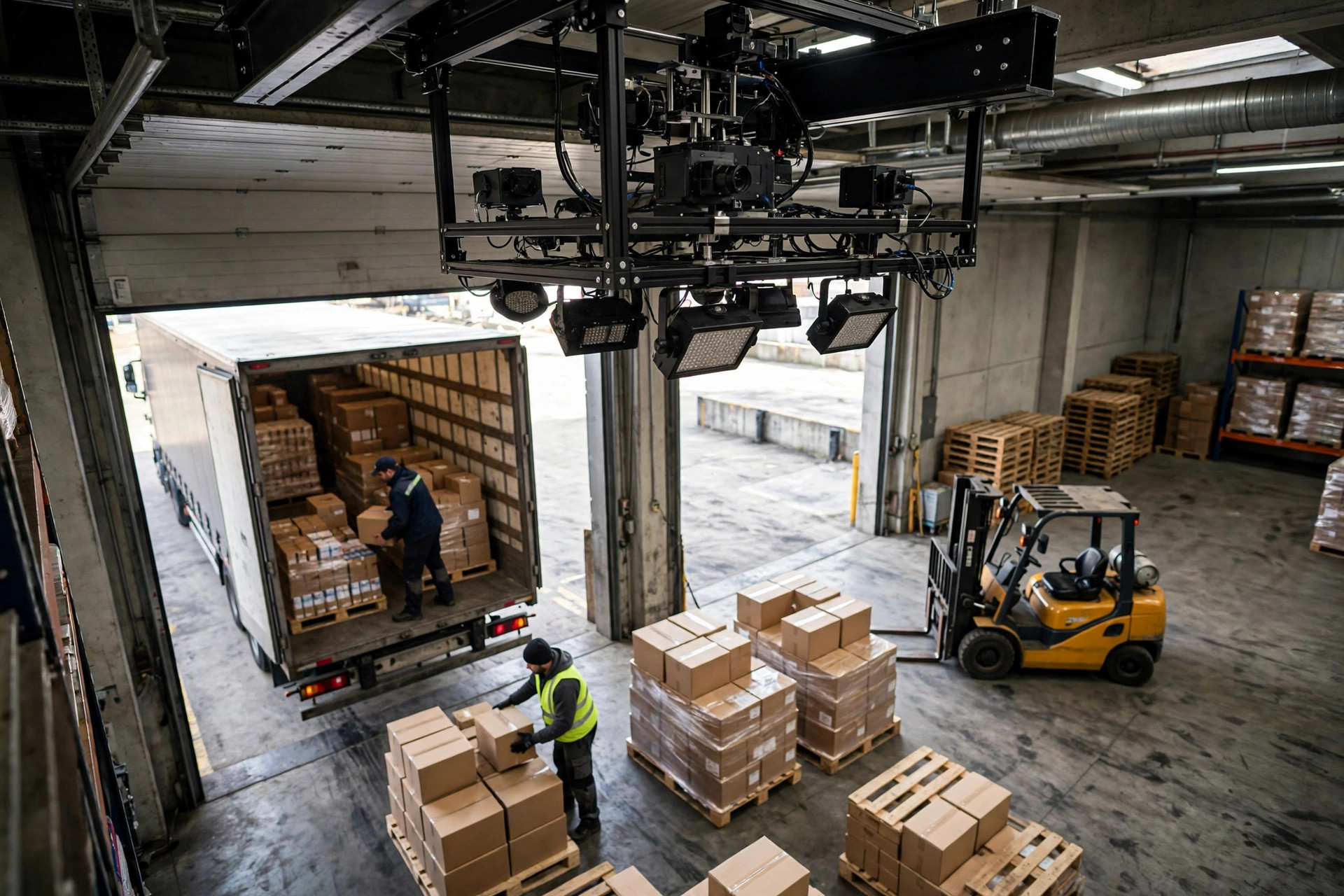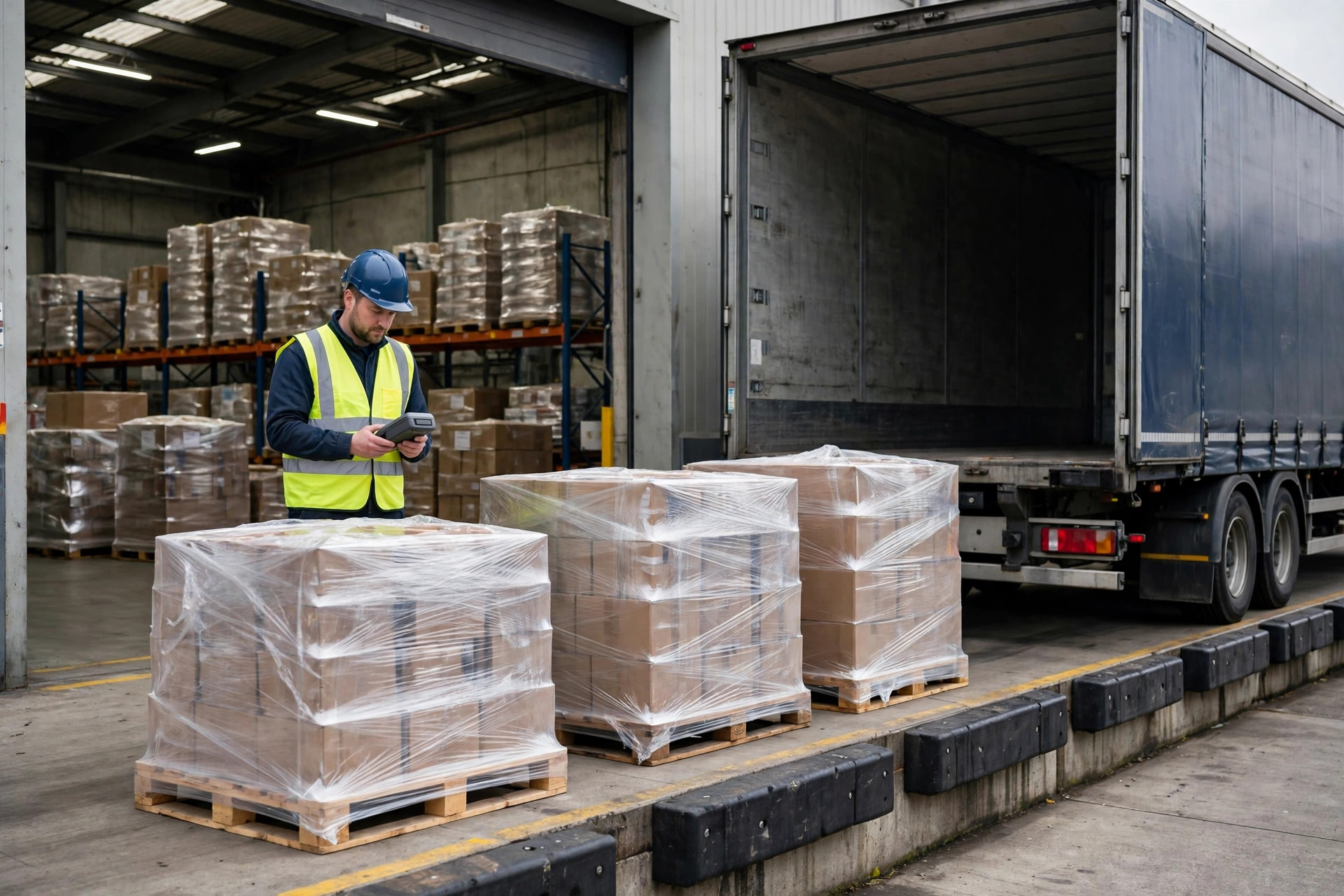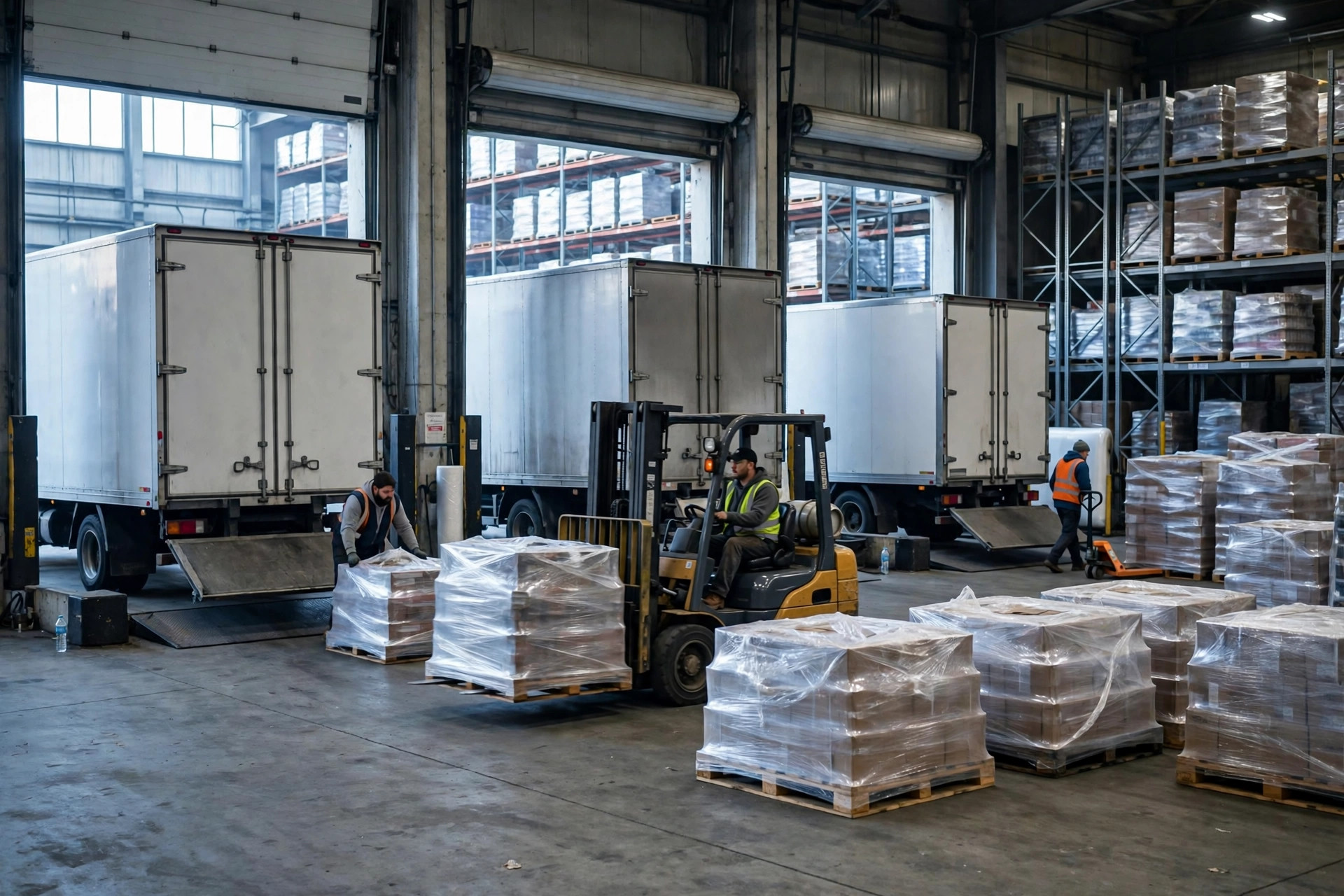
At 6:40 in the morning I walked into the warehouse and the receiving dock was already loud. Nine trucks were waiting outside, and inside there was barely a path left to walk through. A driver leaned out and asked me how much longer. I had no good answer. Because I knew the truth: this was warehouse receiving dock congestion, and it was our own doing, not the drivers arriving early.
It was the week before a peak replenishment push. Two loads had arrived overnight, the night shift was short-handed, and half-broken-down pallets were left sitting where they were dropped. The morning crew walked in to pallets with nowhere to go. The first truck was half unloaded when the second truck's freight started piling in behind it. Forklifts circled the stacks looking for an open spot, and finding one took longer than unloading. By ten o'clock four more trucks had joined the line outside. The longer the line got outside, the messier it got inside.
That is how a receiving bottleneck builds. It rarely explodes all at once. It accumulates. Two pallets left out of place today, one problem pallet left unresolved tomorrow, one driver waiting an extra half hour and driving off annoyed. Nobody calls any of that a big deal. Then one morning you look up and the dock looks like a parking lot. Trucks cannot get in, freight cannot get out, and pickers wait on stock sitting twenty feet away.
We used to make a mistake I still see everywhere. The moment a truck arrived, we tried to do everything at the door. Count it, check it, inspect it, photograph it, post it in the system. All of it, right there on the dock. One pallet with a problem stopped the whole door. I remember one load most clearly. A pallet arrived with a broken outer case and a count that did not match. Under the old rules the door could not move. The whole crew stood around that pallet flipping through paperwork, calling the supplier, waiting for a reply. That truck sat in the door for over three hours. The trucks behind it stacked up in the yard until the yard was jammed solid. We worked until eleven that night just to catch up on the day's work.
Let me be straight with you. After that day we changed how we work. The whole change fits in one sentence: clear the door first, reconcile later.
Warehouse Receiving Dock Congestion Starts at the Door, Not the Paperwork
Our rule now is two-stage receiving. When a truck arrives at the door, we only do three things: unload it, scan the pallet ID, and push it to an inspection area. Freight with a wrong count, a damaged case, or a questionable document never gets argued about at the door. The door's only job is "the freight is in." Whether it is right gets settled later.
The inspection area is a marked-off section not far from the dock, but not on the door's path. Freight lands there, and then the office staff check it at their own pace, take photos, and call the supplier. The door is free, the next truck rolls straight in, drivers stop burning hours in the yard, and nobody has to fight one problem pallet in the doorway.
I know how this sounds to some folks. It sounds sloppy, like we are just pushing the problem down the road. We are. To the right place. That is the whole point. A door's value is flow, not perfection. One problem pallet in a door costs you the five trucks behind it. Moving it to inspection costs one person half an hour. That is not a hard calculation.
And here is something I want my fellow managers to hear. When the dock is jammed, do not start by blaming drivers for arriving in a bunch, and do not start by blaming suppliers for shipping badly. Look at your own door first. Ask whether your own process is the thing blocking it.
Give Problem Freight a Quarantine Lane, Never a Door
Two-stage receiving only works if you also give problem freight its own lane. Inside the inspection area we keep a small section just for trouble: damaged goods, doubtful counts, freight waiting on a customer decision. All of it goes in that lane. At the entrance we post what the problem is, who is chasing it, and by when it needs an answer.
Before we had that lane, problem freight mixed in with good freight. A picker would see a pallet with no tag, not dare touch it, and go around it. Enough people going around, and the aisle got narrow. Narrow aisles mean bumped freight. The quarantine lane separates "not figured out yet" from "good to flow," and everybody knows to leave it alone until word comes.
One more detail, and this one matters. The quarantine lane gets cleared every week. Friday afternoon, I walk it myself. Anything sitting there over a week gets escalated to a supervisor for a decision. Without that rule the quarantine lane just becomes a second parking lot. Freight goes in easily and comes out hard. That is as true for the quarantine lane as it is for the dock.
We learned the same lesson again before last year's peak season. For three days straight, inbound volume roughly doubled. We had staggered appointments, the schedule looked beautiful, and trucks still jammed up. Why? Because the speed inside the door had not changed. Appointments only make the line look tidy. If unloading one truck still takes an hour and a half inside the door, a pretty appointment schedule buys you nothing. Once two-stage receiving went in, door time per truck dropped to around forty minutes, and only then did appointments start to actually help. Appointments are one tool. They are not the cure. If the work inside the door is slow, no schedule will save you.
Measuring Warehouse Receiving Dock Congestion With Door-Dwell
These days we watch one number every day: door-dwell. That is how long a truck occupies a door, from rolling in to the door being free again. That number is more honest than "how many pallets we received today." Pallet counts can be padded with overtime. Door-dwell cannot be faked.
Here is a rough comparison from our own warehouse at the time. These are not industry statistics, just what we saw on our floor, offered so you can think through the same trade-off:
| Approach | Door-dwell | What it costs | What actually happened |
|---|---|---|---|
| Open two more doors | Barely changed | Construction, extra labor, extra equipment | More doors, same slow process, jammed a little later |
| Add night-shift hands and push through | Better for that day | Overtime pay, night-shift morale drops fast | Works until peak ends, then people start quitting |
| Two-stage receiving plus a quarantine lane | From about ninety minutes to around forty | One marked-off inspection area, one process change | Doors started turning, appointments and schedules fell into place |
There is a counterintuitive judgment in that table, and I will say it plainly. Adding doors and adding people looks like the most direct fix, and it is usually the worst value. Doors and people are expensive. Process is cheap. Fix the process first. When the process cannot be squeezed any further, then talk about doors and people. Do it the other way around and you spend the money and keep the jam.
Door-dwell has another benefit. It gives you something solid to take upstairs. We used to say "the dock is jammed," and management would ask, jammed how badly? We had no answer. Now I can say average door-dwell is ninety minutes, the target is forty, and here are the trucks where we lost the time.
Anybody who works a warehouse floor knows the real fear in receiving is not a lot of freight. It is freight that does not move. Once freight stops moving, everybody starts waiting on everybody else: drivers on doors, forklifts on aisles, office staff on documents, pickers on stock. The rhythm of the whole building gets stuck in those few meters at the door.
So here is my reminder to peers. Go measure your door-dwell first. Then check whether some "waiting for an answer" pallet is sitting in a door right now. Then ask whether your beautiful appointment schedule is covering up slow work inside the door. Get those three things clear, and you will know where your receiving bottleneck lives. Clear the door, and the warehouse can move again.
By Chen Feng, Warehouse Operations Manager