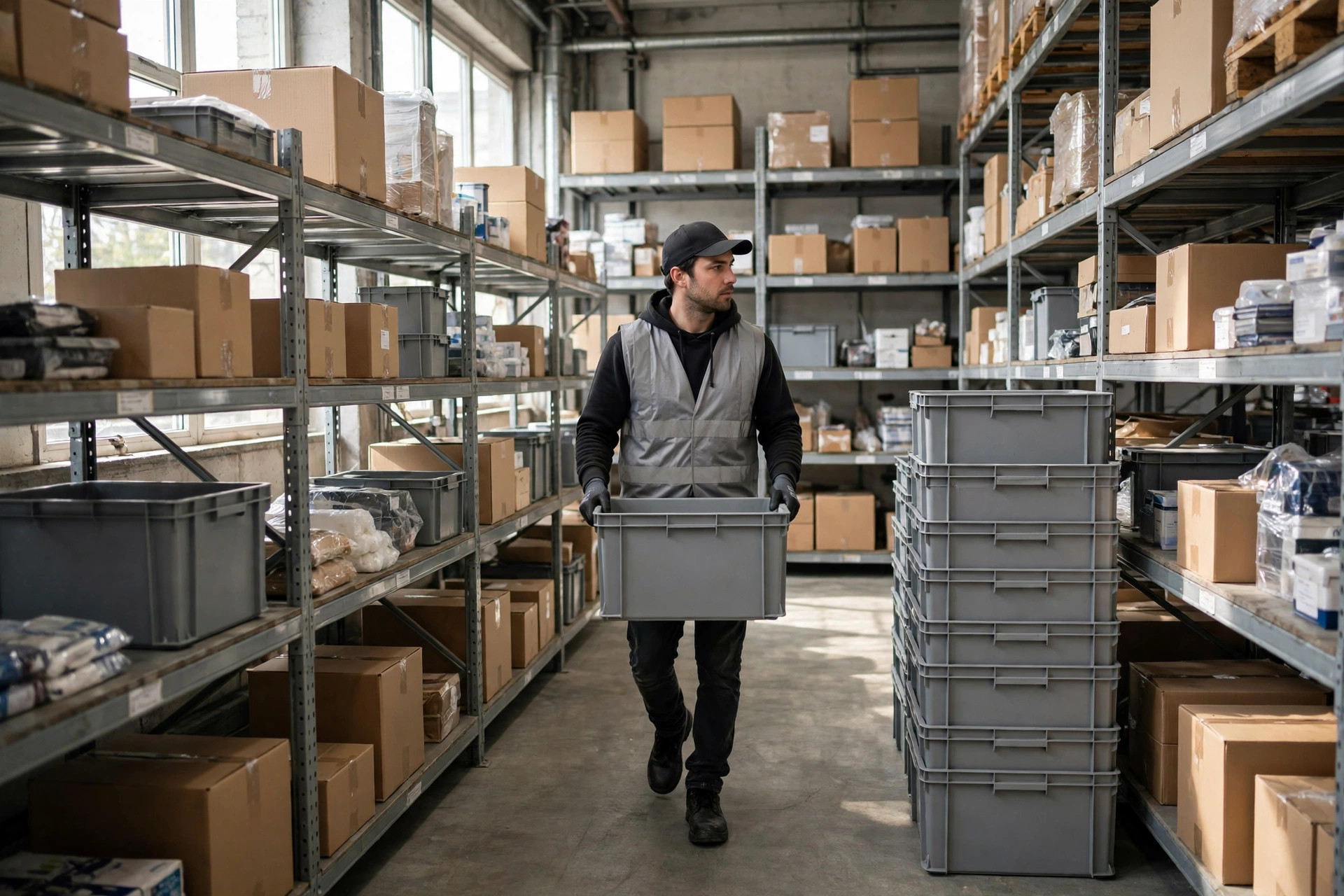
At 6:40 in the morning, I walked into the warehouse to check the picking totes and found our picking lead, Aqiang, standing in the staging area looking worried. The night shift had picked more than 400 orders. Seventeen picking totes that should have gone out on the morning trucks were missing. Not the goods. The totes holding them. The team searched the whole building, under racks, behind packing benches, in the corner of the returns area. They found nine. Eight were simply gone. The trucks could not wait, so we broke open eight new totes to cover the gap. By the end of the day, the books showed eight more totes lost. Let me be straight: one tote costs little; losing them steadily costs a lot.
We run more than 3,000 totes in our building, in two sizes and two colors. For years nobody managed them: you grabbed one, picked, set it down wherever, and empties piled by the conveyor. When peak season hit, totes seemed to grow legs. Today one was in picking, tomorrow it was in returns, the day after it was nowhere. At year-end, finance found the books short by more than 400 totes, tens of thousands gone. Worse was the day we ran out. Orders were waiting, pickers stood idle waiting for totes, and every schedule slipped.
Where Picking Totes Actually Disappear
Totes do not vanish all at once. They leak, a few at a time, through gaps nobody owns. We spent two weeks tracing them before the pattern became clear.
The first leak is handover. A picker pushes a finished tote to packing and leaves; the packer sets the empty beside the belt, and the next shift assumes it belongs to someone else. Over time, empties pile up, clean ones mixed with dirty and broken ones, and nobody dares grab one for a fresh order.
The second leak is returns and the exception area. A returned order comes back, goods are taken out, and the tote is left beside the returns rack. Returns move slowly, so the tote sits for days until cleaning tosses broken-looking ones as scrap and others borrow good ones as containers. We once found more than twenty totes in the maintenance corner, all filled with screws and zip ties. They had become toolboxes.
The third leak is the count itself. The books recorded only a total, never where totes were. During a count, the team tallied the total, wrote down the difference, and nobody chased the reason. Differences stacked up month after month until nobody could explain where anything had gone.
Peak season in November 2024 taught us the hard way. It was the weekend before the big sale, and order volume was double the usual level. On Friday night the night lead told me only about sixty usable totes were left in picking. We normally need two hundred on hand. I took people through the whole building until past midnight. Under a tarp in the dock corner we found more than eighty, some still holding goods from returns that had never been cleared the month before. The day shift still ran short, and we borrowed fifty totes from a neighboring warehouse. After that night, I stopped saying "we have enough totes." Enough is not a feeling. It is a number on a sheet.
What We Tried: Number Them, Then Set Rules
The first thing we tried was numbering every tote. Nothing fancy, just sprayed codes and labels. Totes in Zone A start with A, Zone B with B, and the number ranges split by size. It took two weekends of overtime to finish. The point of numbering is not tidiness. When a tote goes missing, you can trace which stage last handled it from the handover sheet.
The second thing was a handover rule. Picking no longer means "set it down and walk away." Beside each packing bench we put a return rack with three slots: good, to be washed, and damaged. Pickers put empties in the right slot. The packing lead counts once per shift. If the count is off, that shift finds the gap the same day instead of passing it on. A count takes ten minutes per shift; hunting for totes used to take an hour.
The third thing was separating washing from damage. Dirty totes used to go straight back into picking, and we got two customer complaints about soiled totes. Now the rule is simple. A tote with oil, odor, or mold inside goes to the wash area and only returns to the line after it is cleaned and dried. A tote with a cracked rim, a broken handle, or a warped base goes to the damaged area and never goes back on the line as a stopgap. Damaged totes get reviewed together once a month. Fixable ones get fixed. The rest go through the scrap process, and the scrap number goes into the monthly report.
We also added totes to new-hire training. New starters used to learn picking and nothing about totes. Now, on day one, the lead walks them through the tote route: where to collect one, where to leave it, which slot takes an empty. Ten minutes of walking cut first-month losses for new hires by more than half. Managing totes is managing people. If people do not know the rule, no rule will hold.
The Fixed Routine: How We Count Totes Now
Today we count picking totes fully once a month and spot-check weekly. The monthly count covers every number range against the books. A gap over twenty means the lead writes an explanation. The weekly check samples two number ranges at random, and a large gap gets chased that same week, not at month-end. The count sheet has only four columns: range, book quantity, physical quantity, and reason. Reasons are limited to four choices: scrapped as damaged, moved to another zone and not returned, lost at handover, or other. More than three "other" entries means the lead explains each one separately.
On responsibility, we settled on a principle: chase the stage, not the person. If totes went missing at a stage, that shift's lead owns finding them, and the shift shares part of the replacement cost. Part, not all. That distinction matters: a lost tote is rarely one person's fault, usually the process leaked. Charge one person in full and people stop reporting; totes get hidden and books get faker. Sharing part keeps pressure real without pushing people to lie.
We also set a hard line for scrapping. A rim crack longer than a hand span, a warped base that will not sit flat, or a broken handle: scrap it, no approval needed. Light scratches keep working. One warped tote jamming a conveyor stops the line ten minutes, costing more than ten totes. Count the big bill, not just the tote's price.
| Practice | Before | Now | Result |
|---|---|---|---|
| Tote issue | No record, grab and go | Issued by number range, signed on handover sheet | Losses traced to a stage |
| Empty returns | Piled in corners | Three slots: good, to wash, damaged | Empties no longer mixed up |
| Counting | Once at year-end | Monthly full count plus weekly spot checks | Gaps found the same week |
| Damaged totes | Dirty and broken ones reused | Dirty ones washed, broken ones scrapped | Fewer complaints, fewer jams |
| Lost totes | Nobody owned it | Stage shares part of replacement cost | Less hiding, more recovery |
No clever trick here: numbering, handover, washing, counting, scrapping, done daily until habit. A system keeps books; it cannot walk a tote back to its rack.
A Counterintuitive Call: Better Too Many Totes Than Just Enough
Some people say stocking extra picking totes wastes space and money. That sounds right, and it misses the point. The cost structure is different from inventory. One missing tote delays one order. One hundred spare totes take a few square meters and a few thousand yuan. When peak volume doubles, tote turnaround cannot keep up, and a just-enough stock is the first thing to break. Our rule now is daily usage times 1.5, plus one shift's worth on top. It sounds generous. Since the peak-season scare, we have never stopped a line for lack of totes. Totes are the kind of thing you would rather have sitting idle than be short of.
One reminder for fellow managers: go count your tote books first. If physical stock is more than five percent below book stock, do not rush to buy new totes. Find the leaks first. Buying is easy; keeping old totes in circulation is hard. Get that right, and picking keeps its rhythm.
By Chen Feng, Warehouse Operations Manager