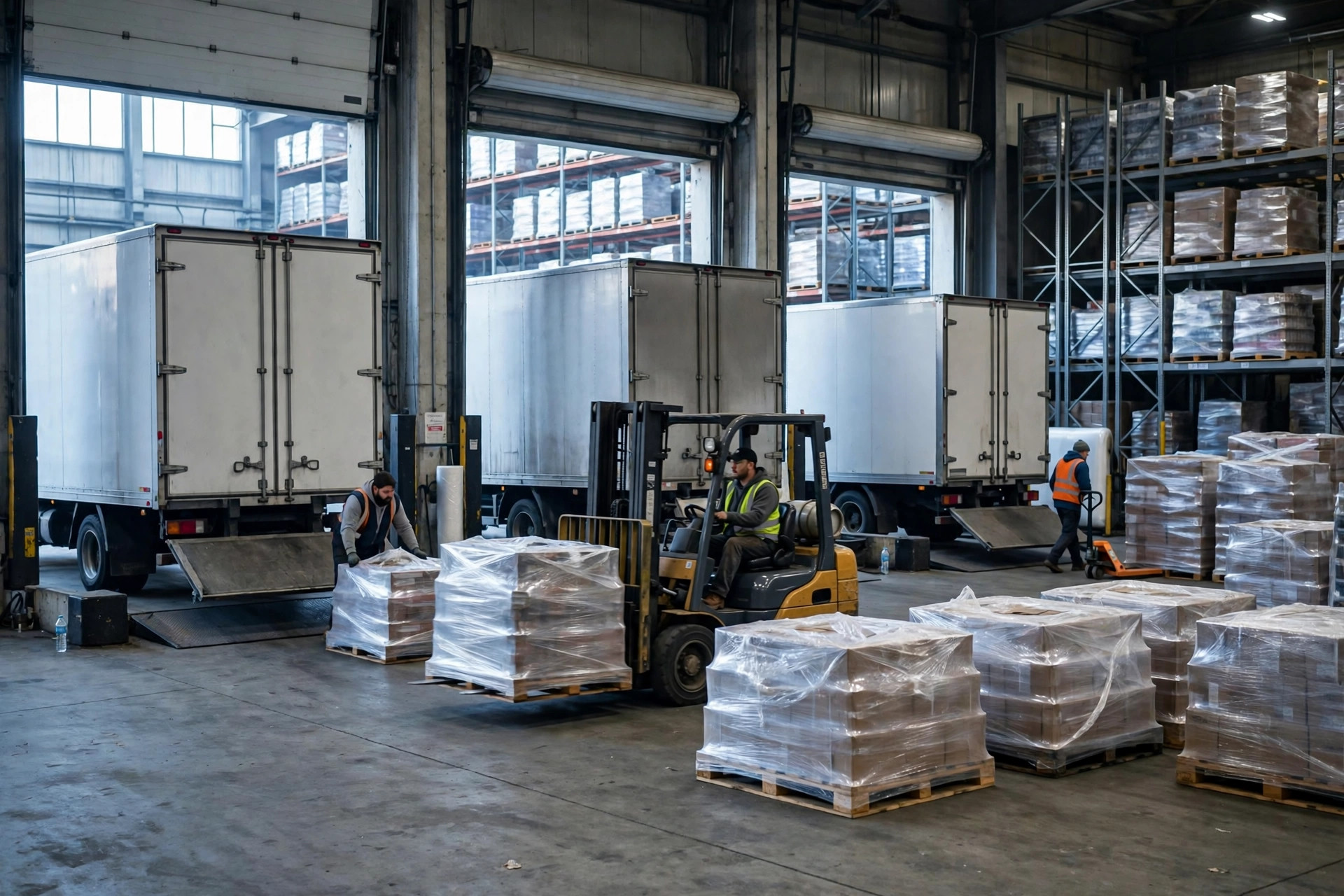
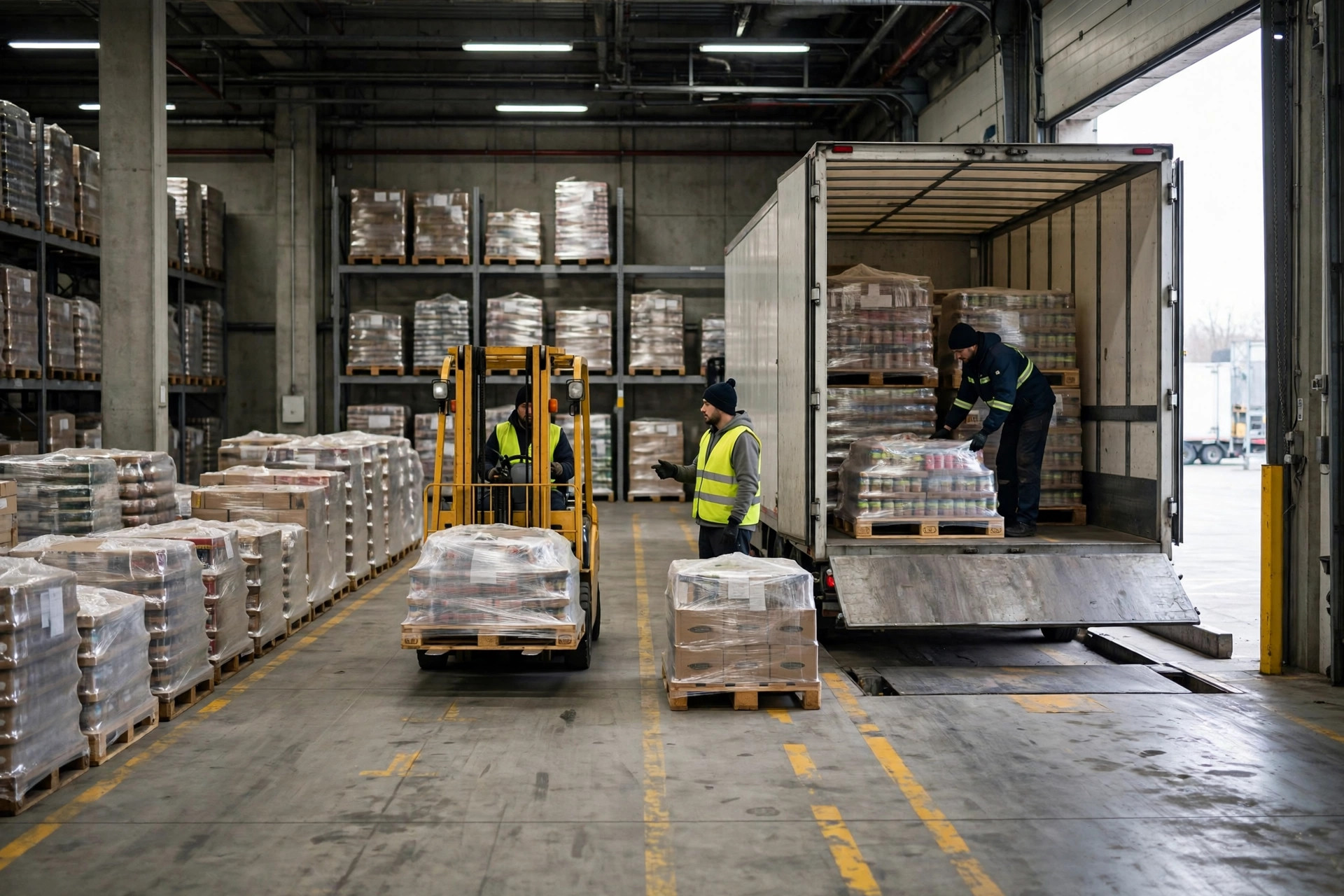
After fifteen years behind the wheel, I can tell you warehouse trailer cube utilization is something you learn standing on a dock, waiting on a load. The truck is there, the freight is there, and halfway through loading, nothing else fits. The driver is annoyed, the warehouse crew looks embarrassed, and the trailer still has a big empty gap in it. It is not that there is too much freight. It is that the loading plan was wrong. Outbound loading is not muscle work. It is arithmetic: figure out first whether this trailer tops out on weight or on cube, and then start loading.
A Half-Empty Trailer Costs More Than Diesel
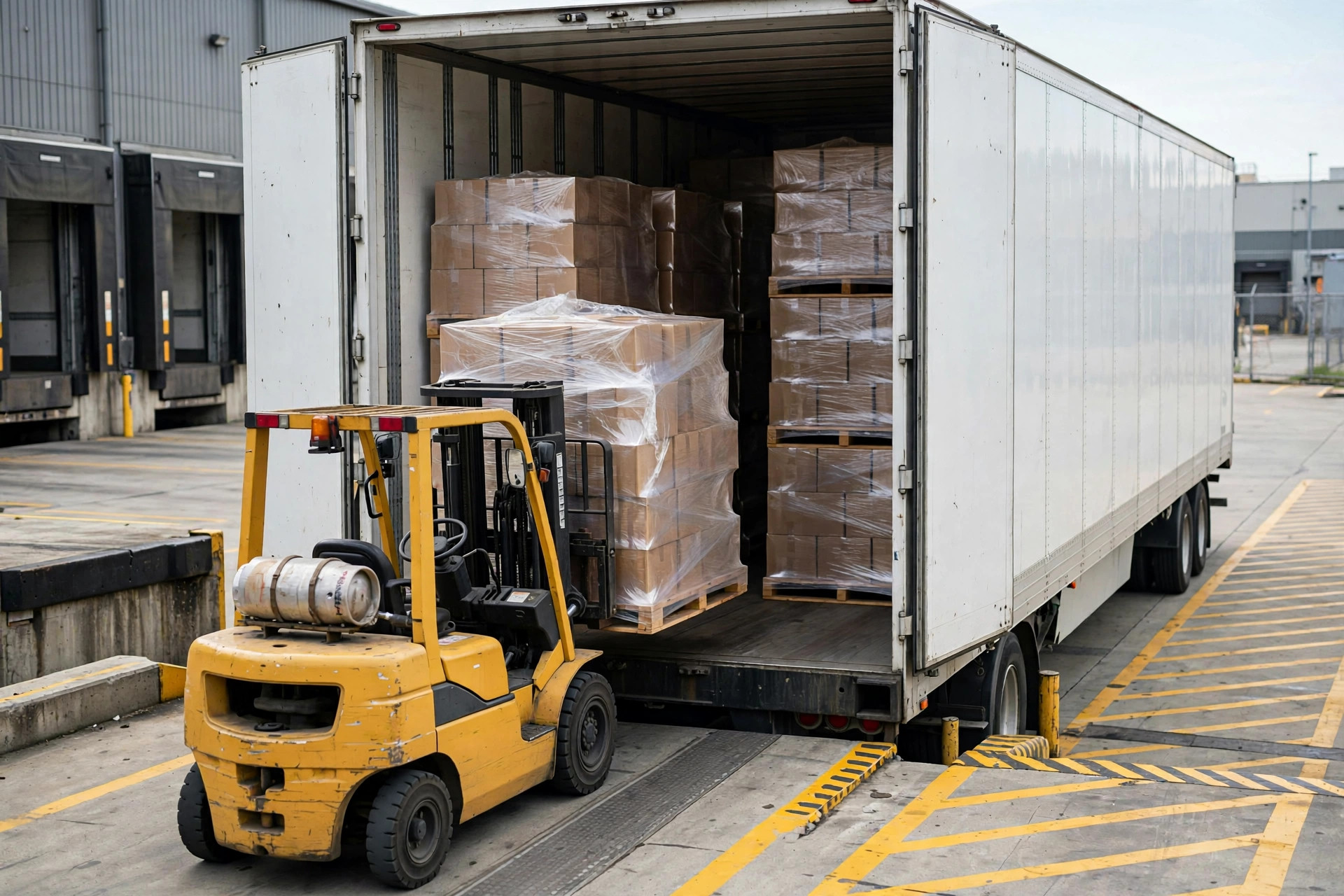
In October 2024, I picked up a load of toilet paper at a warehouse in Ontario, California. The freight was light, maybe seven or eight hundred pounds a pallet, but bulky. The crew loaded pallets of mixed heights wherever they fit, and by the 22nd pallet the doors had to close, with an awkward gap left by the door that would not take a full pallet. A shipment that should have moved in five truckloads took six. One extra run, one late delivery, and the shipper later added it up for me: the extra freight charge, the driver's day, and another day of dock time at the warehouse. All of it real money.
I have eaten the loss the other way around, too. In the summer of 2023, outside Dallas, Texas, I loaded bottled water, and at the 14th pallet the dock supervisor walked over with the scale ticket and called a stop. Add any more, he said, and we would be over on axle weight. The trailer was still nearly half empty, but the weight limit had already arrived, so two pallets came back off and I rolled out with half a trailer. Light freight runs out of cube. Heavy freight runs out of weight. Two different ways to lose money, and they need two different ways of doing the math.
Weigh First, Then Count Cube: Trailer Cube Utilization Basics
When I deal with a warehouse now, I hold to one rule: weigh first, then count cube, and get both numbers before a single pallet moves. Whichever limit you hit first is the cap for that trailer. Take a common 53-foot dry van: payload around 45,000 pounds, volume around 3,800 cubic feet, room for 26 standard pallets in a single layer. Put those two limits side by side and the freight tells you the answer:
| Freight type | Weight per pallet (approx.) | Which limit hits first |
|---|---|---|
| Light freight, like toilet paper | About 800 lbs | Cube fills first: 26 pallets fill the trailer at barely over 20,000 lbs |
| Heavy freight, like bottled water | About 2,200 lbs | Weight fills first: about 20 pallets get close to the limit, with cube to spare |
Once that table is on the table, nobody has to guess at the loading plan. Light freight means chasing cube: pallets squared up, heights evened out, one more pallet in whenever you can get it. Heavy freight means respecting weight: forget filling the trailer, keep the axles legal, and put the heavy pallets toward the middle and front, not all stacked at the tail, or the trailer axles go over first and a roadside inspection makes the day worse. On a mixed load, heavy pallets go low and light pallets go high, heavy freight to the nose and light freight by the door, so the unloading order works out too.
Mixed Pallets: Where the Empty Space Hides
Most of the time, poor warehouse trailer cube utilization is not a shortage of freight. It is space nobody bothered to recover. What I have seen on docks comes down to a few habits. Pallets of the same size go in the same row, because one short pallet drags down the height of the whole row. Where heights genuinely do not match, top off the short row with a layer of light freight instead of leaving it empty. The wedge-shaped gaps between pallets and between pallets and the trailer wall get filled with small cartons, not with a full pallet forced into a space it does not fit. Odd-shaped freight loads last, by the door, so it comes off first and never blocks the freight behind it.
One more habit gets overlooked: the freight that comes off first loads by the door, and the freight that comes off last loads deep inside. That sounds like an unloading problem, but it is a loading problem. Get the order backwards and the unload crew has to pull freight out and put it back just to reach what they need, and the damage and labor hours climb. A loading plan does not need to be fancy. Ten minutes of planning before the doors open beats half an hour of shuffling pallets while the truck waits.
The Weekly Trailer Cube Utilization Report That Settles the Bill
Load-by-load math is not enough. You need the weekly totals. I tell warehouses to run a weekly loading report with just four numbers per trailer: pallet count, total weight, estimated cube, and utilization rate. After a week, you can see the average utilization, how many shipments got split across an extra trailer, and how many loads came back off for overweight. When a shipment splits, the report also settles whose problem it was: the freight genuinely needed two trailers, or bad loading forced the split. The numbers say it, not anyone's opinion.
That report is also your leverage when the carrier's bill arrives. Carriers charge by the truck, so every extra trailer is an extra charge, and when the shipper asks where the money went, a warehouse that can show the utilization of every trailer can answer. And when utilization stays low week after week, the report pushes the warehouse to fix its loading instead of shrugging it off with "that is just how much freight there was."
Here is the counterintuitive part about warehouse trailer cube utilization: higher utilization is not always better. A trailer packed to 100 percent of cube means freight tumbling out when the doors open, unloading running half an hour long, and a couple of extra damaged cartons, and whatever you saved on freight gets handed straight back. What I do now is leave a 3 to 5 percent working gap. The trailer does not look stuffed, but unloading is fast and damage is down, and the whole trip pencils out better. A full trailer is not the skill. Loaded right, unloaded fast, and the bill adding up — that is a run done right.
By Shifu Zhao, Trucking Veteran (15 yrs)