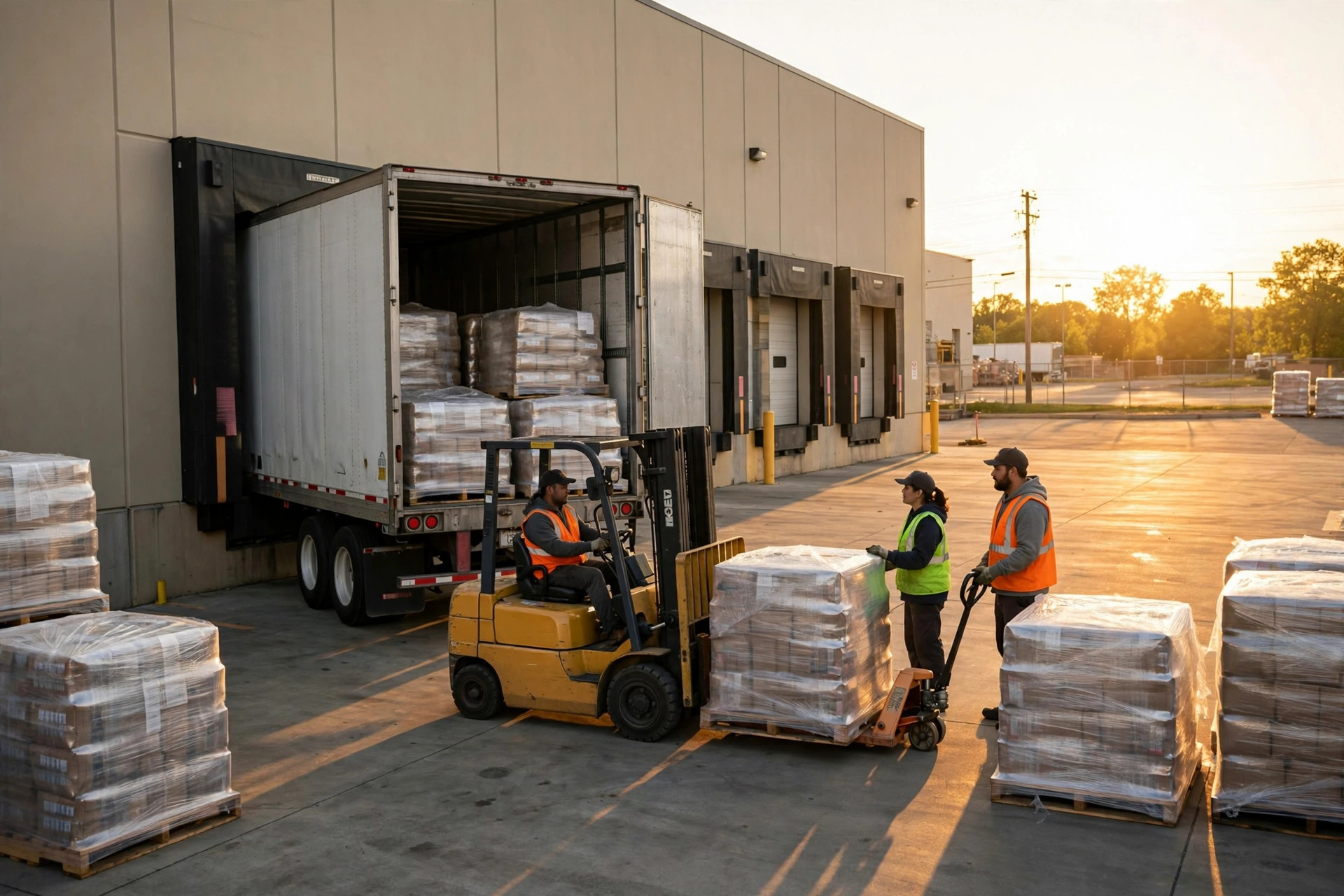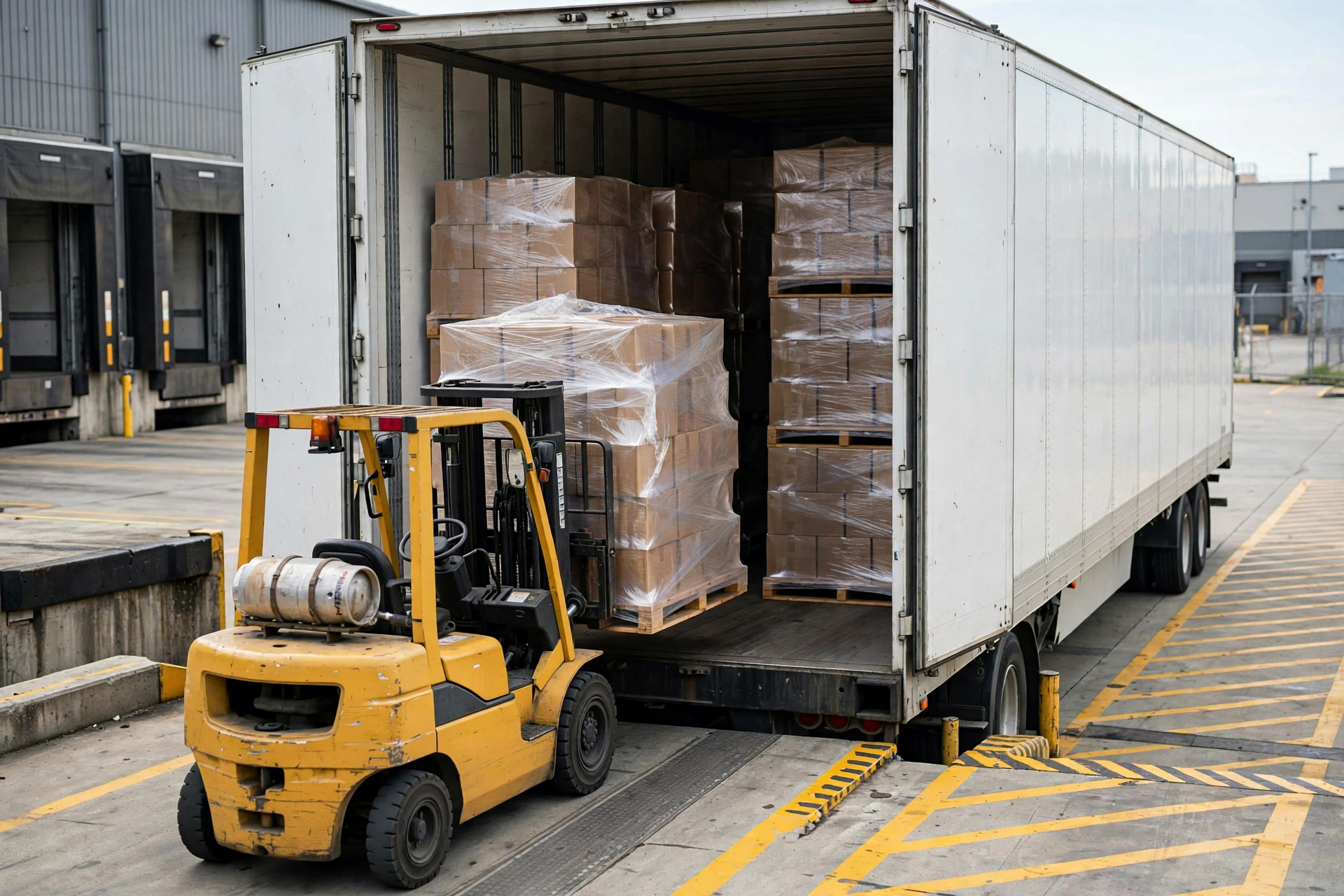
Late 2023, I was watching outbound at a small-appliance shipper's warehouse in Zhengzhou. A 53-foot trailer sat at the dock while the forklift driver shuffled pallets back and forth for nearly 40 minutes. When the doors finally closed, almost two meters of empty space yawned at the rear. I did the math standing on the dock: that trailer was barely three-quarters full on cube. The carrier, of course, charged the full truckload rate anyway.
That's the infuriating thing about loading a trailer — freight is priced by the truck, not by how much of it you actually filled. Every empty cubic foot is money you handed over for free.
That warehouse was shipping 30 to 40 loads a day to regional distribution centers, all planned by veteran loaders working from experience. Cube utilization hovered around 74%. In March 2024 they rolled out load-planning software, and three months later utilization sat steady at 89%. Same freight volume, monthly loads dropping from 900-plus to around 760. The savings were real dollars, not a PowerPoint fantasy.
Get the Denominator Right Before You Talk About Utilization
Before we talk algorithms, let's nail down what a trailer actually holds. Otherwise every percentage is hand-waving.
A standard 53-foot dry van gives you roughly 52.5 feet of usable interior length, about 8.3 feet of width, and 9 feet of height — 3,800 to 4,000 cubic feet of usable cube. A standard 48-by-40-inch pallet loads 26 to the floor, straight in. Payload tops out around 42,000 to 45,000 pounds once you subtract tractor and empty-trailer weight from the 80,000-pound legal gross.
Think of it this way: every load has two ceilings, space and weight. Bulky freight (tissue, sofas, mattresses) hits the space ceiling first — that's "cubing out." Dense freight (bottled water, hardware, paper) hits the weight ceiling first — that's "weighing out." What AI load planning actually does well is optimize against both ceilings at once. A human brain can only watch one at a time.
The published industry bands back this up: manual loading typically lands at 65–75% cube utilization, software-assisted loading reaches 85–92%, an average lift of about 8–18%. So the 78%-to-92% in the headline isn't marketing fluff — 78% is what a genuinely skilled veteran achieves, and 92% is the software ceiling when the freight mix cooperates. Those 14 points in between are what the algorithm earns you.
What the Software Is Actually Computing
A lot of people think this is just 3D Tetris. That's half right.
It's like Tetris, except the rules are brutal: no floating blocks (everything needs support underneath), heavy can't crush light (carton compression strength is a hard constraint), freight for the first delivery stop must sit by the doors (multi-stop sequencing), and the weight distribution has to keep every axle legal (get it wrong and you're paying fines at the weigh station). You can think of the algorithm as searching through hundreds of thousands of arrangements with 3D bin-packing plus pruning, hunting for the one layout that is simultaneously dense, crush-safe, unload-friendly, and axle-legal.
Why does manual loading stall around 78%? Human cache runs out. A veteran can remember that this carton is 24×16×16 and that one is 20×12×12, but mix twenty sizes with stacking rules and delivery sequencing and the brain falls back to the conservative playbook: big boxes on the bottom, small ones wedged in gaps, leave extra room by the doors for easy unloading. Every "play it safe" costs a few points of utilization.
Early 2025, I saw the textbook case at a 3PL's furniture warehouse in Dongguan. Bulky freight (sofas, mattresses) mixed with dense freight (metal hardware). The manual crew, being lazy, piled all the heavy stuff at the nose — and got flagged for drive-axle overweight twice at highway checkpoints, a few thousand in fines each time. After the system went live, the algorithm spread heavy pallets near the axles and floated bulky freight up high: utilization went from 78% to 92%, axles legal. But there was a cost — load time rose from 35 minutes to 50, because the crew had to follow a tablet diagram pallet by pallet instead of winging it.
Who Should Buy This — and Who Shouldn't
Blunt verdict first: not every warehouse needs this. Vendors love to demo "AI digital-twin loading" that turns out to be a 3D animation wrapped around decade-old heuristics. That kind of pseudo-innovation? Pass.
The buy profile is clear. Check two or more of these and it's a yes: first, 30-plus loads a month — the more trucks, the more each utilization point is worth; second, messy SKU dimensions, ten-plus carton sizes mixed in one trailer, beyond what a human can juggle; third, dense-and-bulky mixes or multi-stop routes, where constraints pile up faster than experience can handle; fourth, your own fleet or committed capacity, where every eliminated load drops straight to profit.
And the don't-buy list: fixed pallet specs on fixed lanes, month after month — your veteran already loads at 85% with his eyes closed, and spending six figures on software is a donation to the vendor. Or the small warehouse doing fewer than five loads a day: an Excel loading template plus a scale check gets you 90% of the benefit.
The math is simple. Loads needed for the same freight volume scale inversely with utilization:
| Manual loading | AI load planning | |
|---|---|---|
| Cube utilization | 78% | 92% |
| Loads needed for 100 loads' worth of freight | 100 | ≈85 |
| Loads eliminated | — | ≈15% |
(92−78)/92 ≈ 15.2%. A warehouse running 100 loads a month can theoretically cut 15 of them. At, say, $2,000 per lane-haul (check your carrier's latest quote — rates move), that's $30,000 a month, $360,000 a year. Annual software licenses typically run from tens of thousands to low six figures. A fifth-grader can do this math.
One caution: that 15% is the ceiling. The more standardized your freight and lanes, the smaller the real gain; the messier the mix and the heavier the constraints, the bigger it gets. Vendors always show you their best case. Don't paste it onto your operation.
The Biggest Trap Isn't the Software — It's the Master Data
Nine out of ten failed load-planning rollouts I have seen weren't algorithm problems. They were garbage master data. Garbage in, garbage out is an iron law here.
A carton dimension off by two centimeters and the system's beautiful 92% plan doesn't fit in the real trailer — the whole load gets torn down and restacked. The worst case I saw: a warehouse with 300-plus SKUs whose carton heights in the WMS were whatever the supplier felt like typing, routinely off by 3–5 centimeters. Week one, the loading crew went on strike — "your diagram is fiction." It took a full month with tape measures re-measuring every high-velocity SKU before the project came back to life.
Trap two: the crew doesn't follow the diagram. The system computes to the centimeter; the veteran eyeballs it as "close enough," two pallets by the doors go in crooked, and everything downstream cascades. There is exactly one fix: put the plan on a tablet, load pallet by pallet, scan to confirm. Don't negotiate "flexibility" with veterans. Put it in the KPIs.
Trap three: no integration with WMS and TMS. The planner doesn't know tomorrow's actual orders, hand-exports Excel into the planning tool three times a day, gets it wrong twice, and everyone quietly goes back to gut feel. Load planning must consume live orders and inventory from the WMS and feed plans to the TMS for capacity planning. Break any one of those links and the money is wasted.
And here's the counterintuitive one: higher utilization isn't always better. A 92% plan takes 50 minutes to load; an 88% plan takes 25. If your dock has to turn 40 trailers a day, that extra 25 minutes times 40 is 1,000 minutes — the dock chokes, detention and overtime pile up, and total cost goes up, not down. The real pros optimize utilization × load time as a pair, not utilization alone. When to chase 92% and when to stop at 88% depends on your dock's throughput pressure, not the vendor's demo animation.
So is it worth the money? Look at one number: your monthly loads, times your average cost per load, times 15%. If that beats the annual license, buy it. If not, build a good Excel template and move on. What the algorithm can compute for you was always just math. Whether the savings actually land depends on the least mathematical things in your warehouse — cartons measured with a tape, a crew that follows the diagram, and data that actually flows.
By Da Liu, Automation Engineer