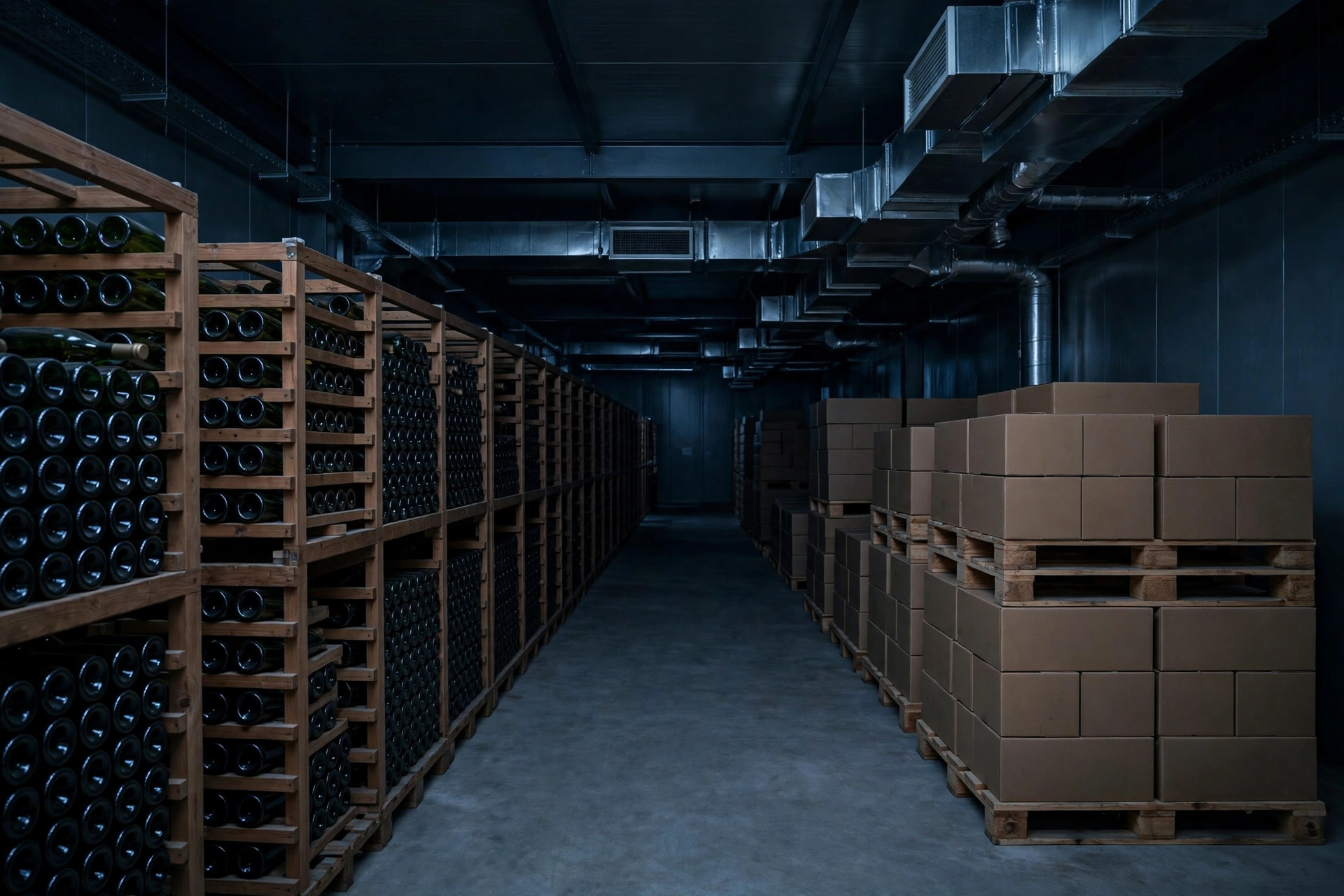
Last summer a frozen-food importer I know took a brutal hit. A full container of chicken nuggets cleared the Port of Los Angeles, the receiver spot-checked it, and the core temperature of the cartons was out of spec. The entire load was rejected — product value plus ocean freight plus demurrage, well over a hundred thousand dollars gone. They checked the refrigeration units: fine. They checked the daily temperature logs: beautiful curves. So where was the problem? A temperature mapping study finally showed it: the two pallet rows nearest the dock doors ran several degrees warmer than the center of the room on summer afternoons, and the product had sat there for three days. The core temperature never stood a chance.
That is the question mapping answers: where is your cold room actually warmest, where is it coldest, and by how much. The one or two probes hanging on the wall only tell you the temperature at the probe. Mapping means distributing dozens of calibrated sensors across the whole space per a written plan, logging continuously for a set period, and drawing the true thermal picture of the room. Pharma cold chain has done this for years; food cold storage is catching up fast as customers and auditors demand it.
Placing sensors is not scattering pepper — it is hunting the unluckiest corner
The placement logic has exactly one rule: cover every spot most likely to misbehave, and when in doubt, add more sensors. Start with the structure: the four corners, the personnel and dock doors, anywhere the room meets the outside world — these see the most heat exchange, so they get sensors. Then the airflow: directly under the evaporator fans the air moves fastest and runs coldest; the farthest diagonal point gets the weakest airflow and runs warmest. Both extremes get sensors. Then height: warm air rises, cold air sinks, so every column of interest gets probes at high, middle, and low positions. Skip that and you will never know how far apart your top-tier and floor-level product really are.
Two placements people always forget. First, inside the product stack. Probes cannot just hang in the air — several should sit between cases, even inside cartons at representative locations, because what matters is product temperature, not air temperature, and that is what an auditor will ask about. Second, the worst-case spots: the side of the room where the doors cycle open all afternoon in July, or the row tight against an uninsulated metal wall. The placement plan should be a drawn floor map with every sensor numbered, located, and height-marked — reuse the same map for every re-mapping so the data stays comparable.
Empty and loaded runs are separate studies, and this is where people cut corners. An empty room maps beautifully; then real product goes in, blocks the airflow paths, and the hot spots move. The right sequence is an empty run first to baseline the refrigeration system itself, then a loaded run under real operating conditions. You can simulate the load with empty cartons or water bottles, but the stacking pattern has to match real operations — if you normally stack three high, testing at two high is theater.
One more distinction that matters: routine monitoring probes are not mapping sensors. The two or three probes permanently mounted on the wall are for day-to-day operations; a mapping study uses a separate set of calibrated portable loggers that go in for the study and come back out. Never substitute the routine data for a mapping report — the accuracy class and calibration records are different, and any experienced auditor spots it immediately. Calibrate every mapping sensor against the same reference before the study and staple the calibration certificates to the back of the report. That paperwork is the foundation the whole dataset stands on.
As for how many sensors, how long to log, and how much variation is acceptable: there is no universal number. Those belong in the validation protocol, which should state the acceptance criteria and cite the regulation or customer requirement behind them. An auditor reads the protocol before the data. No protocol, and the prettiest dataset in the world buys you nothing.
When the report fails, don't just re-run it and hope
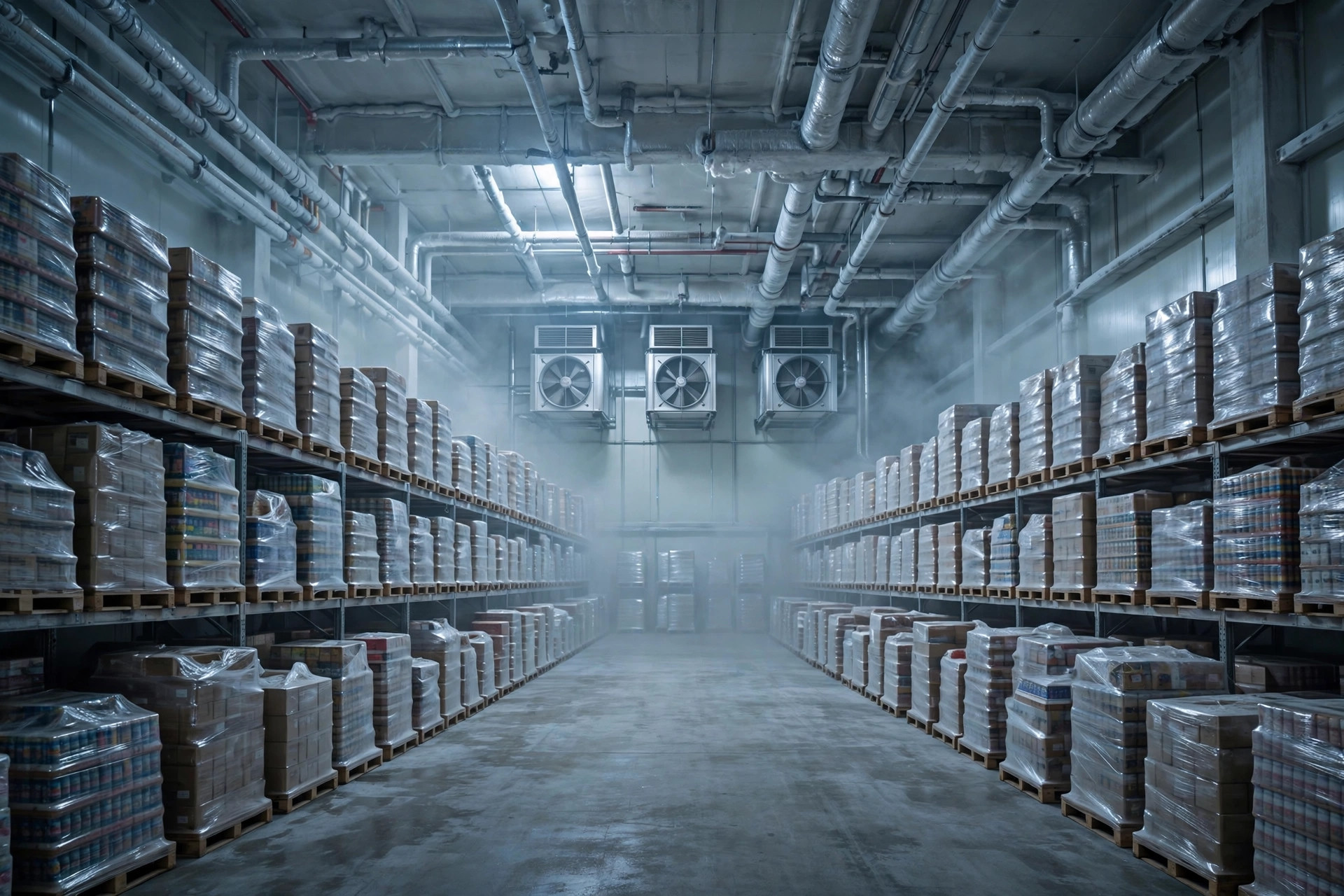
When the mapping report comes back with failing points, the worst first instinct is to re-run the study at a friendlier hour and hope for luck. A failure is a gift: it shows you where the room's real weakness is. Plot the failures on the floor map and look for the pattern. If they cluster near the doors, the problem is heat intrusion from door cycling. If they are all at the top tier, you have thermal stratification — fan capacity or return-air design is off. If they sit on one fan's diagonal, that is a dead-air zone.
Fix the cause, not the symptom. Door-side failures get air curtains, high-speed roll doors, and disciplined door-open times. Hot top tiers get re-slotting — move temperature-sensitive product down — or adjusted fan operating strategy. Dead zones get re-stacked pallets with clear air channels, and insulation boards where the envelope is weak. Document every fix: what changed, when, and the re-mapping data afterward. Auditors love the "failure — fix — passing re-test" loop; a closed loop turns one bad result into evidence that your system is alive and working.
One trap to avoid: re-testing only the failed points. After remediation, some companies re-map just the sensors that failed, to save money. That logic does not hold — you changed curtains, moved product, altered airflow, and the points that passed before may not pass now. A re-mapping follows the original protocol with the full sensor set. Spend the money where it counts, but don't spend half of it.
And one piece of field wisdom: run the mapping in the season when the room suffers most. Summer for heat, winter for cold — pick the time of year with the biggest inside-outside temperature difference. A gorgeous report from a mild October week protects nobody when July arrives. Validation exists to prove you hold up under the worst conditions, not to prove you were fine on the easiest day.
Don't treat mapping as a one-time checkbox for the auditor. Its real value is the first honest look at your room's thermal truth. That truth might be ugly — but it is a lot prettier than a rejected container.