If you look at only one indicator — warehouse technology budgets for 2027 — the conclusion is not hard to reach: money is still flowing in, but where it flows is changing. The interesting question is not whether budgets rise or fall, but the logic behind the spending. CIOs are no longer buying technology because it looks impressive; they are buying answers to three very specific pressures.
Three Signals Behind Rising Warehouse Tech Budgets
The first signal comes from earnings season. According to public reports, several logistics technology and automation vendors have repeatedly noted in recent quarters that expansion and repeat orders from existing customers are growing — not one-off mega-deals. That means technology spending is shifting from "project-based" to "continuous investment." The nature of the budget itself has changed.
The second signal comes from the trade show floor. Over the past two years, the busiest booths are no longer the scale models of fully automated greenfield warehouses, but retrofit solutions for existing facilities: how to add AMRs without stopping operations, how to retrofit sensors onto old racking. Booth traffic for retrofit vendors is itself a kind of vote.
The third signal is the consensus across industry reports: most surveyed companies say they plan to maintain or increase warehouse technology spending over the next year or two, with only a minority cutting back. The wording differs from report to report, but the direction is consistent.
Taken together, the three signals point to one judgment: 2027 warehouse technology budgets are expanding overall, but the expansion has grown more disciplined.
Three Forces Driving the Expansion
Attribution matters, because it determines where the money goes.
The first force is labor. Frontline warehouse labor costs have climbed steadily in recent years; according to public reporting, hourly wages at major US logistics hubs have reached levels that make many CIOs uncomfortable. Worse than the cost is the availability problem — hiring is hard, retention is harder. Labor has shifted from a cost problem to a certainty problem, and technology spending here is a hedge against uncertainty, not just a savings play.
The second force is tariffs and supply chain resilience. A year of shifting trade policy has pushed many companies' inventory strategies back from "extreme lean" toward "prudent buffer." More inventory demands finer-grained warehouse management: where the goods are, how much remains, whether FIFO is actually enforced. Links that used to depend on human oversight now have to run on systems. This money buys insurance for resilience.
The third force is a technology maturity inflection point. AI scheduling and computer vision were slideware five years ago and pilot projects three years ago; by around 2027, a cohort of early adopters has scaled deployments with real results. When failure stories become harder to find than success stories, CIO psychology shifts: from "should we try it" to "we fall behind if we don't."
Where Warehouse Tech Budgets Go in 2027: Three Bets
With the attribution clear, the destinations become clear. Based on public information and current industry discussion, 2027 warehouse technology budgets will most likely concentrate in three directions:
Bet one: AI scheduling and forecasting. This is the largest slice of incremental spending. Labor planning, slotting, wave release, replenishment forecasting — decisions once made on supervisors' gut feel are being handed to algorithms. Notably, companies are no longer buying point AI features but a "scheduling brain": a system that optimizes across orders, labor, and equipment status simultaneously. Point tools are cheap, but they can't solve coordination problems — which is why CIOs will pay for platform-level solutions.
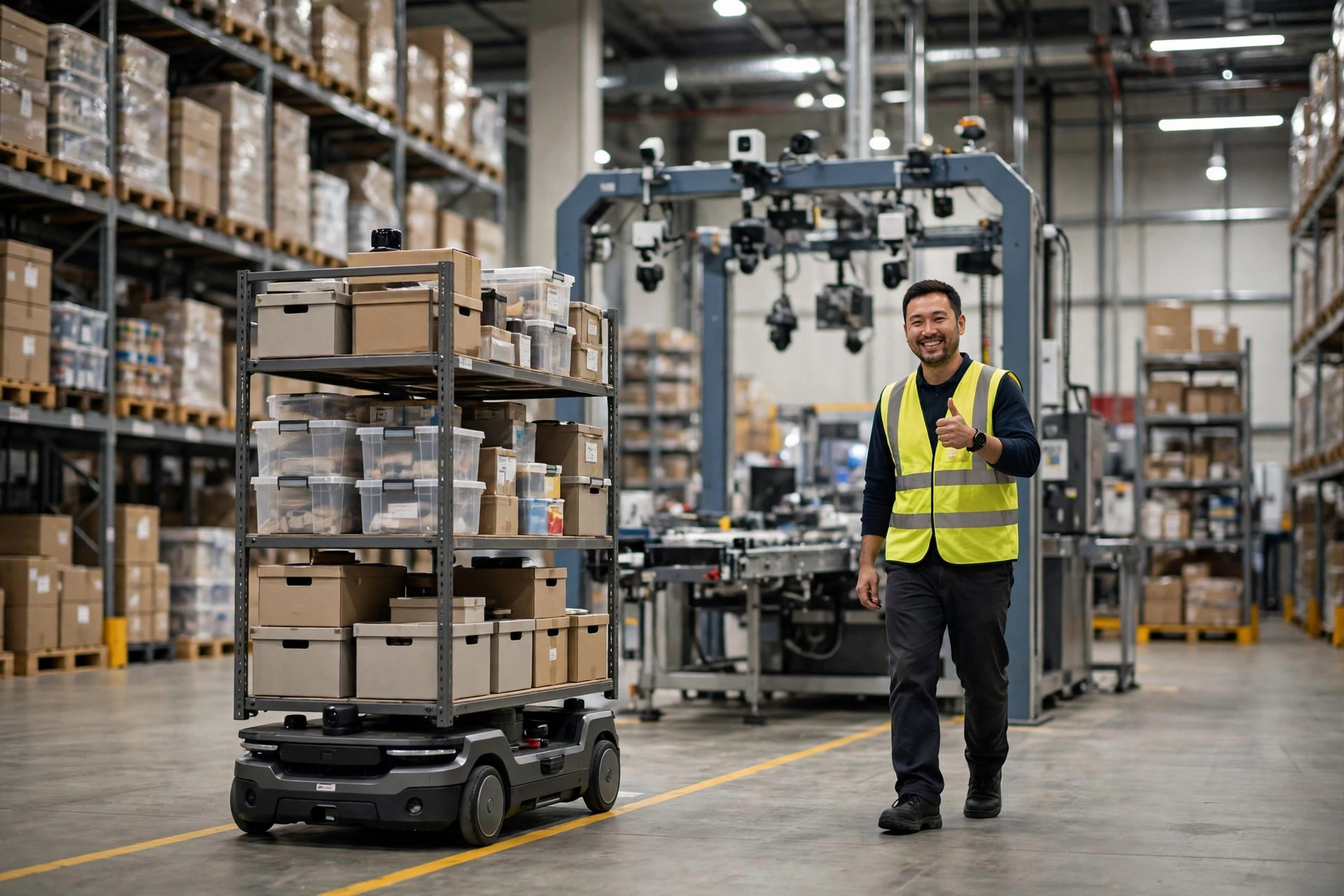
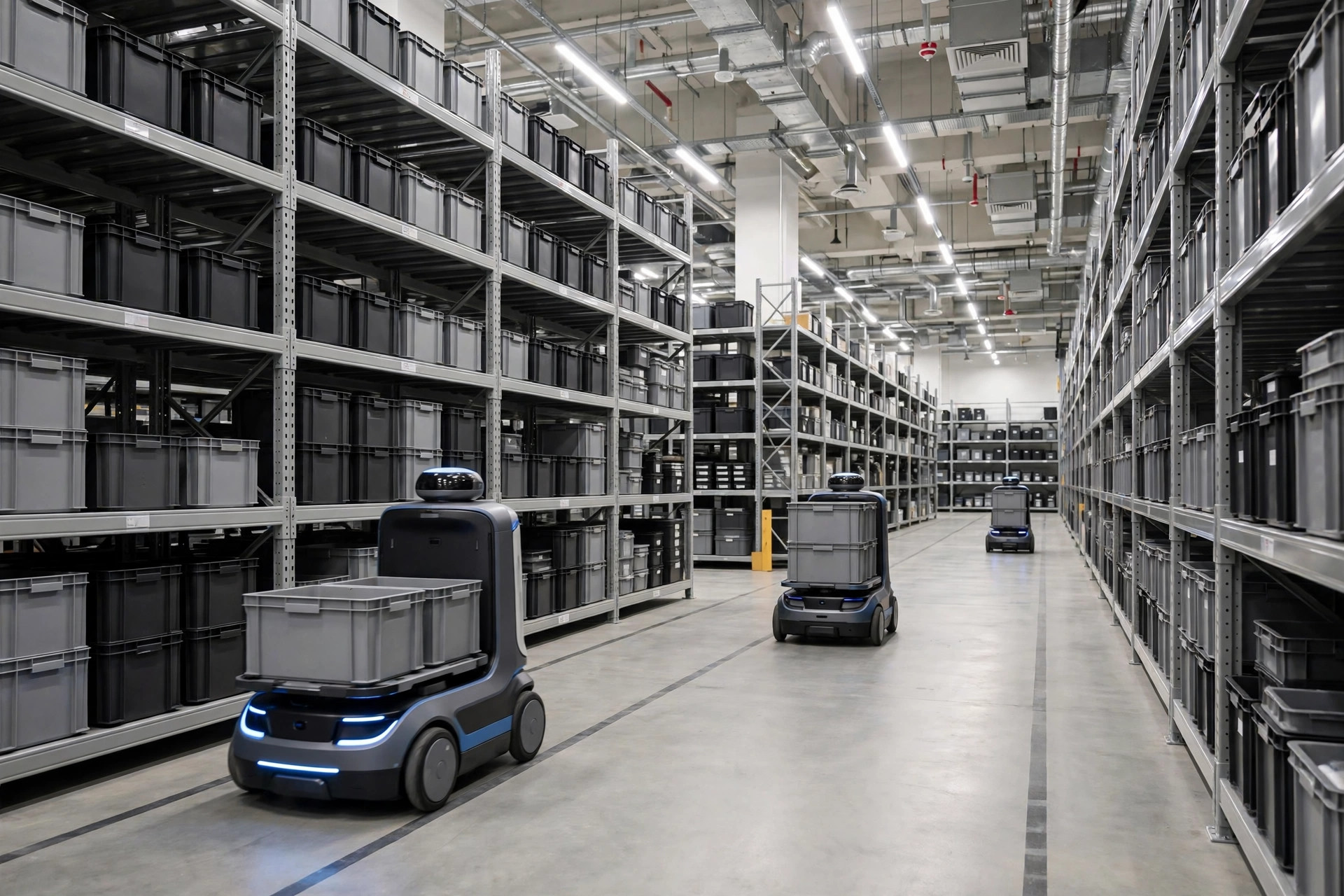
Bet two: targeted automation retrofits. Note: not new fully automated warehouses, but patching existing ones — an AMR for the worst bottleneck, an auto-sorter for the most grueling station. Behind this "brownfield retrofit" logic is a maturing approach to ROI math: CIOs have learned that the payback period for fixing one bottleneck is far more predictable than for tearing everything down. The 2027 automation budget theme is precision strikes, not blanket coverage.
Bet three: data infrastructure. The least glamorous, possibly the most important. Master data governance, systems integration, real-time visibility — without clean, accurate foundational data, AI scheduling is a castle in the air, and automated equipment can't coordinate either. Many companies' 2027 budgets contain a dedicated data governance line item for the first time.

The relationship among the three is worth savoring: data infrastructure is the foundation, automation the limbs, AI scheduling the brain. The order cannot be reversed — yet in practice, most companies invest in reverse: buying the brain first, then discovering the foundation was never poured. That is also where the highest risk of failed AI projects sits in 2027.
An illustrative allocation framework (for discussion only, not survey data):
| Direction | Rough position in incremental budget | Key decision point |
|---|---|---|
| AI scheduling and forecasting | Largest share of the increment | Fix data quality first, or the "smarter" the algorithm, the more spectacularly wrong |
| Targeted automation retrofits | Stable share | Fix only bottleneck links; don't chase full-warehouse automation |
| Data infrastructure | Fastest-growing share | Master data governance before the pretty dashboard |
The Money Is Spent; ROI Remains an Open Question
Which brings us to a counterintuitive observation: the companies spending the most on warehouse technology are often the ones least able to articulate the ROI.
The reason is not hard to see. Labor saved is easy to count; but how many stockouts were avoided, how much faster fulfillment lifted repeat purchases, how much fewer errors saved in customer service costs — attribution for these benefits is permanently murky. More subtly, the greatest value of technology spending may be "things that didn't happen": the peak-season sale that should have overwhelmed the warehouse but didn't, because the system flagged it early. Financial models have no line for that.
So in 2027 budget meetings, CIOs will face a dilemma: the board wants ROI numbers, while the most valuable technology investments are precisely the hardest to quantify. My judgment is that new measurement frameworks will emerge over the next two years — moving away from per-project ROI toward composite indicators like "technology readiness": how many processes are system-covered, what data latency looks like, average anomaly response time. These metrics are imperfect, but more honest than forced ROI math.
One open question to close: if your 2027 warehouse tech budget could fund only one direction — the brain, the limbs, or the foundation — which would you pick? Different answers reveal different anxieties: fear of falling behind, fear of meltdown, or fear of a shaky foundation. Figure out what you're actually afraid of, and the budget will know where to go.
By Dr. Chen, Supply Chain Researcher