Here's my AI talent verdict up front: nine out of ten warehouses have no business hiring their own AI engineers.
Put bluntly, this is not a technology question. It's an accounting question. In the US, a machine learning engineer now commands an average base salary of $187,000 to $190,000 a year — that's Indeed's 2026 figure, drawn from thousands of job postings. Add insurance, payroll taxes, and overhead, and one engineer costs you roughly $250,000 a year, fully loaded. Before a single line of code is written, you're burning close to half a million dollars a year on a two-person team.
I've watched too many owners come back from an AI conference and announce, "We're building our own AI team." Building it is the easy part. Keeping it alive is where the money dies. So today I'm laying both ledgers open — build versus buy — and you can decide for yourself which path pays back first.
The Build Trap: $800,000 for a Pile of Notebooks
In 2023, the owner of a 3PL doing e-commerce fulfillment out of Ontario, California, bought me coffee and said, "Lao Mi, we're going to build our own AI — demand forecasting, smart labor scheduling, the works." I asked whether his data was big enough and clean enough. He said, "We'll hire first and figure it out."
Six months later he had his team: two AI engineers, one on modeling, one on engineering. Base salary $190K each — $380K in wages alone, pushing $500K a year once benefits were in. Fourteen months in, they had models. The accuracy numbers even looked respectable. But nothing ever went live: the WMS data feeds didn't line up, every promo season threw the forecasts off, and the floor supervisors trusted their gut over the model's numbers anyway.
In month sixteen, a big tech company poached both engineers with 30% raises. The owner had spent over $800,000 and was left holding a pile of Jupyter notebooks and the excuse that "the data foundation wasn't there." Put bluntly, he never bought AI capability — he bought two people's resume padding. They used his warehouse as a training ground, then left.
The True Cost of In-House AI Talent: A Three-Year Ledger
No gut feelings — here's the side-by-side. Salaries use Indeed's 2026 US average for machine learning engineers ($187K–$190K base), fully loaded. Off-the-shelf pricing uses public market ranges (vision-system implementations $30K–$150K; SaaS at $500–$2,500 per camera per year).
| Build (2-person AI team) | Buy (SaaS / off-the-shelf) | |
|---|---|---|
| Year-one cash outlay | ~$500K (wages + benefits) | $30K–$150K implementation + annual fee |
| Time to first value | 12–18 months | 6–12 weeks |
| 3-year total cost | ~$1.5M | ~$150K–$400K |
| Payback starts | Year 3, maybe | Year 1 |
| Biggest risk | They quit and take the knowledge with them | Vendor lock-in, customization ceiling |
See it? Building isn't a little more expensive — it's an order of magnitude more expensive. And that $1.5 million doesn't buy you "AI capability." It buys you the chance to make mistakes: the model might not work, might not be trusted, and the people who built it might not stay.
The Buy Payback: Live in Six Weeks, Paid Off in Two and a Half Months
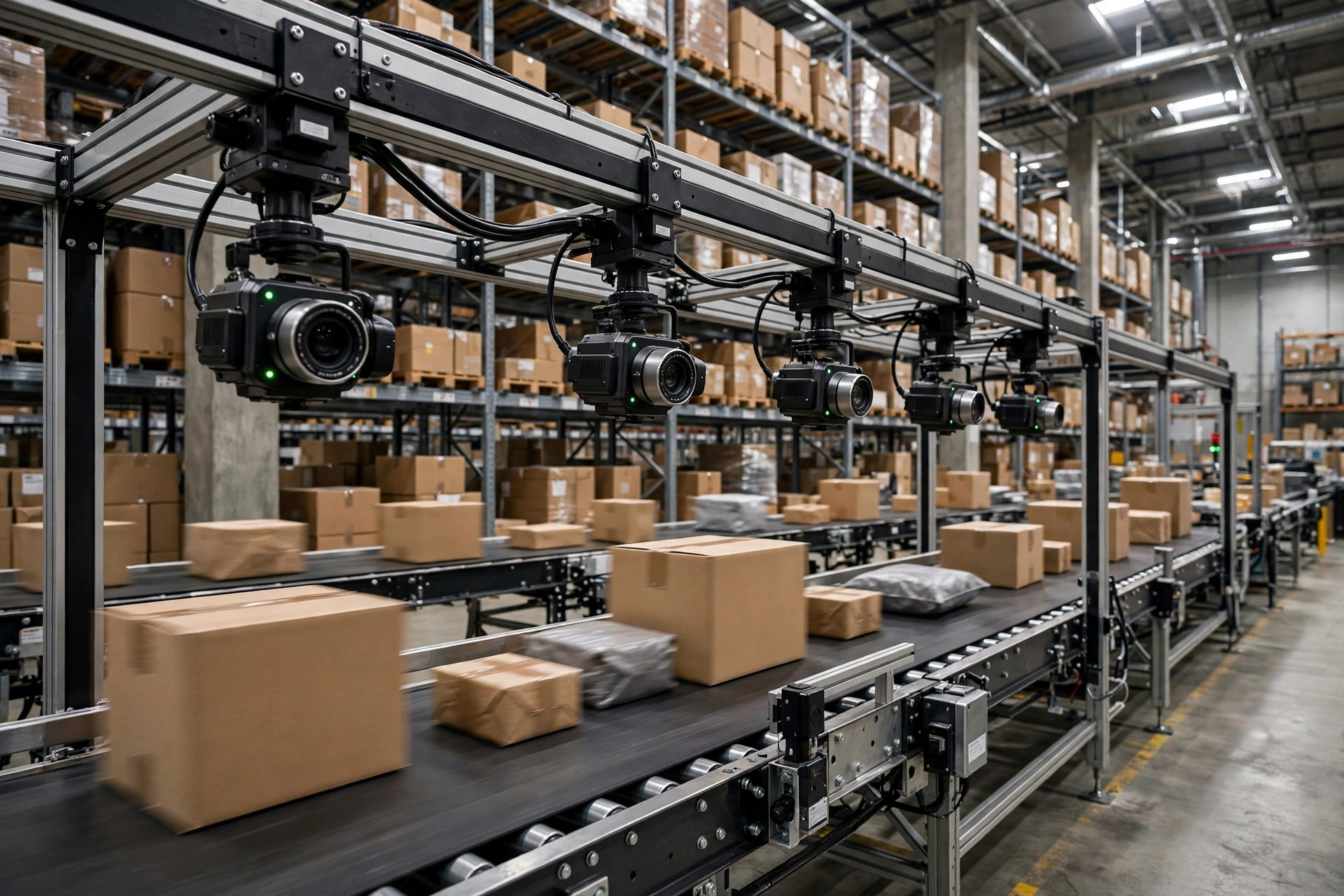
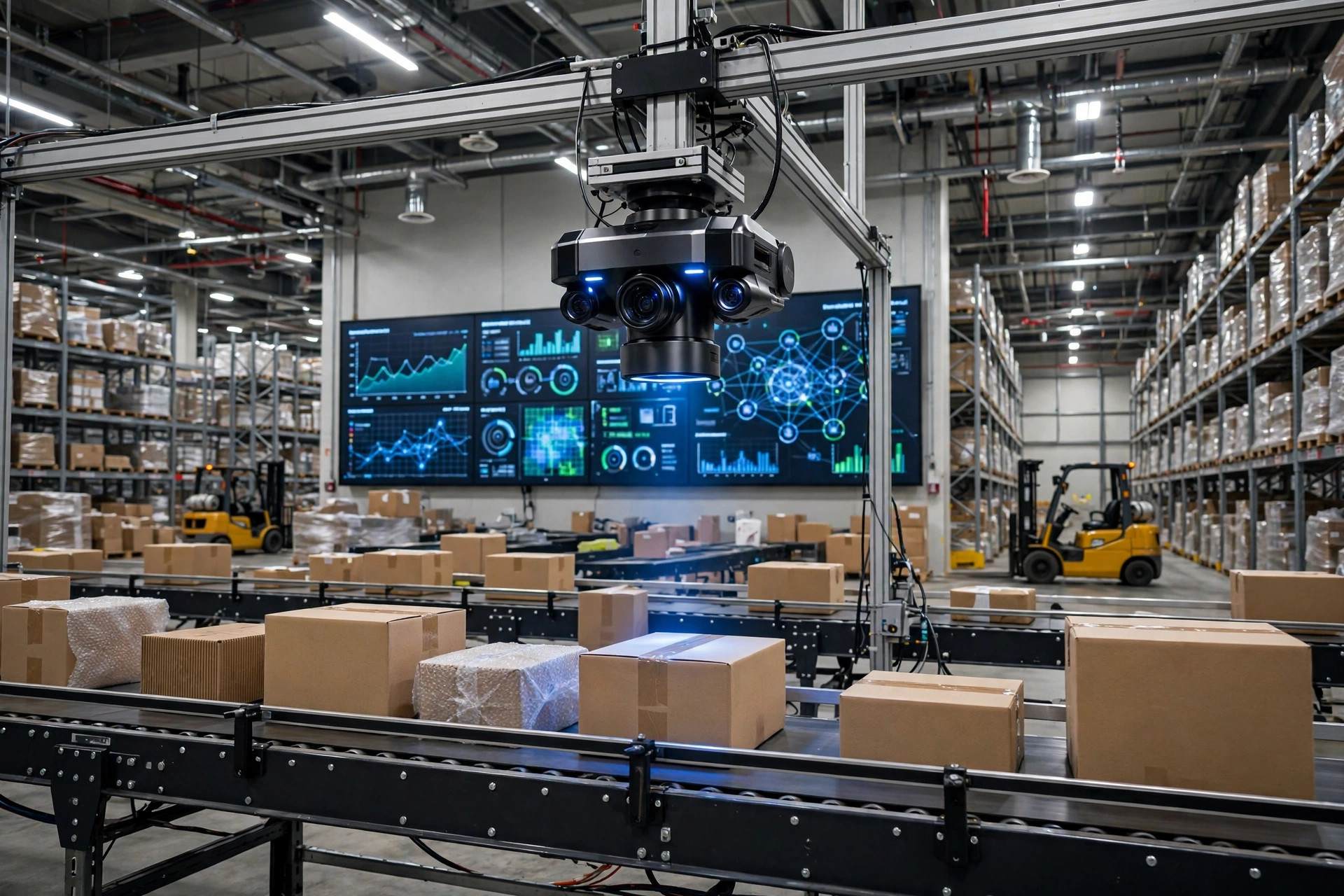
Now the other side. In 2024, an auto-parts distribution center in Ohio was shipping 20,000+ orders a day and eating nearly $100,000 a month in damage claims. The owner hired nobody. He bought an off-the-shelf vision inspection system — cameras over the conveyor, automatically flagging damaged cartons and mislabeled parcels.
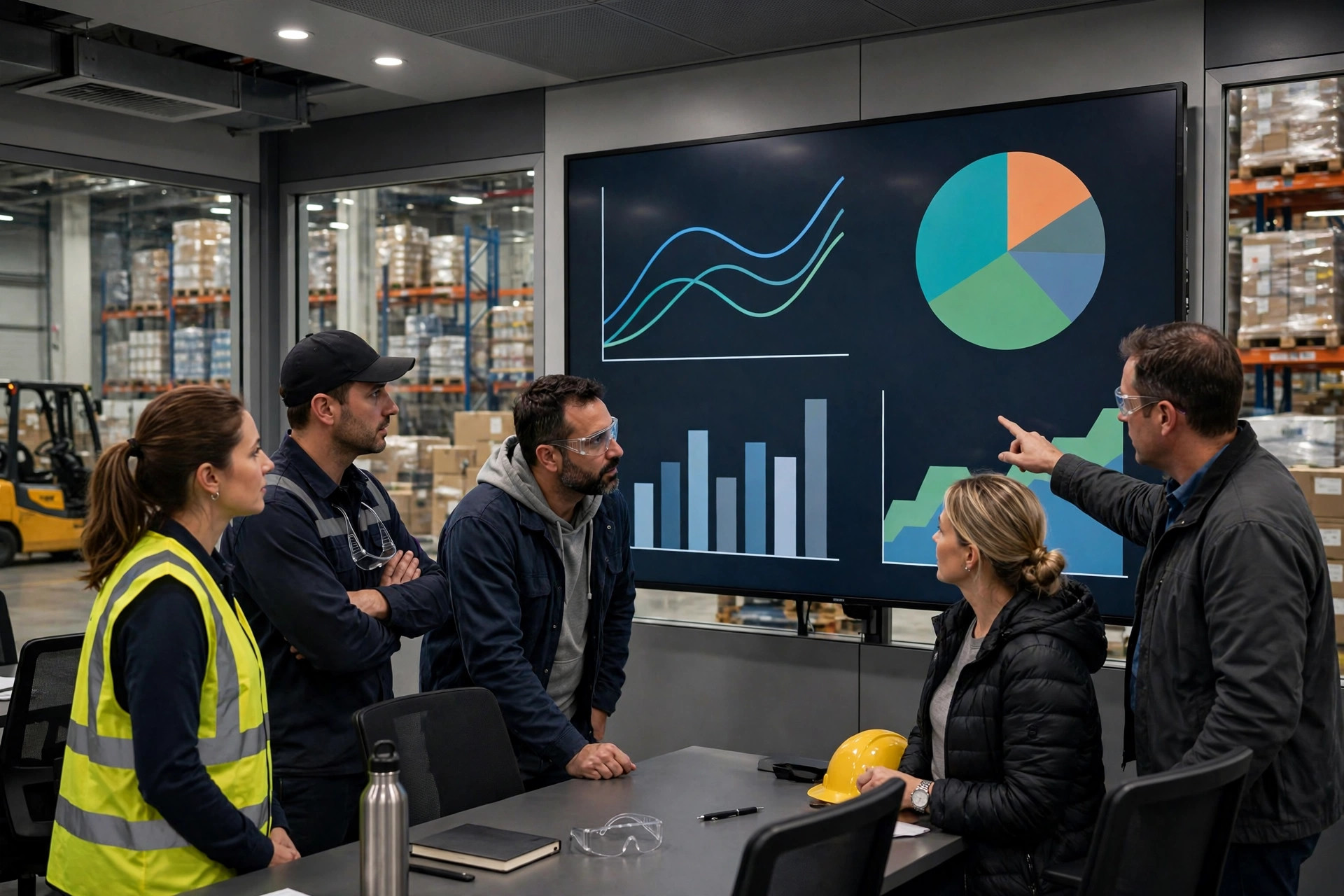
Implementation cost under $100,000. Live in six weeks. Annual software fee a little over $20,000. Within three months, damage claims fell 40% — $40,000 saved a month. The implementation paid for itself in about two and a half months.
There's another side to this: off-the-shelf doesn't win because the technology is better. It wins because time is on its side. The vendor already paid tuition at dozens of warehouses and stepped in every hole. You buy the finished product; you inherit the lessons. Build it yourself, and you get to step in every one of those holes personally — at full price.
A Counterintuitive Take
You think building in-house means "owning the core technology." What you're really buying is attrition risk. AI engineers are among the most recruited people in America. Your warehouse is too small a temple to keep the big monks — that 3PL in Ontario is the standard ending.
You think buying off-the-shelf means "paying the idiot tax." What you're really paying is outsourced tuition. Somebody else stepped in the holes; you just use the road.
And here's the line that stings most: what determines payback speed was never "build versus buy." It's whether your data can feed the model. Dirty, thin data means building burns money and buying burns money too — garbage in, garbage out, no matter how good the model is. Most owners get the sequence backwards: hire engineers first, fix data later. The correct order is the reverse.
Three Questions Before You Choose an AI Talent Strategy
One: Is your problem an industry-common problem or your own secret sauce? Damage detection, demand forecasting, labor scheduling — common problems, buy. Your sortation logic is one of a kind and no vendor product can be bent to fit — then we can talk about building.
Two: Do you have two or three years of clean data? If not, forget AI and talk data governance first. At that stage, one data engineer is worth ten AI engineers.
Three: Can you stomach twelve months of zero output? When the board asks, what will you show them?
Only if you pass all three does building even enter the conversation. And even then, I don't mean building from scratch — buy the platform, buy the foundation, and hire exactly one "AI translator": someone who understands warehouse operations, can tune vendor parameters, and can push back on the supplier. That's the optimal setup for most warehouses: off-the-shelf speed plus in-house business understanding.
So stop asking the false binary of "build or buy." Ask yourself instead: how many $250,000-a-year heads can my warehouse afford to burn? And is my data good enough to feed a model? Answer those two honestly, and the AI talent math does itself.
By Lao Mi, Supply Chain Veteran (20 yrs)