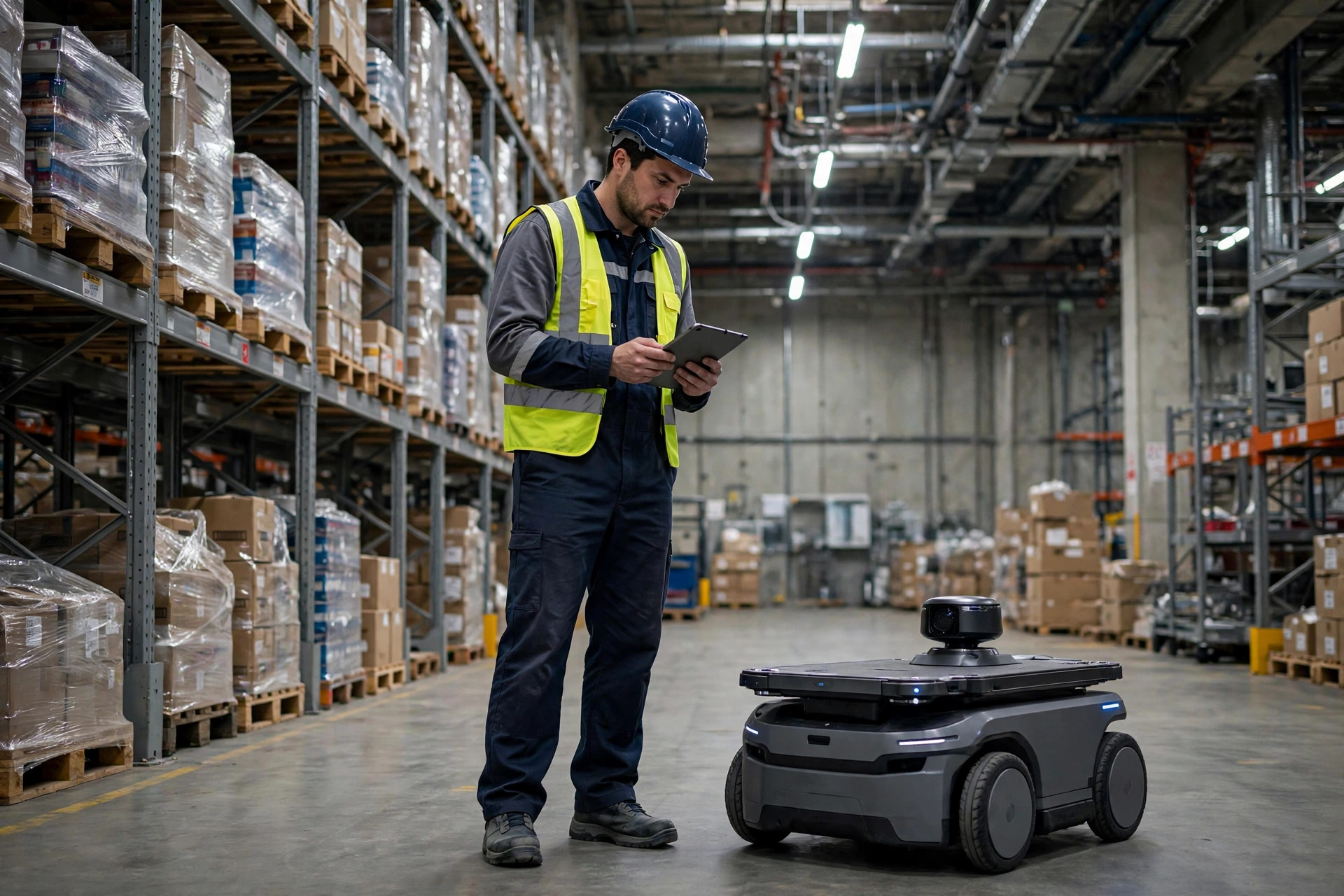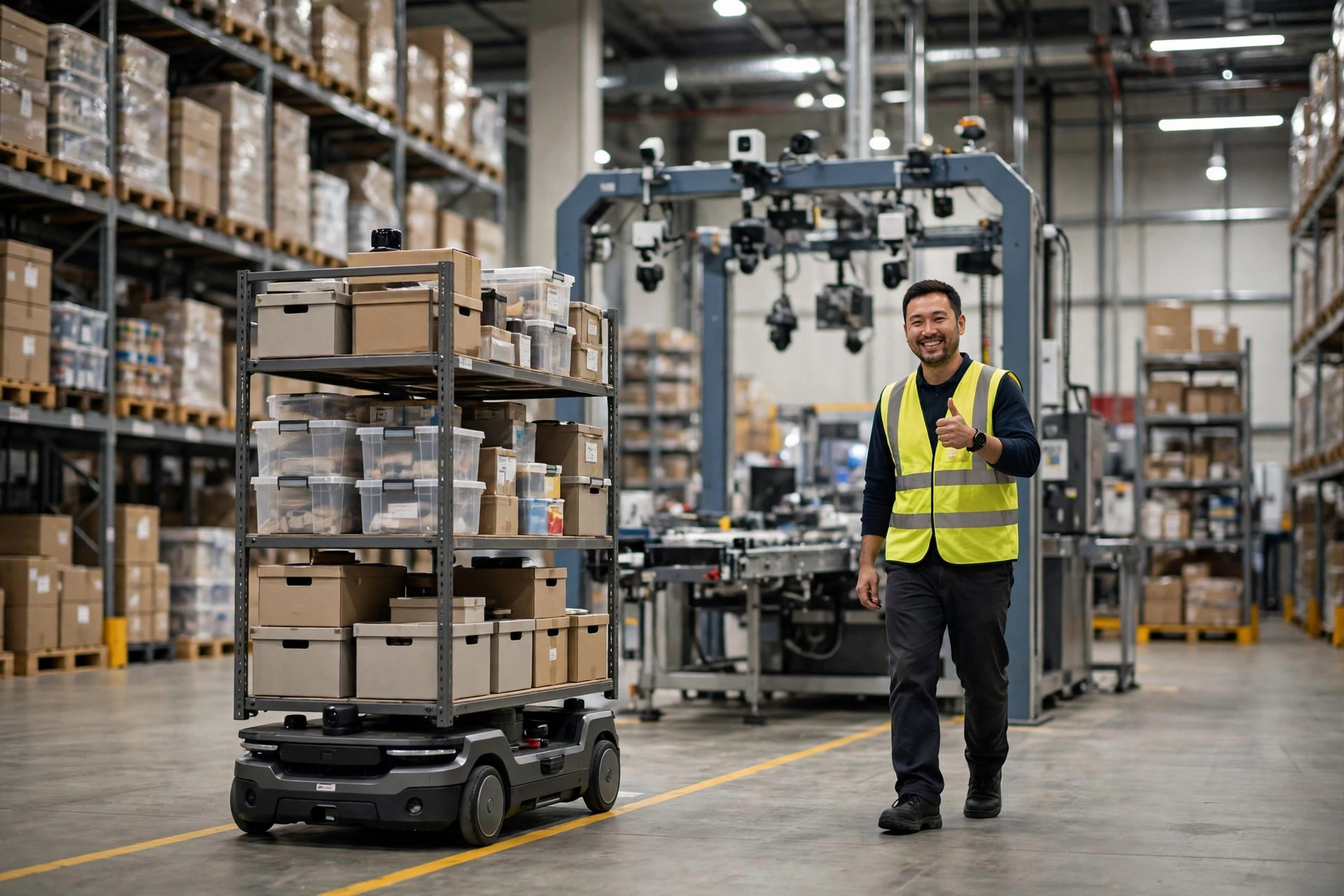
Believe it or not — this is warehouse AI change management in its most honest form. A 3PL I know spent a small fortune on a pack-station vision inspection system — camera snaps a photo, mis-picks trigger an alarm automatically. Sounds beautiful, right? Three months later I visited their warehouse and saw workers still checking orders against paper slips one by one, the camera gathering dust overhead. I asked why. The team lead told me: "That thing false-alarms all the time. My eyes are faster."
The system is fine. The algorithm is fine. What's broken is the people part. As a seller, I'm hardly qualified to lecture — but I've watched three or four AI rollouts at warehouses I work with, the wins and the face-plants, all up close. Today I'm not talking specs. I'm talking about what the tech vendors will never tell you: when AI enters the warehouse, the bottleneck is never the technology. It's change management.
Why Warehouse AI Change Management Gets Stuck — and It's Never the Tech
Three choke points I've seen with my own eyes.
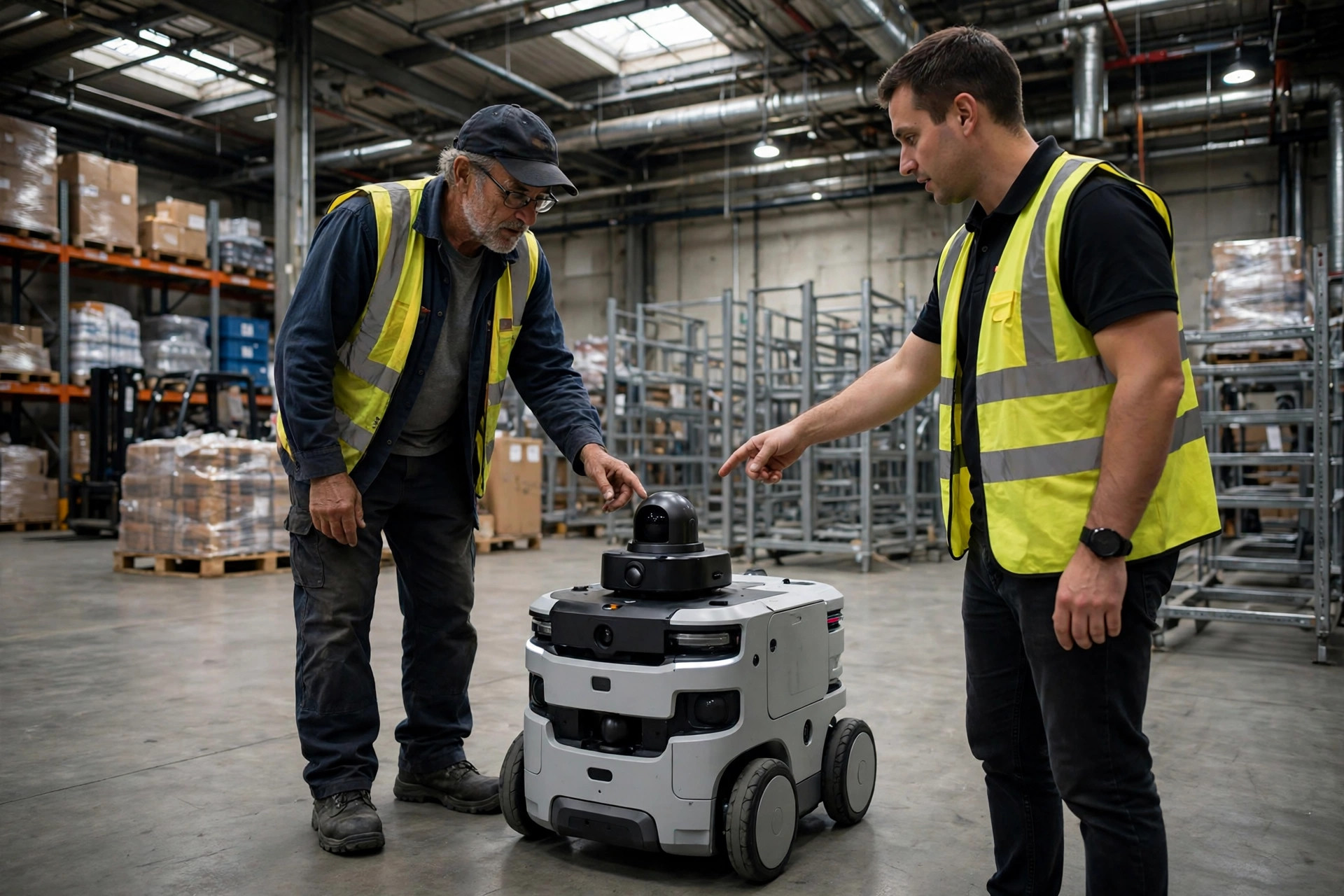
Choke point one: veteran workers think AI is coming for their jobs. Vision inspection, AMRs — a picker's first thought isn't "efficiency gains," it's "am I about to get fired." Once people panic, no new system gets adopted. At one warehouse rolling out AMRs, three veteran workers went into slow-motion protest — deliberately blocking the robots' paths, tripping the dispatch system alarms all day. The tech team tuned parameters for a month. Nothing moved. Then management changed tactics, and things smoothed out in two weeks.
Choke point two: the process never changed — the new equipment was just bolted onto the old one. The classic is vision inspection: the old flow was "pick → manual check → pack," and after the cameras went in, the flow was still "pick → manual check → pack," with the camera as decoration. The correct flow is "pick → camera check → pack" — remove the manual-check step, redeploy the people elsewhere. If you don't change the process, AI is just a tax on the old one.
Choke point three: nobody owns the outcome. The boss bought the system, IT installed it, ops uses it daily — but "what number is this system supposed to move" was never decided by anyone. No target, no review. No review, and high false-alarm rates never get tuned, stuck processes never get fixed, and three months later it's dead.
Look at those three. Which one is a technology problem? None of them.
4 Field-Tested Plays for Warehouse AI Change Management
The four plays below come from warehouses I've seen actually pull this off. Don't shuffle the order.
Play 1: Don't roll out site-wide. Pilot the single most painful spot.
The number-one way AI projects die is "go big on day one." The boss waves a hand, the whole site goes live, nothing shows results in three months, and now everyone says AI is a scam.
The warehouses that made it work do the opposite: pick one spot that hurts the most, is the smallest, and is the most measurable. The pack station with the worst mis-ship rate. The returns-check corner that's always on overtime. One spot only, with a target written in stone: cut mis-ships by X, save Y labor hours. If it works, that spot becomes the showroom for the whole site. If it doesn't, the loss is contained and you pivot.
That 3PL with the vision system turned it around exactly this way. The first site-wide rollout died. The second attempt picked just the two pack stations with the worst mis-ship rates, with one target: cut mis-ships in half. Two months, target hit. Then the other stations' leads came asking "when do we get ours." See? You never have to push adoption. It pulls itself.
Play 2: Win over the veterans first. Make one of them the "AI champion."
How did the AMR warehouse get unstuck? The warehouse manager did one thing: invited the ringleader of the slow-motion protest into the office. No lecture. Just asked: "Where exactly does this robot get in your way?" The veteran named three problems — all real: the robots blocked forklift lanes, the charging docks ate into staging space, dispatch priorities made no sense. The manager fixed them one by one, then made the veteran the "AMR coordinator" — a small raise, a new line on his badge.
Two weeks later, his shift ran AMRs better than anyone in the building. The lesson is simple: the first step of change management isn't training, it's recruiting. Veterans don't hate AI. They hate being kept in the dark. Give them a seat and a win first — and they'll push harder than you ever could.
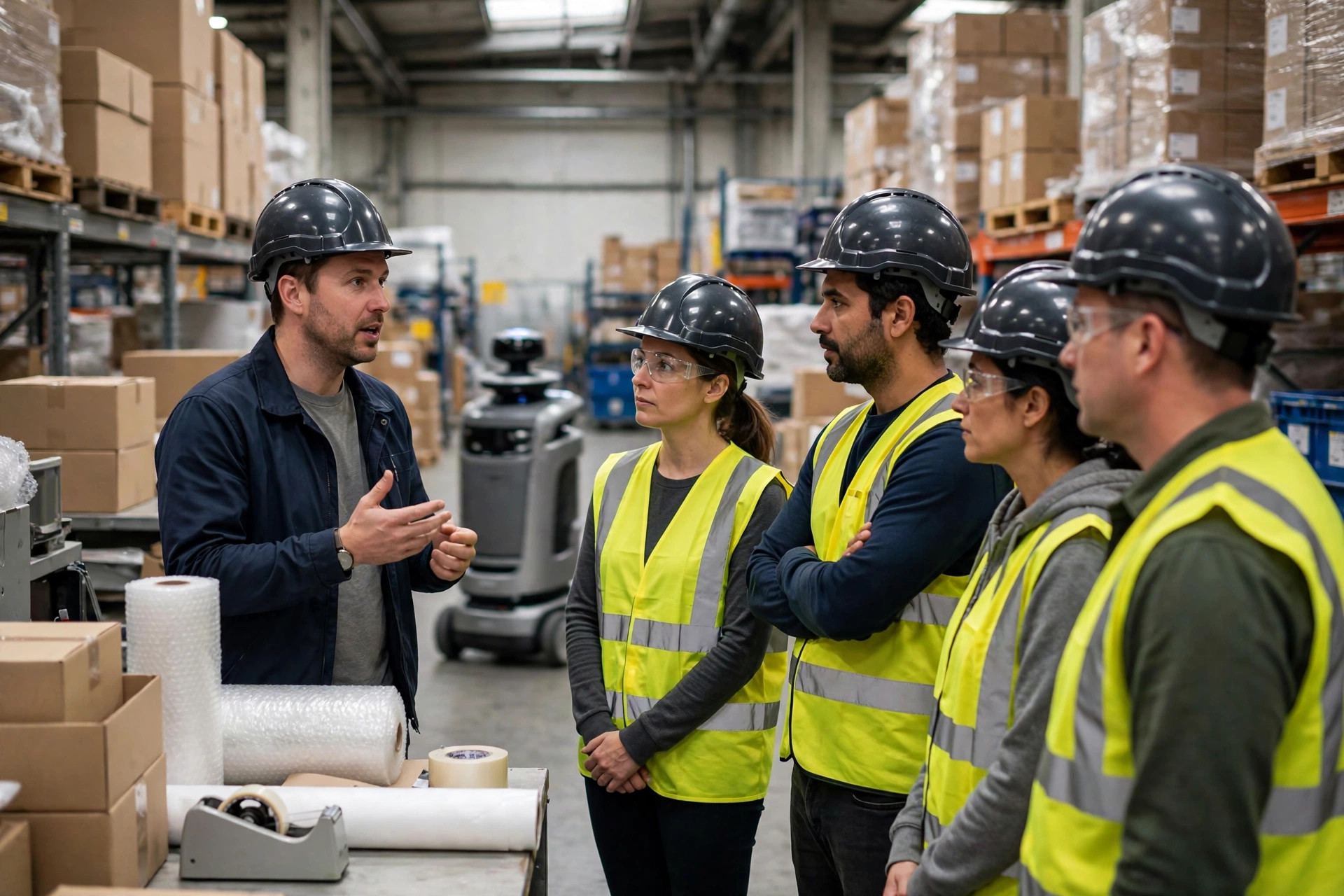
And get the sequence right. Most companies do "train everyone, then go live." Wrong. Get two or three veterans deep into the pilot first, make them your AI champions, then train everyone. One word from a champion beats ten from you.
Play 3: Share the savings with the floor.
This is the most counterintuitive play — and the one where ROI actually lands.
The boss's first instinct with AI labor savings is "cut headcount." Don't. At least not in year one. The right move: take part of the savings and pay it to the floor as bonuses. Vision inspection freed up two checkers? Don't cut them — redeploy them to value-added work (labeling, QC) and add an "AI collaboration bonus" to their pay.
The math is easy: you were never going to capture those savings anyway (an unused system = zero return). Give away half, keep the other half, plus a team that actually cooperates. I ran the numbers for that 3PL: two pilot pack stations, one and a half checker roles redeployed, a few thousand extra in monthly bonuses — but mis-ship payouts dropped by several thousand a month. Net positive, plus a stable team.
AI's ROI isn't bought. It's shared into existence. Share nothing, and nobody will run the ROI for you.
Play 4: A 15-minute weekly review. Numbers only.
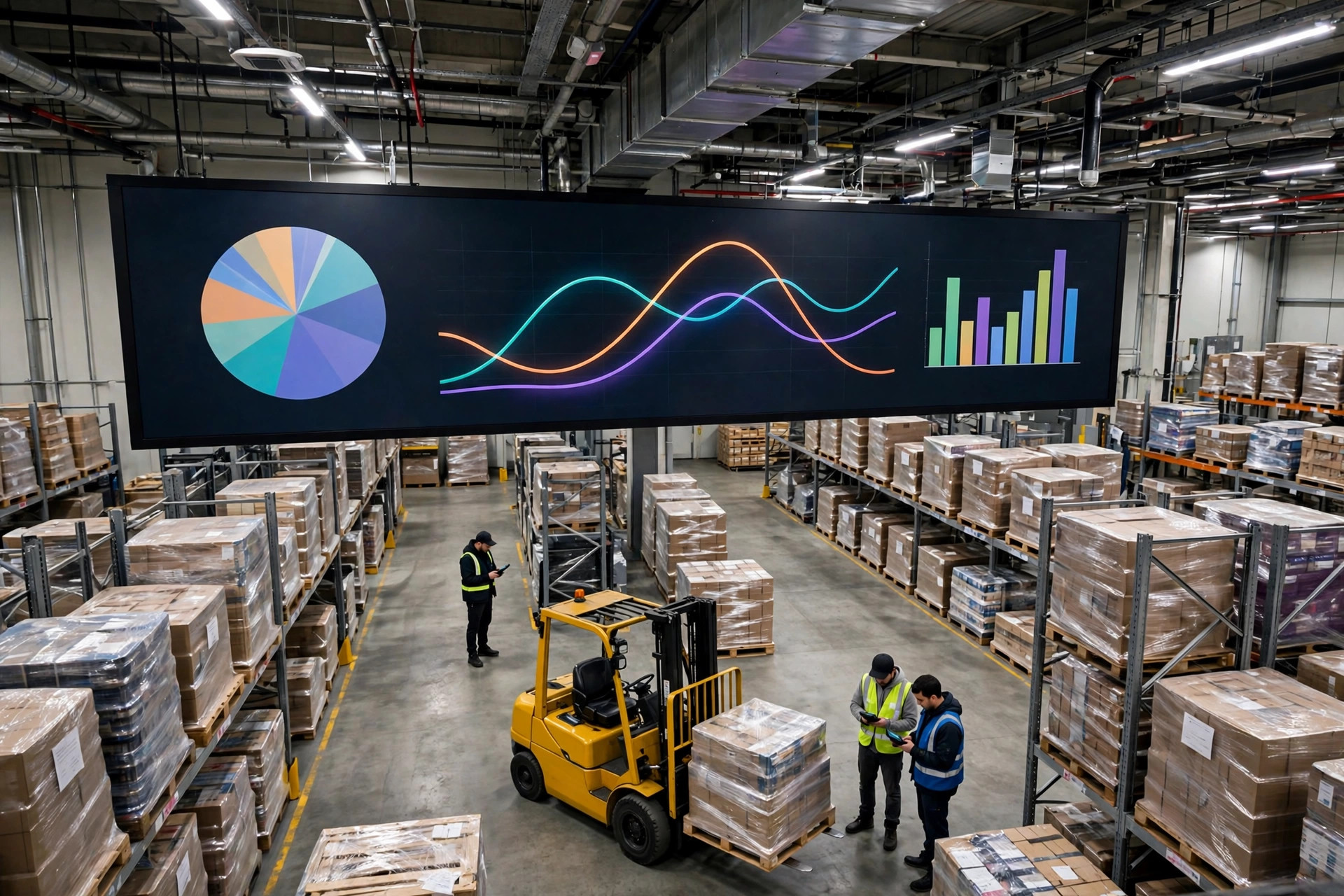
The first three plays are about launch. This one is about not dying. Fifteen minutes, every week, three people: the warehouse manager, IT (or the vendor), one floor lead. Three numbers only: did we hit the target, how many false alarms / exceptions, top 3 pieces of worker feedback.
Fifteen minutes — not a minute more. If the numbers look bad, tune parameters or fix the process. Two straight weeks of no progress? Shrink the pilot. The point of the review isn't blame. It's making sure everyone sees "someone is watching this, and it's iterating." The thing AI systems fear most isn't problems. It's problems nobody addresses.
Two Scenes I Watched Happen
Scene one: the vision-inspection comeback, 2024, a 3PL in eastern China. First site-wide rollout, dead in three months, cameras gathering dust. Second attempt, by the book above: two worst pack stations only, a veteran as pilot lead, redeployed checkers with bonuses, weekly reviews. Two months, mis-ships down by more than half. The boss told me: "If I'd known to pilot first, I could've saved that tuition." I told him his tuition was cheap. I've seen people pay more.
Scene two: the AMR slow-motion incident, 2023, an e-commerce warehouse in southern China. Three veterans resisting AMRs, dispatch alarms daily. The manager didn't force it — he asked the ringleader for input, fixed the layout, gave him a title. Two weeks to smooth operations; three months later those veterans were the best AMR operators in the company, and one got poached to run automation at a new site. See? People don't oppose progress. They oppose being treated as the cost of progress.
Don't Hype AI. Do the ROI Math.
A word of AI-column sobriety to close. My stance on warehouse AI has always been: no hype, no hate, just math.
Here's a simple ROI formula that works: (labor saved + mis-ship payouts avoided + overtime saved − system cost − maintenance) / system cost. Both numerator and denominator must use real, observed numbers — not the vendor's slide deck. Deck ROIs are always 300%. Real ones landing at 80% would be great.
Three more traps to dodge: first, don't believe "works out of the box" — every warehouse AI needs one to three months of break-in, budget for it; second, data quality decides everything — a warehouse with chaotic location coding will just get chaos faster with AMRs, fix your master data first; third, write false-alarm-rate and uptime commitments into the contract, make the vendor own the tuning, and never pay in full upfront.
This fight is about people, not algorithms. The tech company owns making the system good. You own getting the people on board. Get the people right, and the ROI follows. Get it wrong, and the priciest system is just an expensive decoration gathering dust overhead.
These four plays — I've seen them work with my own eyes. Take them. You won't go far wrong.
By Ah K, E-commerce Seller (5 yrs)