I have sat through seven or eight WMS vendor briefings this year, and one detail keeps repeating: around slide three, the same word always appears — agentic. Three years ago that slide said "cloud-native"; five years ago it said "microservices". Vendors always narrate ahead of their products — that is nothing new. What is new is that buyers seem to actually believe it this time.
According to the 2024 MHI Annual Industry Report, produced with Deloitte, 84% of surveyed supply chain companies plan to adopt AI technologies within the next five years, 27% report already using AI, and only 15% say they are unlikely to adopt it. Meanwhile, 55% of firms are increasing their supply chain technology and innovation budgets, with 42% planning to spend more than $10 million. A separate data point comes from IoT Analytics' intralogistics market report: the global intralogistics market reached $96 billion in 2025, with the software segment projected to grow at an 11.4% compound annual rate to $10.8 billion by 2030. Money and intent are moving in the same direction, and marketing alone cannot explain that.
The Ceiling of Plug-in AI: Why "Adding an AI Module" Is Not Enough
To understand AI-native, you have to see clearly what it replaces. The WMS running in most warehouses today is fundamentally a system of record: it faithfully records inventory, orders, and tasks; a rules engine triggers waves and assigns locations on preset logic; the real decisions — which wave to release first, where to shift labor, whether to replenish early — still live in the supervisor's experience. The "AI plug-ins" vendors shipped over the past two years have mostly been copilots: a recommendation appears — "consider moving SKU 4821 to Zone B" — and whether anyone acts on it is up to a human.
That form has an obvious ceiling. Recommendation-style AI does not change the execution loop; it adds a smarter suggestion layer on top of an old process. And the most expensive thing in a warehouse is precisely the time gap between suggestion and execution: in peak season, a wave plan released two hours late throws the entire picking line off rhythm. Plug-ins optimize single points, but they cannot touch the master switch that connects sensing, deciding, and executing.
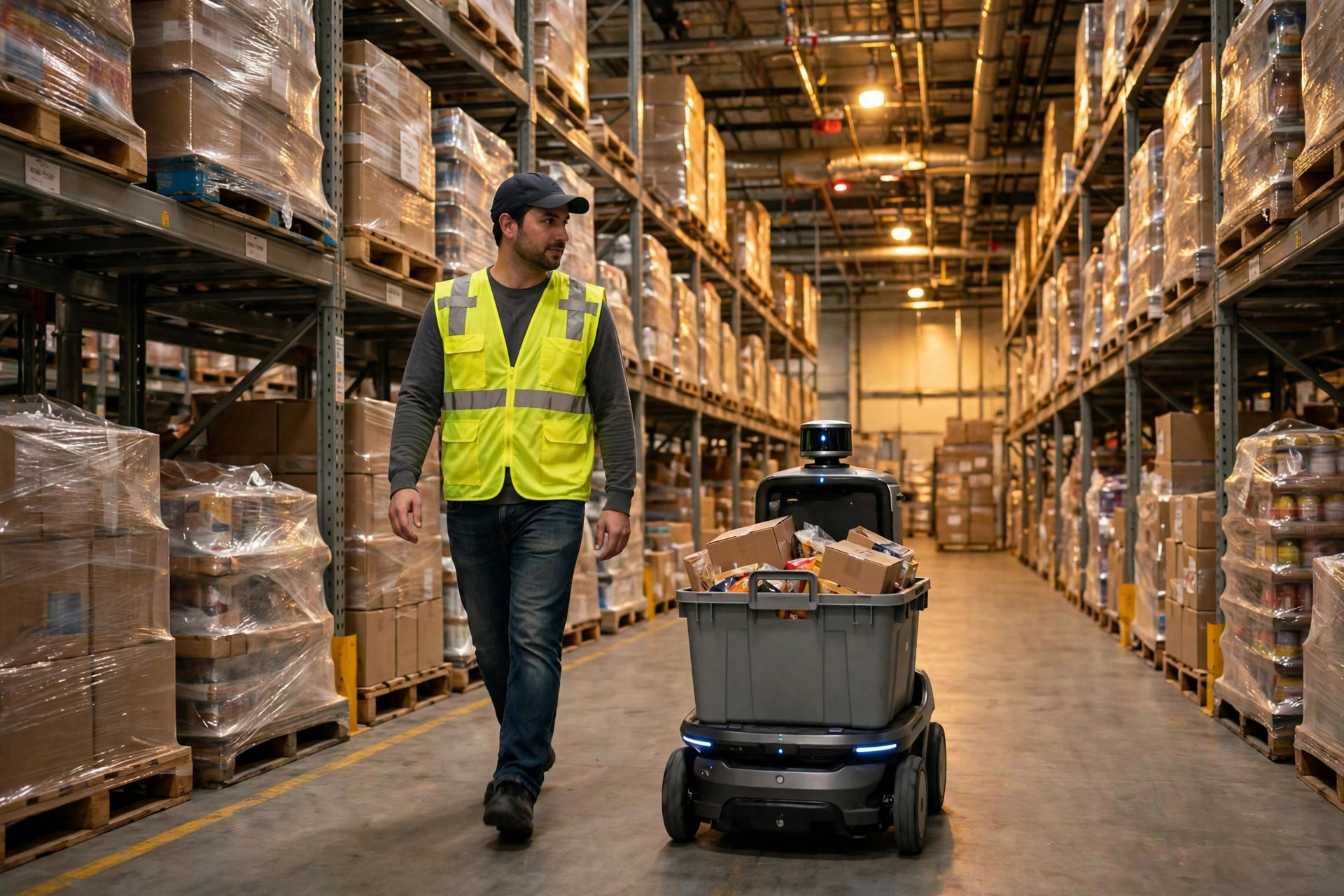
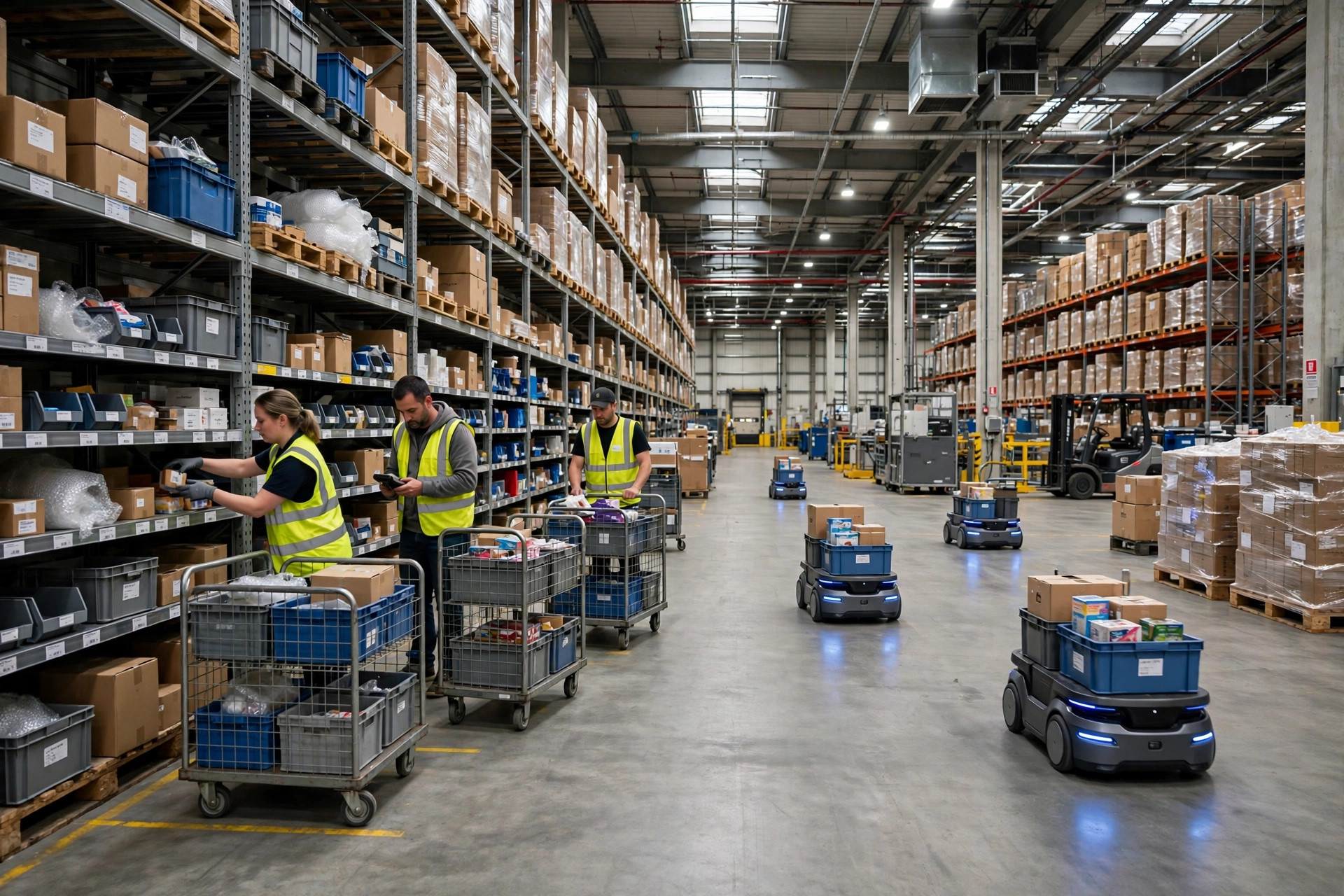
The inflection point arrived in 2025. Amazon announced the deployment of its one-millionth warehouse robot, alongside a foundation model called DeepFleet that coordinates the fleet and improved fleet travel time by 10%. Ten percent does not sound dramatic, until you notice where it came from: not better robots, but better decisions about where the existing robots go. That is a pure software gain, and it does not care whose logo is on the hardware. Around the same time, Manhattan Associates made a set of AI agents commercially available: a Wave Coordinator agent, a Labour agent, and a Dock agent, plus an Agent Foundry that lets customers build their own agents in plain language. Look at the jobs those agents took over: wave planning, labor deployment, dock scheduling — the core of what a WMS supervisor screen has done for twenty years. The difference is that it used to display; now it acts.

The Three-Layer Architecture of an AI-Native WMS
Synthesizing the technical roadmaps vendors are publishing with the three technology trends Gartner flagged in its 2026 WMS Magic Quadrant — cloud-native composability beyond core features, AI- and automation-ready platforms, and converged WMS with supply chain execution — the AI-native architecture is converging on three layers, each a break from the traditional WMS:
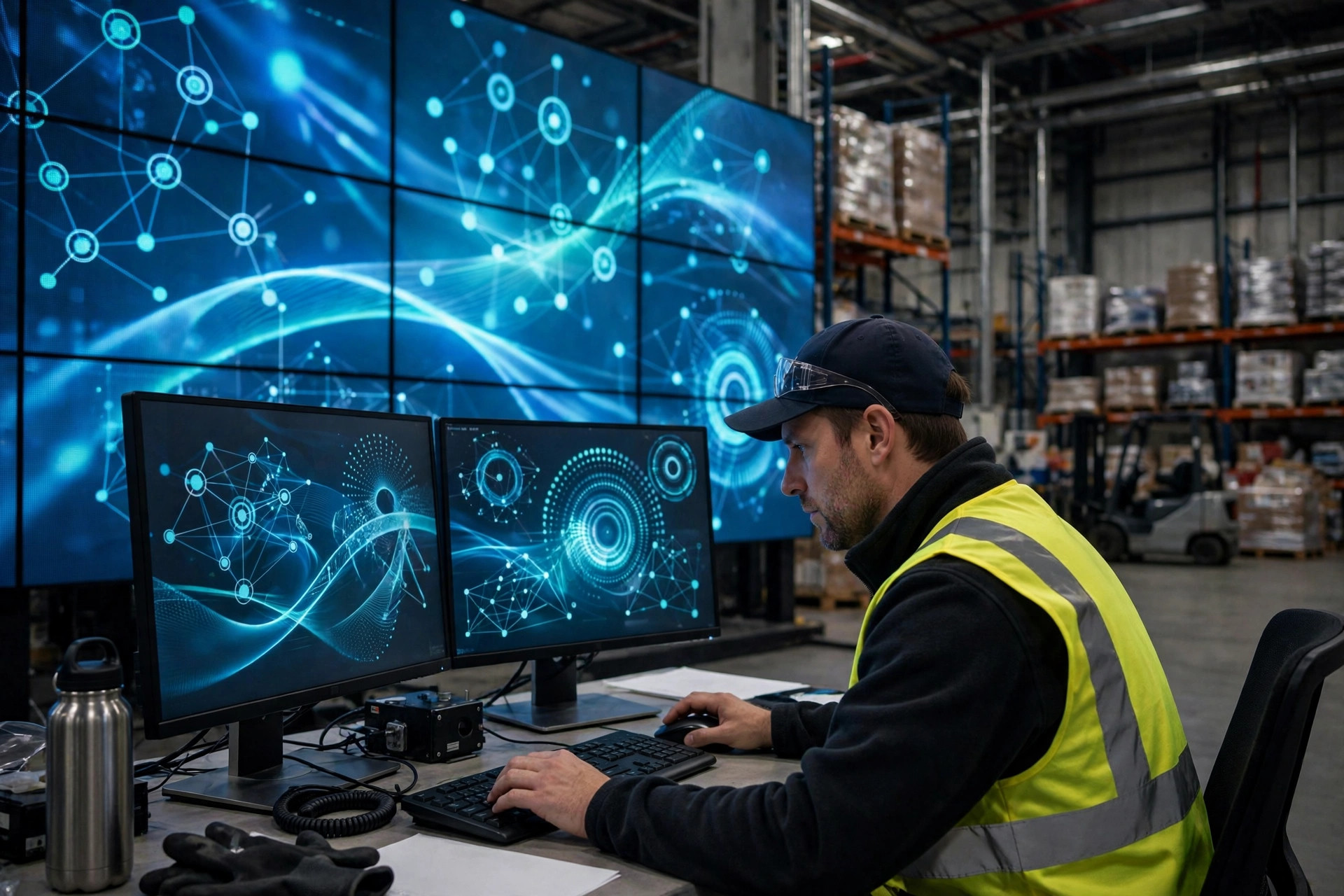
The first layer is sensing and data. A traditional WMS runs on batch, lagging data: nightly jobs, daytime reconciliation. AI-native demands a unified real-time event stream — orders, inventory, labor check-ins, equipment status, dock appointments all entering the same data foundation as events. Without this layer, any agent above it is wargaming on a sand table, disconnected from the floor.
The second layer is reasoning and decision. This is the real meaning of "native": agents no longer fire on fixed rules but continuously optimize against an objective function — dynamically balancing service level, cost, and labor load. What DeepFleet does is, at its core, turning "which path should the robot take" from a static routing problem into a real-time learning problem.
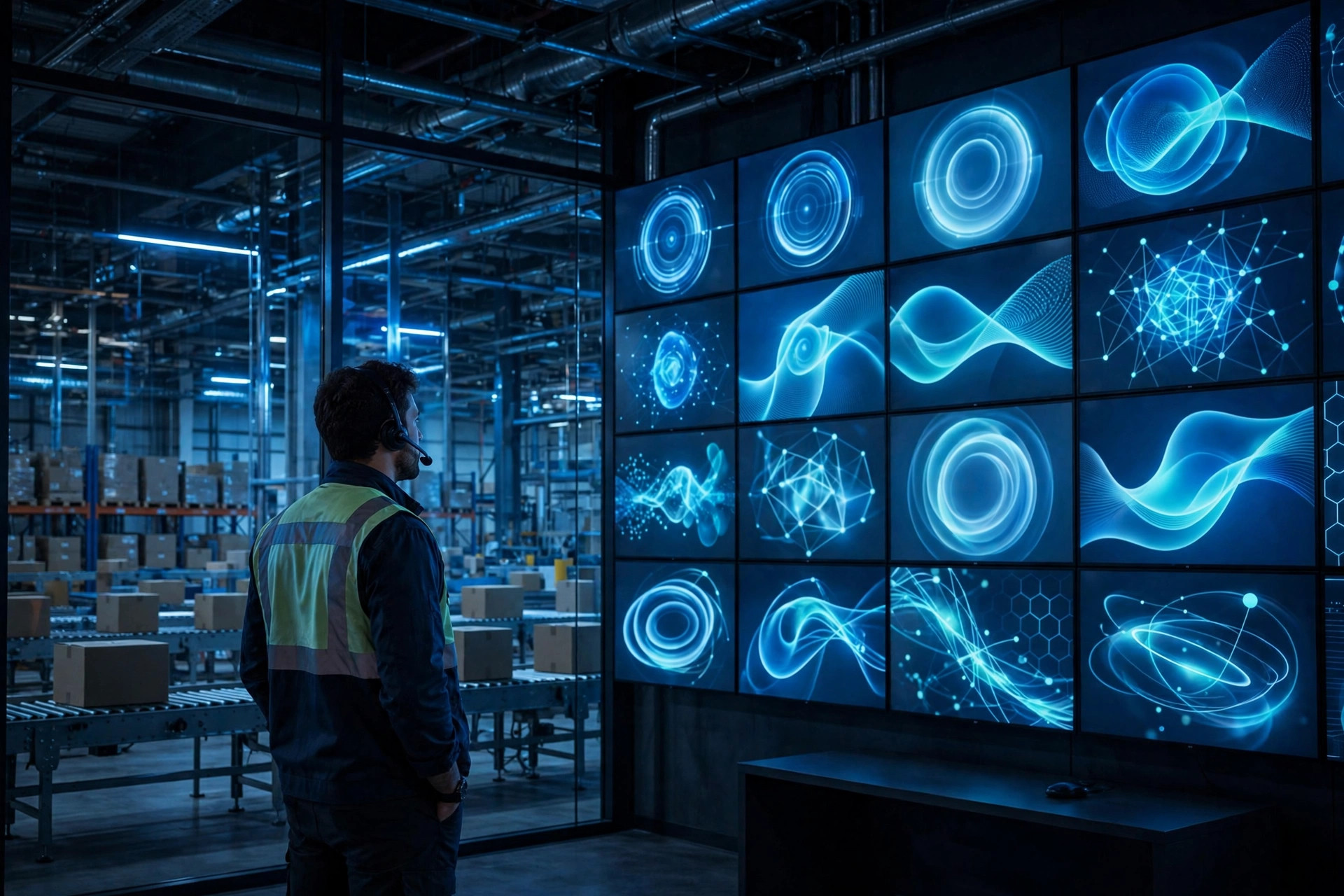
The third layer is execution and orchestration. Decisions flow directly into tasks: instructions to the WES, waves to the labor pool, paths to the robots, with execution results feeding back into the decision layer to close the loop. In a traditional WMS, that loop is completed manually: the system shows an exception, the supervisor calls, the floor adjusts. AI-native removes the human from the loop and places them in the supervisory seat.
One sentence summarizes the shift: the traditional WMS keeps its brain outside the system — in human experience plus a rules engine — while the AI-native WMS grows its brain inside. That is why it is called "native" rather than "enhanced": it is not an elevator retrofitted into an old building, but a floor plan designed for elevators from the start.
Pricing the Switch: The Five Bills of an AI-Native WMS Migration
The architecture is seductive; the bill is sobering. Every generational WMS change carries a ledger thicker than the vendor's deck. I break the cost into five items, comparing the plug-in route against the native rebuild:
| Cost item | Plug-in route (AI module add-on) | AI-native rebuild | Notes |
|---|---|---|---|
| Software licensing | Incremental subscription, low | Platform replacement, high | Native often means switching vendors |
| Implementation timeline | Weeks to go live | Months at minimum | Data-layer rebuild is the main time sink |
| Integration rework | Existing interfaces reused | Interfaces and data models rebuilt | ERP, TMS, and automation connections all move |
| Data governance | Optional | Mandatory | Agents consume real-time clean data; dirty data compounds into wrong decisions |
| Organization and process | Training-led | SOP rewrite | Scheduling authority moves from people to the system |
Here is the counterintuitive judgment: the most expensive of the five bills is not the first — licensing — but the fourth and fifth. AI-native has a rigid requirement on data quality. In a traditional WMS, one wrong inventory record causes at most one picking exception. In an AI-native system, the same wrong record is treated by the agent as fact to be optimized around, potentially triggering a cascade of wrong decisions. Data governance is not an IT project; it is the foundation of AI-native. Without it, the smarter the agent, the faster it goes wrong.
A Trend Judgment: AI-Native Is a Ticket, Not This Quarter's Return
My assessment: AI-native WMS will become the mainstream architecture within five to eight years, but its economic value curve runs opposite to the marketing pitch. Every previous WMS architecture shift — mainframe to client-server, client-server to cloud-native — took five to eight years to truly diffuse, and AI-native will be no exception. Over the next three years, the plug-in route will most likely deliver the better ROI: smaller investment, faster payback, controllable risk. Buying AI-native is not buying this year's efficiency gain; it is buying the option of not being locked into the old architecture.
When should you switch? My framework looks at windows: a greenfield warehouse, or a 3PL onboarding a new client, is the best window — if you are building from zero, build the new thing. An already stable large operation, especially one with a weak data foundation, is better served by the plug-in route; forcing a rebuild there most likely means paying tuition before returns. The logic is simple: migration risk and data readiness determine whether you are paying for a ticket or paying for tuition.
I will close with three open questions, for you to hold against your own warehouse: first, is your real-time data ready — not report data, but event-stream data an agent can consume directly? Second, can your organization accept "machines make scheduling decisions, humans supervise" — which is first a management question and only then a technical one? Third, five years from now, is your current WMS vendor still at the AI table? The answers to those three questions essentially decide whether you should switch now, in three years, or keep watching.
By Dr. Chen, Supply Chain Researcher