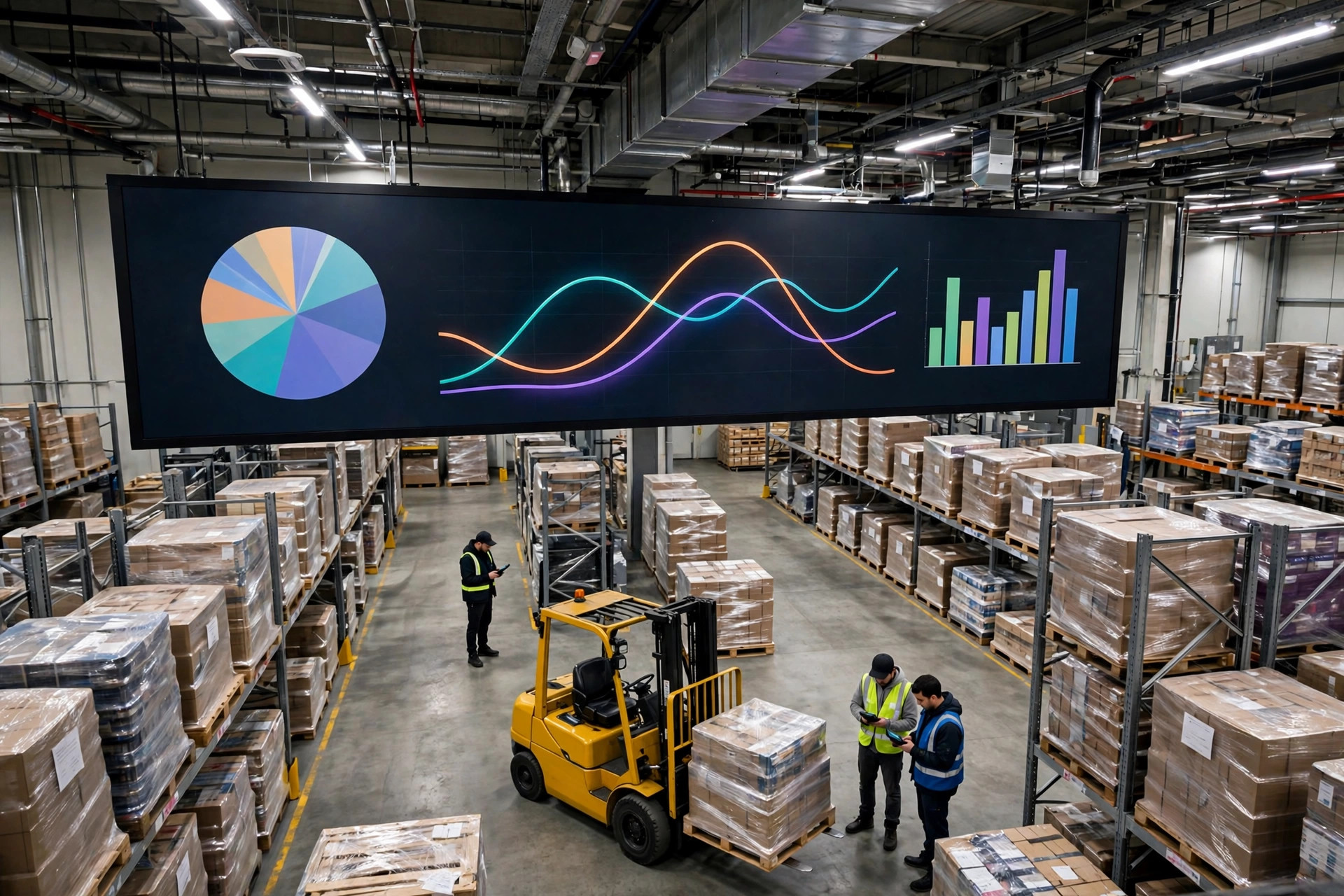
Demand sensing and demand forecasting differ not in algorithm but in time horizon.
Last summer, a heat wave arrived in the American Midwest two weeks earlier than usual. A friend who runs beverage distribution told me what happened that June: the monthly sales forecast called for 120,000 cases, a number built on historical seasonality that was, from a modeling standpoint, impeccable. By the second week of the heat wave, point-of-sale data from convenience channels was already approaching 90,000 cases. By the time the monthly forecast cycle "corrected" itself at month-end, shelves in some areas had been empty for nearly two weeks, and emergency transfers from out of state cost far more than normal freight. His summary stuck with me: "The forecast wasn't wrong. The timing was."
That story captures the fundamental distinction between demand sensing and demand forecasting: they answer questions on different time scales.
Forecasting Sets Direction; Sensing Makes Corrections
According to publicly available industry research, the division of labor is quite clear. Traditional demand forecasting operates over a horizon of roughly 3 to 18 months. Its inputs are historical sales, seasonal patterns, and macroeconomic variables, and it refreshes on the cadence of monthly or bi-weekly S&OP cycles. Its working assumption is that the future will broadly resemble the past, which makes it good at directional questions: should we expand the warehouse next year, how much safety stock before peak season, should we sign long-term capacity.
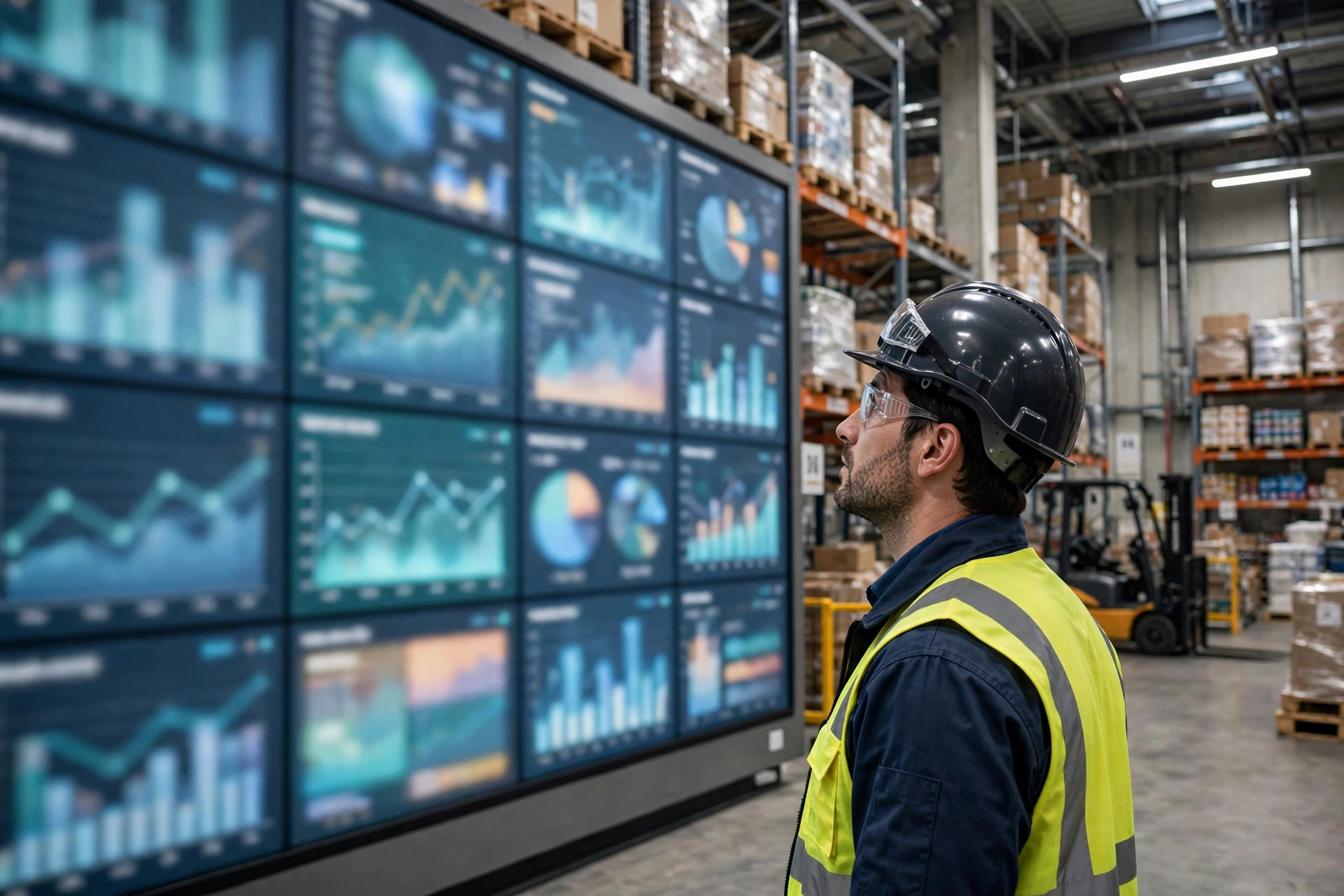
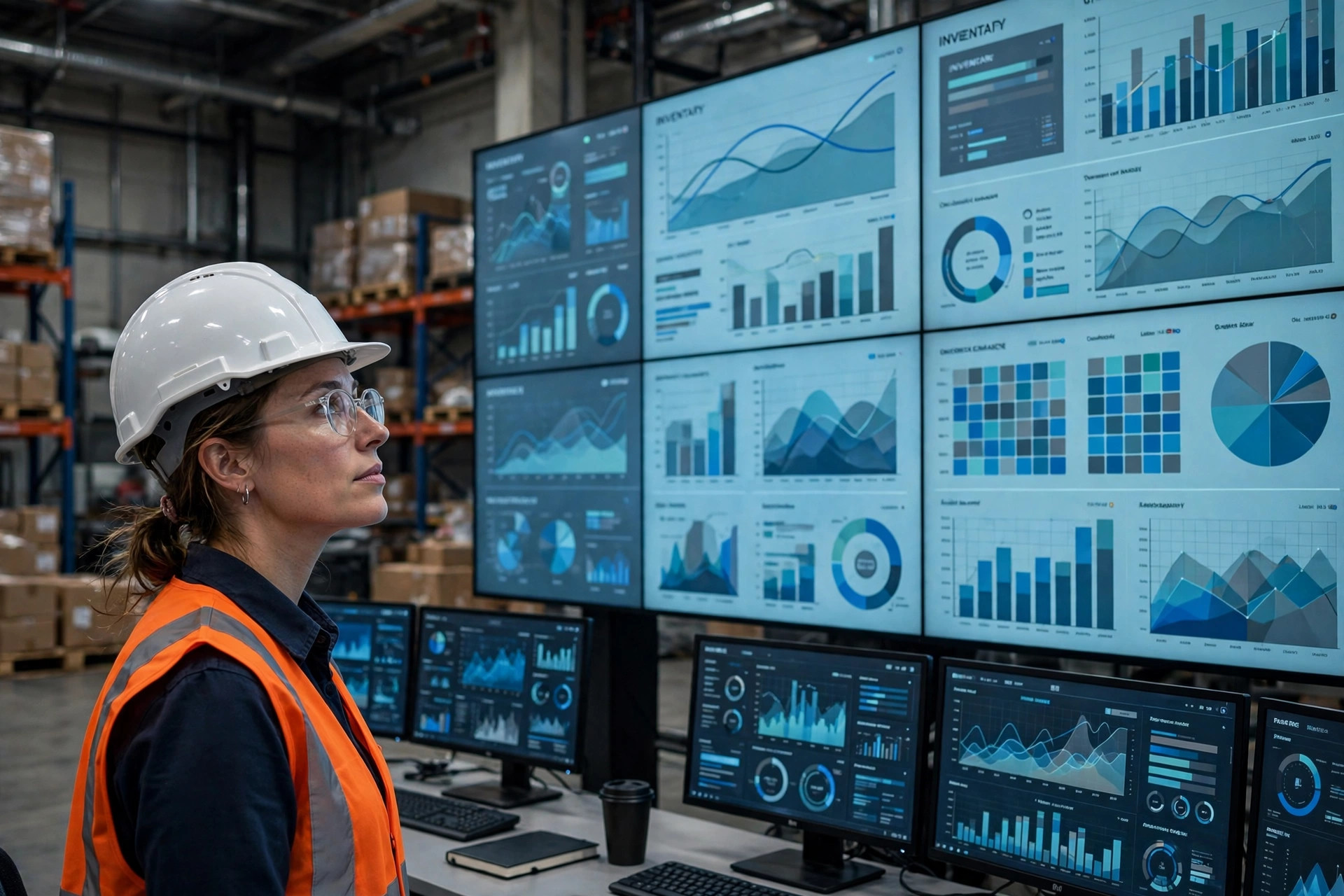
Demand sensing looks at the next zero to eight weeks. Its inputs are not history but what is happening right now: real-time POS sales, in-transit inventory levels, weather forecasts, social media signals, how promotions are actually performing. It refreshes daily or even hourly, and it serves execution questions: how much to replenish this week, whether to transship between warehouses, how many shifts to schedule next week.
The relationship is not replacement but layering: forecasting sets the trajectory, sensing keeps it corrected. One detail worth noting is that sensing is extremely sensitive to data freshness — if POS data lags by more than three days, the sensing model is effectively dead. That makes sensing a data engineering problem first and an algorithms problem second.
What Demand Sensing Actually Looks Like Inside a Warehouse
For warehouse operators, sensing lands in three concrete places.
First, signals feed replenishment. Daily-granularity POS data plus weather forecasts produce SKU-level demand corrections for the coming two weeks, automatically adjusting safety stock levels. In the heat wave case, had the system raised safety stock when POS spiked in week two, the stockout could have been avoided.
Second, signals feed labor planning. Sensing a likely 40% volume increase in a category next week means scheduling five days ahead — not calling people for overtime on Friday night. Labor is the most rigid cost in a warehouse and the most sensitive to forecast error.
Third, signals feed slotting. SKUs likely to surge get moved to golden pick zones in advance, instead of having pickers run deep into the racks during the spike.
There is another case worth recording from late 2024: a storage bin went viral on short-video platforms, and a home-goods 3PL saw daily orders jump from 200 on Monday to 3,000 by Friday. The monthly forecast kept marching to its old rhythm. The warehouse survived on "manual sensing" — operators scrolling social media comments every day — for three days before temp labor and slotting caught up on day four. That is the signature of a warehouse without a sensing layer: always chasing after the fact, never moving ahead of it.
The Math: How to Size the ROI of a Sensing Project
This column does not do hype; it does arithmetic. Below is an estimation framework — replace the parameters with your own numbers:
| Benefit | Estimation logic |
|---|---|
| Reduced stockout losses | Annual stockout losses x reduction in stockout rate from sensing |
| Reduced emergency transfers | Annual emergency transfers x per-transfer premium x reduction rate |
| Reduced ad-hoc overtime | Annual ad-hoc overtime hours x wage premium x reduction rate |
| Investment | Data integration work, model service subscription, roughly half a data FTE |
One public study gives a starting point for the math: joint research by Kinaxis and Kearney (2023) found that companies layering demand sensing on top of traditional forecasting improved forecast accuracy by 5 to 20%. Plug in the conservative 5%: for a distributor with annual stockout losses in the hundreds of thousands of dollars, the "fewer stockouts" line alone can pay for two to three years of a lightweight sensing setup.
But there is a precondition, stated plainly in the research: sensing adds little beyond a four-week horizon. If your category has stable demand and strong, predictable seasonality, the ROI shrinks considerably. First determine whether you are a high-volatility, fast-turn category — then talk about investment.
One Counterintuitive Finding
Most people assume the ROI of demand sensing sits in "fewer stockouts." My observation is that the larger share actually sits in warehouse labor and slotting.
The logic chain: every 10% of forecast deviation translates into roughly 10% error in shift schedules, wave plans, and slot reservations. Stockouts are episodic — a few times a year. But the "wasted preparation" in labor and slotting burns money every single day. In a 200-person warehouse, the overtime and idle time from scheduling error is a continuous bleed. Getting the next four weeks right saves that daily money first; the episodic stockout savings come second.
The second counterintuitive point: the biggest enemy of sensing is not the algorithm, it is the organization. Sensing demands "revise the plan daily as new signals arrive," yet many companies run planning as "one meeting a month sets the plan." Buy the system without changing the process, and the sensing signals will sit unread in a dashboard. Before implementing sensing, ask one question: do we have the organizational ability to change the plan daily? If not, fix the process before buying the system.
Where This Is Heading
Over the next three to five years, demand sensing will likely evolve from a separately sold software module into a standard execution layer inside WMS and ERP systems — the way wave management is today. For small and mid-size warehouses, the real window is not buying a big system but "lightweight sensing": daily POS reports plus weather forecasts plus a set of manual correction rules, tuning replenishment parameters weekly. Near-zero cost, most of the benefit.
When replenishment decisions move from "once a month" to "daily, machine proposes and human confirms," will the meaning of the word "plan" inside a warehouse change along with it? The answer to that question may only become visible in the next peak season.
By Dr. Chen, Supply Chain Researcher