
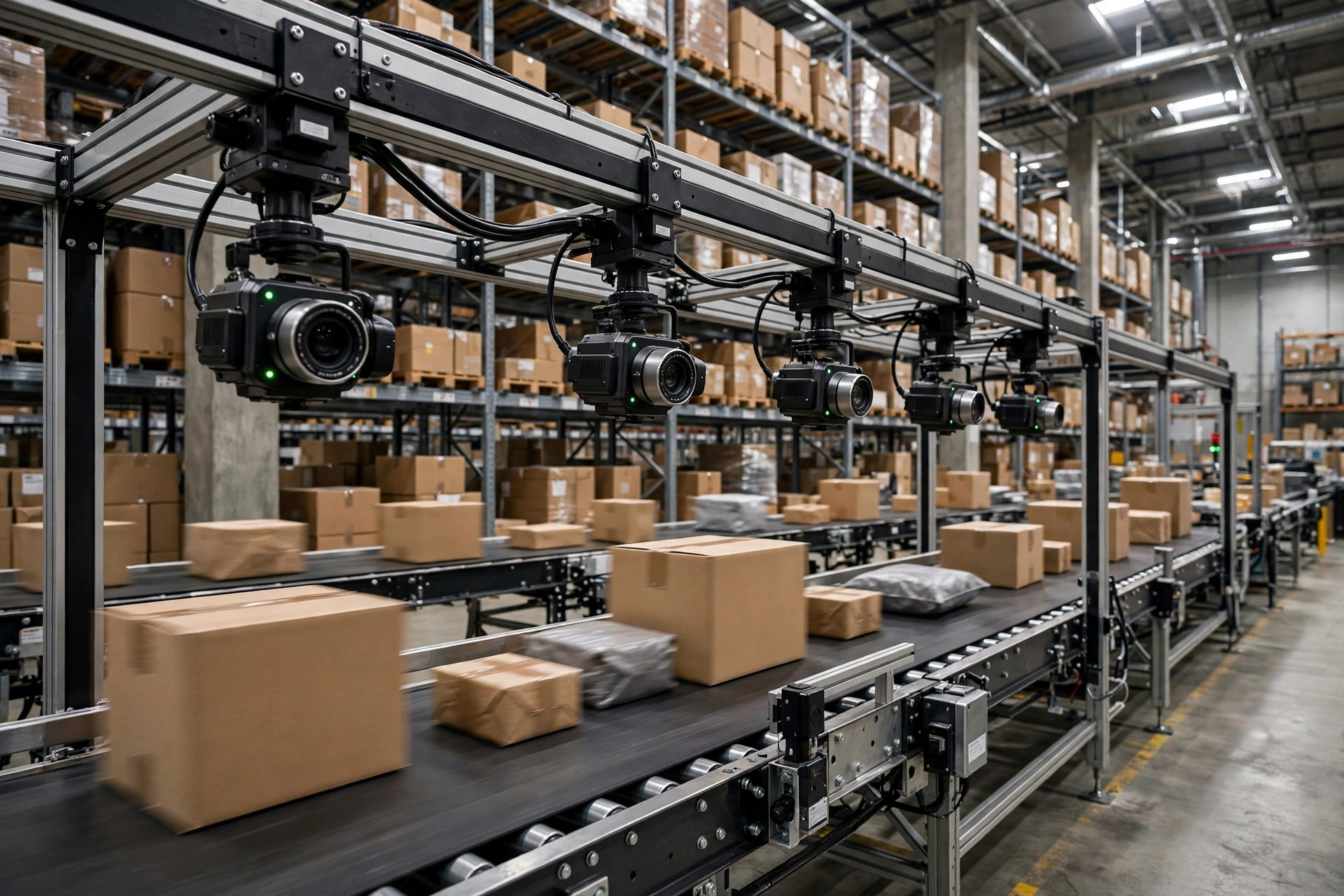
In the first half of this year, three warehouse operators came to me with essentially the same question: for warehouse AI, should we build it ourselves or buy it off the shelf? One runs an e-commerce fulfillment center in East China, another a 3PL in the South, the third a cross-border transshipment hub in the North. Six months later, the three had landed on three different answers: one built, one bought, one tried both.
The pattern itself is worth examining. On Gartner's hype cycle for supply chain technology, AI applications have spent years oscillating between the peak of inflated expectations and the trough of disillusionment. My own read, from tracking this space: between 2024 and 2025, purchases of warehouse AI products genuinely picked up — but the survival rate of in-house AI projects did not rise with it. Research from multiple consulting firms points to the same conclusion: AI initiatives that make it from pilot to scaled production remain the minority. Why? Two real stories first.
The first comes from East China. In the fall of 2024, an e-commerce warehouse processing roughly 80,000 orders a day decided to build its own order-screening AI — software to flag abnormal orders and intercept mis-shipments before they left the building. The team: five people, two ML engineers, two backend developers, one product manager. Annual labor cost, at market rates, ran into the millions of yuan — an order-of-magnitude figure; it varies widely by city. Six months later the model went live, and interception accuracy looked respectable. The trouble arrived in year two: the warehouse switched to a new wave-picking strategy, the order mix shifted, and model performance dropped by 12 percentage points. The ML engineer responsible for tuning left; his replacement spent three months just untangling the data pipeline. Eighteen months in, total investment had long exceeded what three years of subscription fees for a ready-made screening module would have cost. The operations head told me something I have not forgotten: "The biggest cost of building in-house isn't salaries. It's maintenance."
The second story is from a 3PL in the South. In early 2025 they purchased a WMS add-on with AI-powered labor scheduling, priced per warehouse per year. It went live in three months, and the effect was immediate: peak-season temp scheduling dropped from two hours a day to twenty minutes. But they paid their own tuition. The scheduling model had been trained on standard warehouse workflows, and one of their product lines — odd-shaped goods requiring special stations — broke the model's output daily. That line had to be carved out of AI scheduling entirely and handed back to manual planning. The cost of buying was not the subscription; it was the fit. Your process has to bend toward the software, and wherever it cannot bend, the AI simply does not apply.
The Build-vs-Buy Matrix
Both stories point to the same decision framework. I have organized it into a matrix — score each dimension against your own operation:
| Dimension | Build | Buy |
|---|---|---|
| Cost structure | Heavy upfront headcount; long-term maintenance costs more — a five-person team runs into the millions (RMB) per year | Predictable subscription fees; but customization, integration, and future vendor-switching costs are routinely underestimated |
| Time to value | 6–18 months, depending on data readiness | 1–3 months to go live, plus process adaptation and training time on top |
| Data threshold | Requires proprietary, clean, labeled historical data; without enough data, nothing works | Vendor pre-trains on industry data; decent baseline out of the box, but may struggle with your edge cases |
| Risk | Attrition equals knowledge loss; a wrong technical bet becomes a sunk cost | Vendor lock-in; the product roadmap is not yours to control; data compliance risk sits with you |
| Best fit | Highly distinctive processes, real data assets, AI as long-term core competence | Standardized scenarios, need for speed, small team |
The Counterintuitive Part: Year Three Is the Crossover
Most build-vs-buy math only covers year one. In year one, building looks like "just a few salaries" while buying looks like "an expensive subscription." Stretch the horizon to three years and the curves invert: the build cost curve gets steeper over time — models need periodic retraining, data pipelines need babysitting, every business change degrades performance, and every degradation is an emergency repair. The buy curve stays comparatively flat. Expensive, but predictable. The ROI crossover is not in year one. It is in year three. That is the first counterintuitive finding.
The second: the biggest trap in buying is not missing features — it is starved data. AI scheduling and visual inspection perform on day one exactly as well as the data you feed them. Many warehouses buy an AI module, never get their historical data imported, never staff the labeling work, and the model runs forever on the vendor's generic baseline. The verdict follows: "AI doesn't work." That verdict arrives too early. It is not that AI failed; the data never showed up. Under a buy model, the data workload is no lighter than under build — it merely shifts from training models to feeding them.
The Data Threshold: The Most Underestimated Variable
Build advocates love to say "we have tons of data." But data abundance in a warehouse is not AI-ready data abundance. WMS records are written for humans: misaligned timestamps, unlabeled exceptions, metrics redefined three times over. Feed that to a model and the outcome is predictable. My suggestion, before committing to a build: run a data audit. Sample three months of history and check timestamp alignment, exception-label coverage, and metric consistency against an 80% bar. Below the bar, fix data engineering first and talk AI later.
Buy advocates should not celebrate either. When a vendor says "we have industry-scale data," the follow-up question is whether they have data from your product category and your operating model. Data from an apparel e-commerce warehouse will not train a 3PL's odd-goods scheduling model. Without matched data, the out-of-the-box baseline may underperform three months of your own fine-tuning.
Which Scenarios Fit Which Path
Pulling the framework together, the conclusion is fairly clean. Consider building only when three conditions hold at once: first, your process is genuinely distinctive — off-the-shelf products cover less than 70% of it; second, you own a continuously generated, high-quality data asset with clean ownership and usage rights; third, you are willing to fund the team for at least three years, not "a project." Miss one, and the build likely becomes a sunk cost.
The mirror image argues for buying: highly standardized scenarios (carton damage detection, generic labor scheduling, anomaly alerts), at least two mature vendors in the market, no ML background on your team, or a need for visible results within three months.
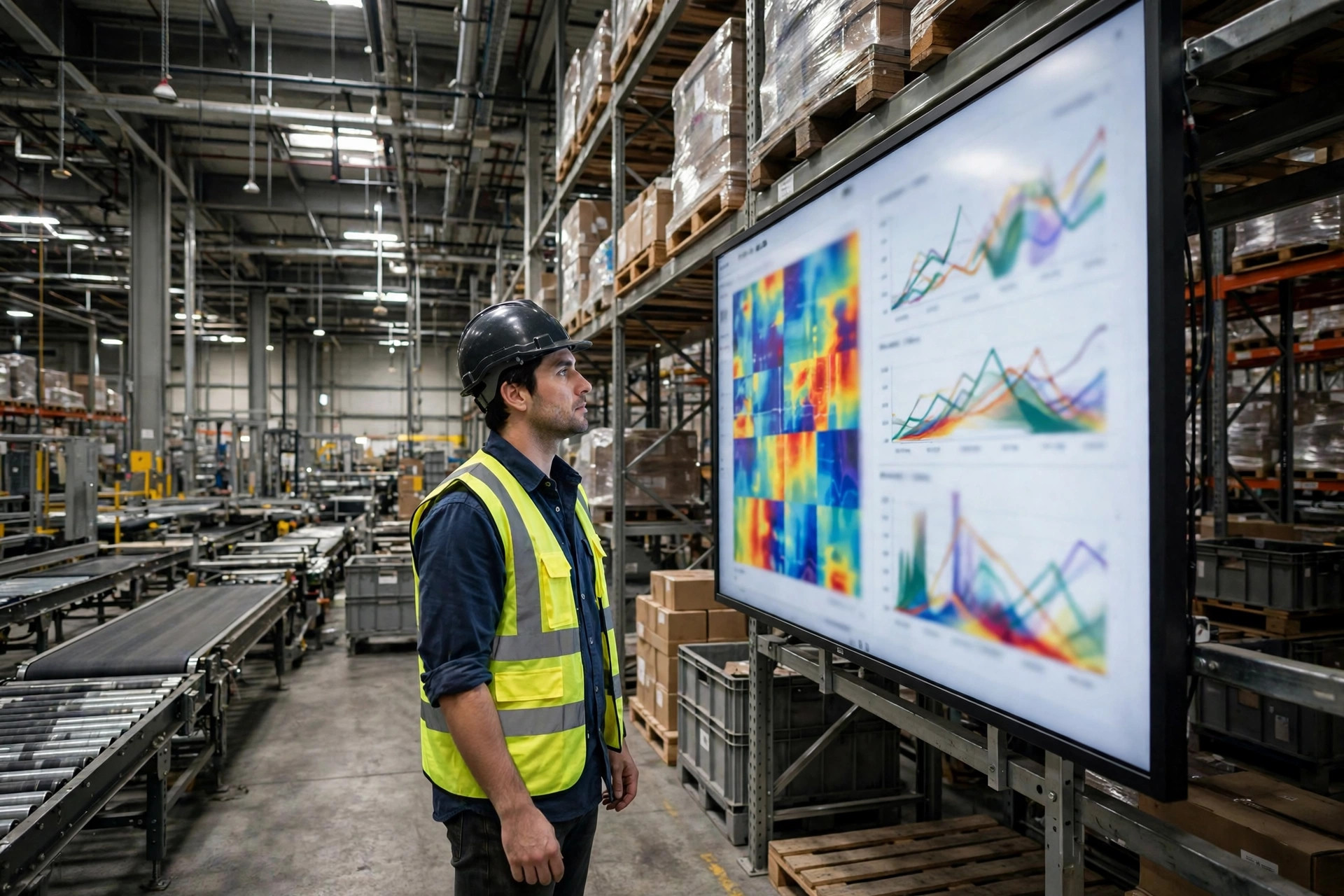
There is a middle path worth naming separately: buy the platform, build the top layer. Purchase a vision platform with open APIs and fine-tune the detection model on your own labeled data; or buy a forecasting engine and write your own business-rule layer. It balances speed with distinctiveness — but it has a prerequisite: at least one or two people on your team who understand data well enough to pry the vendor's black box open a crack. Teams with no data literacy cannot walk this path.
One open question to close with. Large models have pushed the cost floor of AI down another notch over the last two years: what used to take five people a year can now be demoed by two people calling APIs plus fine-tuning. Does that shift the build-vs-buy balance? My observation: it changes the cost of producing a demo, not the cost of running a production system. Between a working demo and stable 24/7 operation lie three gaps — data engineering, exception handling, and adaptation to business change — and those gaps do not disappear whether you build or buy. So perhaps the real question was never "build or buy" at all, but rather: in your warehouse, is AI a cost-reduction tool, or is it your competitiveness for the next three years? Different answers, entirely different math. I will leave that one for you to work through against your own operation.
By Dr. Chen, Supply Chain Researcher





