We small warehouses cannot afford to burn that kind of money on warehouse summer cooling. Last July I stood in our warehouse with sweat running down my neck and the thermometer reading thirty-six degrees. Xiao Wang, one of our pickers, said to me, "Boss, if it stays this hot, I'll be lying down by noon." My first thought was that we had to cool the place down. Then I asked for a central air conditioning quote and my heart sank. For our three-thousand-square-meter warehouse, equipment plus installation plus electricity for a year would cost almost as much as renting another half warehouse. The big-company solution was not for us. But people cannot work inside a steamer either. So we spent one summer testing four options, one by one. We stepped on plenty of rakes, and we ended up with a cooling combination of our own.
Here is the conclusion up front: there is no single magic solution for warehouse summer cooling. It is all about the combination. Natural ventilation costs nothing, but it depends on the weather. Industrial fans are cheap and cover a lot of ground, but they do not actually cool the air. Evaporative cooling works well, but it loses power in humid places. Portable air conditioners cool wherever you put them, but the electricity bill is brutal. Understand each option's personality, then build the combination that fits your own warehouse.
Four Warehouse Summer Cooling Options, One Honest Cost Table
| Option | Equipment cost | Electricity use | Cooling effect | Best for |
|---|---|---|---|---|
| Natural ventilation | Almost nothing, windows and roof vents | None | Noticeable relief when airflow is good | Warehouses with cross-breeze potential |
| Industrial ceiling fans | A few thousand yuan per unit, check local quotes | About one to two units of electricity per fan, check local rates | Feels cooler, does not lower room temperature | Tall spaces, picking areas |
| Evaporative coolers | A few thousand to over ten thousand yuan per unit, check local quotes | Low, a fraction of air conditioning | Several degrees cooler in dry climates | Dry regions, large-area airflow |
| Portable air conditioners | A few thousand yuan per unit, check local quotes | High, not economical for long hours | Most direct local cooling | Small areas, temporary hot spots |
That table is what one summer of testing taught us. Start with natural ventilation. It sounds like the most old-fashioned option, and it is actually the most worth doing first. Our warehouse originally had windows on only one side, so the air never moved through. We added two exhaust fans high up on the walls and started keeping the door on the other side open during the day. Once the cross-breeze was going, it felt two or three degrees cooler right away. The whole job cost less than two thousand yuan, the best value of the entire summer. The problem in many small warehouses is not missing equipment. It is windows and doors that were never used properly.
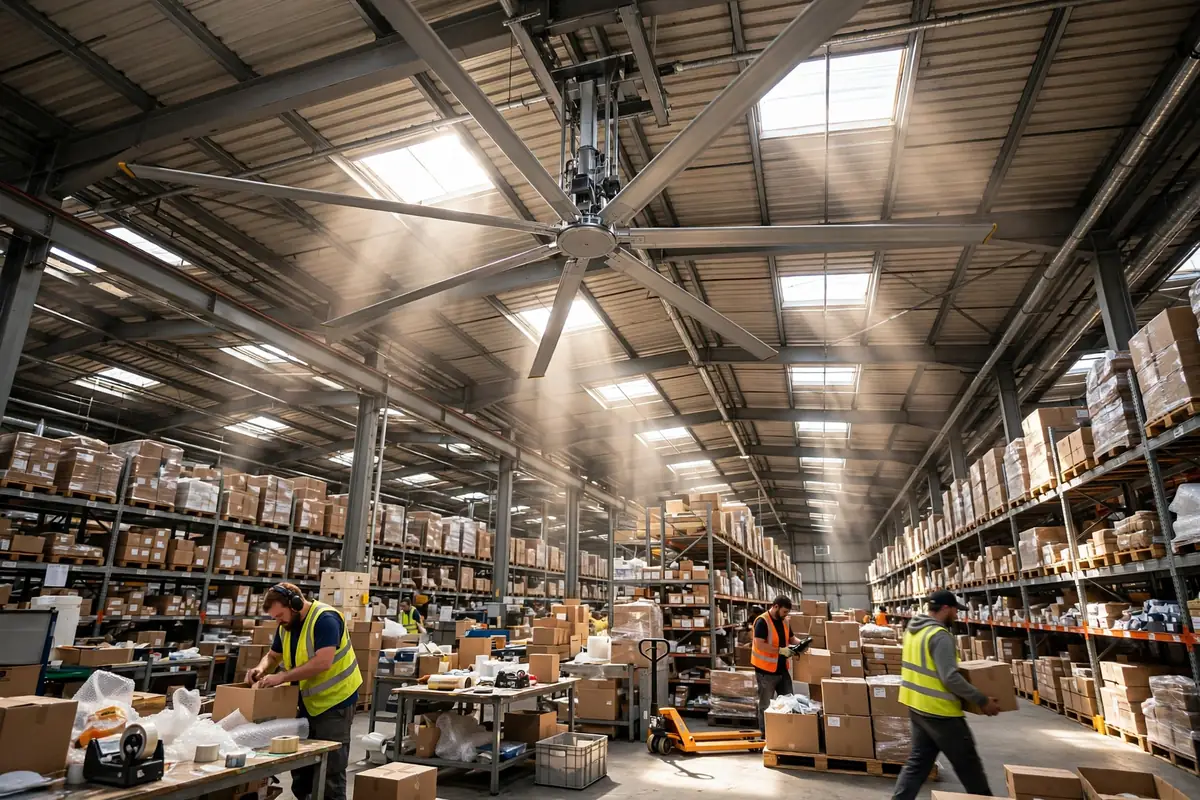
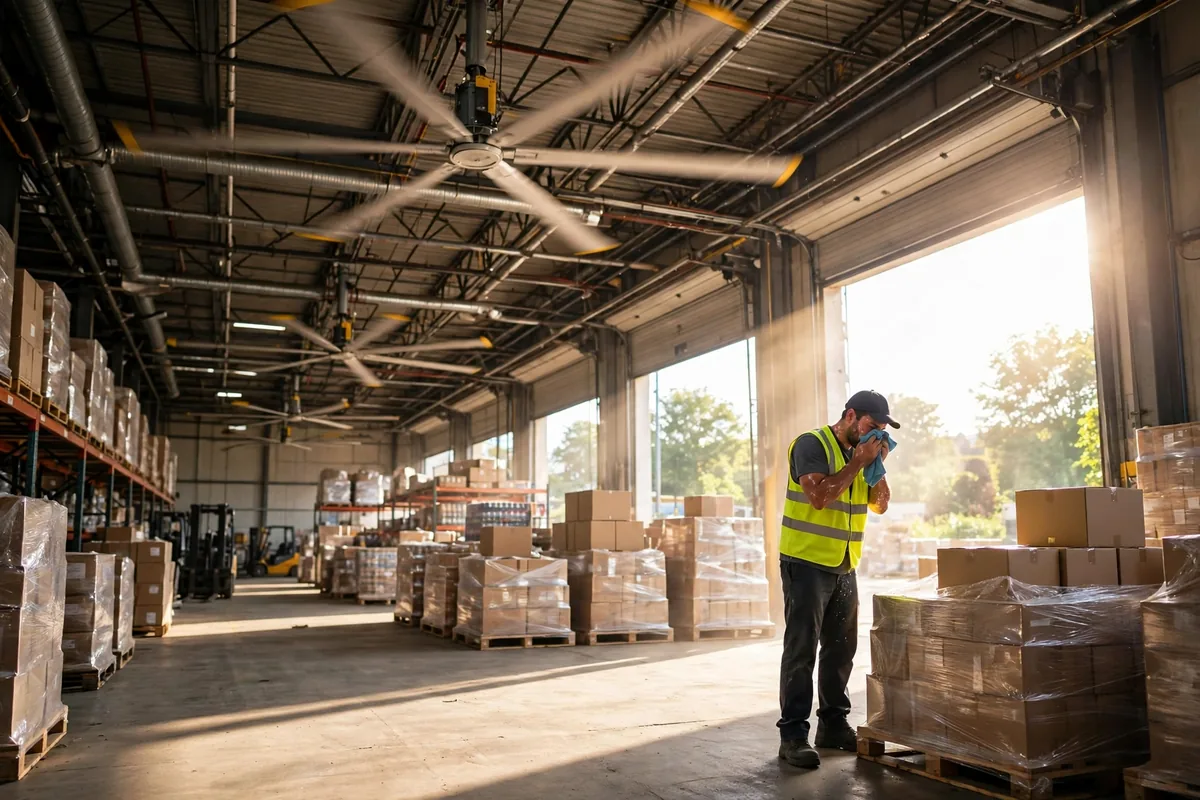
Industrial ceiling fans came second. One big fan covers hundreds of square meters, and standing under it feels genuinely cool. Your sweat dries in minutes. But here is the counterintuitive part: a fan does not lower the temperature at all. The thermometer does not move. What changes is how the moving air feels on your skin. We installed two over the picking area and the workers felt far more comfortable. Complaints about the heat disappeared overnight. But if you expect a fan to take a warehouse from thirty-six degrees down to thirty, forget it. Fans solve the people problem, not the warehouse problem.
Evaporative Cooling Works, But It Depends on the Weather
Evaporative coolers are the most genuinely effective of the four we tried. The air coming out is really cool. In a dry climate, they can pull the temperature near the outlet down by several degrees. Our warehouse is in North China, where summers are hot and dry, and once the coolers were running, the picking area cooled down immediately. Workers stopped hiding in the shade at noon. Electricity use is low too, a fraction of what air conditioning would need for the same area, so the power bill stays manageable.
But it has one fatal weakness: humidity. In August 2024, a client of ours with a warehouse on the humid southern coast installed the same coolers. When the damp season arrived, the machines pushed the indoor humidity even higher. Cardboard boxes went soft, goods were fine but people felt worse. Evaporative cooling works by water absorbing heat as it evaporates. The drier the air, the better it works. The more humid the air, the worse it works. In a humid region, running one is like pouring water into water. So before buying, look at where you are. Dry region, go for it without hesitation. Humid region, walk away.
Portable air conditioners we tried too, and the verdict is one sentence: fine for emergencies, terrible as a permanent solution. The cooling is the most direct of all, and you can roll the unit wherever it is hottest, next to the office or the packing bench, with instant results. But the electricity bill is genuinely painful. One unit running for a month costs as much in power as two evaporative coolers running all summer. We keep exactly one now, reserved for extreme heat. When the temperature passes thirty-eight degrees, we roll it to the hottest picking zone for two days, then put it away when things cool down.
Our Small Warehouse Summer Cooling Combination
After a summer of testing, here is the combination we settled on. Natural ventilation as the base: exhaust fans up high plus doors and windows open on opposite sides, running all year, the free stuff done properly first. Two industrial ceiling fans covering the picking and packing zones, solving how the work feels. Two evaporative coolers in the hottest areas, bringing real cooling on dry days. One portable air conditioner, only for extreme heat emergencies. Total equipment investment came to roughly twenty to thirty thousand yuan, depending on local quotes. Electricity for the three summer months rose by just over a thousand yuan, and picking speed actually went up, because people work faster when they are cool.
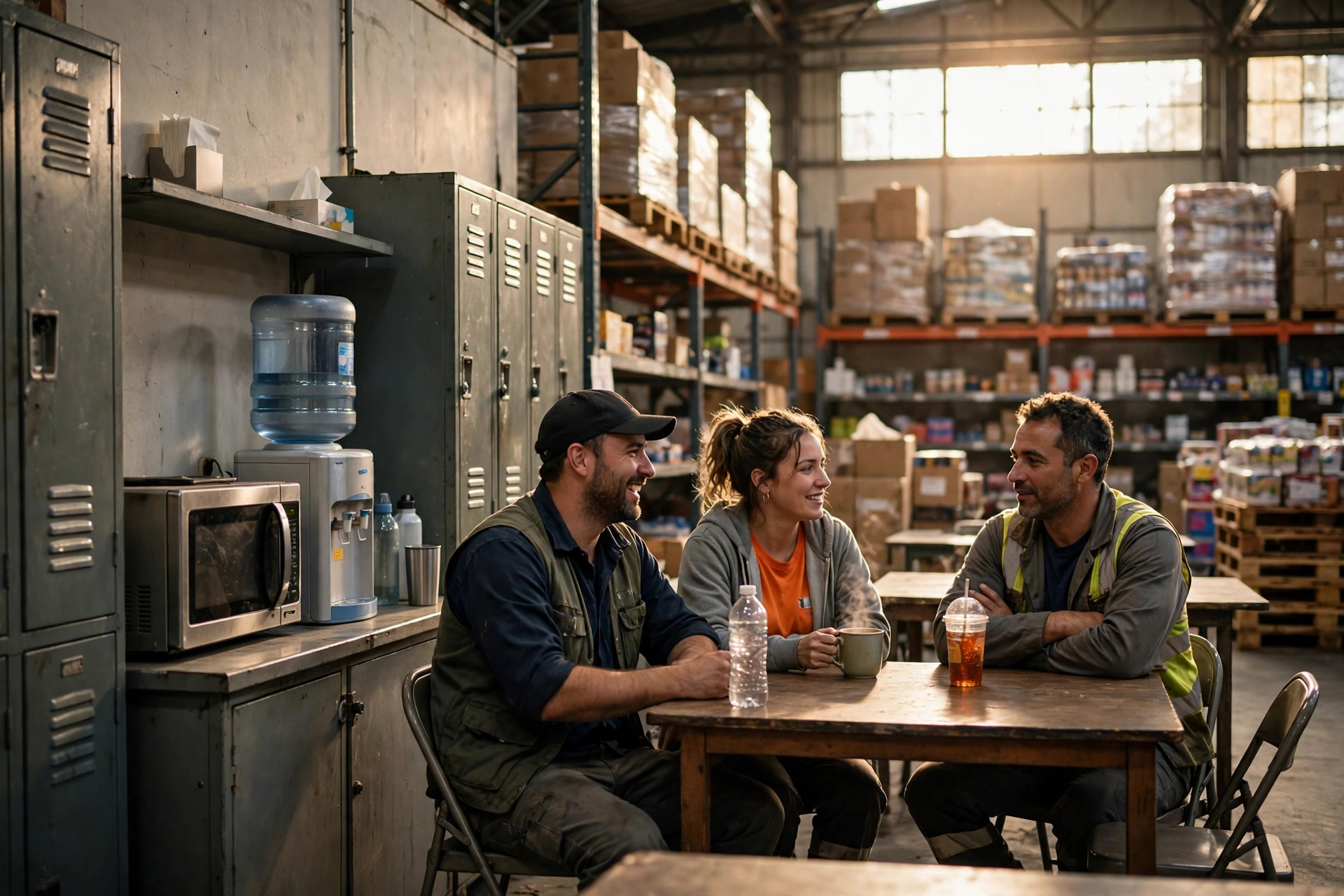
A few free tricks are worth mentioning too. First, paint the roof with heat-reflective coating, or stretch shade netting over it. A roof baking in the sun all day sends all that heat straight down, and good insulation can drop the indoor temperature by several degrees. Second, shift the work schedule: the hottest hours, noon to two, go to light indoor jobs like counting and sorting, and the heavy work moves to the cooler morning and evening. Third, keep iced water, mung bean soup, and heat-relief medicine stocked in the rest area. It costs almost nothing, and the crew notices. These tricks look crude. They genuinely work.
Small warehouses have their own way of surviving. Big companies install central air conditioning. We build a combination and spend little money to get a lot done. Warehouse summer cooling is not a contest over who buys the most expensive equipment. It is about who understands their own warehouse best. Get the free ventilation right first, then add one piece at a time, based on your climate, your floor area, and your budget, until it is enough. Enough is enough. One extra yuan spent beyond that is wasted.
By Xiao Ma, Small Warehouse Owner