Every day I unboxed until my hands hurt, watched the cardboard pile up into a small mountain, and then paid someone to haul it away. That is the dumbest deal in my warehouse, and for a long time I did not even notice it. If you want warehouse cardboard recycling revenue, it starts with admitting the obvious: you are paying to give away something another business will happily buy.
I sell online. I have done it for five years. I have argued with platforms, burned money on ads that went nowhere, and learned to count stocking days like a paranoid accountant. Cardboard taught me a different lesson. It will never make you rich. It can, however, turn a monthly cost into a small, steady line of income, if you stop treating it like trash and start treating it like inventory.
Warehouse Cardboard Recycling Revenue Starts With Sorting, Not Selling
My small warehouse outside Dongguan hit peak season in autumn 2024. Inbound cartons plus returns left us with dozens of kilos of cardboard every single day. Nobody owned the problem. We tossed flattened boxes by the aisle, the pile grew, the packing bench lost half its space, and one day a new hire tripped over a collapsing stack. He was fine, luckily. I was not fine with the picture.
That night I sat next to the pile and did the math in my head. I was paying rent for space occupied by garbage. I was paying a hauler to remove it. The hauler then sold it. I was the only person in that chain losing money twice.
Here is the counter-intuitive part, and it changed everything for me: volume does not make you money here, cleanliness does. Recyclers do not fear a small load. They fear a dirty one. Tape, plastic film, foam, wet board, and random filler mixed into a bale are what kill your price. A buyer can reject that load, dock weight for contamination, or quietly offer less next time. You can pile cardboard to the ceiling and still walk away with almost nothing if the quality is bad.
I asked a few recyclers what they actually want. The answer was boring and consistent: clean, dry, flattened, tightly bundled cardboard. That is it. No secret grade, no magic buyer. So the first job is not finding a buyer. The first job is building sorting into the unboxing routine itself.
How I Actually Do It: Sort It, Stack It, Sell It in Full Loads
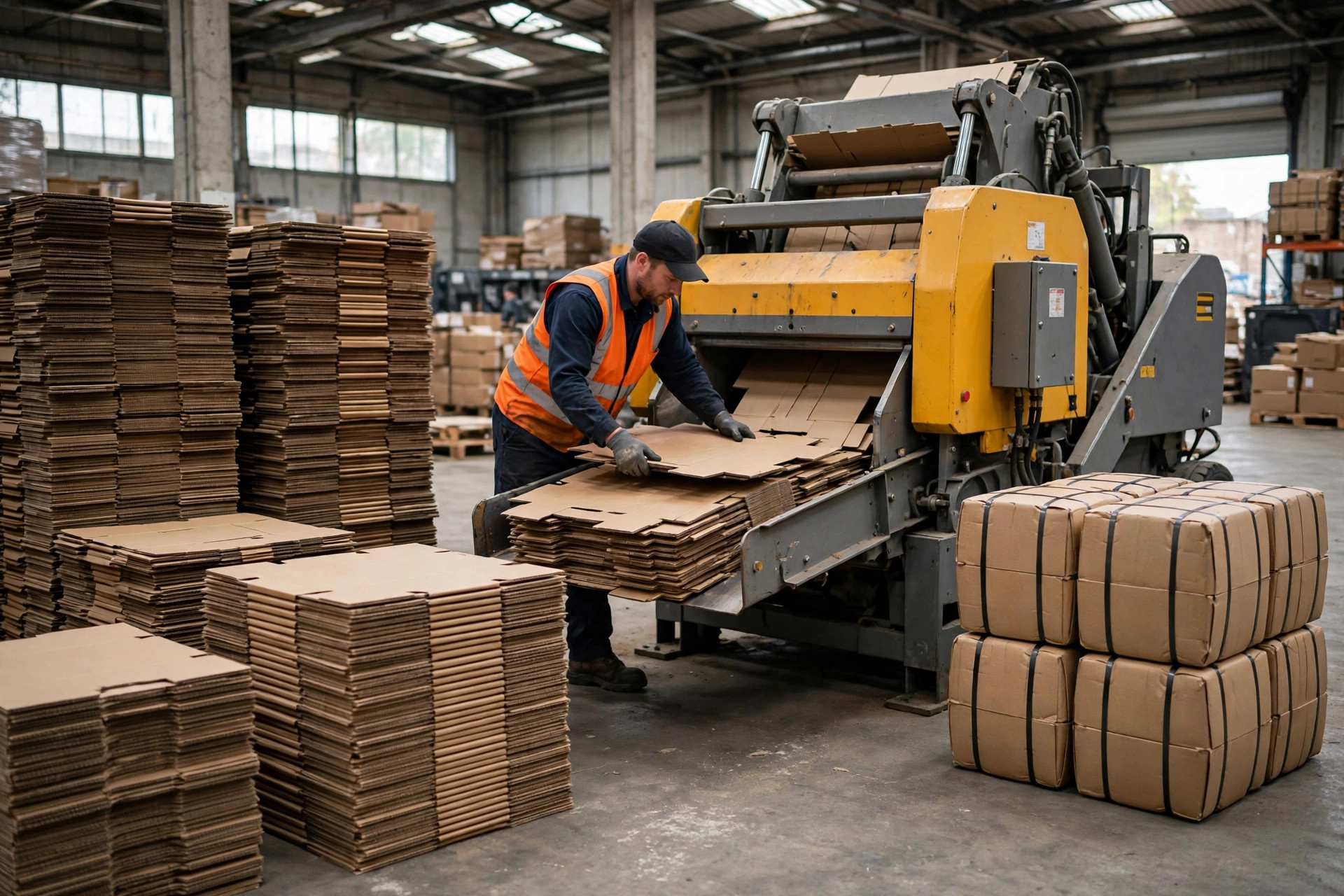
Step one is sorting at the moment you open the box. We made a simple rule: flatten the carton right away, pull off the worst tape and plastic, and separate anything oily, wet, or damaged. Good board goes in one stack, second-grade board in another, and true trash goes in the bin. It adds maybe ten seconds per carton. It saves a painful argument later.
Step two is waiting until you have a full load. I used to call for pickup whenever the pile annoyed me. The truck arrived half empty, the recycler was not thrilled, and I had no leverage. Now we pick one fixed pickup day each week. Flattened board goes to a marked zone by the wall, we stack it until the zone is full, and only then do we call. If your warehouse is small, team up with the warehouse next door. Two small loads become one full truck, and you split any haulage cost.
Step three is the contract, and this is where I got burned once. My first recycler sounded great on the phone. On site, he talked about moisture, then contamination, then deducted weight at his own scale, then took almost a month to pay. Lesson learned. Now I get these points in writing before the first regular pickup: how weighing works, how contamination deductions are calculated, whether there is a collection fee, how often payment is made, and who bears the loss if board gets rained on. For price, I write that it follows the recycler's latest quote and we check it monthly. Pricing varies by market and grade, so get current quotes instead of locking in a fixed price that helps nobody when the market moves.
Let me show you the shape of the math with a clearly illustrative example, not a market price. Suppose in a month you build up dozens of compact bales, each weighing dozens of kilos, and one truck takes the lot. Take the recycler's current quote, multiply by the accepted weight, subtract any collection fee and the small labor cost of sorting, and what is left is your net. When volume is small, that net might only buy the team coffee. When volume grows, the recovered space plus the payment can cover part of your consumables bill. The point is direction: this used to be a negative number. Now it is a positive one, and that flip is the whole idea behind warehouse cardboard recycling revenue. That swing matters more than the size of any single payment.
A friend in Shenzhen who sells home goods showed me the same idea from the other side. In early 2025 he moved to a bigger warehouse and his cardboard volume roughly doubled. He did not rush to sign a recycler. He marked out a cardboard zone, set up sorting, and covered the area before the rainy season. While other warehouses watched wet board lose value, his stayed dry, and he negotiated from a position of strength. Cardboard recycling rewards boring management, not big volume alone.
Warehouse Cardboard Recycling Revenue: The Contract Traps That Eat Your Profit
Trap one is selling unsorted board to save time. It feels efficient. In practice, weight deductions and a lower price eat whatever labor you saved. You did not save time. You just moved the cost into the price.
Trap two is buying a baler before you need one. A small warehouse with modest daily volume does not need heavy equipment taking up floor space, needing maintenance, and needing an operator. Until volume clearly justifies it, flatten and bundle by hand, rent equipment, or share a load with a neighbor. Do not turn a small side income into a capital project.
Trap three is chasing the highest headline quote and ignoring weighing and payment terms. A high quote means little if weighing happens only on the buyer's scale, contamination deductions have no clear standard, and payment drags on for weeks. Run one or two trial loads first. Check the weight ticket, the payment timing, and the service. Only sign a regular arrangement when all three feel clean.
| Approach | Labor | Floor space | What you actually get | | Pay someone to haul it away | Least | Pile grows until pickup | You pay a fee and earn nothing | | Sell mixed board to a passing buyer | Very little | Cleared when called | Some cash, often cut by deductions | | Sort, bundle, and contract a recycler | A little each day | One tidy, fixed zone | Steady small income and a cleaner warehouse |
That table is the whole story. The easiest option loses the most money. The slightly more disciplined option wins. E-commerce gets harder every year on the big costs: ads, freight, platform fees. Those are hard to move. The small costs sitting in your warehouse are not. Cardboard is one of the few places where a one-week change shows up in next month's numbers.
I will be straight with you: this will not fund your next product launch. It will not replace a winning listing. What it does is stop a leak, free up space, and give you a small warehouse cardboard recycling revenue line that shows up every month without a new ad campaign. For a seller who counts every point of margin, that is worth doing properly.
Try it next week. Set a sorting rule, mark a cardboard zone, wait for a full load, and compare two recyclers on weighing and payment, not just on the quote they shout first. Run one load and check the numbers yourself. This one I tested myself, and it works.
By Ah K, E-commerce Seller (5 yrs)